
How the US-Iran Peace Deal Rewires Global Supply Chains After the Hormuz Reopening
The interim agreement to reopen the Strait of Hormuz brings immediate relief to global energy and logistics networks. But unwinding months of rerouted trade, soaring freight costs, and supply bottlenecks will take time.
By Factlen Editorial Team
- Energy Markets & Analysts
- Cautious optimism as oil prices fall, tempered by the reality of the 60-day negotiation window.
- Global Logistics Providers
- Focused on the massive operational challenge of unwinding months of rerouted global freight.
- Asian Importers
- Highly dependent economies celebrating the restoration of critical energy and industrial lifelines.
- Diplomatic Mediators
- Focused on the geopolitical stability and the 60-day negotiation window.
What's not represented
- · Environmental organizations monitoring the impact of rerouted shipping emissions.
- · Local fishing and coastal communities in the Persian Gulf affected by the military presence.
Why this matters
The reopening of the Strait of Hormuz removes the largest supply chain bottleneck of the year, promising immediate relief for global energy prices and manufacturing costs. However, unwinding months of rerouted shipping will take time, meaning consumers will see a gradual rather than instant drop in the cost of goods.
Key points
- The US and Iran reached an interim agreement to halt hostilities and reopen the Strait of Hormuz.
- The breakthrough sets the stage for a 60-day negotiation window regarding Tehran's nuclear program.
- Asian markets rallied on the news, with tech stocks surging and global crude oil prices falling.
- The strait handles roughly 20.9 million barrels of oil per day and 20% of global LNG trade.
- Beyond energy, the reopening restores critical supplies of non-oil commodities like methanol and urea.
- Logistics experts warn that unwinding the massive backlog of rerouted freight will take weeks.
The global economy is breathing a massive sigh of relief. After more than three months of devastating military conflict, the United States and Iran have reached an interim peace agreement that halts the war and immediately reopens the Strait of Hormuz. The breakthrough sets the stage for a critical 60-day negotiation window regarding Tehran's nuclear program, but the immediate economic impact is already rippling across the globe.[1]
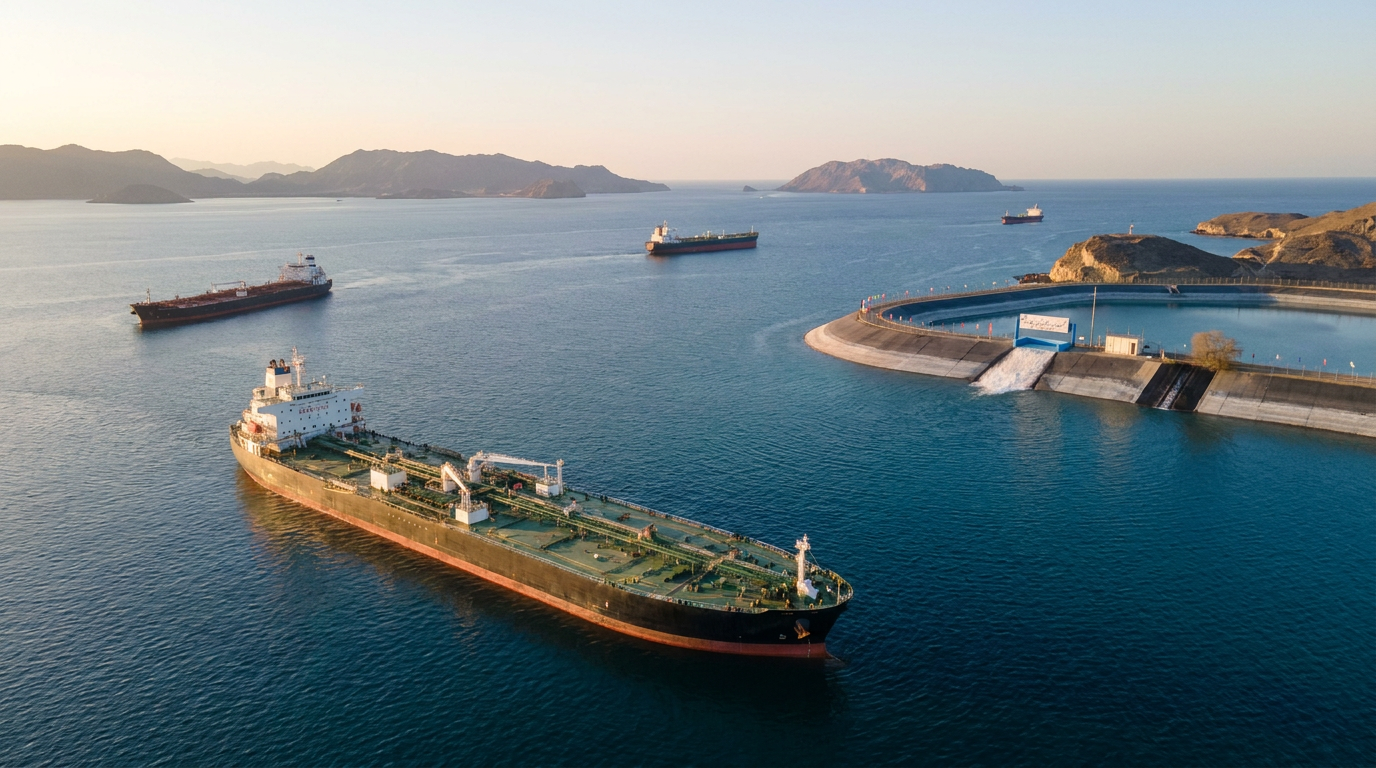
The waterway, a narrow channel separating Oman and Iran, had been effectively closed to commercial shipping since late February. The blockade choked off the Persian Gulf, forcing the world's most vital energy and logistics networks into a state of paralysis.[1]
Financial markets reacted with immediate euphoria. Asian technology stocks, heavily reliant on stable energy prices and global supply chains, surged on the news, with major players like SoftBank jumping more than 12% in a single trading session.[2]
Energy markets also saw an immediate recalibration, with crude oil prices falling sharply as the prospect of restored supply became a reality. However, energy analysts caution that the market is not entirely out of the woods yet, as the looming 60-day deadline for a permanent resolution keeps a floor under prices.[1][9]

The diplomatic breakthrough was not achieved in isolation. Regional mediators played a crucial role in bringing the parties to the table, with Pakistan's Finance Minister publicly celebrating the country's critical role in facilitating the interim agreement.[8]
To understand the sheer scale of the relief, one must look at the staggering volume of trade that relies on this single maritime chokepoint. The Strait of Hormuz is the undisputed jugular of the global energy market, handling approximately 20.9 million barrels of oil per day.[3]
That massive volume represents roughly 20% of total global petroleum liquids consumption. Furthermore, the strait is the transit point for about one-fifth of the world's liquefied natural gas (LNG) trade, making it irreplaceable for global energy security.[3]
The burden of the closure fell disproportionately on Asian economies. Nations such as China, India, Japan, and South Korea are the primary destinations for Gulf energy exports, and the sudden cutoff forced these manufacturing powerhouses to scramble for alternative, more expensive energy sources.[7]

The burden of the closure fell disproportionately on Asian economies.
Yet, the crisis extended far beyond the realm of oil and gas. The Middle East has evolved into a primary global supplier of non-oil commodities, and the blockade exposed a deep vulnerability in the supply chains of essential industrial materials.[4]
For instance, around a third of the world's seaborne methanol trade passes through the strait. Methanol is a critical chemical feedstock used in the production of resins, coatings, and plastics, and the disruption threatened to severely inflate costs across global chemical value chains.[4]
Agriculture was equally threatened. The Arabian Gulf accounts for 46% of the global trade in urea, the world's most widely used nitrogen fertilizer. A prolonged disruption risked driving up global food production costs and exacerbating inflationary pressures on grocery bills worldwide.[4]

During the three-month closure, the logistics industry was forced into a massive and costly rewiring. Companies went to extraordinary lengths to bypass the danger zone; Siemens Energy, for example, resorted to driving critical equipment across the Arabian peninsula desert from the Red Sea to the Persian Gulf.[1]
On the water, the impact was stark. Maritime traffic through the region plummeted by 70% as vessels either idled in the Gulf of Oman or embarked on the long, expensive detour around the Cape of Good Hope, adding weeks to transit times.[6]
The disruption inevitably spilled over into other modes of transport. As sea freight stalled, companies turned to air cargo, but closed airspaces and rerouted flights quickly tightened available capacity, driving up air freight costs and causing significant delays at major hubs.[6]
Even with the strait now officially reopened, supply chain experts warn that a return to normal operations will not happen overnight. The logistics ecosystem is deeply interconnected, and unwinding the massive backlog requires careful orchestration.[5][6]

Carriers must now reposition their vessels and containers, a process that will take weeks. Furthermore, European and Asian ports are bracing for a sudden spike in congestion as delayed ships and newly dispatched vessels arrive simultaneously.[6]
The underlying geopolitical tension also remains a factor. While the interim deal provides immediate operational relief, the 60-day window for nuclear negotiations means that shipping insurers and logistics planners must maintain contingency plans.[1]
For now, however, the reopening of the Strait of Hormuz stands as a monumental win for global stability. By restoring the flow of energy, fertilizers, and industrial materials, the agreement prevents a deeper economic crisis and allows the global supply chain to begin the hard work of healing.[1][4][5]
How we got here
Late February 2026
Conflict escalates between the US, Israel, and Iran, leading to the effective closure of the Strait of Hormuz to commercial shipping.
March–May 2026
Global supply chains undergo massive rewiring, with ships rerouting around Africa and companies utilizing overland desert routes.
Mid-June 2026
The US and Iran reach an interim peace agreement, halting the war and immediately reopening the strait.
August 2026 (Upcoming)
The 60-day window for negotiations on Tehran's nuclear program is set to conclude, determining the long-term stability of the region.
Viewpoints in depth
Energy Markets & Analysts
Cautious optimism as oil prices fall, tempered by the reality of the 60-day negotiation window.
While the immediate reopening of the strait triggered a sharp drop in crude prices, energy analysts warn that the market has not fully priced out geopolitical risk. Experts from CSIS and the EIA note that unwinding the supply shock will take weeks, and the looming 60-day deadline for nuclear talks means a risk premium will remain embedded in global energy contracts until a permanent resolution is signed.
Global Logistics Providers
Focused on the massive operational challenge of unwinding months of rerouted global freight.
For the shipping and freight industry, the peace deal marks the beginning of a complex logistical untangling. Carriers that rerouted vessels around the Cape of Good Hope or shifted cargo to overland desert routes cannot instantly normalize schedules. Logistics firms anticipate a wave of port congestion in Asia and Europe as delayed ships arrive simultaneously, warning clients that transit times and freight rates will remain volatile through the summer.
Asian Importers
Highly dependent economies celebrating the restoration of critical energy and industrial lifelines.
Nations like China, India, Japan, and South Korea bore the brunt of the Hormuz closure, relying on the strait for the majority of their oil and LNG imports. Beyond energy, the restoration of methanol and urea shipments is a massive relief for Asian manufacturing and agriculture sectors, which were facing critical shortages and surging input costs that threatened broader economic inflation.
What we don't know
- Whether the 60-day negotiation window will result in a permanent resolution to the conflict.
- Exactly how long it will take for global shipping rates and transit times to fully normalize.
- The total economic cost incurred by the logistics industry during the three-month closure.
Key terms
- Strait of Hormuz
- A narrow, strategically vital waterway between Oman and Iran that connects the Persian Gulf to the open ocean.
- Chokepoint
- A narrow channel along widely used global sea routes that is critical to international trade and highly vulnerable to blockages.
- Liquefied Natural Gas (LNG)
- Natural gas that has been cooled to a liquid state for easier and safer storage and transport across oceans.
- Urea
- A widely used nitrogen-based fertilizer essential for global agriculture, heavily produced in and exported from the Persian Gulf.
- Freight Rerouting
- The logistical process of changing a ship or cargo's planned path to avoid danger zones, often adding significant time and cost.
Frequently asked
Why was the Strait of Hormuz closed?
The waterway was effectively shut down for over three months due to a military conflict between the US, Israel, and Iran, making the passage too dangerous for commercial shipping.
What does the interim peace deal entail?
The US and Iran agreed to halt hostilities and reopen the strait immediately, setting the stage for a 60-day negotiation period regarding Tehran's nuclear program.
How much of the world's oil passes through the strait?
Approximately 20.9 million barrels per day, which accounts for about 20% of global petroleum liquids consumption.
Will shipping return to normal immediately?
No. Logistics experts warn that repositioning vessels, unwinding alternative routes, and managing expected port congestion will take weeks or even months.
Sources
Source coverage
9 outlets
4 viewpoints surfaced






[1]BloombergDiplomatic Mediators
What the US-Iran Peace Deal Means for the Strait of Hormuz
Read on Bloomberg →[2]CNBCAsian Importers
SoftBank surges more than 12% as Iran-U.S. peace deal sends Asia stocks soaring
Read on CNBC →[3]U.S. Energy Information AdministrationEnergy Markets & Analysts
World Oil Transit Chokepoints
Read on U.S. Energy Information Administration →[4]World Economic ForumAsian Importers
Beyond oil: 9 commodities impacted by the Strait of Hormuz crisis
Read on World Economic Forum →[5]Roland BergerGlobal Logistics Providers
Strait of Hormuz: Global supply chain at risk
Read on Roland Berger →[6]Customs Support GroupGlobal Logistics Providers
Strait of Hormuz Disruption Impacts Global Logistics and Freight Networks
Read on Customs Support Group →[7]SETAEnergy Markets & Analysts
The Impacts of the Strait of Hormuz Blockade on Global Energy Markets
Read on SETA →'Proud Moment for Pakistan': Finance Minister on US-Iran Agreement
Read on Bloomberg Television →CSIS' Cahill on US-Iran Deal Impact on Energy
Read on CSIS via Bloomberg →

More in business
See all 5 stories →AI Infrastructure
SpaceX Raises Record $85.7 Billion in Historic IPO to Fund Orbital AI Infrastructure
7 sources

AI Economics
The Compute-First Era: How AI is Rewriting the Rules of Venture Capital
6 sources
Fed Watch
Federal Reserve Holds Rates Steady as New Chair Kevin Warsh Signals Hawkish Pivot
8 sources
Every angle. Every day.
Get business stories with full source coverage and perspective breakdowns delivered to your inbox.