
How the US-Iran Ceasefire is Reshaping Global Markets and Easing Stagflation Fears
A preliminary 60-day peace agreement has reopened the Strait of Hormuz, triggering a sharp drop in oil prices and a rally in European equities as inflation risks cool.
By Factlen Editorial Team
- Equity Investors & Strategists
- Optimistic that falling energy costs will eliminate stagflation risks and boost corporate earnings.
- Energy Market Analysts
- Cautious about the physical logistical hurdles that will delay a true return to normal oil flows.
- Geopolitical Skeptics
- Warning that the 60-day interim deal is fragile and could easily collapse back into conflict.
What's not represented
- · Middle Eastern civilian populations
- · Renewable energy sector advocates
Why this matters
The reopening of the Strait of Hormuz directly lowers the cost of gasoline, heating, and manufacturing worldwide. By eliminating the threat of a prolonged energy shock, this ceasefire allows central banks to pause interest rate hikes, easing the borrowing burden on consumers and businesses.
Key points
- The U.S. and Iran have signed an interim 60-day ceasefire, ending a three-month conflict.
- The Strait of Hormuz is reopening to commercial shipping, easing a major energy chokepoint.
- Brent crude oil prices have plummeted 30% from their mid-crisis peak.
- Lower energy costs are easing stagflation fears and driving a rally in European equities.
- Analysts warn that logistical hurdles and depleted storage will delay a full return to pre-war oil flows.
- The deal remains fragile, with threats of renewed hostilities if negotiations fail.
The three-month conflict between the United States and Iran that choked global energy supplies has reached a preliminary truce, sending immediate shockwaves of relief through the global economy.[4][5]
The core of this macroeconomic shift stems from a memorandum of understanding signed by U.S. President Donald Trump and Iranian President Masoud Pezeshkian, initiating a 60-day ceasefire.[4][7]
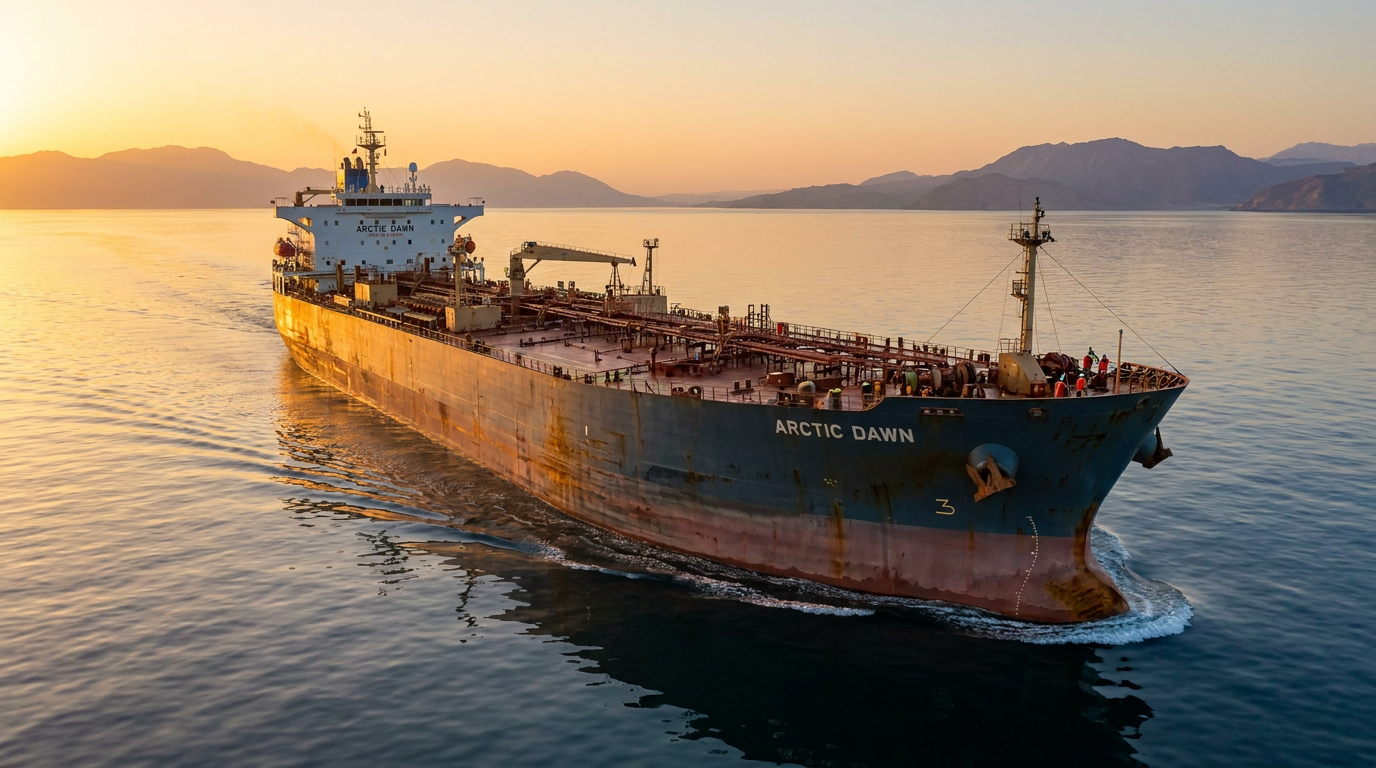
The immediate focus of the agreement is the Strait of Hormuz—a narrow, critical waterway between the Persian Gulf and the Gulf of Oman that typically handles about a fifth of the world's seaborne oil and liquefied natural gas.[5][7]
During the hostilities, which erupted on February 28, 2026, the strait was effectively blockaded, sending energy markets into a panic. Now, the Joint Maritime Information Center (JMIC) has advised that commercial vessels can resume transiting the southern route with their transponder signals turned on.[2][5]

The financial market reaction was swift and dramatic. Brent crude, the primary international benchmark for oil purchases, plummeted roughly 30% from its mid-crisis peak to trade around $78 to $80 per barrel.[3][4]
This drop in energy costs is acting as a massive pressure release valve for the global economy, directly easing fears of "stagflation"—a toxic economic condition characterized by stagnant growth combined with persistently high inflation.[2]
European markets, which are particularly sensitive to imported energy costs, have been the biggest beneficiaries of the detente. The pan-European STOXX 600 index has reclaimed its post-conflict losses and is trading near record highs.[2]
European markets, which are particularly sensitive to imported energy costs, have been the biggest beneficiaries of the detente.
Strategists at major financial institutions, including Barclays and Goldman Sachs, have upgraded their outlooks for European equities, citing the dual tailwinds of lower oil prices and stabilizing macroeconomic indicators.[2][5]

The ripple effects extend to central bank policy. With energy-driven inflation cooling, expectations for further interest rate hikes have softened. The U.S. Federal Reserve, under new Chair Kevin Warsh, and the Bank of England are now widely expected to hold rates steady.[7]
However, the physical reality of moving oil is lagging significantly behind the financial market's optimism. While the JMIC has cleared the southern route, the physical logistics of a rapid Middle East oil rebound remain fraught with deep uncertainty.[1][2]
Shipbrokers and insurance markets remain in a cautious "wait-and-see" mode. Analysts warn that it will take time for shipments to reach the market and for depleted global storage to be replenished, setting a higher floor for oil prices than before the war.[3][5]
The International Energy Agency (IEA) noted that while prices have plunged, global demand dynamics remain complex, with major importers like China having drawn down their strategic reserves rather than importing more oil during the peak of the crisis.[6]

Furthermore, the geopolitical foundation of this economic relief is highly fragile. The current agreement is only an interim 60-day measure designed to allow for further negotiations on unresolved issues.[4][5]
Iranian officials have indicated that the Strait of Hormuz will not return to pre-war conditions, floating the possibility of charging transit tolls after the 60-day toll-free period expires.[4]
Meanwhile, President Trump has publicly threatened to resume military action if Tehran fails to honor its commitments, keeping a persistent risk premium priced into global energy markets.[4]
If the deal collapses and the strait is closed again, financial models warn of severe consequences, with some projections suggesting Brent crude prices could spike to $130 per barrel by 2027.[3]
How we got here
Feb 28, 2026
Conflict erupts between the U.S. and Iran, leading to the effective blockade of the Strait of Hormuz.
April 2026
Oil prices peak as global energy markets price in a prolonged supply shock and stagflation risks.
Mid-June 2026
U.S. President Trump and Iranian President Pezeshkian sign an interim 60-day peace agreement.
June 18, 2026
The JMIC advises that commercial ships can resume using the southern route of the Strait of Hormuz.
Late June 2026
European stock markets rally to near-record highs as Brent crude prices plummet 30%.
Viewpoints in depth
Equity Investors & Strategists
Optimistic that falling energy costs will eliminate stagflation risks and boost corporate earnings.
Financial markets are pricing in a 'peace dividend.' Strategists at Barclays and Goldman Sachs argue that the reopening of the Strait of Hormuz removes the primary headwind that has suppressed European equities. By eliminating the threat of a prolonged energy shock, they believe central banks can pause rate hikes, allowing economic growth to accelerate in the second half of the year.
Energy Market Analysts
Cautious about the physical logistical hurdles that will delay a true return to normal oil flows.
Commodity experts and shipbrokers emphasize the disconnect between financial optimism and physical reality. Analysts at Morningstar and the IEA point out that clearing the southern route is only the first step. Lingering risks of sea mines, skyrocketing maritime insurance premiums, and the time required to replenish depleted global storage mean that actual oil availability will remain constrained, keeping a floor under prices.
Geopolitical Skeptics
Warning that the 60-day interim deal is fragile and could easily collapse back into conflict.
Foreign policy analysts and defense observers highlight the precarious nature of the Versailles memorandum. With Iranian officials demanding future transit tolls and President Trump threatening renewed military strikes if compliance falters, skeptics argue the risk premium has been priced out of the market prematurely. If negotiations fail, they warn of a rapid return to blockades and price spikes.
What we don't know
- Whether Iran will successfully implement transit tolls on the Strait of Hormuz after the 60-day period.
- How quickly maritime insurance premiums will normalize to allow full-scale shipping to resume.
- If the interim 60-day ceasefire will translate into a permanent peace treaty.
Key terms
- Strait of Hormuz
- A narrow waterway between the Persian Gulf and the Gulf of Oman that serves as the transit chokepoint for roughly 20% of the world's seaborne oil.
- Brent Crude
- The primary international benchmark price for purchases of oil worldwide.
- Stagflation
- An economic cycle characterized by slow growth, high unemployment, and persistently rising prices (inflation).
- Joint Maritime Information Center (JMIC)
- An international naval coalition that provides security guidance and threat assessments to commercial shipping.
- Risk Premium
- The extra cost factored into an asset's price to account for the uncertainty and potential disruption caused by geopolitical instability.
Frequently asked
What caused the recent drop in oil prices?
A preliminary 60-day peace agreement between the U.S. and Iran has allowed the Strait of Hormuz to reopen to commercial shipping, easing fears of a prolonged energy supply shock.
What is stagflation and why were markets worried about it?
Stagflation is an economic condition where slow growth is combined with high inflation. The three-month blockade of the Strait of Hormuz threatened to cause this by simultaneously driving up energy costs and slowing industrial output.
Are oil prices back to normal?
Not entirely. While Brent crude has dropped 30% from its mid-crisis peak, it remains slightly above the pre-war level of $72 per barrel due to lingering logistical and insurance hurdles.
How are central banks responding to the ceasefire?
With energy-driven inflation cooling, expectations for further interest rate hikes have softened. Both the U.S. Federal Reserve and the Bank of England are now widely expected to hold rates steady.
Sources
Source coverage
7 outlets
3 viewpoints surfaced







[1]The New York TimesEnergy Market Analysts
Mines, Logistics and Deep Uncertainty Threaten a Middle East Oil Rebound
Read on The New York Times →[2]BloombergEquity Investors & Strategists
Europe’s Stocks Are Back in the Lead as Stagflation Risks Ease
Read on Bloomberg →[3]MorningstarEnergy Market Analysts
Oil dropped on the preliminary agreement, but analysts caution against expecting a near-term return to prewar prices
Read on Morningstar →[4]The GuardianGeopolitical Skeptics
Oil prices fall after peace deal signed
Read on The Guardian →[5]The Straits TimesEnergy Market Analysts
Oil prices sink towards pre-war levels as US and Iran sign peace deal
Read on The Straits Times →[6]Financial TimesEquity Investors & Strategists
IEA notes oil prices plunged between May and mid-June
Read on Financial Times →[7]ICISEnergy Market Analysts
Oil prices fell on Thursday morning, with Brent crude trading at below $79/barrel
Read on ICIS →
Every angle. Every day.
Get business stories with full source coverage and perspective breakdowns delivered to your inbox.