
How the US Finally Built a Sustainable Professional Women's Volleyball Ecosystem
Fueled by massive collegiate viewership and over $100 million in venture capital, the United States has established two thriving professional women's volleyball leagues by 2026. The unique business models of LOVB and MLV have finally allowed American Olympians to play professionally on home soil.
By Factlen Editorial Team
- Grassroots Advocates
- Supporters of LOVB's bottom-up model believe integrating youth clubs is the key to long-term survival.
- Traditional Franchise Proponents
- Advocates for MLV argue that independent, city-based ownership backed by heavy capital is the proven American sports model.
- Market Consolidation Analysts
- Sports economists who warn that the US market cannot sustain two competing volleyball leagues indefinitely.
What's not represented
- · European Club Owners
- · Collegiate Coaches
Why this matters
For decades, America's top volleyball talent was forced to move overseas to earn a living. The successful capitalization of domestic leagues means athletes can now build lucrative careers at home, while fans gain access to world-class competition in their own cities.
Key points
- The US has successfully established a lucrative domestic professional volleyball ecosystem by 2026.
- League One Volleyball (LOVB) utilizes a grassroots model, building a built-in fanbase through its network of 77 youth clubs.
- Major League Volleyball (MLV) operates on a traditional franchise model, backed by over $100 million in venture capital.
- The two leagues allow American Olympians to play professionally at home rather than relocating to overseas leagues.
- Both leagues are expanding aggressively in 2027, though analysts debate if the market will eventually force a merger.
For decades, the best American women's volleyball players faced a frustrating professional paradox. They routinely won Olympic medals and dominated collegiate television ratings, but upon graduation, they had to pack their bags for Italy, Turkey, or Brazil to earn a living playing the sport they loved.
By 2026, that paradigm has entirely flipped. The United States is now home to a booming, heavily capitalized professional indoor volleyball ecosystem that allows homegrown stars to build lucrative careers on domestic soil.
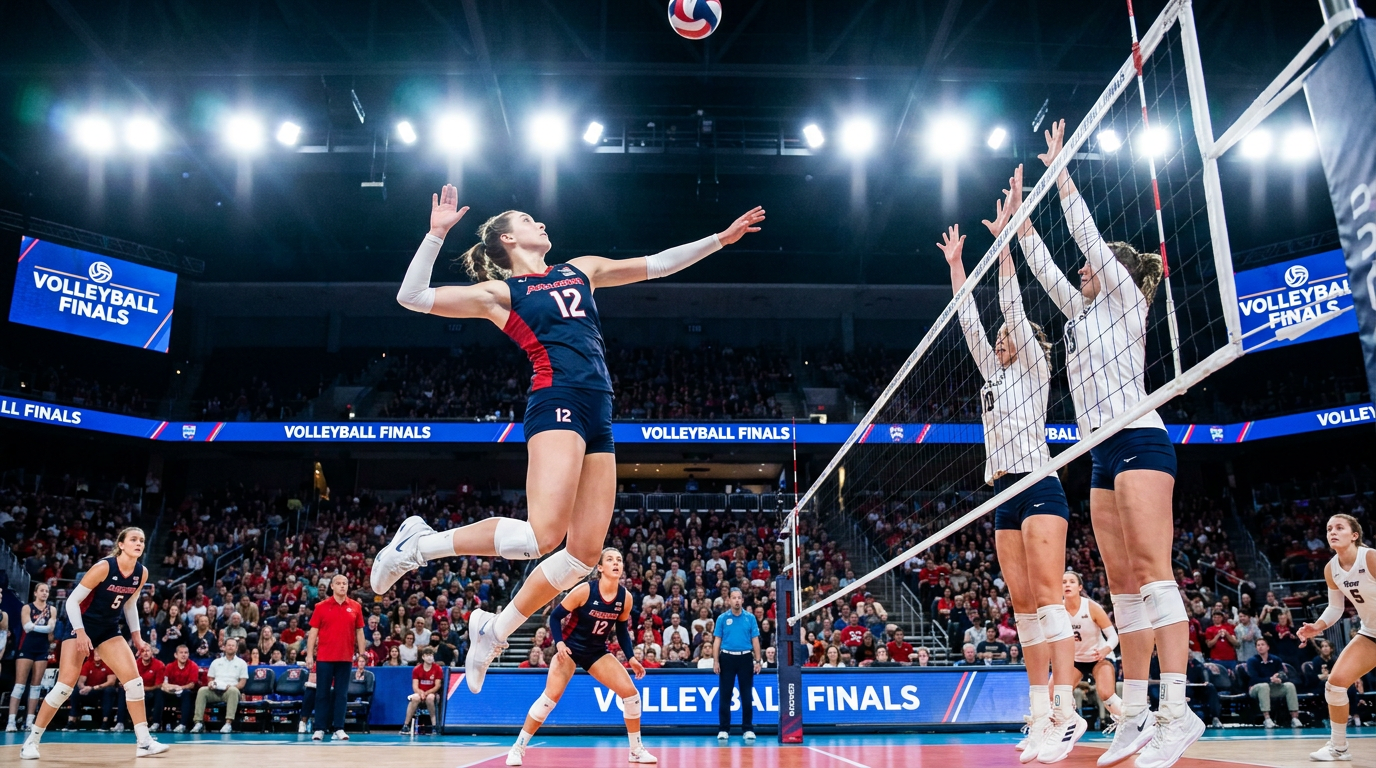
The current landscape is defined by two distinct, highly ambitious leagues: League One Volleyball (LOVB) and Major League Volleyball (MLV). Both are armed with millions in venture capital, major national broadcast deals, and rosters packed with Olympians.
The catalyst for this sudden explosion was the undeniable proof of concept provided by the collegiate game. Following massive NCAA viewership—including 1.3 billion minutes watched during the 2024 NCAA Championship and world-record stadium attendance in Nebraska—investors realized the domestic market was vastly underserved.[1]

The two leagues have taken radically different approaches to capturing that market. League One Volleyball, which launched its inaugural pro season in 2025, utilizes an unconventional, grassroots-up mechanism.[3]
Rather than simply launching a top-tier professional league from scratch, LOVB spent years acquiring and building a massive network of youth volleyball clubs across the country. By 2025, the organization boasted over 77 club locations and 22,000 youth athletes.[7]
This built-in infrastructure guarantees a localized, highly engaged fanbase. When LOVB Pro teams take the court on ESPN, the stands are filled with youth players who already wear the LOVB logo, creating an immediate consumer base for the league's six franchises.[4][7]
On the other side of the ecosystem is Major League Volleyball (MLV), which operates on a traditional, city-based franchise model similar to the NBA or NFL, complete with independent team owners.[1]
MLV's path to the 2026 season was highly dramatic. The league's roots trace back to the Pro Volleyball Federation (PVF), which launched in 2024. In early 2025, the PVF's flagship franchise, the Omaha Supernovas, announced they were breaking away to form a rival league.[6]
The league's roots trace back to the Pro Volleyball Federation (PVF), which launched in 2024.
That breakaway effort was backed by $100 million in committed funding and a heavy-hitting investor group that included Sacramento Kings owner Vivek Ranadivé, musician Jason Derulo, and Olympic beach volleyball legend Kerri Walsh Jennings.[1]
Rather than engage in a protracted, mutually destructive turf war, the PVF and the breakaway group successfully negotiated a merger in August 2025. The unified organization adopted the MLV banner for the 2026 season, consolidating eight teams—including a new Dallas franchise—under one well-funded umbrella.[5][6]

The influx of capital has fundamentally changed the financial realities for American athletes. MLV mandates strict minimum operational standards across its franchises and emphasizes athlete empowerment and revenue sharing.[1][6]
LOVB, meanwhile, has attracted its own massive investment rounds and secured multi-year broadcast agreements with ESPN and USA Network. This ensures the kind of national television visibility that drives major corporate sponsorships.[4]
For the athletes, the benefits are immediate and life-changing. Stars can now transition from collegiate stardom directly into domestic careers, playing in front of family and home-country fans rather than navigating foreign leagues and grueling international travel.[4]

Both MLV and LOVB also view the shorter, draft-based Athletes Unlimited (AU) season as a complementary piece of the puzzle. Players can now stack contracts across the different domestic leagues, earning year-round income without ever leaving the United States.[3]
Despite the unprecedented growth, sports economists and passionate fans are actively debating the long-term viability of a bifurcated market. The central question hovering over the sport is whether the United States can truly sustain two competing major leagues.[6]
History suggests that rival American sports leagues—such as the AFL and NFL, or the ABA and NBA—eventually merge to maximize media rights and avoid cannibalizing their audience. Many analysts predict a similar consolidation will eventually occur in professional volleyball.[6]

For now, however, the competition is driving rapid, aggressive expansion. MLV is preparing to add teams in Los Angeles, Washington D.C., and Northern California for 2027, while LOVB is expanding its footprint to Miami, San Francisco, and Minnesota.[2][7]
Regardless of whether the leagues eventually consolidate into a single entity, the foundational goal has already been achieved. The United States finally has a professional volleyball infrastructure worthy of its world-class talent pool.
How we got here
January 2024
The Pro Volleyball Federation (PVF) launches its inaugural season.
January 2025
League One Volleyball (LOVB) begins its first professional season, backed by its youth club network.
January 2025
The Omaha Supernovas announce their departure from PVF to form a rival league with $100 million in backing.
August 2025
PVF and the breakaway group merge to form Major League Volleyball (MLV).
January 2026
Both LOVB and the newly unified MLV launch their highly anticipated 2026 seasons.
Viewpoints in depth
Grassroots Advocates
Supporters of LOVB's bottom-up model believe integrating youth clubs is the key to long-term survival.
This camp argues that traditional top-down sports leagues often fail because they lack an organic connection to the community. By acquiring and operating dozens of youth volleyball clubs, League One Volleyball has engineered a built-in consumer base. When a LOVB Pro team plays, the local youth players and their families are already invested in the brand, creating a sustainable revenue stream through club fees, merchandise, and guaranteed ticket sales that doesn't rely solely on fickle broadcast ratings.
Traditional Franchise Proponents
Advocates for MLV argue that independent, city-based ownership backed by heavy capital is the proven American sports model.
Proponents of Major League Volleyball point to the success of the NBA, NFL, and NWSL as proof that the franchise model works best. By securing over $100 million in funding from high-profile investors like Vivek Ranadivé and Jason Derulo, MLV can afford to market aggressively, secure top-tier arenas, and pay competitive salaries immediately. They argue that independent owners competing against one another drives innovation and local market penetration faster than a single-entity grassroots organization.
Market Consolidation Analysts
Sports economists who warn that the US market cannot sustain two competing volleyball leagues indefinitely.
While celebrating the influx of capital, this camp points to the history of American sports—from the AFL-NFL merger to the absorption of the WHA into the NHL. They argue that competing leagues inevitably cannibalize each other's talent pools, drive up player salaries to unsustainable levels, and fracture the television audience. These analysts predict that within a few years, LOVB and MLV will be forced to merge to negotiate a unified, highly lucrative media rights deal.
What we don't know
- Whether the US sports market can generate enough television and sponsorship revenue to sustain two competing volleyball leagues long-term.
- If LOVB and MLV will eventually merge to consolidate their media rights, similar to historic mergers in other American sports.
- How the growth of lucrative domestic leagues will impact the talent pool and dominance of traditional European powerhouses like Italy and Turkey.
Key terms
- League One Volleyball (LOVB)
- A professional league built on a grassroots model, utilizing a massive network of youth clubs to build a built-in fanbase for its pro teams.
- Major League Volleyball (MLV)
- A traditional franchise-model league formed by the 2025 merger of the Pro Volleyball Federation (PVF) and a breakaway investor group.
- Athletes Unlimited (AU)
- A complementary, shorter-season professional league where players earn individual points and teams are drafted weekly.
- Revenue Sharing
- A financial model where players receive a percentage of the league's overall income, implemented by MLV from its inception.
Frequently asked
Why did US players previously have to play overseas?
Despite dominating the Olympics, the US lacked a financially viable domestic professional league, forcing athletes to sign with clubs in Italy, Turkey, and Brazil to earn a living.
What is the difference between LOVB and MLV?
LOVB uses a bottom-up model, owning dozens of youth clubs that feed into and support the pro teams. MLV uses a traditional top-down franchise model with independent team owners in specific cities.
Will the two leagues eventually merge?
While there are no official plans, many fans and sports economists speculate that LOVB and MLV may eventually merge to consolidate media rights, similar to historic mergers in basketball and football.
Sources
Source coverage
7 outlets
3 viewpoints surfaced







[1]SportsProTraditional Franchise Proponents
New US$100m women's volleyball league to launch in 2026
Read on SportsPro →[2]ForbesTraditional Franchise Proponents
Major League Volleyball Ends Year Three With Record Growth
Read on Forbes →[3]USA VolleyballGrassroots Advocates
LOVB, PVF Pro Women's Leagues Begin 2025 Seasons
Read on USA Volleyball →[4]ESPNGrassroots Advocates
ESPN presents LOVB's 2026 professional volleyball season
Read on ESPN →[5]WFAATraditional Franchise Proponents
Professional volleyball is coming to Dallas in 2026
Read on WFAA →[6]Volleyball StateMarket Consolidation Analysts
MLV, PVF merge into new league for 2026
Read on Volleyball State →[7]WikipediaGrassroots Advocates
LOVB Pro
Read on Wikipedia →

Every angle. Every day.
Get sports stories with full source coverage and perspective breakdowns delivered to your inbox.