
How the Strait of Malacca Controls 30% of Global Maritime Trade
A narrow 500-mile waterway between Indonesia and Malaysia serves as the primary artery for global shipping, handling over 90,000 vessels annually and 80% of China's oil imports.

- Energy-Importing Nations
- View the strait as a critical vulnerability and seek to diversify routes to ensure energy security.
- Littoral States
- Focus on sovereignty, environmental protection, and managing the immense traffic safely while avoiding great-power conflict.
- Global Maritime Industry
- View the strait through the lens of risk premiums, transit efficiency, and supply chain continuity.
Perspectives this story doesn't cover
- Local coastal fishing communities
- Environmental conservation groups monitoring marine ecosystems
Why this matters
The global economy relies on this single 2.8-kilometer-wide bottleneck. Any disruption—whether from geopolitical conflict, piracy, or a major maritime accident—would instantly sever the shortest route between Middle Eastern energy suppliers and East Asian manufacturing hubs, triggering worldwide supply chain failures and energy price spikes.
At its narrowest point near the coast of Singapore, the Phillips Channel tightens to a width of just 2.8 kilometers. Through this confined stretch of water, the global economy pulses. Every day, an average of 210 massive commercial vessels navigate the passage, forming a continuous, slow-moving convoy of supertankers, container ships, and bulk carriers. This is the Strait of Malacca, a geographic bottleneck that dictates the pace and price of international trade.
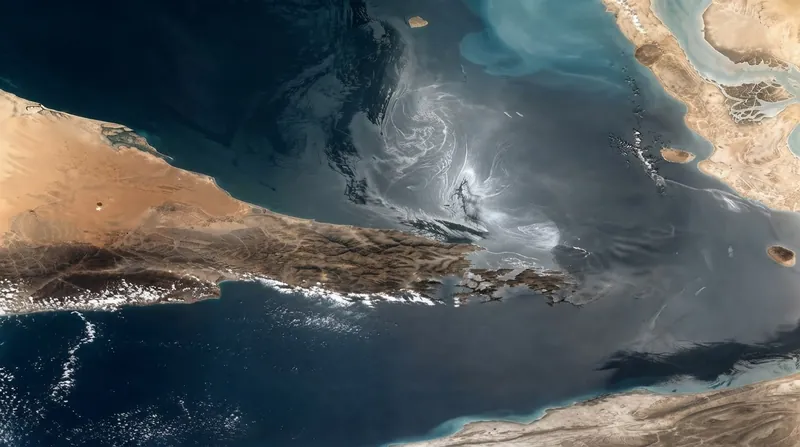
Spanning approximately 800 kilometers, the funnel-shaped strait runs between the Indonesian island of Sumatra to the west and the Malay Peninsula to the east. It serves as the shortest and most efficient maritime corridor connecting the Indian Ocean to the South China Sea and the broader Pacific. By linking the energy producers of the Middle East with the manufacturing powerhouses of East Asia, the waterway has become the undisputed central artery of global shipping.[1][2]
The sheer volume of traffic is staggering. More than 90,000 merchant vessels transit the strait annually, carrying between 25 and 30 percent of all global seaborne trade. The cargo includes everything from Chinese manufactured electronics and Indonesian coal to palm oil and agricultural staples. But the strait's most critical function is the transportation of energy.[2][3]
The U.S. Energy Information Administration identifies the Strait of Malacca as the primary oil chokepoint in Asia, and the second-largest in the world after the Strait of Hormuz. An estimated 15 to 17 million barrels of oil flow through the passage every single day. Furthermore, the strait handles approximately 40 percent of the world's liquefied natural gas (LNG) shipments, primarily bound for energy-hungry markets in Japan, South Korea, and China.[1]
For Beijing, this geographic reality represents a profound strategic vulnerability. In 2003, then-President Hu Jintao coined the term "Malacca Dilemma" to describe China's acute reliance on the waterway. Approximately 80 percent of China's imported crude oil must transit the strait to reach its eastern seaboard. If a hostile power were to blockade the channel during a conflict, the Chinese economy would face immediate and catastrophic energy shortages.[2][3]
For Beijing, this geographic reality represents a profound strategic vulnerability.
To mitigate this risk, China has spent decades attempting to bypass the bottleneck. Through its Belt and Road Initiative, Beijing has financed overland oil and gas pipelines from Myanmar's coast to Yunnan province, as well as energy corridors stretching through Central Asia and Russia. Despite these massive infrastructure investments, the sheer scale of China's energy consumption means the maritime route remains irreplaceable.[2][4]
The alternatives to the Strait of Malacca offer little relief for global shipping. If the primary channel were blocked or deemed too dangerous, vessels would be forced to reroute southward through the Indonesian archipelago, utilizing either the Sunda Strait or the Lombok Strait.[1]
However, these detours come with severe logistical penalties. Diverting a supertanker through the Lombok Strait adds roughly seven to ten days to a voyage between the Persian Gulf and East Asia. The Sunda Strait, meanwhile, is plagued by shallow waters and shifting sandbanks, making it impassable for the largest class of crude carriers. A forced rerouting of global fleets would instantly absorb excess shipping capacity, sending freight rates and energy prices soaring.[1][4]
The burden of managing this vital corridor falls on the littoral states: Indonesia, Malaysia, and Singapore. These nations must coordinate complex traffic separation schemes to prevent collisions in the congested waters, while also bearing the environmental risks of potential oil spills. The shallow depth of the strait—averaging just 25 meters in some areas—leaves virtually no margin for navigational error for fully laden supertankers.[2][4]
Security remains a persistent concern. Historically, the strait's narrow channels and myriad coastal inlets made it a notorious haven for piracy. While coordinated naval patrols by the Association of Southeast Asian Nations (ASEAN) have drastically reduced the frequency of hijackings since the early 2000s, the threat has not been entirely eliminated. Any cluster of security incidents can trigger immediate spikes in war-risk insurance premiums, which are ultimately passed on to consumers worldwide.[2]
Today, the strategic calculus surrounding the strait is increasingly defined by great-power competition. As geopolitical tensions rise in the Indo-Pacific, military planners in Washington, Beijing, and regional capitals are acutely aware that control of maritime chokepoints can dictate the outcome of broader conflicts. The ability to deny access to the Strait of Malacca remains one of the most potent, if unspoken, deterrents in modern naval strategy.[3]
Despite advances in overland logistics and pipeline engineering, the fundamental realities of global geography remain unchanged. The Strait of Malacca stands as a stark reminder that the modern, interconnected global economy still relies entirely on a few narrow stretches of water, vulnerable to the whims of geopolitics, weather, and human error.[4]
Key points
- The Strait of Malacca handles 25 to 30 percent of all global seaborne trade, including 90,000 vessels annually.
- The 500-mile waterway serves as the shortest route connecting the Indian Ocean to the South China Sea.
- Approximately 80 percent of China's imported crude oil transits the strait, creating a strategic vulnerability known as the 'Malacca Dilemma.'
- Alternative routes through the Indonesian archipelago would add up to 10 days to voyages, significantly increasing global shipping costs.
Sources
Source coverage
4 outlets
3 viewpoints surfaced




- [1]U.S. Energy Information AdministrationGlobal Maritime Industry
World Oil Transit Chokepoints
Read on U.S. Energy Information Administration → - [2]WikipediaEnergy-Importing Nations
Strait of Malacca
Read on Wikipedia → - [3]Lowy InstituteLittoral States
The strategic relevance of maritime choke points
Read on Lowy Institute → - [4]Factlen Editorial TeamGlobal Maritime Industry
Synthesis by Factlen editorial team
Read on Factlen Editorial Team →
Comments
More in World
See all →Ethiopian Conflict
Ethiopian Federal Forces Recapture Alamata as Northern Conflict Resumes
5 sources

Border Security
South Korea Blames North Korean Mines for DMZ Blast That Injured Three Officers
6 sources

Caribbean Security
US Army Reserve Assesses Readiness of Six Units for Potential Cuba Operation
3 sources

Sanctions Policy
EU Secures Three-Year Russia Sanctions Extension in Exchange for Delisting Two Billionaires
8 sources

Every angle. Every day.
Get World stories with full source coverage and perspective breakdowns delivered to your inbox.