
How the Gut-Brain Axis and Psychobiotics Are Reshaping Mental Health Treatment
Emerging research in nutritional psychiatry reveals that the gut microbiome plays a critical role in emotional regulation, paving the way for diet and targeted 'psychobiotics' to help treat anxiety and depression.
By Factlen Editorial Team
- Nutritional Psychiatrists
- Advocate for whole-food dietary interventions as a primary tool for mental health.
- Microbiome Researchers
- Focus on isolating specific psychobiotic strains for targeted neurological therapies.
- Skeptical Clinicians
- Urge caution regarding commercial supplements, demanding more rigorous human trials.
What's not represented
- · Patients with severe, treatment-resistant depression who have not responded to dietary changes
- · Agricultural economists analyzing the accessibility and affordability of whole-food diets for low-income populations
Why this matters
Understanding the gut-brain connection empowers individuals to take an active role in their mental well-being through everyday dietary choices. It shifts the treatment paradigm for anxiety and depression from relying solely on pharmaceuticals to incorporating accessible, whole-food interventions.
Key points
- The emerging field of nutritional psychiatry links gut health directly to emotional and cognitive well-being.
- Approximately 95% of the body's serotonin is produced in the gastrointestinal tract, not the brain.
- Specific bacterial strains, known as psychobiotics, can actively manufacture neuroactive compounds like GABA and dopamine.
- Traditional, fiber-rich diets are associated with a 25% to 35% lower risk of depression compared to Western diets.
For decades, mental health treatment has focused almost exclusively on the brain. But a quiet revolution in neuroscience and gastroenterology is shifting the spotlight downward. The emerging field of "nutritional psychiatry" suggests that the key to managing anxiety, depression, and cognitive decline might lie not just in our neurochemistry, but in our intestines. By treating the digestive system as a primary driver of emotional health, researchers are unlocking entirely new, accessible pathways for psychological care.[1][7]
The concept sounds radical, but it is deeply rooted in fundamental human anatomy. The human gastrointestinal tract is lined with an astonishing network of approximately 100 million nerve cells, forming what scientists formally call the enteric nervous system. This complex, highly sophisticated neural network is so extensive and capable of independent function that researchers frequently refer to it as the body's "second brain." It governs the intricate mechanics of digestion, but its influence extends far beyond breaking down food, playing a pivotal role in our emotional and psychological well-being.[1][6]
The communication between the brain and the gut is constant and bidirectional, facilitated by a physical and chemical superhighway known as the gut-brain axis. The primary physical conduit is the vagus nerve, which runs directly from the brainstem to the abdomen. Through this pathway, a troubled intestine can send distress signals to the brain, just as a stressed brain can trigger gastrointestinal discomfort. This explains why public speaking can cause "butterflies" in the stomach, or why chronic stress often manifests as digestive distress.[1][4]
But the chemical communication is where the most groundbreaking and counterintuitive discoveries are currently happening. Serotonin, a crucial neurotransmitter that helps regulate sleep cycles, appetite, and mood, is heavily targeted by traditional antidepressant medications like SSRIs. Because it dictates so much of our mental state, it is natural to assume it is primarily manufactured in the brain. Yet, scientific consensus reveals that approximately 95% of the body's serotonin is actually produced in the gastrointestinal tract. This staggering statistic underscores why digestive health is inextricably linked to emotional stability.[1]

This production is highly influenced by the trillions of microorganisms residing in the digestive system—the gut microbiome. These bacteria do not merely passively digest food; they actively manufacture neuroactive compounds. When the microbiome is balanced and thriving, it produces an optimal supply of these mood-stabilizing chemicals. When it is in a state of "dysbiosis," or imbalance, the supply chain falters, potentially starving the brain of the chemical messengers it needs to maintain emotional equilibrium.[4][5]
The clinical evidence linking specific bacterial populations to mental health outcomes is moving rapidly from theoretical frameworks to robust, population-level data. In a landmark study analyzing comprehensive health data from 2,539 adults in the Netherlands, researchers found consistent, measurable connections between the presence of certain gut bacteria and the severity of symptoms of depression. By cross-referencing detailed fecal microbiome analyses with extensive mental health surveys, the study provided some of the clearest evidence to date that our microbial inhabitants directly correlate with our psychological state.[2]
Digging deeper into the data, the researchers identified that an overabundance of a specific bacterium, Eggerthella, was strongly and consistently associated with depressive symptoms across the study cohort. Conversely, a depleted population of Subdoligranulum bacteria correlated with the presence of clinical depression. These granular findings are revolutionary because they move the science beyond vague, generalized notions of "gut health" and into the precise realm of identifying specific microbial biomarkers for mental illness, paving the way for highly targeted diagnostic tools and therapies.[2]
Animal studies have provided even more startling evidence of causality, demonstrating that the microbiome doesn't just reflect mental states—it can actively create them. In highly controlled laboratory experiments, researchers have taken fecal microbiota from human patients diagnosed with clinical depression and transferred it into the digestive tracts of germ-free mice. Remarkably, the recipient mice subsequently began exhibiting recognizable depression-like behaviors and anxiety responses. This suggests that microbial imbalances can actively induce psychiatric symptoms, fundamentally challenging the traditional view that depression originates exclusively within the brain.[4]
Animal studies have provided even more startling evidence of causality, demonstrating that the microbiome doesn't just reflect mental states—it can actively create them.
This growing understanding has given rise to a new class of therapeutic interventions known as "psychobiotics." Defined as live microorganisms that confer mental health benefits when ingested in adequate amounts, psychobiotics represent a targeted approach to modulating the gut-brain axis. Rather than treating the brain with systemic pharmaceuticals, psychobiotics aim to heal the gut so that it naturally produces the neurochemicals required for mental wellness.[3][5]
Unlike generic probiotics found in standard yogurt or over-the-counter digestive supplements, psychobiotics involve specific, clinically studied strains—such as certain Lactobacillus and Bifidobacterium species—that have demonstrated the ability to influence neural pathways. These specific strains can modulate the production of gamma-aminobutyric acid (GABA) and dopamine, neurotransmitters that are absolutely integral to emotional regulation, stress response, and complex cognitive processing.[3][5]

Beyond neurotransmitter production, psychobiotics appear to exert profound effects on systemic inflammation. Chronic, low-grade inflammation is increasingly recognized as a major underlying driver of conditions like depression and anxiety. Specific gut bacteria help regulate the immune response, reducing the production of pro-inflammatory cytokines that can cross the blood-brain barrier and disrupt neural function. By calming the immune system in the gut, psychobiotics effectively lower the inflammatory burden on the brain.[3][4]
While the prospect of a "mood pill" containing beneficial bacteria is enticing, researchers caution that we cannot simply supplement our way out of a poor diet. The foundation of a healthy microbiome—and by extension, a healthy gut-brain axis—remains the food we consume every day. Supplements can introduce beneficial bacteria, but those bacteria require the right dietary environment to survive and multiply.[6][7]
Observational studies conducted across diverse global populations consistently show that broad dietary patterns heavily influence an individual's baseline mental health risk. Researchers have found that individuals adhering to "traditional" diets—most notably the Mediterranean diet or the traditional Japanese diet—exhibit a remarkable 25% to 35% lower risk of developing depression compared to those consuming a typical Western diet. These traditional eating patterns are naturally rich in vegetables, fruits, unprocessed grains, and healthy fats, providing the exact nutritional profile required to sustain a diverse, resilient microbiome.[1]

In stark contrast, the standard Western diet, characterized by high intakes of ultra-processed foods, refined sugars, and saturated fats, actively promotes a state of gut dysbiosis. Ultra-processed foods often contain artificial emulsifiers, preservatives, and additives that can degrade the protective mucosal lining of the intestines. Over time, this degradation leads to increased intestinal permeability—a condition frequently referred to as "leaky gut." When the gut barrier is compromised, inflammatory molecules and bacterial toxins can easily escape into the bloodstream, triggering a systemic immune response that ultimately reaches the brain.[4]
Conversely, plant-forward diets rich in fiber act as "prebiotics," providing the essential fuel that beneficial gut bacteria need to thrive. When these microbes ferment dietary fiber in the lower intestine, they produce short-chain fatty acids (SCFAs) like butyrate. These SCFAs have potent anti-inflammatory properties, provide energy to the cells lining the colon, and play a crucial role in maintaining the structural integrity of the blood-brain barrier, protecting the brain from circulating toxins.[4][5]
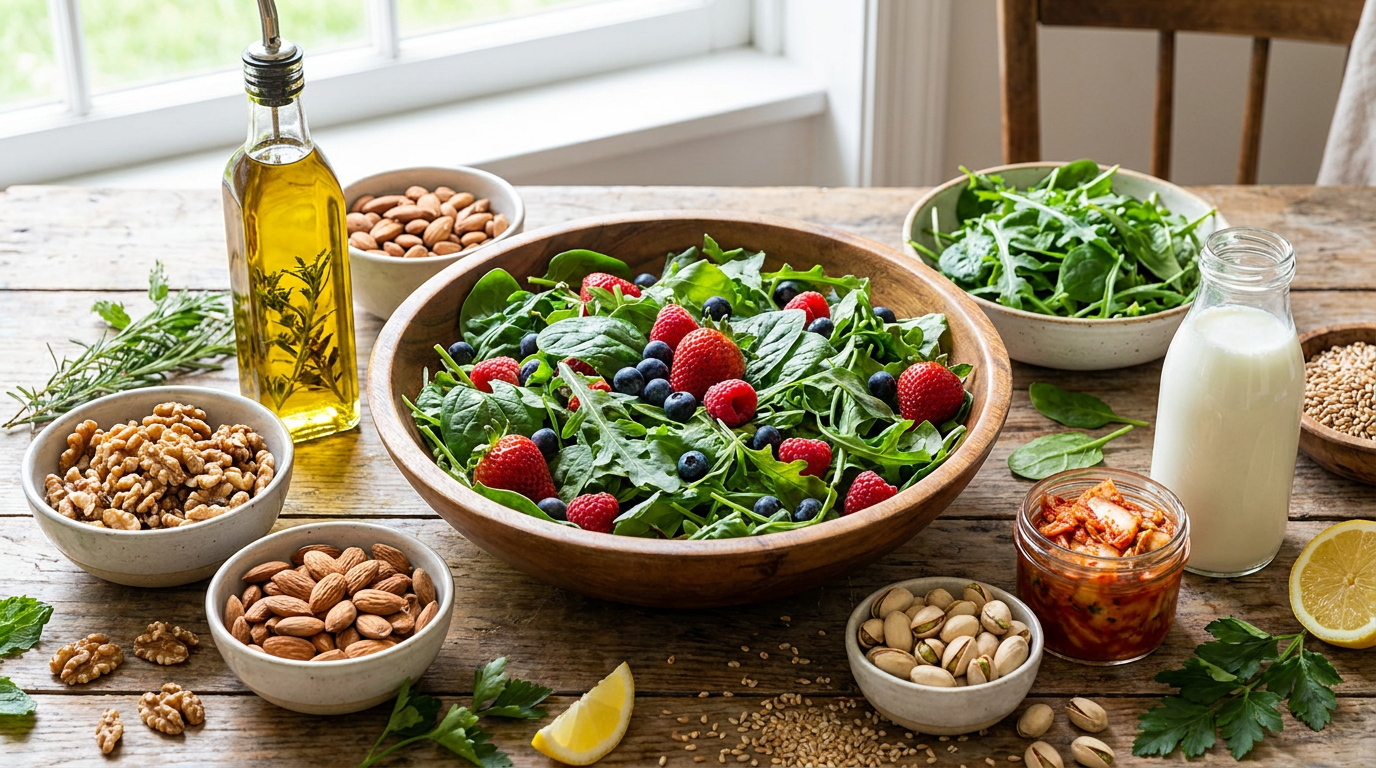
Beyond simply adding more fiber, incorporating naturally fermented foods into the daily diet is another highly effective, evidence-based strategy for introducing diverse, beneficial microbes directly into the digestive tract. Foods such as kefir, kimchi, traditional sauerkraut, and kombucha undergo lacto-fermentation, a process that cultivates robust populations of live probiotics. Nutritional psychiatrists increasingly recommend these accessible, whole-food sources as a frontline, low-risk intervention for patients struggling with mood disorders, emphasizing that dietary additions are often more sustainable and effective than restrictive dieting.[6]
Despite the immense promise of nutritional psychiatry, the field is still navigating significant uncertainties. The human microbiome is incredibly complex and highly individualized, meaning a dietary intervention or psychobiotic strain that works miracles for one person might have negligible effects on another. The scientific community is currently working toward "precision nutrition," aiming to map individual microbiomes to prescribe highly tailored dietary and probiotic interventions.[5][7]
Furthermore, researchers face significant technical and methodological challenges in accurately quantifying how these neuroactive compounds travel from the gut to the brain in living human subjects. Current mass spectrometry and measurement techniques often lack the extreme sensitivity required to track trace metabolites as they navigate the complex pathways of the human body. This makes it difficult to map the exact biochemical mechanisms with absolute certainty, leaving scientists to rely heavily on indirect evidence and preclinical animal models to piece together the full picture of the gut-brain axis.[5]
Nevertheless, the paradigm shift currently underway in both psychiatry and gastroenterology appears irreversible. The realization that mental health is inextricably linked to our daily dietary choices offers a profoundly empowering and hopeful message for the general public. While severe, clinical psychiatric conditions will always require comprehensive, professional medical care and potentially pharmaceutical intervention, the food on our plates represents a daily, highly accessible opportunity to actively nourish not just our physical bodies, but our emotional resilience and long-term mental well-being.[1][7]
How we got here
Early 2010s
The concept of the gut-brain axis gains mainstream scientific traction following landmark studies on germ-free mice.
2013
The term 'psychobiotics' is officially coined to describe live organisms that produce health benefits in patients suffering from psychiatric illness.
2017
The SMILES trial becomes one of the first randomized controlled trials to demonstrate that dietary improvement can effectively treat major depressive episodes.
2022
Large-scale population studies identify specific bacterial strains, such as Eggerthella, that strongly correlate with human depression.
2025
Research accelerates into 'personalized psychobiotics,' aiming to tailor microbial treatments to individual genetic and metabolic profiles.
Viewpoints in depth
Nutritional Psychiatrists
Focus on clinical dietary interventions as a foundational treatment for mental health.
This camp argues that mental health treatment must move beyond the neck. They advocate for prescribing dietary changes—specifically the Mediterranean diet and fermented foods—alongside or even before traditional pharmaceuticals for mild to moderate depression. They emphasize that while supplements have their place, whole foods provide a complex matrix of fibers and polyphenols that isolated pills cannot replicate.
Microbiome Researchers
Focus on isolating specific bacterial strains and mapping exact metabolic pathways.
Scientists in the laboratory setting are focused on precision. They argue that the future of mental health lies in 'personalized psychobiotics'—identifying exactly which bacterial strains a patient lacks (such as Subdoligranulum) and administering targeted, clinical-grade probiotics to restore balance. They prioritize rigorous, placebo-controlled human trials to prove causality and establish exact dosages.
Skeptical Clinicians
Urge caution against overhyping commercial probiotics before large-scale human trials are conclusive.
While acknowledging the reality of the gut-brain axis, this camp warns against the commercialization of 'mood probiotics.' They point out that many over-the-counter supplements do not survive stomach acid, and that animal studies (like fecal transplants in mice) do not always translate perfectly to human neurobiology. They advocate for conservative clinical guidelines until more robust human data is available.
What we don't know
- Exactly how specific neuroactive compounds produced in the gut successfully cross the blood-brain barrier in living humans.
- The precise dosages and specific bacterial strains required to reliably treat different types of anxiety or depression.
- How an individual's unique genetic background alters their response to psychobiotic interventions.
Key terms
- Gut-Brain Axis
- The bidirectional communication network linking the central nervous system (the brain) with the enteric nervous system (the gut).
- Enteric Nervous System
- A vast network of approximately 100 million nerve cells lining the gastrointestinal tract, often referred to as the body's 'second brain'.
- Psychobiotics
- Specific strains of beneficial gut bacteria that have been shown to positively influence mental health and cognitive function.
- Dysbiosis
- An imbalance or maladaptation of the microbial communities in the gut, often linked to systemic inflammation and disease.
- Short-Chain Fatty Acids (SCFAs)
- Beneficial compounds produced when gut bacteria ferment dietary fiber, known for their powerful anti-inflammatory properties.
Frequently asked
Can changing my diet actually cure depression?
Diet is not a guaranteed cure for severe clinical depression, which often requires comprehensive medical treatment. However, research shows that improving diet quality can significantly reduce symptoms and lower the overall risk of developing mood disorders.
What are psychobiotics?
Psychobiotics are specific strains of live bacteria (probiotics) that, when ingested in adequate amounts, confer mental health benefits by interacting with the gut-brain axis.
Should I take a probiotic supplement for my mood?
While targeted psychobiotic supplements show promise in clinical trials, many experts recommend starting with a diet rich in fiber and naturally fermented foods (like kefir and kimchi) to sustainably improve gut health.
How does the gut communicate with the brain?
The gut and brain communicate bidirectionally through the vagus nerve, immune system signaling, and the production of neurotransmitters like serotonin, 95% of which is manufactured in the digestive tract.
Sources
Source coverage
7 outlets
3 viewpoints surfaced







[1]Harvard Health PublishingNutritional Psychiatrists
Nutritional psychiatry: Your brain on food
Read on Harvard Health Publishing →[2]UCLA HealthMicrobiome Researchers
Research says gut-brain axis plays role in mental health
Read on UCLA Health →[3]Frontiers in NutritionMicrobiome Researchers
Transforming mental health: the future of personalized psychobiotics in anxiety and depression therapy
Read on Frontiers in Nutrition →[4]MDPIMicrobiome Researchers
Diet–Microbiome–Brain Axis and Mental Health: Biological Mechanisms and Nutritional Implications
Read on MDPI →[5]Critical Reviews in Food Science and NutritionSkeptical Clinicians
Psychobiotics and the gut-brain axis: advances in metabolite quantification and their implications for mental health
Read on Critical Reviews in Food Science and Nutrition →[6]University of Toronto EPICSkeptical Clinicians
Nourishing young minds: Exploring the link between adolescent mental health and the gut microbiome
Read on University of Toronto EPIC →[7]Factlen Editorial TeamNutritional Psychiatrists
Synthesis by Factlen editorial team
Read on Factlen Editorial Team →

Every angle. Every day.
Get food drink stories with full source coverage and perspective breakdowns delivered to your inbox.