
How the EU's 2027 Battery Mandate is Forcing a Smartphone Design Revolution
A landmark European Union regulation requiring user-replaceable batteries or unprecedented durability is poised to drastically extend the lifespan of smartphones worldwide.
By Factlen Editorial Team
- Right-to-Repair Advocates
- Celebrate the mandate as a victory over planned obsolescence that will empower consumers and reduce e-waste.
- Smartphone Manufacturers
- Focus on meeting the strict durability exemptions to maintain premium, water-resistant designs without returning to fully modular hardware.
- Environmental Policymakers
- Emphasize the urgent need to curb the millions of tonnes of electronic waste generated annually by forcing companies to support devices longer.
What's not represented
- · Independent repair shop owners
- · Battery chemistry researchers
Why this matters
Starting in February 2027, a landmark European Union regulation will fundamentally change how smartphones are built, forcing manufacturers to either make batteries easily replaceable by users or engineer them to last significantly longer. Because tech giants rarely design separate hardware for different regions, this European mandate will effectively extend the lifespan of phones worldwide, saving consumers money and drastically reducing electronic waste.
Key points
- The EU will require all new smartphones to have user-replaceable batteries by February 2027.
- Manufacturers can bypass the rule if their batteries retain 80% capacity after 1,000 charge cycles.
- The use of chemical solvents and heat guns for battery removal will be strictly prohibited.
- Companies must guarantee the availability of spare parts for seven years after a device is discontinued.
- Because tech giants rely on global supply chains, the EU rules will likely become the worldwide standard.
The era of the disposable smartphone is drawing to a close. By February 18, 2027, the European Union's sweeping Battery Regulation will take full effect, forcing a massive structural redesign across the consumer electronics industry. The legislation targets the most common failure point in modern technology, aiming to keep devices in users' hands for years longer than the current industry average.[1][3]
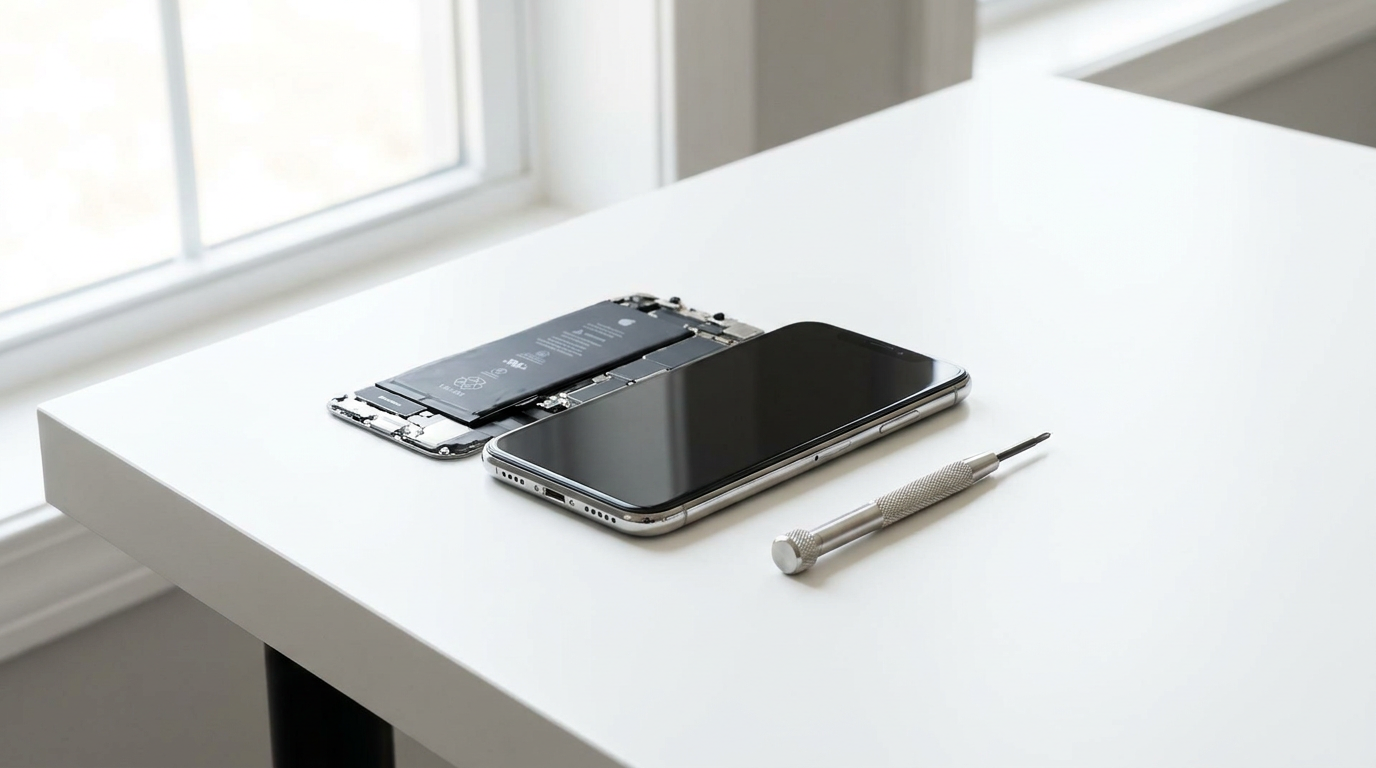
At the heart of the new mandate is a simple requirement: portable devices must be designed so that end users can remove and replace the battery using only commercially available tools. Manufacturers will be prohibited from using specialized equipment, heat guns, or chemical solvents to bind batteries to the chassis, effectively outlawing the aggressively sealed designs that have dominated the market for the past decade.[2][8]
While the law technically only applies to devices sold within the European Union, its impact will be global. The mechanics of mass production dictate that tech giants like Apple, Samsung, and Google are highly unlikely to design and manufacture entirely separate hardware architectures just for the European market. Consequently, the EU's environmental policy is poised to become the new baseline standard for smartphones worldwide.[1][6]

However, the regulation does not necessarily mean a return to the pop-off plastic backs of the early 2010s. The law includes a crucial "durability exemption" for premium devices. If a smartphone carries an IP67 water-resistance rating and its battery can retain at least 80 percent of its original capacity after 1,000 full charge cycles, it is legally exempt from the user-replaceable requirement.[4][6][8]
This exemption is currently driving a quiet revolution in battery chemistry. Rather than completely abandoning the ultra-thin, glass-and-metal aesthetics that consumers prefer, major manufacturers are heavily investing in high-endurance cells to meet the 1,000-cycle threshold. For consumers, this loophole is a massive win, as it guarantees that even sealed flagship phones will last significantly longer before their batteries begin to degrade.[6][8]
This exemption is currently driving a quiet revolution in battery chemistry.
For devices that do not meet the strict durability exemption—or for when those high-endurance batteries eventually do fail—the EU has established a robust repairability safety net. A companion directive mandates that manufacturers must keep replacement batteries and other critical components available for at least seven years after a specific model is discontinued from the market.[4][5]

To prevent companies from discouraging repairs through exorbitant pricing, the regulation explicitly stipulates that these spare parts must be offered at "reasonable and non-discriminatory" costs. This ensures that swapping a battery remains a financially viable alternative to purchasing a brand-new handset, fundamentally altering the economic calculus of smartphone ownership.[3]
The environmental stakes driving this legislation are massive. The European Union currently generates roughly five million tonnes of electronic waste annually, with only about 40 percent of that material being properly recycled. Policymakers identified battery degradation as the primary catalyst for this waste, as consumers frequently discard otherwise perfectly functional hardware simply because it can no longer hold a charge through the day.[3][4]

The scope of the legislation also extends far beyond smartphones. Tablets, laptops, and even wireless earbuds will be subject to the new rules. The extreme miniaturization required for in-ear headphones presents a particularly daunting engineering challenge, as manufacturers must figure out how to make tiny, densely packed batteries accessible without destroying the product's form factor.[6]
As 2026 progresses, the smartphone industry is racing to finalize its compliance strategies. The upcoming wave of 2027 flagship devices will serve as the first major test of this new regulatory landscape, revealing whether the market will lean toward modular repairability or an era of unprecedented battery endurance.[1][2]
How we got here
2009
The EU issues its initial Ecodesign Regulation, beginning a long-term focus on the environmental impact of consumer electronics.
August 2023
The European Union officially passes the Battery and Waste Battery Regulation, setting the stage for mandatory replaceability.
June 2025
The EU implements standardized energy efficiency labels for all smartphones sold within the bloc.
February 18, 2027
The final deadline for all new portable electronics sold in the EU to feature user-replaceable batteries or meet strict durability exemptions.
Viewpoints in depth
Right-to-Repair Advocates
A victory for consumer ownership and the end of disposable tech.
For years, repair advocates have argued that sealing batteries behind layers of industrial adhesive is a deliberate tactic to enforce planned obsolescence. By making battery replacement a costly and risky procedure, manufacturers effectively put an expiration date on otherwise perfectly functional hardware. Advocates view the EU mandate as a structural triumph that returns ownership to the consumer. Even if companies opt for the durability exemption, advocates note that forcing batteries to last 1,000 cycles still achieves the ultimate goal: keeping phones in users' hands and out of landfills for years longer than the current industry average.
Smartphone Manufacturers
Balancing the new legal requirements with consumer demands for premium, waterproof designs.
Hardware engineers and major tech brands are navigating a complex design challenge. Consumers have grown accustomed to ultra-thin, glass-and-metal smartphones that can survive being dropped in a swimming pool—features that are inherently difficult to maintain with a user-removable back panel. Consequently, most premium manufacturers are heavily investing in advanced battery chemistry to qualify for the EU's durability exemption. By engineering cells that retain 80% of their capacity after 1,000 charge cycles and maintaining an IP67 water-resistance rating, companies can legally keep their sealed designs while still complying with the spirit of the environmental regulation.
Environmental Policymakers
Targeting the root cause of Europe's mounting electronic waste crisis.
From a regulatory perspective, the battery mandate is just one piece of a broader legislative net designed to force a circular economy. The European Union generates roughly five million tonnes of electronic waste annually, with a recycling rate of only 40%. Policymakers identified battery degradation as the primary catalyst for premature device abandonment. By legally requiring manufacturers to either make batteries swappable or drastically improve their longevity—and by mandating that spare parts remain available for seven years—regulators are shifting the financial burden of e-waste back onto the companies that design the hardware.
What we don't know
- Whether manufacturers will pass the increased research and development costs of high-endurance batteries onto consumers.
- How the regulation will affect the design and size of highly miniaturized devices like wireless earbuds.
- Whether budget smartphone lines will adopt modular, user-replaceable designs while premium lines rely on the durability exemption.
Key terms
- Planned Obsolescence
- The industry practice of designing products with an artificially limited useful life so that consumers will generate repeat sales.
- Charge Cycle
- The process of fully charging a battery from 0% to 100% and then fully discharging it.
- IP67 Rating
- An international standard indicating that a device is fully protected against dust and can withstand being submerged in up to one meter of water for 30 minutes.
- E-waste
- Discarded electronic appliances, which often contain toxic chemicals and represent a major environmental hazard when not properly recycled.
Frequently asked
Will phones go back to having pop-off plastic backs?
Unlikely for flagship devices. Manufacturers are expected to either use the high-endurance exemption or include simple disassembly tools in the box, allowing them to maintain premium glass and metal designs.
Does this law apply outside of Europe?
Legally, no. However, because tech companies prefer to streamline global manufacturing, the design changes required for the EU will likely become the standard for devices sold worldwide.
What happens if a manufacturer ignores the rule?
Devices that fail to comply with either the user-replaceable mandate or the strict durability exemption will be banned from sale within the European Union starting February 18, 2027.
Sources
Source coverage
8 outlets
3 viewpoints surfaced








[1]TechRadarRight-to-Repair Advocates
EU battery regulations: What they mean for your next phone
Read on TechRadar →[2]Business StandardEnvironmental Policymakers
This EU rule may let you replace your phone battery yourself from 2027
Read on Business Standard →[3]The Olive PressEnvironmental Policymakers
Smartphones and tablets sold in Europe will have to feature replaceable batteries starting next year
Read on The Olive Press →[4]Bangkok PostEnvironmental Policymakers
EU rules demand easy battery swaps for smartphones by 2027
Read on Bangkok Post →[5]MakeUseOfRight-to-Repair Advocates
What the EU's 2027 Battery Regulation Actually Means for Your Phone
Read on MakeUseOf →[6]PhoneArenaSmartphone Manufacturers
EU's replaceable battery law: Will it affect your next phone?
Read on PhoneArena →[7]Economy.acEnvironmental Policymakers
EU Mandates User-Replaceable Batteries by 2027
Read on Economy.ac →[8]IT-ConnectSmartphone Manufacturers
EU to Mandate Removable Smartphone Batteries by 2027, With Key Exceptions
Read on IT-Connect →
More in technology
See all 5 stories →Identity Security
The Evidence That Passkeys Have Finally Killed the Password
7 sources
AI Architecture
Why Hypernetworks Are Replacing RAG and Fine-Tuning for Enterprise AI Agents
7 sources

Memory Safety
The Evidence on Memory-Safe Languages: How Rust is Actually Performing in Core Infrastructure
7 sources

Every angle. Every day.
Get technology stories with full source coverage and perspective breakdowns delivered to your inbox.