
How the Advancing Bipartisan Rail Safety Act Changes Freight Operations in Local Communities
As the Railway Safety Act of 2026 gains bipartisan momentum in Congress, new federal rules are codifying two-person train crews and addressing the local impacts of ultra-long freight trains.

When most people think about preventing the next major train derailment, they picture upgraded steel tracks, high-tech braking systems, or reinforced tank cars. But the most fiercely debated safety mechanism in the American freight network isn't a piece of hardware at all. It is the presence of a second human being in the locomotive cab, and the sheer physical length of the train trailing behind them.
For a local commuter waiting at a crossing, or a first responder rushing to an emergency, abstract federal rail policies translate directly into daily reality. Following a landmark August 2026 federal appeals court ruling that upheld the Federal Railroad Administration's (FRA) two-person crew mandate, a bipartisan coalition in Congress is now moving to cement those rules into permanent law.[1][2]
The Railway Safety Act of 2026, advancing through both the House and Senate, targets the operational practices that dictate how freight moves through local neighborhoods. Sponsored by Senators Maria Cantwell (D-Wash.) and Jon Husted (R-Ohio), alongside a companion House bill, the legislation represents the most comprehensive operational shift in freight rail in decades.
The core of the legislation—and the recent court victory—centers on human redundancy. Modern freight locomotives are highly automated, leading some to assume a single operator is sufficient. However, the reality of navigating a 15,000-ton machine through populated areas requires divided attention.[1]
In a standard two-person crew, the locomotive engineer is strictly responsible for operating the train—managing speed, braking, and track signals. The conductor serves as the operational manager, handling radio communications, monitoring system alerts, and managing unusual operating conditions.
When a train experiences a mechanical issue or an emergency stop, this division of labor becomes critical. The engineer must remain in the cab to secure the train and communicate with dispatchers, while the conductor physically dismounts to walk the length of the train, inspect the cars, and coordinate directly with local first responders.
This physical inspection process ties directly into the second major focus of the advancing legislation: the rise of "ultra-long" trains. Driven by efficiency models, freight carriers have increasingly assembled trains stretching two to three miles in length.
For a local driver, an ultra-long train means a longer wait at a railroad crossing. But for a community's emergency infrastructure, it represents a potential barrier. A three-mile train can simultaneously block every road crossing in a small town for hours during a mechanical failure, effectively cutting off ambulances and fire trucks.
The Railway Safety Act addresses this by requiring enhanced reporting on train length and trailing tonnage, and directing regulators to evaluate safety rules tied specifically to these massive consists. It forces the industry to account for the local footprint of their operational efficiency.
Beyond crew size and train length, the legislation mandates a denser network of wayside defect detectors—the sensors that monitor passing trains for overheating wheel bearings. The bill requires these "hotbox" detectors to be placed an average of every 15 miles, a significant reduction from the current 25-mile standard.
This hardware requirement is paired with new communication mandates. The act strengthens emergency response plans by requiring railroads to proactively notify state and local officials about the specific hazardous materials moving through their jurisdictions, eliminating the dangerous information gap first responders often face during an incident.
The push for these permanent statutory changes has been heavily championed by rail labor organizations. The Brotherhood of Locomotive Engineers and Trainmen (BLET) and the SMART-TD union have argued that federal law—not just agency regulations that can be reversed by future administrations—is essential to protect both workers and the communities they travel through.
Conversely, the Association of American Railroads (AAR) has maintained that the two-person crew mandate lacks a statistical safety justification. Industry representatives point to previous National Transportation Safety Board (NTSB) statements indicating insufficient data to prove a second crew member inherently prevents accidents, arguing the rules disrupt collective bargaining and hinder the industry's ability to compete.
Despite industry pushback, the 11th Circuit Court of Appeals firmly rejected those arguments in its 93-page August decision, ruling that the FRA's mandate was neither arbitrary nor an overreach. The court explicitly recognized the distinct, necessary safety functions performed by both the engineer and the conductor.[1][2]
For local governments, the advancement of the Railway Safety Act is viewed as a necessary rebalancing of priorities. The National Association of Counties has strongly endorsed the legislation, emphasizing that when incidents occur, local agencies bear the immediate burden of response.
As the legislation moves toward potential passage, the focus shifts from the courtroom back to the rail yard. For the communities intersected by the nation's 140,000 miles of freight track, the codification of these rules promises a more transparent, predictable, and human-monitored rail network.
Key points
- A federal appeals court recently upheld the FRA's rule mandating two-person crews on most freight trains.
- The bipartisan Railway Safety Act of 2026 seeks to make these crew requirements permanent federal law.
- The legislation targets the operational risks of ultra-long trains, which can block local crossings for hours.
- Railroads will be required to place wayside defect detectors every 15 miles to catch mechanical failures.
What we don’t know
- Whether the Railway Safety Act will secure enough votes to overcome a potential filibuster in the Senate.
- How the freight industry will adapt its efficiency models if ultra-long trains face stricter federal limitations.
How we got here
February 2023
A major freight train derailment in East Palestine, Ohio, sparks a national debate over rail safety regulations.
April 2024
The Federal Railroad Administration issues a final rule mandating two-person crews for most freight operations.
February 2026
The bipartisan Railway Safety Act of 2026 is introduced in Congress to codify operational safety rules.
August 2026
The 11th Circuit Court of Appeals upholds the FRA's two-person crew rule, rejecting industry challenges.
- Rail Labor and Unions
- Argues that human redundancy is essential for safe operations and effective emergency response.
- Local Governments and First Responders
- Focuses on the need for hazmat transparency and the prevention of blocked crossings by ultra-long trains.
- Neutral Observers and Regulators
- Reports on the legal and legislative advancements codifying the safety rules.
- Freight Rail Industry
- Maintains that crew size mandates lack statistical safety justification and disrupt collective bargaining.
Perspectives this story doesn't cover
- Short-line railroad operators
- Supply chain logistics managers
Sources
Source coverage
2 outlets
4 viewpoints surfaced


- [1]Trains.comNeutral Observers and Regulators
Federal court upholds challenge to FRA's two-person rail crew rule
Read on Trains.com → - [2]FreightWavesNeutral Observers and Regulators
Federal court upholds challenge to FRA's two-person rail crew rule
Read on FreightWaves →
More in Automotive & Transportation
See all →Bus Rapid Transit
How Dedicated Lanes and Signal Priority Allow Bus Rapid Transit to Match Light Rail Speeds
8 sources

Rail Decarbonization
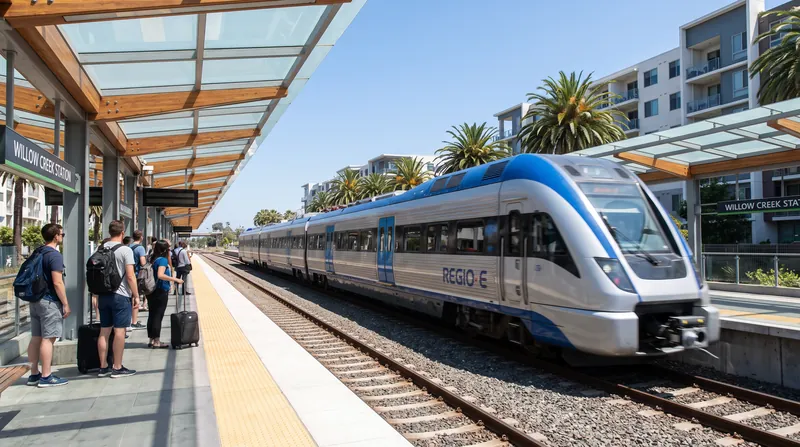
Bridging the Catenary Gap: How Battery-Electric Trains Are Decarbonizing Regional Transit
6 sources
Brake Architecture
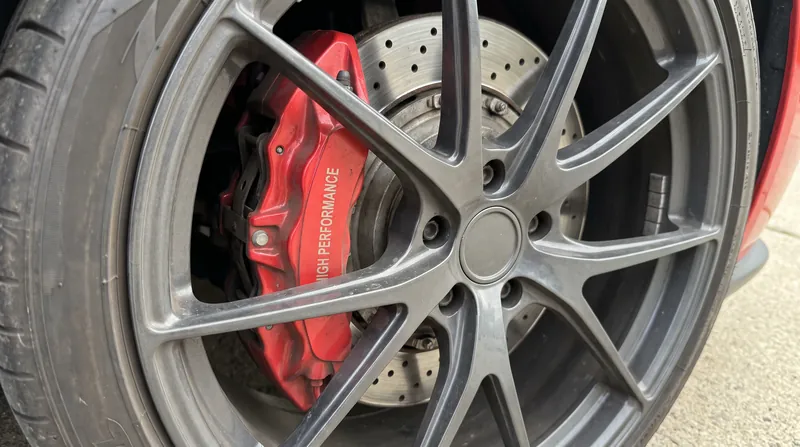
Fixed vs. Floating Brake Calipers: How Hardware Choices Dictate Maintenance Costs and Stopping Power
4 sources
EV Powertrains
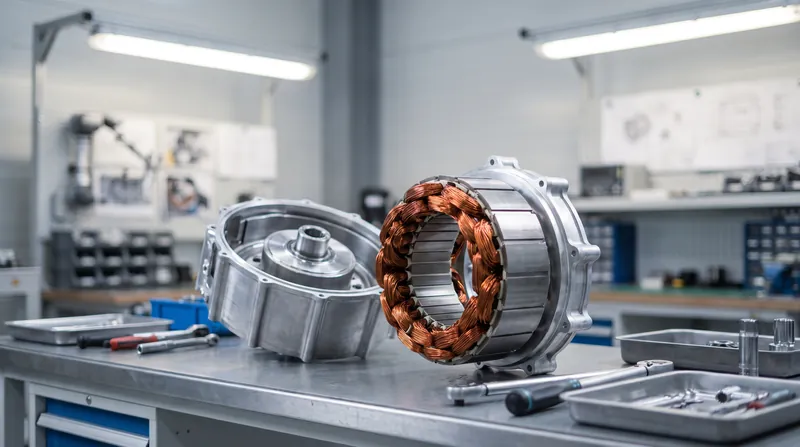
Permanent Magnet vs. Induction: The Trade-Offs Between EV Motor Types on Efficiency and Cost
3 sources
Comments
Every angle. Every day.
Get Automotive & Transportation stories with full source coverage and perspective breakdowns, free every day.