
Bridging the Catenary Gap: How Battery-Electric Trains Are Decarbonizing Regional Transit
By charging at electrified hubs and running on battery power for the rest of the route, a new generation of trains is allowing transit agencies to eliminate diesel without stringing continuous overhead wires.
By Derya Kaplan

Share this story
Traditional transit planners and legacy rail advocates have long argued that fully decarbonizing regional rail requires stringing continuous overhead catenary wires across every mile of track. The capital expenditure for this infrastructure—often running into the millions of dollars per mile—has kept thousands of miles of branch lines tethered to diesel locomotives.
But a new generation of Battery-Electric Multiple Units (BEMUs) is proving that continuous electrification is no longer a prerequisite for zero-emission transit. By charging under existing wires at major hubs and running on battery power for the rest of the route, these trains are erasing the infrastructure barrier entirely.
The scale of the unelectrified rail network is massive, presenting a daunting financial hurdle for governments worldwide. In Europe alone, more than 85,000 kilometers of railway currently lack overhead wires, forcing operators to rely on heavily polluting diesel trains for regional and rural routes.
In the United States, the situation is even more pronounced, with vast commuter networks operating almost entirely on diesel power outside of the Northeast Corridor. Electrifying these sprawling networks mile by mile is financially prohibitive for most transit agencies, often costing millions of dollars per mile in environmental reviews, bridge clearances, and substation construction, thereby creating a severe bottleneck in the transition to zero-emission public transport.[2]
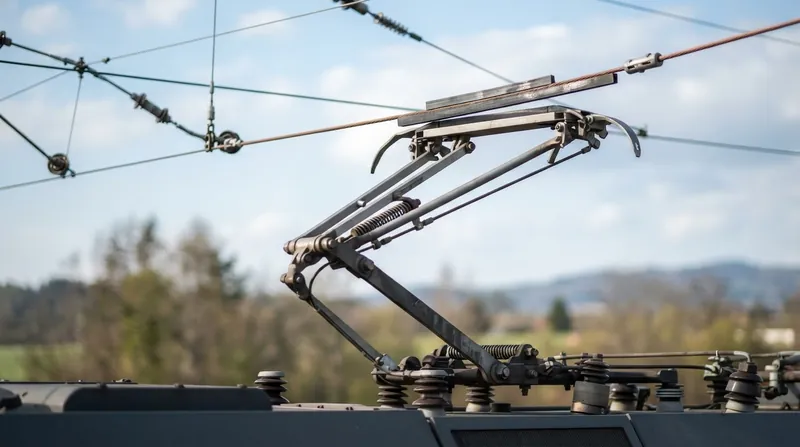
Battery-Electric Multiple Units bypass this bottleneck by carrying their own high-capacity energy storage directly onboard. These trains operate exactly like conventional electric trains when running under existing catenary wires, drawing power through a roof-mounted pantograph to drive the traction motors.
However, when the overhead wires end, the pantograph automatically retracts, and the train seamlessly switches to onboard lithium-ion or lithium-titanate-oxide (LTO) battery packs without interrupting the journey. This dual-mode capability allows transit agencies to decarbonize entire routes by only electrifying small, strategic sections—such as terminal stations, maintenance yards, or short 'charging islands'—rather than funding the full length of the line.[3][4]
The operational range of these battery systems has expanded dramatically in recent years, moving BEMUs from experimental prototypes to highly viable diesel replacements. In August 2026, Spanish rail manufacturer CAF successfully tested its Class 557 BEMU, achieving a remarkable 273-kilometer (169-mile) range on a single charge at the Siemens Test and Validation Center in Wildenrath, Germany.
This performance metric far exceeds the typical daily requirements for regional commuter routes, proving that modern battery density can now sustain prolonged operations under extreme conditions while maintaining the acceleration and top speeds expected of modern passenger rail.[3]
Other major manufacturers are rolling out similar capabilities to capture the growing market for zero-emission regional transit. Hitachi Rail is set to showcase its new BEMU at the InnoTrans 2026 trade fair in Berlin, boasting a 100-kilometer battery range and a 70 percent reduction in carbon dioxide emissions compared to the existing diesel fleets it aims to replace.
The Hitachi units feature roof-mounted double pantographs for rapid charging and underframe battery installations that preserve valuable passenger space in the cabin. By utilizing regenerative braking, the trains recover kinetic energy during deceleration, feeding it back into the batteries to further extend their range and overall efficiency.[2]
Real-world deployments are already demonstrating the immediate viability of the catenary-battery concept across European networks. On August 31, 2026, Alstom celebrated the entry into service of France's first two battery-powered regional trains in the Occitanie and Sud regions, marking a major milestone in a 41 million EUR national decarbonization program.
These units, converted from existing high-capacity diesel trains, were retrofitted with lithium-ion batteries that provide a reliable 80-kilometer range. Operating commercially on the Avignon-Carpentras line, the trains run on electric power where overhead lines exist and switch to battery power at Sorgues station for the non-electrified remainder of the journey.[4]
The shift is also gaining significant momentum in the United States, where transit agencies are leveraging BEMUs to modernize aging diesel fleets without waiting for federal infrastructure grants. Chicago's Metra recently awarded a $154 million contract to Stadler US Inc. for eight two-car battery-powered trainsets, which are currently being assembled in Salt Lake City and are expected to enter revenue service by 2027.
The agency plans to initially deploy the zero-emission trains on a 15-mile section of its Rock Island branch to rigorously evaluate charging requirements, turnaround times, and operational capacity before expanding their use across the broader Chicago network.[1]
The journey to this procurement was a long one for the Chicago transit authority, which had been monitoring the technology for nearly a decade. "The technology hadn't developed far enough yet that people could sit there and say, 'Hey, I can build you one of these,'" Metra CEO Jim Derwinski told Mass Transit Magazine, reflecting on the agency's initial push for zero-emission locomotives seven years ago.
As battery technology matured in European markets and demonstrated reliable performance in cold weather, Metra recognized that BEMUs could finally meet the rigorous demands of heavy American commuter rail without the need for continuous overhead wires.[1]
In Boston, the Massachusetts Bay Transportation Authority (MBTA) is pursuing a similar strategy for its Fairmount Line, aiming to introduce Stadler BEMUs by 2030 to drastically increase service frequency. The agency originally planned to install up to three miles of new catenary wire to support the trains, but recent advancements in battery life rendered the expensive infrastructure unnecessary.
The new trains will simply recharge at South Station and Readville—where the Fairmount Line intersects with the already-electrified Providence Line—and run the entire 10-mile urban route entirely on battery power, transforming a legacy commuter rail branch into a rapid-transit subway experience.[5]
The economic implications of this technological shift are profound for municipal budgets and long-term transit planning. By eliminating the need for continuous overhead electrification, transit agencies can redirect massive amounts of capital toward increasing service frequency, expanding route maps into underserved suburbs, and upgrading station accessibility. While the upfront procurement cost of a specialized BEMU is higher than that of a traditional diesel locomotive, the long-term savings in diesel fuel, engine maintenance, and avoided infrastructure construction make the battery-electric model highly competitive over a standard 30-year operational lifespan.
The transition is not without its logistical hurdles, requiring a fundamental rethink of how train yards and terminal stations operate. Transit agencies must carefully map out their charging infrastructure, ensuring that terminal stations have sufficient electrical grid capacity to support rapid, high-voltage charging between tight schedule turnarounds.
Additionally, the long-term degradation of battery packs under the intense daily cycling of heavy commuter rail operations remains an area of ongoing study. Operators will need to factor in the cost and downtime of battery replacements midway through the train's lifecycle, a maintenance variable that does not exist with traditional diesel or fully catenary-powered trains.
Despite these localized grid challenges, the rapid commercialization of BEMUs represents a structural shift in how cities approach transit decarbonization and climate goals. By decoupling electric trains from continuous overhead wires, manufacturers have unlocked a scalable, pragmatic pathway to zero-emission regional rail that can be deployed in years rather than decades. The technology allows transit planners to achieve the environmental and public health benefits of full electrification today, without waiting for the astronomical funding and political will required to string copper wires across thousands of miles of legacy track.
Key points
- Battery-Electric Multiple Units (BEMUs) allow transit agencies to run zero-emission trains on routes without continuous overhead wires.
- The trains charge via pantographs at electrified hubs and switch to battery power for non-electrified branch lines.
- Recent tests by manufacturers like CAF have demonstrated battery ranges exceeding 270 kilometers on a single charge.
- Agencies in Chicago and Boston are investing hundreds of millions in BEMUs to replace aging diesel fleets without building new catenary infrastructure.
What we don’t know
- How extreme winter temperatures will affect the real-world range and efficiency of BEMU battery packs over a full daily schedule.
- The exact lifecycle and replacement cost of high-capacity rail batteries under the intense charge-discharge cycles of commuter transit.
- Whether local electrical grids at terminal stations can handle the simultaneous rapid-charging demands of an entire BEMU fleet during peak hours.
- Rail Technology Developers
- Emphasize the rapid advancements in battery density, range, and regenerative braking efficiency.
- Transit Modernization Advocates
- Focus on the operational flexibility and capital savings of deploying battery trains on legacy networks.
- European Deployment Authorities
- Focus on the real-world logistics of integrating battery trains into existing regional rail schedules.
Perspectives this story doesn't cover
- Utility Grid Operators
- Local Taxpayers
Sources
Source coverage
6 outlets
3 viewpoints surfaced






- [1]Mass Transit MagazineTransit Modernization Advocates
Metra awarded a $154 million contract to Stadler US Inc. for eight battery-powered trainsets
Read on Mass Transit Magazine → - [2]Railway NewsRail Technology Developers
Hitachi Rail to Showcase ETR1000 and Battery Train at InnoTrans 2026
Read on Railway News → - [3]Railway InternationalRail Technology Developers
CAF is advancing its zero-emission rail portfolio with the successful 273-kilometer range test
Read on Railway International → - [4]RailvolutionEuropean Deployment Authorities
On 31 August 2026, Alstom celebrates the entry into service of the first two battery-powered regional trains
Read on Railvolution → - [5]StreetsblogTransit Modernization Advocates
The MBTA is getting close to selecting a train manufacturer to deliver on its promises for faster, more frequent service on the Fairmount Line
Read on Streetsblog → - [6]StadlerRail Technology Developers
InnoTrans 2026: Seven world firsts and innovations from Stadler
Read on Stadler →
More in Automotive & Transportation
See all →IMO Carbon Tax
US President Attacks Global Shipping Carbon Tax at UN as Decarbonization Target Slips
5 sources

Railway Engineering
The Adhesion Limit: How the Coefficient of Friction Between Steel Wheel and Rail Dictates Maximum Tractive Effort
9 sources
Aerodynamic Efficiency
The CdA Metric: Why Frontal Area, Not Just Drag Coefficient, Dictates Vehicle Range
9 sources
Bus Rapid Transit
How Dedicated Lanes and Signal Priority Allow Bus Rapid Transit to Match Light Rail Speeds
8 sources

Comments
Every angle. Every day.
Get Automotive & Transportation stories with full source coverage and perspective breakdowns, free every day.