
Algeria Authorizes First Foreign Military Deployment Since 1973 to Send Troops to Niger
Algeria’s upper house of parliament has approved a presidential resolution to deploy military units to neighboring Niger. The vote marks a historic departure from Algiers' decades-old doctrine of non-intervention and reshapes the security architecture of the Sahel.
By Adel Khoury

Share this story
On Sunday, October 25, 2026, Algeria's Council of the Nation voted to authorize the deployment of military units across its southern border into Niger. The parliamentary approval ends a 53-year constitutional restriction on operating outside national territory.[1][2]
The resolution, initiated by the Algerian presidency, passed the upper house following a closed-door session in Algiers. It represents the first time the Algerian People's National Army will officially deploy abroad since the 1973 Arab-Israeli War.[5][6]
“This is a sovereign decision dictated by the absolute necessity to secure our strategic depth,” an Algerian senator told reporters following the vote. The exact size and operational mandate of the deployed unit remain classified.[3]
The intervention comes at the direct request of authorities in Niamey, who have sought new security partnerships following the withdrawal of French and American forces from Niger. The two nations share a porous 956-kilometer desert border.[4]
A historic doctrinal shift
For decades, Algeria maintained a strict non-interventionist military doctrine, enshrined in its constitution, which prohibited the army from crossing its borders. That posture was amended in a 2020 constitutional referendum, which allowed foreign deployments under specific bilateral conditions.[1][6]
Until this weekend, Algiers had never utilized that constitutional mechanism. The decision to activate it now reflects growing alarm over the deteriorating security environment in the Sahel region, where armed insurgencies have expanded their territorial control.[2][5]
The deployment fundamentally alters the balance of power in North Africa. With an active duty force of roughly 130,000 personnel and the continent's largest defense budget, Algeria possesses significant conventional military capabilities.[1][6]
Nigerien officials welcomed the parliamentary vote, framing it as a crucial step in bilateral military cooperation. Niamey has struggled to contain militant groups operating in the tri-border region connecting Niger, Mali, and Burkina Faso.[4]
Filling the Sahel security vacuum
The Algerian move directly addresses a security vacuum left by departing Western militaries. Over the past three years, military juntas across the Sahel have systematically expelled European and United States counterterrorism forces.[4][5]
Niger ordered the withdrawal of roughly 1,000 US military personnel earlier in 2024, following the eviction of French forces in 2023. Those departures dismantled a decade-old security architecture that relied heavily on Western intelligence and air support.[4][5]
While Russian paramilitary groups have expanded their footprint in Mali and Burkina Faso, Niger has sought a more diversified portfolio of security partners. Algiers offers a regional alternative with deep knowledge of the Sahara's operational environment.[1][4]
The request from Niamey demonstrates a preference for African solutions to border security, rather than relying exclusively on distant powers. The joint operations will likely focus on intelligence sharing and mechanized border patrols.[4]
Strategic and economic stakes
Beyond immediate counterterrorism objectives, Algeria has substantial economic interests tied to Niger's stability. The two countries are partners in the proposed Trans-Saharan Gas Pipeline, a multi-billion-dollar infrastructure project intended to transport Nigerian gas to Europe.[1][2]
That 4,128-kilometer pipeline must traverse Nigerien territory to reach Algeria's Mediterranean export terminals. Securing that corridor is a strategic priority for Algiers as it seeks to capitalize on Europe's pivot away from Russian energy supplies.[2][5]
Furthermore, the Algerian government aims to stem the flow of undocumented migration and illicit arms smuggling across its southern frontier. Instability in the Sahel has historically driven thousands of displaced persons toward Algerian border towns.[3][6]
The deployment also serves as a geopolitical signal to regional rivals. By projecting military power into the Sahel, Algiers is asserting its role as the dominant security guarantor in Northwest Africa.[1][5]
Operational uncertainties remain
Despite the parliamentary authorization, the timeline for the actual troop movement has not been publicly disclosed. Military analysts expect the initial deployment to consist of specialized border security and intelligence units rather than large infantry formations.[2][6]
Key points
- Algeria's upper house of parliament authorized the deployment of military units to Niger, marking the country's first foreign military operation since 1973.
- The intervention was requested by authorities in Niamey to help secure the 956-kilometer shared border following the withdrawal of French and US forces.
- The deployment utilizes a 2020 constitutional amendment that ended Algiers' strict doctrine of keeping its armed forces within national territory.
- Beyond counterterrorism, the military presence aims to secure the corridor for the proposed multi-billion-dollar Trans-Saharan Gas Pipeline.
What we don’t know
- The exact number of Algerian troops being deployed and the specific timeline for their arrival in Niger.
- Whether the Algerian forces will engage in direct combat operations against militant groups or strictly maintain a defensive border posture.
How we got here
1973
Algeria deploys forces abroad for the last time during the Arab-Israeli War.
November 2020
Algerian voters approve a constitutional amendment allowing the military to participate in bilateral missions abroad.
July 2023
A military coup in Niger leads to the eventual expulsion of French and American counterterrorism forces.
October 25, 2026
The Algerian Council of the Nation officially approves the presidential resolution to send troops to Niger.
- Algerian Government
- Views the deployment as a necessary sovereign action to secure strategic depth and protect economic interests.
- Nigerien Authorities
- Frames the bilateral cooperation as a crucial African-led solution to the security vacuum left by departing Western forces.
- Regional Security Analysts
- Notes that the deployment tests Algeria's expeditionary capabilities and signals its intent to act as the dominant security guarantor in the Sahel.
Perspectives this story doesn't cover
- Civilian populations in northern Niger who will host the foreign troops
- Western military commands assessing the shifting security architecture
Sources
Source coverage
6 outlets
3 viewpoints surfaced






- [1]Al JazeeraRegional Security Analysts
Algerian parliament's upper house approves troop deployment to Niger
Read on Al Jazeera → - [2]Anadolu AgencyAlgerian Government
Council of the Nation votes in favor of presidential decision to send military unit to Niger
Read on Anadolu Agency → - [3]Ahram OnlineAlgerian Government
Algeria senate approves sending troops to Niger: senator
Read on Ahram Online → - [4]ActuNigerNigerien Authorities
Coopération militaire : à la demande de Niamey, l'Algérie va déployer des soldats au Niger
Read on ActuNiger → - [5]The IndependentRegional Security Analysts
Algeria's parliament approved a resolution Sunday to send troops to Niger
Read on The Independent → - [6]InternazionaleRegional Security Analysts
(untitled)
Read on Internazionale →

More in News & Politics
See all →Balkan Geopolitics
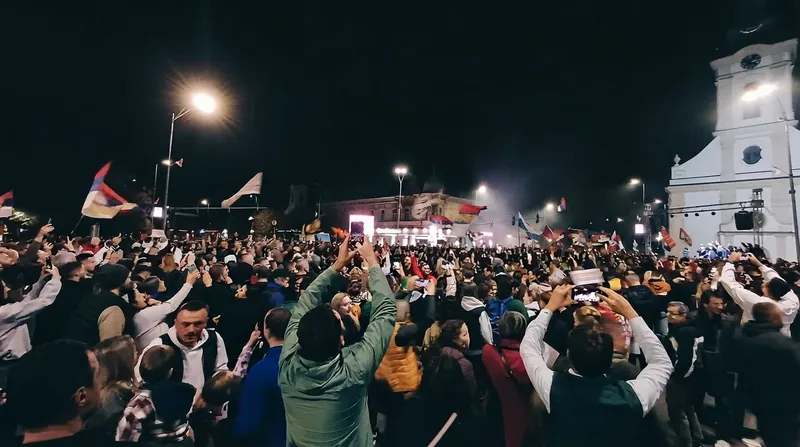
Serbian President Vučić Concedes Defeat as Student Coalition Sweeps Snap Election
2 sources
Media Freedom
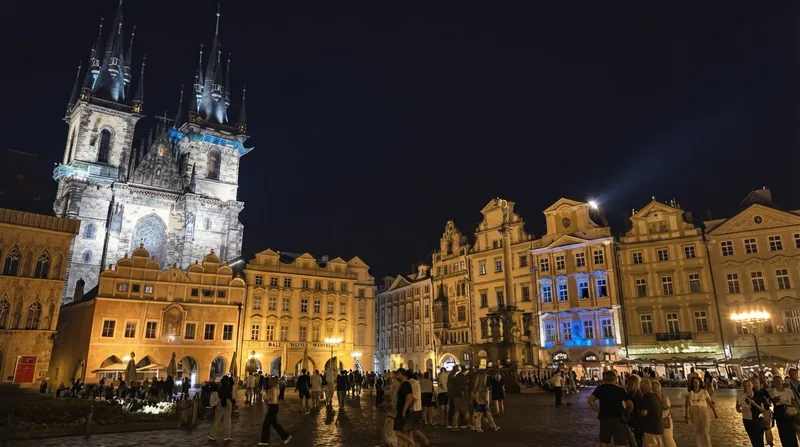
Thousands Protest in Prague as Czech Journalists Threaten Strike Over Public Media Overhaul
5 sources
Political Crisis
Opposition Leader María Corina Machado Returns to Venezuela After Ten Months in Exile
6 sources

Armed Banditry
Death Toll Reaches 40 Following Terror Attack in Nigeria's Taraba State
4 sources
Comments
Every angle. Every day.
Get News & Politics stories with full source coverage and perspective breakdowns, free every day.