
Western Sydney International Airport Opens as First Jetstar Flight Departs
Australia's first major new aviation hub in 50 years has officially commenced operations, launching a curfew-free facility designed to handle 10 million passengers annually. The $14 billion infrastructure project aims to relieve capacity constraints across the Sydney basin while anchoring a broader economic zone.
By Hunter Cole

Share this story
At 6:30 a.m. local time on Sunday, Jetstar flight JQ362 pushed back from the gate at Western Sydney International Airport, its engines spooling up in the early morning light. The Airbus A320 lifted off the 3,700-meter runway bound for the Gold Coast, carrying a fully booked cabin of passengers.[2][3][5]
That departure marked the official operational launch of Australia’s first major new airport in half a century. Decades of planning and a $14 billion federal investment culminated in the opening of the Nancy-Bird Walton terminal, a facility designed to process 10 million passengers annually during its initial phase.[6][7][9]
Government officials and industry figures have heavily promoted the facility in the lead-up to the launch, with promotional materials already dubbing the site "Australia's best airport" as it begins operations. The project aims to relieve severe capacity constraints across the broader Sydney basin.[1][7]
"Western Sydney unveils a curfew free $14 billion hub with sold out inaugural Jetstar flight and freight services," noted industry analysts at Simple Flying, highlighting the dual-purpose nature of the new infrastructure.[9]
Unlike Sydney’s Kingsford Smith Airport, which operates under a strict 11:00 p.m. to 6:00 a.m. curfew, the new Badgerys Creek facility operates 24 hours a day. This continuous operational window fundamentally alters how airlines can schedule long-haul international routes and overnight freight logistics.[9]
The absence of a curfew allows carriers to optimize aircraft utilization, particularly for flights arriving from North America and Europe that previously had to loiter over the Pacific or delay departures to avoid landing before dawn. Freight operators gain immediate access to overnight distribution networks.[4][9]
Jetstar and Qantas have already positioned the airport as a core domestic hub, basing multiple aircraft at the facility to serve routes across Australia. International carriers have also signaled intent to utilize the 24-hour slots to bypass existing congestion at the legacy airport.[3][5][8]
The terminal itself represents a departure from legacy airport design, utilizing biometric processing and automated baggage handling to reduce transit times. Planners engineered the layout to minimize the walking distance from security checkpoints to the furthest departure gates, aiming for a seamless passenger flow.[1][4]
However, the facility opens ahead of its primary mass-transit connection. The Sydney Metro Western Sydney Airport line, a dedicated rail link connecting the terminal to the broader network at St Marys, remains under construction and is not scheduled to carry passengers until late 2027.[1][2]
In the interim, passengers and staff must rely on a network of rapid transit buses and upgraded arterial roads. Transport authorities have deployed high-frequency shuttle services, but the lack of day-one rail integration presents an immediate logistical hurdle for the projected workforce and traveler volume.[1][2]
The minor logistical realities of day one were apparent to early travelers. "A place in the history books but no toastie," wrote The Guardian's reporter on board the inaugural flight, noting the minor catering and operational hiccups typical of a massive infrastructure launch.[2]
Beyond aviation, the airport serves as the anchor for the "Aerotropolis," a designated economic zone intended to attract advanced manufacturing, aerospace engineering, and logistics firms. Local governments project the precinct will generate thousands of direct and indirect jobs over the next two decades.[6]
The surrounding municipalities have already seen a surge in commercial real estate development, with warehousing and distribution centers clustering along the newly expanded M12 motorway. This industrial expansion aims to capture the overnight freight capacity unlocked by the airport's 24-hour operations.[6][9]
Viewpoints in depth
Airlines and Freight Operators
Carriers view the curfew-free status as a critical operational advantage.
For domestic and international airlines, the 24-hour operational window removes the severe scheduling constraints imposed by Sydney's Kingsford Smith Airport. Freight operators can now process overnight cargo without delay, while passenger airlines can schedule early morning arrivals from North America and Europe without forcing aircraft to loiter over the Pacific waiting for a 6:00 a.m. curfew to lift.
Urban Planners and Local Government
Regional authorities see the airport as the anchor for a massive economic shift.
Planners view the facility not just as transit infrastructure, but as the core of the "Aerotropolis"—a designated zone intended to draw advanced manufacturing, aerospace, and logistics firms to Western Sydney. Local councils project the development will generate up to 200,000 jobs, fundamentally shifting the economic center of gravity away from the eastern seaboard and into the western suburbs.
Transport Advocates
Infrastructure critics highlight the delayed rail integration as a major flaw.
While the aviation infrastructure is complete, transport advocates point out that the airport has opened without its primary mass-transit link. With the Sydney Metro Western Sydney Airport line not scheduled to open until late 2027, early adopters must rely on a network of rapid transit buses, creating an immediate logistical bottleneck for both passengers and the facility's workforce.
Key points
- Western Sydney International Airport has officially opened, marking Australia's first major new aviation hub in 50 years.
- A fully booked Jetstar flight to the Gold Coast served as the facility's inaugural commercial departure.
- The $14 billion airport operates without a nighttime curfew, allowing 24-hour passenger and freight scheduling.
- The dedicated metro rail link connecting the terminal to the broader Sydney network remains under construction until late 2027.
What we don’t know
- How quickly international carriers will shift their existing slot allocations from Kingsford Smith to the new facility.
- Whether the interim bus network can adequately handle the workforce and passenger volume before the rail line opens in 2027.
- The long-term impact of 24-hour heavy freight traffic on the surrounding residential communities.
How we got here
2014
The Australian federal government officially designates Badgerys Creek as the site for Sydney's second airport.
2018
Earthworks and major construction begin on the 1,780-hectare site in Western Sydney.
2024
Terminal construction finishes and operational testing commences.
October 2026
The airport officially opens to commercial traffic with the departure of Jetstar flight JQ362.
Late 2027
The Sydney Metro rail link is scheduled to begin carrying passengers to the terminal.
- Aviation Industry
- Focuses on the operational flexibility and capacity relief provided by the new curfew-free hub.
- General Public & Passengers
- Focuses on the day-one travel experience, accessibility, and regional connectivity.
- State & Economic Planners
- Focuses on the broader economic impact, job creation, and the Aerotropolis development.
Perspectives this story doesn't cover
- Local residents affected by the new 24-hour flight paths and increased heavy vehicle traffic.
- Environmental groups monitoring the emissions and ecological impact of the Aerotropolis development.
Sources
Source coverage
9 outlets
3 viewpoints surfaced









- [1]ABC NewsGeneral Public & Passengers
Western Sydney International Airport opens to passengers today, with its first commercial flights
Read on ABC News → - [2]The GuardianGeneral Public & Passengers
A place in the history books but no toastie: my time on board Western Sydney airport's inaugural flight
Read on The Guardian → - [3]The Aviation HubAviation Industry
Western Sydney Airport Opens: Jetstar Makes History With First Flight
Read on The Aviation Hub → - [4]Travel RadarAviation Industry
Western Sydney International Airport Welcomes First Passengers
Read on Travel Radar → - [5]Aero CornerAviation Industry
Western Sydney Airport Opens as Jetstar JQ362 Flies Its First Passengers to the Gold Coast
Read on Aero Corner → - [6]XinhuaState & Economic Planners
Western Sydney International Airport officially launches passenger operations
Read on Xinhua → - [7]Travel WeeklyAviation Industry
'Australia's best airport'
Read on Travel Weekly → - [8]MiGFlugState & Economic Planners
Western Sydney International Opens: First Jetstar Flight Takes Off
Read on MiGFlug → - [9]Simple FlyingAviation Industry
Sydney’s New $14 Billion Airport Officially Opens As First Jetstar Flight Takes Off
Read on Simple Flying →
More in Transportation
See all →Aviation Infrastructure
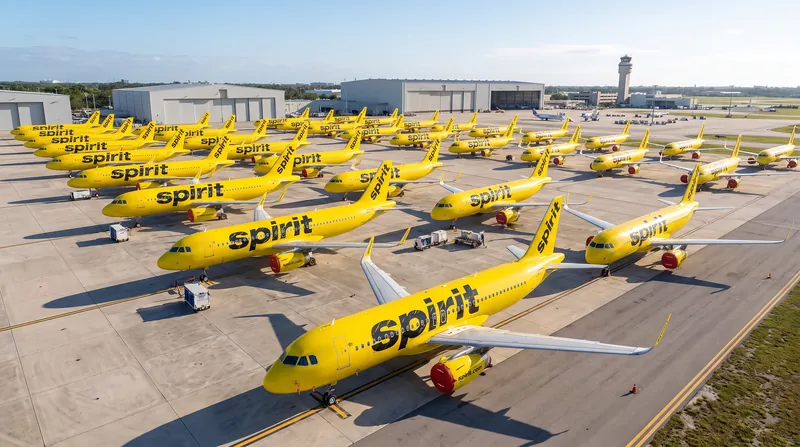
The Mechanics of Liquidation: How Spirit Airlines' Assets Are Being Absorbed
10 sources
Aviation Safety
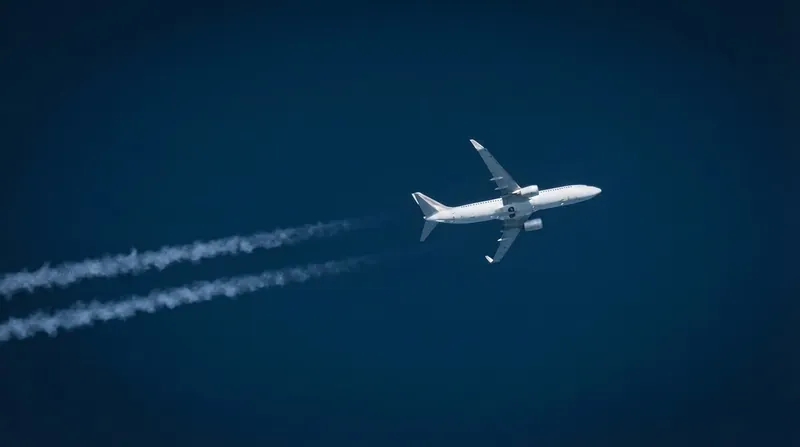
FAA Mandates Tail Inspections on 1,987 Boeing 737 NG Jets Over Pitch Oscillation Risks
7 sources
Airline Consolidation
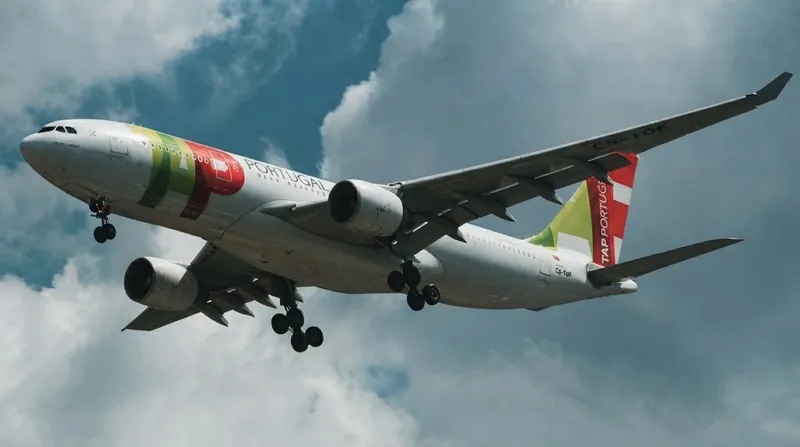
Lufthansa Selected to Acquire 44.9 Percent Stake in TAP Air Portugal for €1.2 Billion
6 sources
Aviation Safety
How Ram Air Turbines Harness Wind to Restore Flight Controls During Dual Engine Failures
5 sources
Comments
Every angle. Every day.
Get Transportation stories with full source coverage and perspective breakdowns, free every day.