
Congressional Review Act Bypasses the Senate Filibuster to Nullify Agency Regulations
The 1996 Congressional Review Act grants lawmakers a fast-track mechanism to nullify federal regulations without facing a Senate filibuster. Its 60-legislative-day lookback provision effectively allows an incoming administration to permanently dismantle the final months of its predecessor's regulatory agenda.

Share this story
In short
- The Congressional Review Act allows Congress to overturn federal agency rules with a simple majority, bypassing the Senate filibuster.
- A 'lookback' provision resets the 60-day clock for rules finalized late in a presidential term, exposing them to the next Congress.
- Once a rule is voided under the CRA, the agency is permanently barred from issuing a 'substantially similar' regulation.
When a new president wants to reverse a predecessor's executive order, they simply sign a new document. The Congressional Review Act operates on a different plane entirely: it targets the binding federal regulations that executive agencies spend years drafting and finalizing.
Unlike a standard legislative repeal, which must navigate the traditional committee process and survive floor debates, this mechanism bypasses the Senate's traditional 60-vote filibuster threshold, offering a fast-track route to nullification. By leveraging this statute, a newly aligned government can erase the final months of an outgoing administration's regulatory legacy in a matter of weeks, fundamentally altering the balance of power between the legislative and executive branches.[1][8]
Enacted in 1996 as part of the Small Business Regulatory Enforcement Fairness Act, the CRA establishes a strict reporting requirement for the executive branch. It mandates that federal agencies submit all new final rules to both the House of Representatives and the Senate, as well as the Government Accountability Office (GAO), before those rules can legally take effect.
Once the rule is received by Congress and published in the Federal Register, the statute activates a ticking clock: lawmakers have exactly 60 days of legislative session to pass a joint resolution of disapproval.[1][5]
The defining feature of this 60-day window is its procedural immunity on the Senate floor. In the upper chamber, a CRA resolution requires only a simple majority of 51 votes to pass, entirely shielding the measure from the filibuster that routinely blocks most standard legislation. The resolution is strictly limited to a binary choice—Congress cannot amend the agency rule, only kill it entirely. If the resolution passes both chambers and the president signs it, the regulation is immediately voided and treated as though it had never taken effect.[3]
The most consequential element of the 1996 statute is the 'lookback' provision, explicitly designed to capture what Washington calls 'midnight regulations'—rules rushed through the pipeline at the very end of a presidential term. If an agency submits a rule to Congress with fewer than 60 legislative days remaining in a given session, the review clock does not simply pause. Instead, it resets entirely when the new Congress convenes the following year, granting the incoming legislature a fresh 60-day window to strike the rule down.[2][8]
Because the statutory timeline is measured exclusively in legislative days—the specific days the chambers are actually gaveled into session—rather than standard calendar days, the 60-day window routinely stretches backward for several months. A regulation finalized in July or August of an election year can easily fall into the crosshairs of the next Congress if the chambers take extended recesses during the fall campaign season. This structural delay means an outgoing administration must finalize its highest-priority rules by late spring to safely insulate them from a CRA reversal.[2][3]
Nullifying a rule under this framework carries a severe and permanent penalty for the executive branch. The statute dictates that once a regulation is formally disapproved, the issuing agency may not publish a new rule in 'substantially the same form' unless Congress explicitly authorizes it to do so through subsequent legislation. This provision ensures that a CRA resolution does not merely delay a policy, but permanently strips the agency of its authority to regulate that specific issue under its existing statutory mandate.[1][5]
This prohibition creates a structural chilling effect across the administrative state, largely because the exact boundaries of the ban remain legally ambiguous. According to the Environmental Protection Agency's internal guidance on the statute, the CRA 'does not define substantially the same,' leaving agencies to guess exactly how much a future regulatory proposal must differ from the voided one to survive a legal challenge.
Consequently, agencies often abandon the regulatory space entirely rather than risk investing years of staff time into a new rule that a federal judge might immediately strike down for violating the CRA's permanent prohibition.[5][8]
The Government Accountability Office serves as the crucial arbiter of what actually constitutes a 'rule' under the statute. Federal agencies routinely issue guidance documents, memorandums, and policy statements that they do not classify as formal regulations, and therefore do not submit to Congress.
However, the CRA adopts the broad definition of a rule found in the Administrative Procedure Act, encompassing nearly any agency statement of general applicability designed to implement or interpret law. This broad definition allows Congress to police the boundaries of executive action far beyond the pages of the Federal Register.[6][7]
Lawmakers can formally ask the GAO to determine whether an unsubmitted agency action meets the statutory definition of a rule. If the GAO issues a formal decision concluding that a guidance document is indeed a rule, that decision triggers the 60-day CRA window immediately upon publication. Crucially, this applies even if the agency issued the document years prior. Because the clock never started on an unsubmitted rule, a new Congress can use a GAO determination to strike down long-standing agency guidance that bypassed the formal submission process.[6][7]
The system's efficacy depends heavily on strict compliance with the reporting mandates. 'The CRA provides a mechanism for Congress to review and disapprove federal agency rules,' the GAO notes in its legal framework, but that mechanism requires precise tracking of submission dates and legislative calendars. In a 2026 report analyzing the statute's mechanics, the GAO found that agencies and Congress could 'improve implementation of 60-day delay for major rules,' highlighting ongoing administrative gaps in how the federal government processes and tracks these high-stakes regulatory submissions.[1][7]
The system's efficacy depends heavily on strict compliance with the reporting mandates.
For the first two decades following its 1996 enactment, the statute functioned primarily as a theoretical threat rather than an active legislative weapon. The CRA was successfully deployed only once during that period: in 2001, when a Republican Congress and incoming President George W. Bush used it to overturn a workplace ergonomics rule issued by the Occupational Safety and Health Administration during the final months of the Clinton administration.
Because a resolution requires the president's signature, the tool is almost exclusively viable during a transition of power, when a new president is willing to sign a resolution killing their predecessor's work.[2][4]
That long dormancy ended abruptly in 2017, when an incoming Republican trifecta aggressively utilized the lookback provision to overturn 15 separate rules issued during the final months of the Obama administration. Four years later, in 2021, an incoming Democratic trifecta deployed the exact same mechanism to reverse three environmental and labor rules finalized by the outgoing Trump administration.
This tit-for-tat escalation has transformed the CRA from an obscure procedural quirk into a standard weapon of modern partisan transitions. The threat of a CRA repeal now actively dictates the regulatory calendar of every first-term president.[3]
The federal mechanism has increasingly inspired state legislatures to pursue similar oversight tools to rein in their own executive branches. The National Conference of State Legislatures tracks these state-level efforts, noting that at least 41 states now have some form of legislative review over administrative rules. While the specific veto powers vary widely—ranging from advisory committees to binding legislative overrides—the proliferation of these laws reflects a broader national push by legislative bodies to reclaim authority delegated to unelected agency officials.[4]
Proponents view the statute as an essential constitutional corrective against an administrative state that has grown too powerful. The Harvard Law School Journals published an analysis describing the CRA as 'Congress's new favorite tool for restoring its constitutional authority' over an executive branch that increasingly legislates through regulation rather than waiting for statutory authorization.
From this perspective, the 60-day window forces agencies to remain tethered to the actual intent of the elected lawmakers who fund them. Without this fast-track mechanism, advocates argue, Congress would be virtually powerless to stop executive overreach.
The precise legal limits of the statute remain untested at the highest levels of the judiciary. Until a federal agency actively attempts to regulate an area previously voided by a CRA resolution and faces a direct lawsuit from an affected industry, the exact boundaries of the 'substantially the same' clause will remain a matter of statutory interpretation rather than settled case law. The 60-day window guarantees that the regulatory battles of one administration will inevitably spill over into the legislative calendar of the next.[2][8]
Key terms
- Joint Resolution of Disapproval
- The specific legislative vehicle used under the CRA to strike down an agency rule, requiring passage by both chambers and the president's signature.
- Legislative Day
- A day when a chamber of Congress is actually convened in session, which stretches the 60-day CRA window across many calendar months.
- Midnight Regulation
- A federal rule rushed through the final stages of the regulatory process during the last months of an outgoing presidential administration.
- Substantially the Same Form
- The statutory standard prohibiting an agency from reissuing a rule that has been struck down by the CRA without explicit new authorization from Congress.
Frequently asked
Can a CRA resolution be filibustered in the Senate?
No. The statute explicitly limits debate and allows a resolution of disapproval to pass the Senate with a simple majority of 51 votes.
Can the president veto a CRA resolution?
Yes. Because it is a joint resolution, it requires the president's signature. This is why the CRA is almost exclusively successful during a transition of power, when a new president is willing to sign a resolution killing their predecessor's rule.
What happens if an agency never submits a rule to Congress?
The 60-day clock does not start. However, lawmakers can ask the GAO to determine if an agency action constitutes a rule; if the GAO says yes, the 60-day window opens immediately, regardless of how old the rule is.
Viewpoints in depth
Deregulation Advocates
Supporters view the CRA as an essential mechanism for restoring legislative authority over the executive branch.
For proponents of the statute, the CRA is a necessary constitutional corrective against an administrative state that frequently bypasses the legislative process. They argue that executive agencies routinely stretch ambiguous statutory language to enact sweeping policy changes that Congress never explicitly authorized. By providing a fast-track mechanism immune to the Senate filibuster, the CRA ensures that elected lawmakers retain the final say over major regulatory burdens, forcing agencies to remain tethered to the actual intent of the legislature.
Agency Defenders
Critics argue the statute's permanent ban on similar rules cripples the government's ability to respond to emerging crises.
Defenders of the administrative state warn that the CRA's 'substantially the same' clause is a draconian penalty that permanently damages federal capacity. Because the statute does not define the standard, agencies are often terrified to regulate an issue once a CRA resolution has passed, fearing immediate litigation. This perspective argues that the CRA allows a single partisan Congress to permanently salt the earth on critical environmental, labor, or health issues, preventing future administrations from addressing those problems even when circumstances drastically change.
Procedural Critics
Observers warn that the CRA bypasses necessary legislative debate and creates severe regulatory whiplash.
From a purely procedural standpoint, critics argue the CRA undermines the deliberative nature of the Senate by circumventing the 60-vote threshold designed to forge consensus. Because the resolutions are strictly binary and cannot be amended, they encourage a blunt-force approach to policymaking. Furthermore, the increasing weaponization of the lookback provision during presidential transitions creates massive regulatory uncertainty for industries, as rules finalized in the summer of an election year are now routinely erased the following spring.
- Deregulation Advocates
- View the CRA as a vital constitutional tool to restore Article I legislative powers and curb administrative overreach.
- Agency Defenders
- Argue that the 'substantially the same' clause permanently cripples necessary regulatory functions and creates legal ambiguity.
- Procedural Critics
- Warn that the mechanism bypasses standard Senate debate and creates severe regulatory whiplash between changing administrations.
Perspectives this story doesn't cover
- Federal Agency Career Staff
- Industries Relying on Regulatory Certainty
Sources
Source coverage
8 outlets
3 viewpoints surfaced







- [1]U.S. GAO
Congressional Review Act
Read on U.S. GAO → - [2]Regulatory Studies CenterProcedural Critics
Congressional Review Act
Read on Regulatory Studies Center → - [3]Economic Policy Innovation CenterDeregulation Advocates
EPIC EXPLAINER: The Congressional Review Act
Read on Economic Policy Innovation Center → - [4]National Conference of State Legislatures
Congressional Review Act
Read on National Conference of State Legislatures → - [5]US EPAAgency Defenders
Summary of the Congressional Review Act
Read on US EPA → - [6]Brookings InstitutionProcedural Critics
GAO's role in the regulatory state
Read on Brookings Institution → - [7]U.S. GAO
Congressional Review Act: Agencies and Congress Could Improve Implementation of 60-Day Delay for Major Rules
Read on U.S. GAO → - [8]Factlen Editorial Team
Synthesis by Factlen editorial team
Read on Factlen Editorial Team →
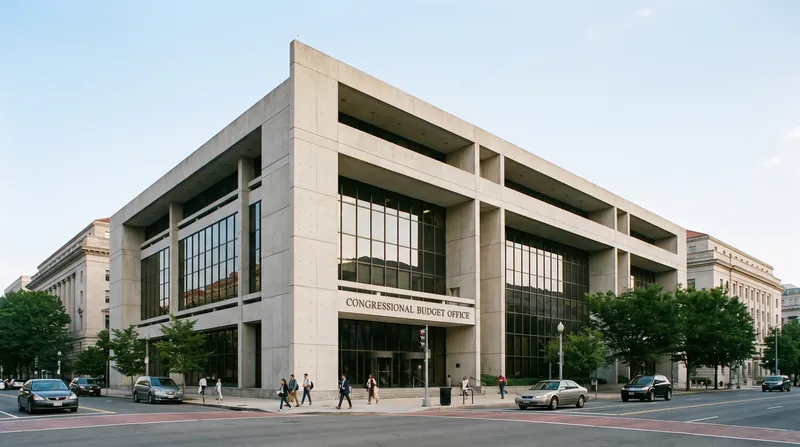
More in News & Politics
See all →Federal Budget
The Antideficiency Act and the Three Exceptions: How a Lapse in Appropriations Triggers a Government Shutdown
6 sources
Constitutional Law
The Three Requirements of the Lemon Test: How the Supreme Court Determines the Constitutionality of State Aid to Religious Schools
5 sources
Constitutional Law
The Intelligible Principle Test: How the US Supreme Court Determines if Congress Illegally Delegated Legislative Power
5 sources
Security Dilemma
The Structural Trap of the Security Dilemma: Why Defensive State Actions Trigger Escalation
7 sources

Comments
Every angle. Every day.
Get News & Politics stories with full source coverage and perspective breakdowns, free every day.