
How Smart Rackets Are Revolutionizing Badminton Training in 2026
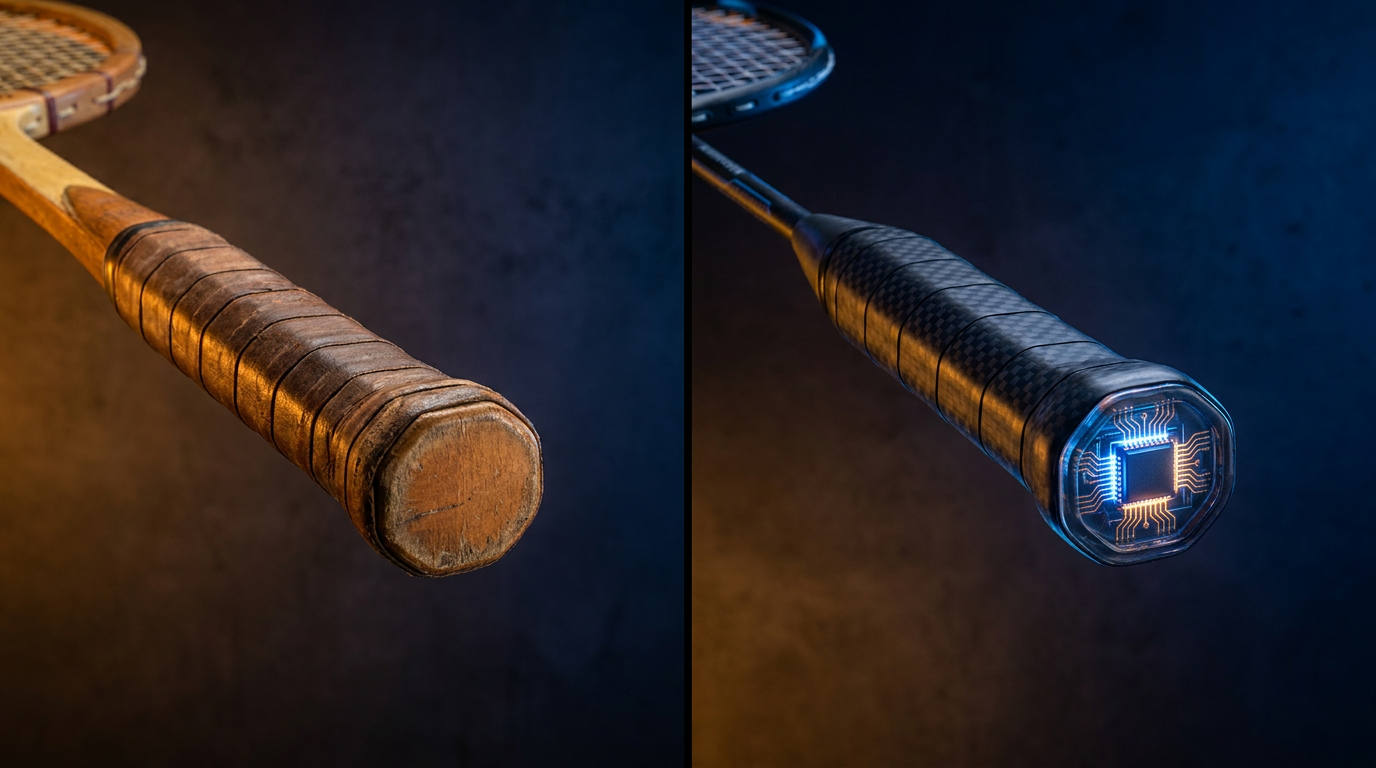
Miniaturized sensor chips embedded in racket handles are bringing elite-level data analytics to amateur badminton players. The technology tracks swing speed, shot distribution, and impact accuracy in real time without altering the racket's weight.
By Factlen Editorial Team
- Amateur Players
- Excited by the democratization of elite-level analytics, allowing them to set measurable goals.
- Tech-Forward Coaches
- Value objective data to supplement visual observation and track player fatigue over time.
- Traditionalists
- Argue that over-reliance on smartphone apps distracts from the intuitive feel and flow of the game.
What's not represented
- · Professional players who may not want their training data shared
- · Racket stringers dealing with new handle technology
Why this matters
For the first time, amateur badminton players have access to the same granular performance data—like real-time smash speed and shot accuracy—that was previously reserved for elite national teams. This technological leap transforms how everyday players train, allowing them to measure fatigue and fix technical flaws with objective smartphone feedback.
Key points
- Smart badminton rackets feature microscopic sensor chips embedded in the handle's end cap.
- The chips track swing speed, shot distribution, and impact accuracy in real time.
- Modern sensors do not alter the racket's swing weight or balance point.
- The data syncs to a smartphone app, allowing players to measure fatigue and consistency.
- While data provides objective feedback, human coaches are still required to fix technical flaws.
For decades, improving at badminton meant relying on a coach's eye or a player's own intuition. If a smash felt weak in the third game of a grueling match, it was easily chalked up to general fatigue, but quantifying that exact drop-off was nearly impossible for anyone outside a well-funded national training center.[1][7]
In 2026, that dynamic has fundamentally shifted. The arrival of commercially viable "smart rackets" has successfully brought elite-level data analytics to the local sports hall, democratizing how players measure and improve their performance.[6]
Unlike the clunky, balance-ruining prototypes of the past decade, the new generation of smart rackets integrates microscopic sensor chips directly into the handle's end cap. The technology is entirely invisible from the outside, preserving the sleek aesthetics of modern frames.[1][6]
The mechanism is elegantly simple for the user but technologically complex under the hood. The embedded sensor connects via Bluetooth to a companion smartphone app, recording high-fidelity motion data during every rally and syncing it instantly for post-match review.[4][6]

These chips track several critical metrics that define a player's game: swing speed, shot distribution (the exact ratio of smashes, drops, and clears hit during a session), and impact accuracy, which measures how consistently the player is striking the stringbed's sweet spot.[1][6]
Victor's "Intelligence" system, which was officially unveiled at a major product trade show in Nanjing, China, in April 2026, is currently leading this technological revolution. The system has moved rapidly from a beta concept to a fully functional commercial product.[1][6]
The primary claim from manufacturers is that these chips do not alter the racket's performance on the court. Evidence strongly supports this: because the sensor sits flush inside the handle and weighs mere grams, the racket's swing weight and balance point remain identical to standard models.[6][7]
For instance, the Victor DriveX 12, widely considered a top all-around flagship racket for 2026, plays exactly the same whether it houses the Intelligence chip or a traditional plastic end cap. Players do not have to sacrifice maneuverability for data.[2]

This miniaturization breakthrough solves the primary complaint that plagued earlier iterations of the technology. Devices like the SOTX Smart Racquet, introduced years ago, were often criticized because the added weight altered the natural mechanics of a player's swing.[4]
This miniaturization breakthrough solves the primary complaint that plagued earlier iterations of the technology.
The data provided by these modern sensors is revelatory for amateur and intermediate players. A player can now look at their app after a match and see exactly when their smash speed began to degrade, pinpointing the exact moment their stamina failed.[1][6]
"Instead of just feeling like your smashes got weaker in the third game… you'll actually see it," notes one industry analyst, highlighting how this objective visibility completely changes a player's training priorities.[6]
However, the rapid adoption of this technology introduces a layer of uncertainty: can a smartphone app replace a human coach? The consensus among badminton professionals and developers is a firm no.[1][7]

Data is diagnostic, not prescriptive. A smart racket can tell a player that their smash speed dropped by 15% or that they are consistently missing the sweet spot on their backhand, but the chip cannot tell them why those errors are occurring.[1]
A human coach is still required to observe the player's footwork, body rotation, and grip technique to correct the underlying mechanical flaws that are causing the poor data readings in the app.[7]
Used together, however, the combination of objective data and expert coaching is proving to be incredibly powerful. Coaches can use the app's historical data to tailor conditioning drills, accelerating the learning curve for dedicated amateurs.[1][7]
The broader market landscape in 2026 reflects this technological arms race. While Victor leads the integrated chip segment, other giants like Yonex are focusing heavily on advanced frame materials like HM Graphite and Namd, with players utilizing third-party wearable sensors to bridge the data gap.[2][5]

Search interest for "lightweight badminton rackets" and "smart rackets" surged dramatically in late 2025 and early 2026, indicating a strong, sustained consumer appetite for tech-enhanced sporting equipment.[3]
Looking ahead, the next frontier for this technology is pattern detection and AI-driven technique feedback. As companies aggregate millions of swings from users worldwide, the companion apps will likely evolve from passive trackers into active, algorithmic coaches.[6]
How we got here
2016
Early tracking devices like the SOTX Smart Racquet introduce basic data collection but are often bulky.
2024–2025
Sensor miniaturization advances, allowing chips to fit inside standard racket end caps without altering balance.
April 2026
Victor unveils its 'Intelligence' chip system at a major product trade show in Nanjing, China.
May 2026
The first wave of fully integrated, commercial smart rackets hits the global market, surging in popularity among amateurs.
Viewpoints in depth
Tech-Forward Coaches
Data serves as a diagnostic tool to enhance traditional coaching.
For modern coaches, the smart chip doesn't replace their job; it enhances it. By tracking a player's shot distribution and smash velocity across a two-hour session, coaches can pinpoint exactly when fatigue sets in. This objective data removes the guesswork from stamina training and allows for highly targeted conditioning programs. Instead of relying on a player's subjective feeling of tiredness, the coach has hard numbers to prove when their mechanics begin to break down.
Traditionalists
Preserving the art and intuitive feel of the game.
Some veteran players and purists argue that badminton is fundamentally a game of rhythm, deception, and feel. They express concern that amateurs might become too fixated on achieving a high 'smash speed' metric on their app, neglecting the softer, unquantifiable skills like net play, court positioning, and tactical awareness. For this camp, over-reliance on a smartphone screen distracts from the flow of the match and the psychological battle against the opponent.
Amateur Players
Democratizing access to elite-level sports analytics.
For the everyday club player, smart rackets offer a previously inaccessible window into their own performance. Without the budget for a dedicated coach, amateurs can use the app's feedback to set measurable goals, track their improvement over months, and finally understand why their performance dips in the third game of a match. It turns casual practice sessions into structured, data-driven workouts.
What we don't know
- Whether the BWF will allow smart rackets to be used in official tournament play to transmit live data to coaches.
- How long the embedded sensors will last under the extreme physical stress of daily professional training.
- If AI-driven technique feedback will eventually become sophisticated enough to entirely replace basic coaching.
Key terms
- Smart Racket
- A standard-weight badminton racket fitted with a microscopic sensor chip that records motion data and syncs it to a smartphone.
- Swing Weight
- How heavy a racket feels when it is in motion, determined by the distribution of weight across the frame and handle.
- Sweet Spot
- The optimal area on the racket's stringbed that delivers maximum power and control with minimal vibration.
- Shot Distribution
- The statistical breakdown of the different types of strokes a player uses during a match, such as smashes, clears, and drop shots.
Frequently asked
Does the smart chip change the weight of the racket?
No. Modern sensors are miniaturized to weigh only a few grams and sit flush inside the handle's end cap, keeping the racket's swing weight and balance identical to standard models.
What exactly does a smart badminton racket track?
The chip tracks swing speed, shot type distribution (such as smashes, drops, and clears), and impact accuracy to see if you are consistently hitting the sweet spot.
Can a smart racket replace a human badminton coach?
No. The data tells you what is happening—like a drop in smash power—but a coach is still needed to explain why it's happening and correct your footwork or technique.
Do all major brands offer smart rackets in 2026?
Victor currently leads the integrated smart chip market with their 'Intelligence' system. Other brands like Yonex focus on advanced materials, though third-party sensors can be attached to their rackets.
Sources
Source coverage
8 outlets
3 viewpoints surfaced








[1]Badminton InsightTech-Forward Coaches
Is This The Future Of Badminton?
Read on Badminton Insight →[2]Padelspeed
Best Badminton Rackets of 2026: The Expert Buyer's Guide
Read on Padelspeed →[3]AccioAmateur Players
Trending Badminton Rackets 2026: Top Picks
Read on Accio →[4]HardwareZone
SOTX's badminton tracking Smart Racquet now available in Singapore
Read on HardwareZone →[5]r/badmintonTraditionalists
Wearable For Badminton
Read on r/badminton →[6]Ansh Garg BlogAmateur Players
Smart badminton rackets are no longer an idea, they're already here!
Read on Ansh Garg Blog →[7]Factlen Editorial TeamTech-Forward Coaches
Synthesis by Factlen editorial team
Read on Factlen Editorial Team →[8]Olympics.com
BWF calendar 2026: Know tournament dates and full badminton schedule
Read on Olympics.com →

Every angle. Every day.
Get sports stories with full source coverage and perspective breakdowns delivered to your inbox.