
How Small Modular Reactors and Gen IV Technology Are Reshaping the Future of Nuclear Energy
As global electricity demand surges, a new generation of compact, factory-built nuclear reactors is moving from concept to commercialization. These advanced systems promise to deliver reliable, zero-carbon baseload power and industrial heat with unprecedented safety features.
By Factlen Editorial Team
- Advanced Nuclear Advocates
- Argue that advanced nuclear is essential for baseload power, AI data centers, and decarbonizing heavy industry.
- Institutional Pragmatists
- Emphasize the need for rigorous safety standards, public acceptance, and secure fuel supply chains before widespread deployment.
- Energy Systems Analysts
- Focus on the broader energy transition, comparing nuclear economics with renewables and grid demands.
What's not represented
- · Anti-Nuclear Environmentalists
- · Renewable Energy Developers
Why this matters
The energy transition cannot succeed on intermittent wind and solar alone. If these advanced reactors can be deployed at scale, they will provide the massive, uninterrupted clean power required to run AI data centers and decarbonize heavy industry.
Key points
- Small Modular Reactors (SMRs) are compact nuclear plants producing 300 megawatts or less, designed for factory assembly and rapid deployment.
- Generation IV technologies utilize novel coolants like molten salt and liquid metal, allowing them to operate at higher temperatures and lower pressures.
- The extreme heat generated by Gen IV reactors can be used to decarbonize heavy industries like steelmaking and produce clean hydrogen.
- Major tech companies are actively investing in SMR developers to secure reliable, zero-carbon baseload power for their expanding AI data centers.
- The industry faces significant hurdles, including high first-of-a-kind capital costs, regulatory bottlenecks, and the need to secure specialized HALEU fuel supply chains.
The global push for decarbonization has collided with an unprecedented surge in electricity demand. As artificial intelligence data centers, cryptocurrency mining operations, and the electrification of heavy industry strain aging grids, the limitations of intermittent renewable energy sources have become starkly apparent. Wind and solar power, while crucial, cannot single-handedly provide the uninterrupted, 24/7 "baseload" power required by modern digital and industrial infrastructure. This reality has sparked a renaissance in a field long plagued by cost overruns and public skepticism: nuclear energy. But the industry is not returning to the colossal, decade-long construction projects of the past. Instead, a new paradigm is taking shape, centered on Small Modular Reactors (SMRs) and Generation IV advanced technologies.[1][2]
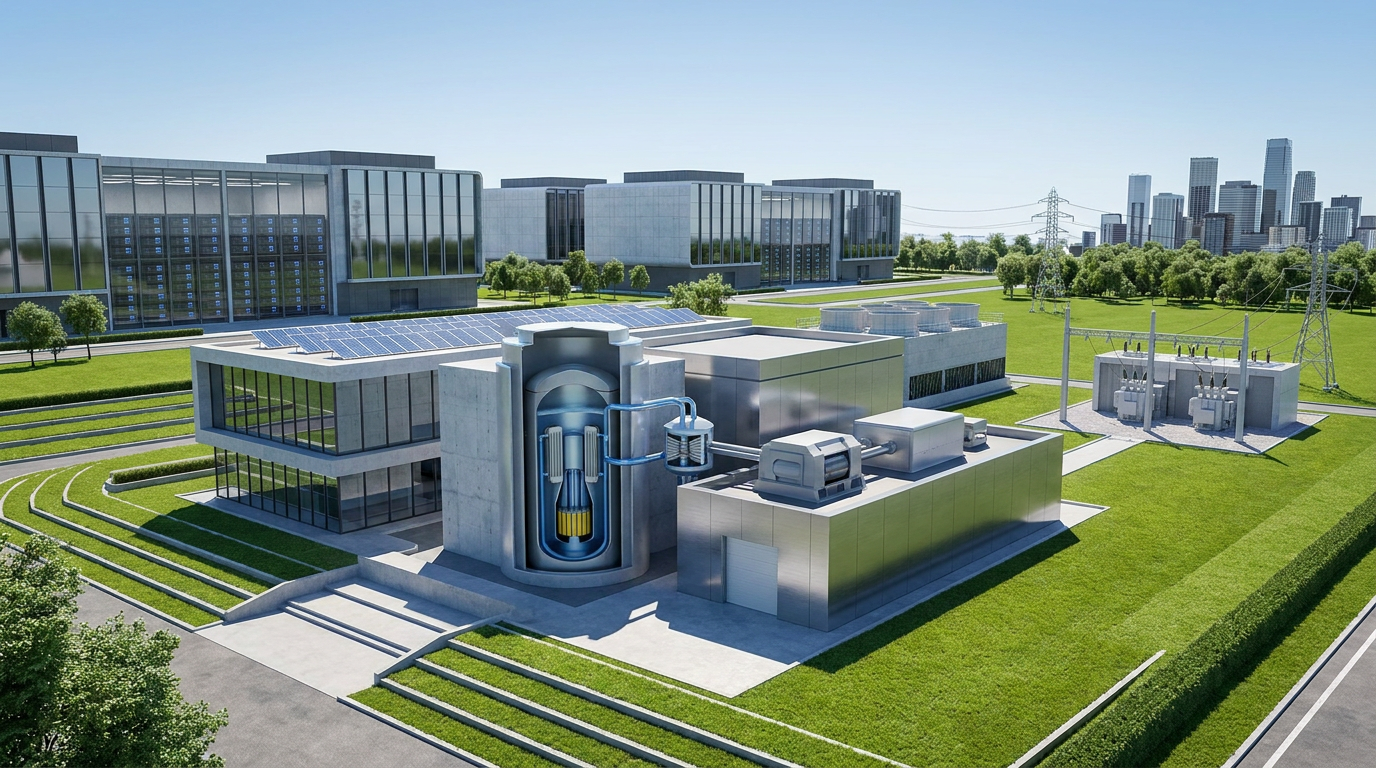
Small Modular Reactors represent a fundamental shift in how nuclear power is designed, built, and deployed. Traditional nuclear plants are bespoke, massive infrastructure projects that generate upwards of 1,000 megawatts electric (MWe) and often require billions of dollars and a decade to construct. SMRs, by definition, produce 300 MWe or less. More importantly, the "modular" designation means their components are standardized and manufactured in centralized factories. These modules can then be shipped by truck, rail, or barge to a site and assembled in a matter of two to three years. This factory-fabrication model aims to replace the unpredictable economics of custom construction with the reliable cost-efficiencies of serial production.[1][3]
The reduced physical footprint of SMRs unlocks deployment options that were previously impossible for nuclear energy. Because they require significantly less land and, in many designs, less cooling water, SMRs can be installed in remote communities, on isolated island grids, or directly adjacent to energy-hungry industrial facilities. This co-location capability is particularly attractive to the tech sector. Major corporations, including Amazon and Google, are actively investing in SMR developers like X-energy and Kairos Power to secure dedicated, zero-carbon electricity for their expanding fleets of data centers.[2][5]

Beyond their size and construction methods, the next wave of nuclear innovation involves a leap in reactor physics and engineering, collectively known as Generation IV (Gen IV). The Generation IV International Forum, a cooperative global endeavor established in 2000, identified six promising reactor technologies that represent the future of nuclear energy. These include the Molten Salt Reactor (MSR), Sodium-cooled Fast Reactor (SFR), Lead-cooled Fast Reactor (LFR), Gas-cooled Fast Reactor (GFR), Supercritical Water-cooled Reactor (SCWR), and Very High-Temperature Reactor (VHTR). Unlike the current fleet of Generation II and III light-water reactors, these advanced systems utilize novel coolants and operate at significantly higher temperatures.[6]
The shift away from water as a primary coolant is a critical evolution. Reactors cooled by liquid metals, such as sodium or lead, or by molten salts, can operate at near atmospheric pressure. This eliminates the need for the massive, expensive, and heavily reinforced containment domes required to hold highly pressurized water in traditional plants. Furthermore, these advanced coolants are vastly more efficient at transferring heat, allowing the reactors to achieve operating temperatures between 500 and 850 degrees Celsius.[4][6]
These extreme temperatures open up entirely new applications for nuclear energy beyond simply generating electricity. The high-grade industrial heat produced by Gen IV reactors can be piped directly into chemical manufacturing plants, oil refineries, and steel or cement production facilities—sectors that are notoriously difficult to decarbonize using electricity alone. Additionally, this intense heat can be utilized for high-temperature electrolysis or thermochemical processes to produce clean hydrogen fuel at scale, providing a critical building block for a broader hydrogen economy.[2][6]

Safety is perhaps the most heavily scrutinized aspect of nuclear power, and both SMRs and Gen IV designs incorporate a paradigm shift known as "passive safety." Traditional reactors rely on "active" safety systems—complex networks of electrically driven pumps, valves, and backup diesel generators—to circulate coolant and prevent meltdowns during an emergency. If power is lost, as happened during the Fukushima Daiichi disaster, the core is at risk. Advanced reactors, however, are designed to rely on the immutable laws of physics.[3][4]
If power is lost, as happened during the Fukushima Daiichi disaster, the core is at risk.
In a passive safety system, mechanisms like natural circulation, gravity-driven coolant injection, and convection take over automatically if the reactor loses external power or operator control. Because SMR cores are smaller and produce less residual decay heat, they can be designed to safely cool themselves indefinitely without human intervention or external electricity. Some Gen IV designs, such as molten salt reactors, feature a "freeze plug" at the bottom of the vessel; if temperatures rise too high, the plug melts, and the liquid fuel safely drains into a sub-critical catch basin where the fission reaction naturally stops.[3][6]
Another major advantage of advanced reactors is their potential to address the long-standing challenge of nuclear waste. Many Gen IV designs, particularly fast-neutron reactors, utilize a "closed fuel cycle." This means they are capable of consuming a much higher percentage of the uranium fuel, and some can even be fueled by the spent nuclear waste generated by older, traditional reactors. By recycling and burning these long-lived transuranic elements, advanced reactors can extract vastly more energy from the same amount of mined uranium while significantly reducing both the volume and the radioactive lifespan of the final waste product.[6]
The global race to commercialize these technologies has accelerated dramatically in the mid-2020s. China took an early lead by connecting the world's first Generation IV demonstration reactor, the HTR-PM (a high-temperature gas-cooled pebble-bed reactor), to its grid in December 2023. Russia has also been operating a floating SMR, the KLT-40S, since 2020. However, Western nations are now mobilizing massive public and private capital to establish their own supply chains and regain technological leadership.[2][4]

In the United States, the Department of Energy (DOE) launched the Reactor Pilot Program in 2025, streamlining regulatory pathways to fast-track advanced reactor demonstrations. This initiative aims to have at least three new reactor designs reach criticality by mid-2026. Companies like Kairos Power have already broken ground on commercial demonstration reactors, such as the Hermes 2 facility in Tennessee, while X-energy is advancing a four-unit SMR installation at a Dow chemical plant in Texas, slated for operation by 2030.[2][5]
Europe is similarly aggressively pursuing SMR deployment. Recognizing the technology's potential to enhance energy security and meet stringent climate targets, the European Commission launched the European SMR Industrial Alliance in early 2024. By March 2026, the Commission had published a comprehensive strategy aimed at bringing the first operational SMRs online in Europe by the early 2030s. The European Union projects that its total SMR capacity could reach between 17 and 53 gigawatts by 2050, replacing aging fossil-fuel plants and preserving high-skilled industrial jobs.[3]
Despite the immense promise, the path to widespread SMR adoption is fraught with significant hurdles. The most immediate challenge is economic. While the "nth-of-a-kind" factory-built SMR is projected to be highly cost-competitive, the "first-of-a-kind" demonstration projects are currently facing steep capital costs and supply chain bottlenecks. Critics point out that wind and solar power, coupled with battery storage, are already cheap and available today, whereas commercial SMR fleets remain largely theoretical and may not arrive in time to meet urgent 2030 climate deadlines.[1][3]

Fuel supply presents another critical bottleneck. Many advanced SMR and Gen IV designs require High-Assay Low-Enriched Uranium (HALEU), which is enriched to between 5% and 20% uranium-235—higher than the fuel used in traditional reactors. Until recently, Russia was the only commercial supplier of HALEU. In response, the US and European governments are investing billions to rapidly stand up domestic uranium enrichment capabilities to ensure a secure, independent fuel supply for the next generation of reactors.[5]
Regulatory frameworks also require a massive overhaul. The world's nuclear regulatory bodies were built to oversee massive, custom-built light-water reactors. Licensing a factory-built, liquid-metal-cooled microreactor requires entirely new safety standards and evaluation models. While agencies like the US Nuclear Regulatory Commission and its international counterparts are working to streamline approvals, the friction between innovative engineering and conservative regulatory cultures remains a pacing factor for the industry.[3][5]
Ultimately, the success of Small Modular Reactors and Generation IV technology will hinge on public acceptance and demonstrated execution. If the industry can deliver its initial demonstration projects on time and on budget, proving the viability of factory fabrication and passive safety, SMRs could become the linchpin of a stable, zero-carbon global grid. As the energy transition enters its most difficult phase—decarbonizing heavy industry and powering the AI revolution—advanced nuclear power offers a compelling, physics-based solution to the limits of intermittent renewables.[1][2][6][7]
How we got here
Jan 2000
The Generation IV International Forum is established to coordinate global R&D on advanced nuclear systems.
May 2020
Russia's KLT-40S, a floating small modular reactor, begins commercial operation.
Dec 2023
China connects the HTR-PM, the world's first Generation IV demonstration reactor, to its power grid.
Feb 2024
The European Commission launches the European SMR Industrial Alliance to accelerate deployment.
May 2025
The US Department of Energy launches the Reactor Pilot Program to fast-track advanced reactor licensing.
April 2026
Kairos Power breaks ground on the Hermes 2 commercial demonstration reactor in the United States.
Viewpoints in depth
Advanced Nuclear Advocates
Focuses on rapid deployment, industrial use, and technological breakthroughs.
This camp, including the US Department of Energy and industry analysts, argues that advanced nuclear is the only viable solution to provide zero-carbon baseload power for the AI boom and heavy industry. They emphasize that factory fabrication will eventually drive down costs, and that the high-temperature heat from Gen IV reactors is essential for decarbonizing sectors like steel and cement.
Institutional Pragmatists
Focuses on regulatory frameworks, safety standards, and measured integration into existing grids.
International bodies like the IAEA and the European Commission support SMR development but stress the immense logistical and regulatory hurdles. They focus on harmonizing international licensing standards, ensuring the secure supply of HALEU fuel, and building public trust before these reactors can be widely deployed across diverse national grids.
Energy Systems Analysts
Focuses on the broader energy transition, comparing nuclear economics with renewables and grid demands.
Academic and editorial observers weigh the promise of SMRs against the current reality of cheap renewables. They note that while SMRs offer unmatched reliability and footprint advantages, the 'first-of-a-kind' economic penalties are currently severe. They argue the success of the technology hinges entirely on whether the industry can actually achieve the cost savings promised by serial factory production.
What we don't know
- Whether the promised cost savings of serial factory production will actually materialize once SMRs move beyond early demonstration phases.
- How quickly international regulatory bodies can harmonize licensing standards for novel, non-water-cooled reactor designs.
- Whether the domestic supply chain for High-Assay Low-Enriched Uranium (HALEU) can scale fast enough to meet the projected demand of advanced reactors.
Key terms
- Small Modular Reactor (SMR)
- A compact nuclear reactor producing 300 megawatts or less, designed to be factory-built and transported to a site for assembly.
- Generation IV (Gen IV)
- A set of six advanced nuclear reactor technologies that use novel coolants like molten salt or liquid metal to improve efficiency, safety, and waste reduction.
- Passive Safety System
- A safety mechanism that relies on natural physical forces, such as gravity or natural circulation, to cool a reactor during an emergency without needing external electricity.
- High-Assay Low-Enriched Uranium (HALEU)
- A specialized nuclear fuel enriched between 5% and 20%, required by many advanced reactor designs to achieve longer operating cycles in a smaller core.
- Baseload Power
- The minimum level of electricity demand on a grid over a 24-hour period, requiring power plants that can generate consistent, uninterrupted energy.
Frequently asked
What is the difference between an SMR and a traditional nuclear reactor?
Traditional reactors are massive, custom-built facilities generating over 1,000 megawatts. SMRs produce 300 megawatts or less and are built as standardized modules in factories, which are then transported to the site for quicker assembly.
Are Small Modular Reactors safer?
Yes. Most SMRs and Gen IV designs use 'passive safety' systems. Instead of relying on electrical pumps that can fail during a blackout, they use natural physics like gravity and convection to automatically cool the reactor in an emergency.
Why do tech companies want nuclear power?
AI data centers require massive amounts of uninterrupted, 24/7 electricity. Because wind and solar are intermittent, tech giants are investing in SMRs to provide reliable, zero-carbon baseload power directly to their facilities.
What is a Generation IV reactor?
It is the next evolution of nuclear technology. Instead of using water to cool the reactor, Gen IV designs use molten salts, liquid metals, or high-temperature gases, allowing them to operate more efficiently and produce industrial-grade heat.
Sources
Source coverage
7 outlets
3 viewpoints surfaced







[1]ABI ResearchAdvanced Nuclear Advocates
SMRs Are Driving the Next Wave of Energy Transformation
Read on ABI Research →[2]Stanford UniversityEnergy Systems Analysts
Understand Energy: Small Modular Reactors
Read on Stanford University →[3]European CommissionInstitutional Pragmatists
Small modular reactors explained
Read on European Commission →[4]International Atomic Energy AgencyInstitutional Pragmatists
Small modular reactors: flexible and affordable power generation
Read on International Atomic Energy Agency →[5]U.S. Department of EnergyAdvanced Nuclear Advocates
Looking back on a transformative 12 months of progress for nuclear energy
Read on U.S. Department of Energy →[6]Generation IV International ForumAdvanced Nuclear Advocates
Generation IV Technology Systems
Read on Generation IV International Forum →[7]Factlen Editorial TeamEnergy Systems Analysts
Synthesis by Factlen editorial team
Read on Factlen Editorial Team →
Every angle. Every day.
Get energy stories with full source coverage and perspective breakdowns delivered to your inbox.