
How Small Language Models Brought AI Offline and Onto Your Phone
Highly optimized Small Language Models (SLMs) are now running directly on consumer hardware, delivering zero-latency AI that protects user privacy by never sending data to the cloud.
By Factlen Editorial Team
- Privacy & Security Advocates
- Value SLMs primarily for their ability to keep sensitive data on-device and out of corporate cloud servers.
- Mobile Developers & OEMs
- Focus on the performance benefits of edge computing, specifically sub-100ms latency and reduced API costs.
- Resource Skeptics
- Raise concerns about the storage space and battery life required to host multi-gigabyte AI models locally.
What's not represented
- · Cloud Infrastructure Providers losing API revenue
Why this matters
By processing data locally on your device, SLMs eliminate the need to send sensitive personal information, private messages, or confidential documents to third-party cloud servers, fundamentally shifting the balance of digital privacy back to the user.
Key points
- Small Language Models (SLMs) allow AI processing to happen directly on smartphones and laptops.
- On-device AI eliminates network latency, providing sub-100-millisecond response times.
- Because data never leaves the device, SLMs offer unprecedented privacy for sensitive information.
- Modern applications use a hybrid approach, routing simple tasks locally and complex queries to the cloud.
For the past three years, interacting with artificial intelligence usually meant sending your data to a distant server farm and waiting for a response. But in 2026, a quiet revolution has crossed a critical threshold: AI has moved directly into our pockets.[1][7]
The shift is being driven by Small Language Models (SLMs)—highly optimized neural networks designed to run locally on smartphones, laptops, and edge devices without needing an internet connection. While massive cloud-based models still handle complex reasoning, SLMs are taking over everyday tasks, fundamentally changing how consumer hardware operates.[4][6]
To understand the breakthrough, it helps to look at the math. Traditional Large Language Models (LLMs) like GPT-4 operate with hundreds of billions, or even trillions, of parameters, requiring massive data centers to run. In contrast, SLMs typically range from 1 billion to 10 billion parameters.[1][6]

AI researchers achieve this dramatic reduction through techniques like "distillation"—where a smaller model learns to mimic the behavior of a larger one—and "quantization," which compresses the model's mathematical weights so they fit into just 2 to 4 gigabytes of memory. The result is a model that retains 85% to 95% of a massive LLM's performance on specific tasks, but requires a fraction of the computing power.[3][6]
The most immediate benefit of this downsizing is speed. Cloud-based AI APIs typically introduce 200 to 800 milliseconds of network latency before the first word of a response appears. On-device SLMs eliminate this roundtrip entirely, delivering sub-100-millisecond response times. This zero-latency processing is what enables real-time features like live translation during phone calls or instant smart replies in messaging apps.[2][3][4]
But the most profound advantage of local AI is privacy. When a model runs entirely on your device, your data never leaves your hardware. There are no API calls, no server logs, and no third-party data processing agreements. For industries handling sensitive information—like healthcare diagnostics or legal document review—this "data sovereignty" solves one of the biggest regulatory hurdles to AI adoption.[4][6]
This privacy-first architecture is already being deployed at scale. In Android 16, Google integrated Gemini Nano directly into the operating system's AICore, allowing the phone to summarize confidential messages and analyze photos locally. Because the processing happens in secure, volatile memory that auto-wipes after each task, even the operating system doesn't retain a record of the analysis.[2][4]

This privacy-first architecture is already being deployed at scale.
Offline capability is another game-changer. Cloud AI is useless on an airplane, in a remote field location, or during a network outage. SLMs, however, provide continuous intelligence regardless of connectivity. Field researchers, disaster response teams, and travelers can now access sophisticated language translation and data analysis tools entirely off the grid.[4][6]
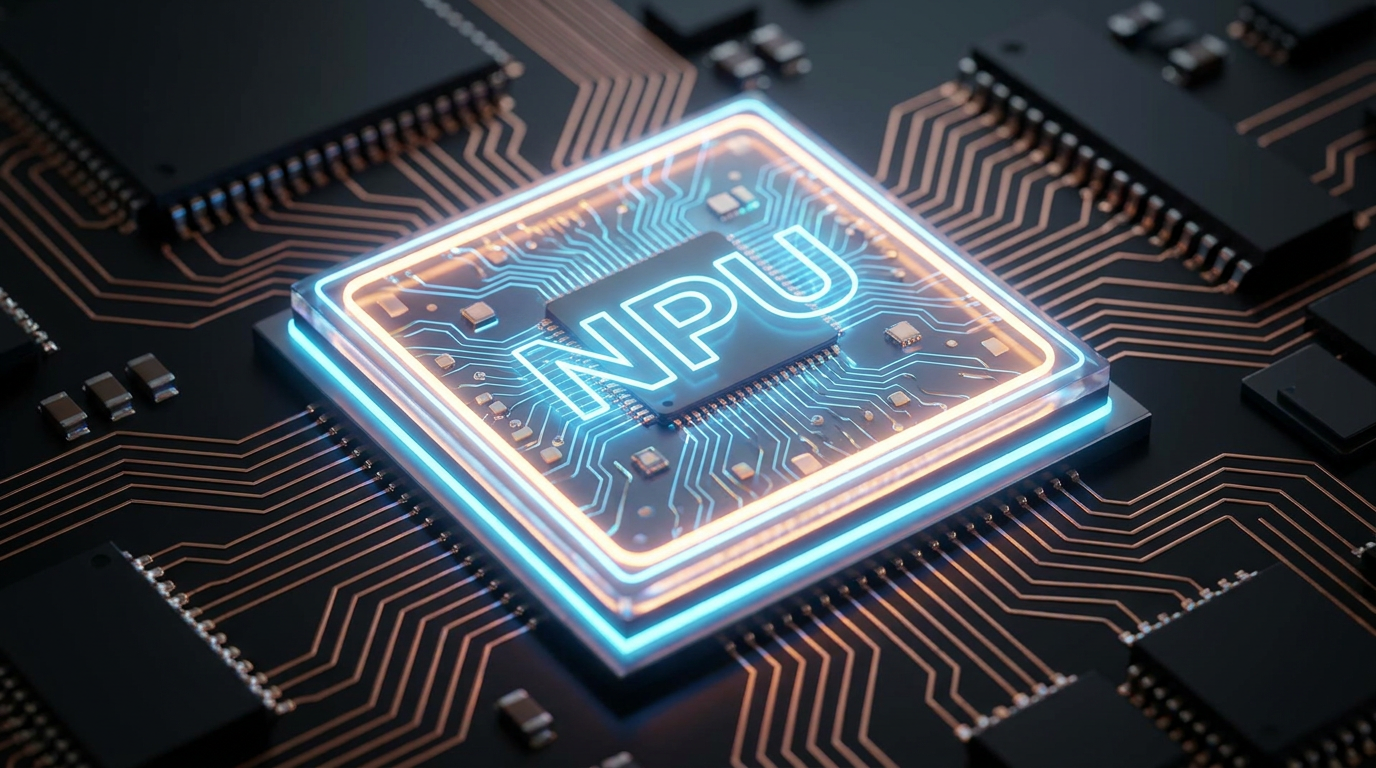
The hardware industry has spent the last two years preparing for this exact moment. The latest consumer chips, such as Qualcomm's Snapdragon 8 Gen 4 and Apple's newest silicon, feature dedicated Neural Processing Units (NPUs) specifically designed to run these models efficiently. By offloading AI tasks to the NPU, devices can run complex models while using up to 40% less battery than cloud-based alternatives.[2][4]
The ecosystem of available models has also exploded in 2026. Microsoft's Phi-4, Meta's Llama 3.2, and Google's Gemma 2 have established a fiercely competitive open-weight landscape. Developers can now download these models, fine-tune them for specific applications, and deploy them directly into mobile apps using standard APIs.[1][3]

However, the transition to local AI has not been entirely frictionless. Because these models require gigabytes of local storage, their deployment has sparked debates about device bloat and user consent.[5]
A notable controversy erupted earlier in 2026 when cybersecurity researchers discovered that Google Chrome was silently downloading a 4-gigabyte Gemini Nano model onto users' desktop machines to power browser-based AI features. While the intention was to improve privacy by processing web summaries locally, the unprompted consumption of disk space frustrated users and IT administrators.[5]
There are also hard limits to what SLMs can achieve. Because of their smaller parameter counts, they lack the broad world knowledge and complex, multi-step reasoning capabilities of frontier cloud models. They also typically feature smaller "context windows," meaning they can only process a few pages of text at a time rather than entire books.[3][4]

Consequently, the future of AI architecture is not strictly local, but hybrid. Modern applications are increasingly using "routers"—systems that evaluate a user's prompt and instantly decide where to send it. Routine tasks, quick summaries, and sensitive data are routed to the on-device SLM, while complex reasoning queries are escalated to the cloud.[1][4]
Ultimately, the rise of Small Language Models represents a democratization of artificial intelligence. By breaking the absolute dependency on massive data centers, SLMs are making AI faster, cheaper, and fundamentally more private. In 2026, the most powerful AI is no longer just the one with the most parameters—it is the one that lives securely in your hands.[6][7]
How we got here
2023
Large Language Models dominate the industry, requiring massive cloud infrastructure and constant internet connectivity.
2024
Early SLMs like Phi-2 and Llama 3 8B prove that smaller, distilled models can punch above their weight class.
2025
Neural Processing Units (NPUs) become standard in flagship smartphone processors from Apple and Qualcomm.
Early 2026
Android 16 integrates Gemini Nano directly into the OS AICore, enabling system-wide local AI capabilities.
Viewpoints in depth
Privacy & Security Advocates
Value SLMs primarily for their ability to keep sensitive data on-device and out of corporate cloud servers.
For privacy advocates and enterprise security teams, the shift to on-device AI solves the fundamental flaw of the cloud era: data leakage. By ensuring that confidential documents, medical records, and private messages are processed locally and immediately purged from volatile memory, SLMs provide 'data sovereignty.' This allows highly regulated industries like healthcare and finance to adopt generative AI without violating compliance laws or risking third-party data breaches.
Mobile Developers & OEMs
Focus on the performance benefits of edge computing, specifically sub-100ms latency and reduced API costs.
Hardware manufacturers and app developers view SLMs as the key to unlocking real-time user experiences. By eliminating the 200-800ms roundtrip delay associated with cloud APIs, developers can build features like live voice translation and instant smart replies that feel native to the device. Furthermore, offloading inference to the user's local NPU drastically reduces the recurring cloud computing costs that have traditionally made scaling AI applications prohibitively expensive.
Resource Skeptics
Raise concerns about the storage space and battery life required to host multi-gigabyte AI models locally.
Despite the benefits, some IT administrators and consumer advocates warn about the hidden costs of local AI. A primary concern is device bloat; models like Gemini Nano require gigabytes of local storage, which can silently consume a significant portion of a user's hard drive—as seen in the controversial 4GB Chrome background download. Skeptics also point out that while NPUs are efficient, running intensive AI tasks on older or lower-tier hardware can still lead to rapid battery drain and thermal throttling.
What we don't know
- Whether hardware manufacturers will increase base storage capacities to accommodate multiple gigabyte-sized AI models.
- How quickly open-weight SLMs will close the reasoning gap with proprietary cloud-based frontier models.
Key terms
- Small Language Model (SLM)
- A compact AI system (typically 1 to 10 billion parameters) designed to run efficiently on consumer devices without cloud connectivity.
- Quantization
- A compression technique that reduces the mathematical precision of an AI model's weights, allowing it to fit into smaller memory spaces.
- Neural Processing Unit (NPU)
- A specialized hardware chip designed specifically to accelerate artificial intelligence and machine learning tasks efficiently.
- Distillation
- A training method where a smaller AI model learns to mimic the outputs and reasoning patterns of a much larger, more complex model.
- Inference
- The process of an AI model running live to generate a response or prediction based on user input.
Frequently asked
Can I run an SLM on my current phone?
It depends on your hardware. While older phones may struggle, devices from 2024 onwards with dedicated Neural Processing Units (NPUs) can run models like Gemini Nano efficiently.
Does on-device AI drain my battery?
Modern SLMs are optimized for NPUs, which are highly energy-efficient. In many cases, running a local model uses less battery than maintaining a constant radio connection to a cloud server.
Is my data truly private with an SLM?
Yes. Because the model runs entirely on your device's local hardware, your prompts, messages, and documents are never transmitted over the internet to a third-party server.
Why are SLMs sometimes called 'edge AI'?
'The edge' refers to computing that happens at the outer edges of a network (like your phone or laptop) rather than in a centralized cloud data center.
Sources
Source coverage
7 outlets
3 viewpoints surfaced







[1]InfoWorldMobile Developers & OEMs
Small language models: Rethinking enterprise AI architecture
Read on InfoWorld →[2]TechPursMobile Developers & OEMs
Gemini Nano on Android 2026: Easy & Powerful Guide
Read on TechPurs →[3]Local AI MasterMobile Developers & OEMs
Gemini Nano Android: On-Device AI Guide (2026)
Read on Local AI Master →[4]MediumPrivacy & Security Advocates
Implementing On-Device SLMs: A 2026 Guide to Gemini Nano
Read on Medium →[5]The Small Business Cybersecurity GuyResource Skeptics
Chrome Gemini Nano Silent AI Download Problem 2026
Read on The Small Business Cybersecurity Guy →[6]Hugging FacePrivacy & Security Advocates
Small Language Models (SLM): A Comprehensive Overview
Read on Hugging Face →[7]Factlen Editorial TeamPrivacy & Security Advocates
Synthesis by Factlen editorial team
Read on Factlen Editorial Team →
More in ai
See all 5 stories →On-Device AI
How Local AI Replaced the Cloud: Running Frontier Models on Your Laptop
0 sources

Enterprise AI
The Rise of Small Language Models: How Enterprises Are Running AI Locally in 2026
0 sources
Drug Discovery
New AI Model Accelerates Molecular Simulations 10,000-Fold, Slashing Drug Discovery Timelines
0 sources

Every angle. Every day.
Get ai stories with full source coverage and perspective breakdowns delivered to your inbox.