
How Precision Fermentation is Brewing the Future of Animal-Free Dairy
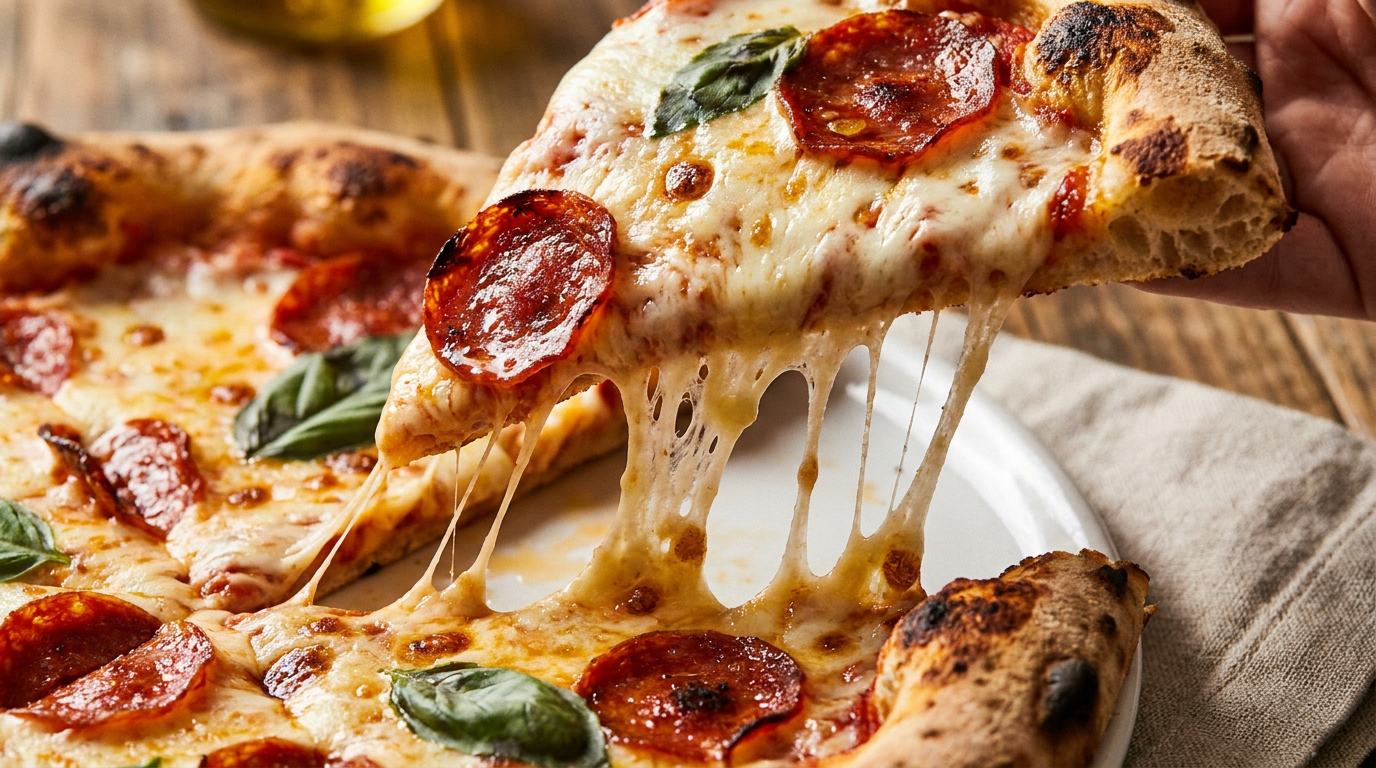
A wave of regulatory approvals is bringing bioidentical, animal-free dairy proteins out of the lab and into the commercial market. By using engineered microbes to brew real casein and whey, food-tech companies are unlocking the exact melt and stretch of traditional cheese without the environmental footprint.
By Factlen Editorial Team
- Food-Tech Innovators
- Focus on decoupling protein from animals while matching the exact sensory experience of traditional dairy.
- Consumer Insights Analysts
- Emphasize that mainstream adoption requires integrating these novel proteins into familiar, everyday formats.
- Environmental Scientists
- Highlight the dramatic ecological benefits of the technology, while noting the energy requirements of scaling bioreactors.
What's not represented
- · Traditional Dairy Farmers
- · Artisan Cheesemakers
- · Vegan Purists
Why this matters
Vegan cheese has historically fallen short of the real thing because plant-based ingredients cannot replicate the melt and stretch of dairy proteins. Precision fermentation solves this by brewing bioidentical milk proteins without the cow, offering a sustainable solution to the world's growing protein demand without forcing consumers to compromise on taste.
Key points
- Precision fermentation uses engineered microbes to brew bioidentical dairy proteins without animals.
- The FDA recently issued 'no questions' letters for animal-free casein and whey, clearing them for the U.S. market.
- These proteins unlock the exact melt, stretch, and texture of traditional cheese that plant-based alternatives lack.
- The technology drastically reduces the greenhouse gas emissions, land use, and water consumption associated with dairy farming.
- Scaling production to achieve price parity with conventional dairy remains the industry's primary hurdle.
For decades, the holy grail of alternative dairy has been the melt. While plant-based milks have successfully captured a significant share of the beverage market, vegan cheeses have historically relied on starches and coconut oils that fall short of replicating the stretch, texture, and mouthfeel of traditional dairy.[8]
But in 2026, the alternative protein sector is crossing a critical threshold. A wave of regulatory approvals and fresh capital is bringing "precision fermentation" dairy out of the laboratory and into the mainstream commercial market.[2][8]
Precision fermentation operates much like a high-tech brewing technique. Instead of using yeast to convert sugar into alcohol, scientists engineer microorganisms—such as specific strains of yeast or fungi—to produce complex animal proteins.[4]
In the dairy sector, the focus is entirely on whey and casein, the two primary proteins found in cow's milk. Casein, in particular, is the foundational structural protein that gives cheese its signature elasticity and creamy indulgence.[5]
The production process begins by identifying the exact genetic sequence in a cow's DNA that codes for these milk proteins. This genetic information is then inserted into the DNA of the microbial host, effectively teaching the microbe how to produce the target protein.[1][5]

These engineered microbes are placed into large, stainless-steel fermenters, commonly known as bioreactors. Inside these vessels, they are fed a nutrient-rich medium consisting of sugars, ammonia, and other essential elements.[4][5]
As the microbes consume the nutrients and multiply, they act as microscopic factories, churning out the desired milk proteins. Once the fermentation cycle is complete, the proteins are carefully separated and purified from the remaining microbial biomass.[1][5]
The end result is a pure, bioidentical protein powder. Because it is molecularly indistinguishable from the casein or whey produced by a cow, it unlocks the exact sensory and functional experience of conventional dairy—without involving a single animal.[1]
Recent regulatory milestones have dramatically accelerated the industry's path to market. In June 2026, Berlin-based food-tech company Formo received a highly anticipated "no questions" letter from the U.S. Food and Drug Administration for its recombinant casein protein.[1]

Recent regulatory milestones have dramatically accelerated the industry's path to market.
This letter signals that the FDA has no further safety queries regarding the ingredient's Generally Recognized As Safe (GRAS) status, effectively clearing the way for Formo to sell its bioidentical casein to American food manufacturers.[1]
Formo joins a growing cohort of pioneers, including France's Verley and Israel's Imagindairy, which have secured similar FDA clearances for their animal-free whey proteins over the past two years.[2][3]
Investor confidence is also rebounding. Verley recently closed a $38 million funding round to scale its whey production capabilities, while Belgium's Those Vegan Cowboys broke crowdfunding records to advance their own casein development.[2]

The environmental implications of this shift are profound. By decoupling protein production from traditional animal agriculture, precision fermentation drastically reduces greenhouse gas emissions, land use, and water consumption.[4][5]
The technology also offers a new paradigm for geopolitical food resilience. Because bioreactors only require electricity, water, and a steady supply of feedstock, high-quality protein can be produced near urban population centers rather than relying on vast, climate-vulnerable agricultural regions.[8]
However, the path to widespread adoption is not without friction. Scaling up from laboratory flasks to industrial-scale bioreactors requires massive capital investment, reliable energy inputs, and highly optimized downstream purification processes.[8]
Currently, precision-fermented proteins remain two to five times more expensive than their conventional dairy counterparts, though industry analysts report consistent declines in production costs as facilities scale.[8]

Consumer acceptance represents the final frontier. Market data indicates that shoppers are most likely to embrace these novel proteins when they are integrated into familiar, everyday formats—such as coffee creamers, milk, and high-protein yogurts—rather than entirely new product concepts.[6][7]
Clear labeling will be crucial for building trust. The FDA has established a precedent by accepting terms like "non-animal whey protein," and "non-animal casein" is expected to become the standard nomenclature on U.S. ingredient lists.[1]
As the global population heads toward an estimated 8.5 billion by 2030, traditional dairy production will increasingly struggle to meet skyrocketing protein demands without causing severe ecological strain.[5]
Precision fermentation offers a tractable, scalable solution. By harnessing the power of biotechnology, the industry is poised to deliver the exact dairy experience consumers know and love, reimagined for a sustainable future.[8]
How we got here
2020
Early pioneers begin developing commercial applications for animal-free dairy proteins using precision fermentation.
Jan 2024
Imagindairy receives an FDA "no questions" letter for its animal-free whey protein.
Oct 2025
French biotechnology company Verley secures FDA clearance for its precision-fermented whey proteins.
Feb 2026
Investment in alternative dairy rebounds, with Verley closing a $38 million round and Those Vegan Cowboys breaking crowdfunding records.
Jun 2026
Berlin-based Formo receives an FDA "no questions" letter for its recombinant casein, clearing the path for meltable vegan cheese in the U.S.
Viewpoints in depth
Food-Tech Innovators
Focus on decoupling protein from animals while matching the exact sensory experience of traditional dairy.
Companies like Formo, Verley, and Imagindairy argue that plant-based alternatives have hit a ceiling because they cannot replicate the molecular functionality of real dairy. By producing bioidentical casein and whey, they believe they can win over omnivores who refuse to compromise on the taste, melt, and stretch of traditional cheese. Their primary focus is scaling production to achieve price parity with conventional agriculture.
Consumer Insights Analysts
Emphasize that mainstream adoption requires integrating these novel proteins into familiar, everyday formats.
Market researchers caution that biological feasibility does not automatically translate to consumer acceptance. Data shows that shoppers are hesitant to try entirely new product concepts built around lab-grown proteins. Instead, analysts argue that precision fermentation will scale fastest when used as an invisible upgrade in familiar staples—such as coffee creamers, high-protein yogurts, and standard cheese slices—where the use case is already established.
Environmental Scientists
Highlight the dramatic ecological benefits of the technology, while noting the energy requirements of scaling bioreactors.
Researchers view precision fermentation as a critical tool for feeding a growing global population without exacerbating climate change. The process requires a fraction of the land and water used by traditional dairy farming and virtually eliminates methane emissions from cows. However, scientists note that the environmental performance of these proteins ultimately depends on the energy grid powering the bioreactors and the sustainability of the agricultural sugars used as microbial feedstock.
What we don't know
- The exact timeline for when precision-fermented proteins will reach price parity with heavily subsidized conventional dairy.
- How traditional dairy lobbying groups will respond to labeling conventions as these products enter international markets.
Key terms
- Precision Fermentation
- A biotechnological process that uses genetically engineered microorganisms to produce specific complex molecules, such as animal proteins, without the animal.
- Casein
- The primary structural protein in mammalian milk, responsible for the melting, stretching, and textural properties of cheese.
- Recombinant Protein
- A protein produced by a host organism (like yeast) that has been genetically engineered to carry the DNA sequence for that specific protein.
- Bioreactor
- A large industrial vessel that provides a controlled environment for microorganisms to grow and produce target compounds.
- GRAS (Generally Recognized As Safe)
- A U.S. FDA designation indicating that a food ingredient is safe for consumption based on expert consensus and scientific data.
Frequently asked
Is precision-fermented dairy vegan?
Yes. While the proteins are molecularly identical to those from a cow, no animals are used in the production process.
Is it safe for people with dairy allergies?
No. Because the proteins are bioidentical to cow's milk, they will trigger the exact same allergic reactions in individuals with dairy allergies.
Does it contain lactose?
Generally, no. The fermentation process isolates the pure proteins (whey and casein) without producing lactose, making it suitable for lactose-intolerant consumers.
How will it be labeled on food packaging?
In the U.S., the FDA has guided companies to use terms like "non-animal whey protein" or "non-animal casein" to clearly indicate the source.
Sources
Source coverage
8 outlets
3 viewpoints surfaced








[1]FlavoristFood-Tech Innovators
Formo's recombinant casein protein receives 'no questions' letter from the FDA
Read on Flavorist →[2]DairyReporterFood-Tech Innovators
Precision-fermentation start-ups are attracting new investment to speed up production
Read on DairyReporter →[3]DairyNewsFood-Tech Innovators
Imagindairy Breakthrough: US Regulatory Green Light for Animal-Free Dairy Proteins
Read on DairyNews →[4]CSIROEnvironmental Scientists
What is precision fermentation?
Read on CSIRO →[5]IntechOpenEnvironmental Scientists
Precision Fermentation for Dairy Proteins
Read on IntechOpen →[6]TastewiseConsumer Insights Analysts
Precision fermentation enters through milk and coffee
Read on Tastewise →[7]Persistence Market ResearchConsumer Insights Analysts
Precision Fermentation Market By Ingredient Type
Read on Persistence Market Research →[8]Factlen Editorial TeamEnvironmental Scientists
Synthesis by Factlen editorial team
Read on Factlen Editorial Team →

Every angle. Every day.
Get food drink stories with full source coverage and perspective breakdowns delivered to your inbox.