
How 'Prebunking' Acts as a Cognitive Vaccine Against Misinformation
Researchers and tech platforms are moving beyond traditional fact-checking by using psychological inoculation to teach users how to spot manipulation tactics before they spread.
By Factlen Editorial Team
- Cognitive Psychologists
- Focus on the mechanism of mental immunity and technique recognition.
- Tech Platforms & Jigsaw
- Focus on the scalability of the intervention and real-world ad deployment.
- Ecological Skeptics
- Caution that real-world social media feeds often override cognitive training.
- Fact-Checking Organizations
- View prebunking as a vital upstream complement to traditional, reactive debunking.
What's not represented
- · Social media algorithm designers who control the distribution of emotional content
- · Everyday users who unknowingly share misinformation due to algorithmic incentives
Why this matters
Understanding the mechanics of digital deception empowers you to navigate social media with cognitive immunity, making you significantly less likely to be manipulated by outrage-bait or false narratives.
Key points
- Prebunking acts like a cognitive vaccine, exposing users to weakened manipulation tactics to build mental resistance.
- A major study of 30,000 participants found that short videos significantly improved the ability to spot misinformation.
- Google Jigsaw has successfully scaled prebunking campaigns to tens of millions of users via social media ad networks.
- The protection typically lasts for two to three months before a 'booster' reminder is required.
- While effective at reducing belief in false claims, prebunking struggles to stop users from sharing highly emotional content.
The internet's misinformation problem is almost always treated reactively. Fact-checkers play a relentless, exhausting game of whack-a-mole, debunking falsehoods only after they have gone viral. By the time a lie is corrected, the algorithmic damage is often done, and the correction rarely reaches the same audience that saw the original claim.[7]
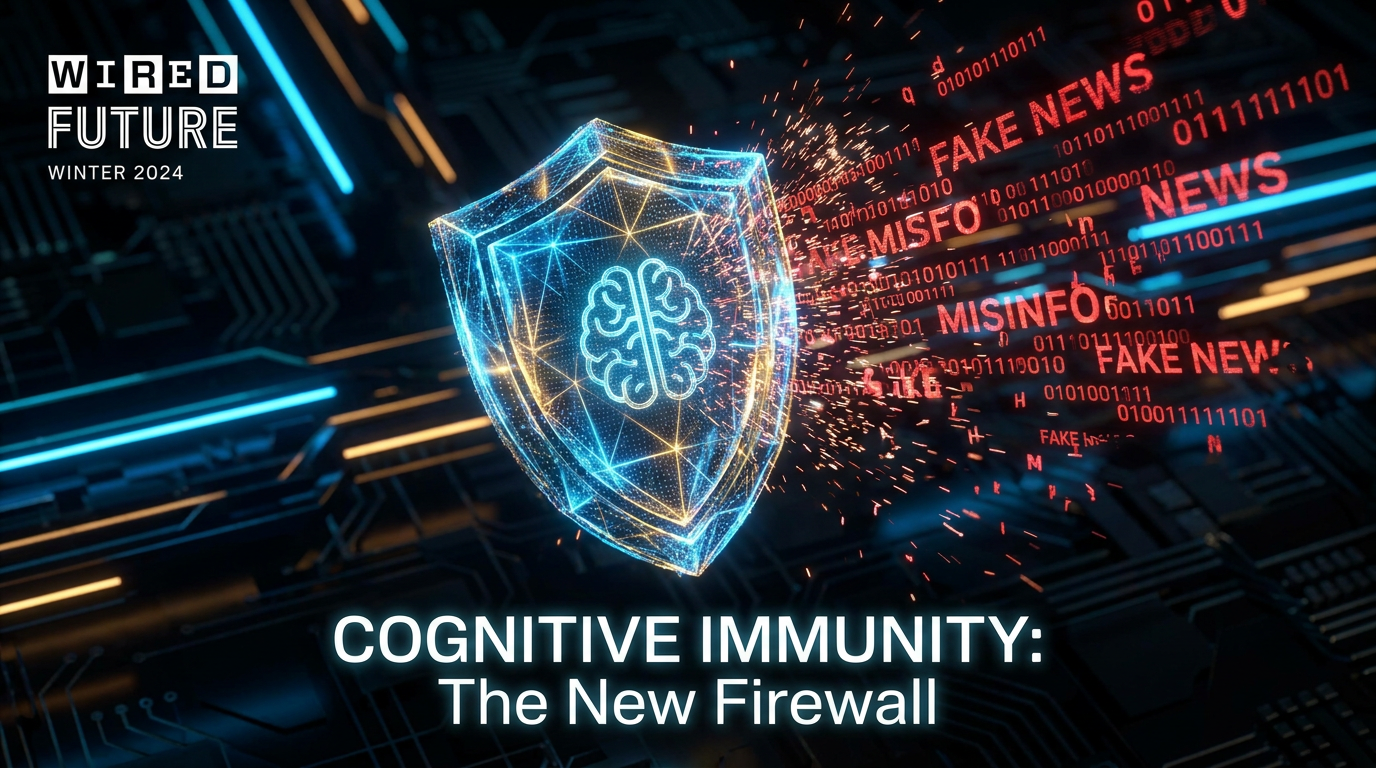
But a proactive strategy is gaining unprecedented traction among cognitive scientists and technology platforms: psychological inoculation, commonly known as "prebunking." Rather than chasing specific lies, this approach targets the underlying structural techniques used to deceive.[1]
The concept borrows directly from epidemiology. Just as a medical vaccine exposes the immune system to a weakened pathogen to build physical antibodies, psychological inoculation exposes the mind to a weakened dose of a manipulation tactic to build mental antibodies.[2]

When users understand exactly how a trick works—such as emotional manipulation, scapegoating, or a false dichotomy—they develop "cognitive immunity." They become significantly less likely to fall for the tactic when they encounter it in the wild, regardless of the specific political, social, or scientific topic being discussed.[1][2]
The empirical evidence backing this approach is robust. In a landmark study published in Science Advances, researchers from the University of Cambridge and the University of Bristol tested 90-second prebunking videos on nearly 30,000 participants to measure their efficacy.[1][2]
The videos used relatable pop-culture references—like Star Wars or Family Guy—to explain logical fallacies in a non-threatening way. The results were striking: a single viewing significantly improved participants' ability to spot misinformation and boosted their confidence in rejecting it, working equally well across different education levels and political ideologies.[1]
Moving from the laboratory to the real world, tech companies have begun deploying these cognitive vaccines at scale. Google's Jigsaw unit has run massive prebunking ad campaigns across YouTube, TikTok, and Facebook in regions vulnerable to targeted disinformation.[3]
Moving from the laboratory to the real world, tech companies have begun deploying these cognitive vaccines at scale.
During a campaign in Eastern Europe aimed at neutralizing anti-refugee propaganda, Jigsaw's videos were viewed 38 million times. Subsequent polling revealed that users exposed to the videos showed a 5% to 10% boost in their ability to correctly identify manipulation techniques compared to a control group.[3]
Similar campaigns have been deployed ahead of elections in Indonesia and to counter polarizing narratives in Germany. Because the videos focus on the method of deception rather than the subject, they bypass the partisan defensiveness that often blocks traditional fact-checking.[3][7]
However, researchers caution that prebunking is not a silver bullet. While the intervention reliably improves technique recognition in controlled settings, its impact on actual user behavior in noisy, real-world environments is more complex.[5][6]
A study published by Oxford University Press tested inoculation in an "ecologically valid" simulated social media feed. The researchers found that when synthetic prebunking exercises were mixed with real, highly emotional tweets, the protective effect on user engagement—such as the likelihood to share or click—was sometimes nullified by the sheer emotional weight of the content.[6]
Meta-analyses from the National Institutes of Health echo this nuance. While prebunking consistently reduces the perceived credibility of false information, it is less consistently effective at stopping the impulse to share it, particularly when the content triggers deep-seated outrage or fear.[5]
Another limitation is the decay of cognitive immunity. Just as vaccine efficacy wanes over time, the psychological protection offered by prebunking diminishes. Studies indicate that the heightened awareness typically lasts for two to three months before fading back to baseline.[2][7]

To maintain resilience, populations require "booster doses"—periodic reminders of manipulation tactics delivered during high-risk periods, such as the weeks immediately preceding a major election or during the onset of a public health crisis.[2]
Recognizing these dynamics, the European Fact-Checking Standards Network has begun formally integrating prebunking into its methodology. They view it not as a replacement for debunking, but as a vital upstream complement that prepares the ground for a healthier information diet.[4]

By forewarning the public about anticipated narratives, exposing the expected falsehoods in a controlled manner, and providing preemptive refutations, fact-checkers can build a more resilient digital ecosystem. In the fight against digital deception, teaching people how they are being manipulated may be the most empowering defense of all.[4][7]
How we got here
1960s
Social psychologist William McGuire first proposes 'inoculation theory' as a framework for resistance to persuasion.
2020
Researchers launch gamified prebunking interventions, proving the concept works against digital misinformation.
2022
A landmark Cambridge and Bristol study of 30,000 users proves short prebunking videos significantly boost technique recognition.
2023
Google Jigsaw scales prebunking campaigns across Europe and Asia, reaching tens of millions of users via ad networks.
2025
The European Fact-Checking Standards Network formalizes prebunking as a core methodology alongside traditional debunking.
Viewpoints in depth
Cognitive Psychologists
Focus on the mechanism of mental immunity and technique recognition.
Academic researchers argue that the human brain can be trained to spot structural deception. By focusing on the *how* of misinformation—such as the use of hyper-emotive language or logical fallacies—rather than the *what*, psychologists bypass the partisan defensiveness that often causes people to reject traditional fact-checks. They point to robust lab data showing that a single exposure to a prebunking video can double a user's ability to identify a false dichotomy.
Tech Platforms & Jigsaw
Focus on the scalability of the intervention and real-world deployment.
For technology companies, prebunking offers a scalable, content-neutral way to combat misinformation without acting as arbiters of truth. By purchasing ad space on platforms like YouTube and TikTok, units like Google Jigsaw can deliver cognitive 'vaccines' to millions of users in targeted regions. They argue that this upstream approach is far more efficient than playing whack-a-mole with individual false claims or engaging in controversial content moderation.
Ecological Skeptics
Caution that real-world social media feeds often override cognitive training.
Some researchers warn against overstating prebunking's efficacy outside the laboratory. They note that while users might correctly identify a manipulation technique in a quiz, their behavior changes in the wild. In a noisy, fast-scrolling social media feed filled with genuine outrage and tribal signaling, emotional triggers frequently override cognitive training, leading users to share misinformative content despite having been inoculated against it.
What we don't know
- How to effectively inoculate users against highly sophisticated, AI-generated deepfakes that don't rely on traditional text-based logical fallacies.
- Whether the 5-10% boost in technique recognition is enough to meaningfully alter the macro-level spread of misinformation during a major crisis.
Key terms
- Psychological Inoculation
- A cognitive strategy that exposes individuals to a weakened form of a deceptive tactic to build their mental resistance against future manipulation.
- Prebunking
- The practical application of inoculation theory; preemptively refuting anticipated false narratives or explaining manipulation techniques before they spread.
- False Dichotomy
- A logical fallacy that falsely presents only two opposing options or sides, ignoring nuance or middle-ground possibilities.
- Scapegoating
- The tactic of unfairly blaming an individual or group for a broader, complex problem to manipulate public anger.
- Ecological Validity
- In research, the degree to which the conditions of an experiment accurately reflect real-world environments, such as a noisy social media feed.
Frequently asked
What is the difference between debunking and prebunking?
Debunking corrects a false claim after it has already spread. Prebunking warns people about manipulation tactics before they encounter them, building cognitive resistance upstream.
What are common manipulation techniques?
Common tactics include emotional language designed to trigger outrage, false dichotomies that present only two extreme options, and scapegoating vulnerable groups.
Does prebunking work on everyone?
Studies show it is effective across different education levels and political ideologies, though its ability to stop people from sharing highly emotional content in real-world feeds can vary.
How long does the cognitive protection last?
The cognitive immunity typically lasts for two to three months, after which "booster" reminders are needed to maintain effectiveness.
Sources
Source coverage
7 outlets
4 viewpoints surfaced







[1]University of CambridgeCognitive Psychologists
Short animations help 'inoculate' people against harmful content
Read on University of Cambridge →[2]Science AdvancesCognitive Psychologists
Psychological inoculation improves resilience against misinformation on social media
Read on Science Advances →[3]Google JigsawTech Platforms & Jigsaw
Prebunking: Building resilience against manipulation
Read on Google Jigsaw →[4]European Fact-Checking Standards NetworkFact-Checking Organizations
Adding to the Fact-Checking Toolkit: Prebunking
Read on European Fact-Checking Standards Network →[5]National Institutes of HealthEcological Skeptics
The efficacy of psychological inoculation against misinformation: A meta-analysis
Read on National Institutes of Health →[6]Oxford University PressEcological Skeptics
Psychological inoculation in ecologically valid social media contexts
Read on Oxford University Press →[7]Factlen Editorial TeamFact-Checking Organizations
Synthesis by Factlen editorial team
Read on Factlen Editorial Team →
More in news politics
See all 9 stories →US-Iran Deal
U.S. and Iran Sign Agreement to End War; Vance Lashes Out at Israeli Critics
7 sources
U.S.-Iran Deal
U.S. and Iran Sign 14-Point Agreement to End War, Sparking Fierce Backlash from Israel
6 sources

U.S.-Iran Relations
Vance Rebukes Israeli Critics of U.S.-Iran Peace Agreement, Warning Against Alienating 'Only Powerful Ally'
8 sources
Cognitive Defense
The Science of 'Prebunking': How Psychological Inoculation is Defeating Misinformation
6 sources

Every angle. Every day.
Get news politics stories with full source coverage and perspective breakdowns delivered to your inbox.