
How Pink Noise and Acoustic Stimulation Are Unlocking Deeper, More Restorative Sleep
Emerging research shows that listening to 'pink noise' timed to brain waves can enhance slow-wave deep sleep, potentially improving memory consolidation and cardiovascular health.
By Factlen Editorial Team
- Sleep Neuroscientists
- View acoustic stimulation as a breakthrough non-invasive tool for cognitive preservation.
- Consumer Tech Advocates
- Believe smart wearables will democratize deep-sleep enhancement for the public.
- Clinical Skeptics
- Caution that long-term efficacy is unproven and the auditory system needs rest.
What's not represented
- · Audiologists concerned about long-term hearing health
- · Patients suffering from severe clinical insomnia
Why this matters
As we age, the brain's ability to generate restorative deep sleep declines, leading to memory impairment and cognitive issues. Non-invasive acoustic stimulation offers a simple, accessible way to protect brain health and improve daily cognitive function without medication.
Key points
- Slow-wave sleep (SWS) is critical for memory consolidation and physical restoration, but it declines significantly with age.
- Pink noise is a balanced sound profile that mimics natural phenomena like rainfall and ocean waves.
- Playing short bursts of pink noise in sync with the brain's slow waves can amplify deep sleep.
- A Northwestern University study found this technique tripled memory recall performance in older adults.
- Continuous pink noise can also help mask disruptive environmental sounds better than white noise.
- Researchers are exploring acoustic stimulation as a non-invasive way to clear Alzheimer's-linked proteins.
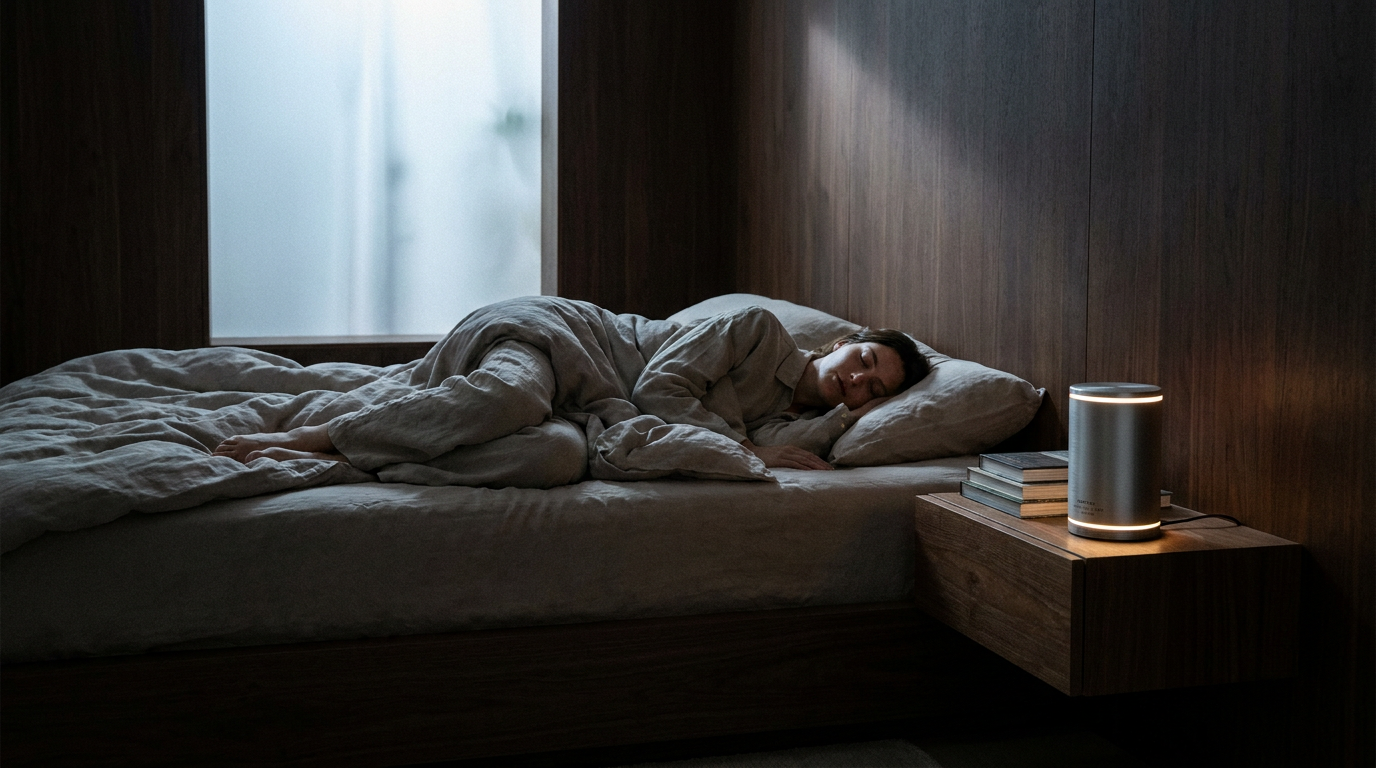
Sleep is not merely a period of unconsciousness; it is an active, highly structured biological process. While much of the public focus remains on getting eight hours of rest, neuroscientists are increasingly focused on the depth of that sleep. The most critical phase for physical and cognitive restoration is slow-wave sleep (SWS), the deepest stage of non-REM sleep. During this period, the brain clears out metabolic waste and consolidates the memories formed during the day.[1][7]
However, the human brain faces a structural problem as it ages: the ability to generate slow-wave sleep drops dramatically. By middle age, the percentage of the night spent in SWS shrinks significantly, creating a vicious cycle. Less deep sleep leads to poorer memory consolidation and cognitive decline, which in turn is associated with further sleep degradation. Finding ways to artificially boost this deep sleep phase has become a holy grail in sleep medicine.[3][4]
Enter sound therapy. For decades, people have relied on white noise to mask disruptive environmental sounds like traffic or snoring. But researchers have discovered that a different acoustic profile—known as pink noise—might actually interact with the brain's electrical activity to deepen sleep, rather than just protect it from interruptions.[1][5]
Unlike white noise, which blasts all audible frequencies at equal intensity and often sounds like harsh television static, pink noise is mathematically balanced for the human ear. In pink noise, the energy decreases by three decibels with each higher octave. This means the lower pitches are louder than the higher pitches, creating a deeper, smoother sound that mimics natural phenomena like steady rainfall, rustling leaves, or ocean waves.[1][7]

The magic of pink noise lies in its frequency distribution, which closely mirrors the electrical patterns of the sleeping brain. During deep sleep, the brain's activity slows down into rhythmic, sweeping electrical pulses. Because pink noise shares this frequency pattern, researchers hypothesized that it could synchronize with and amplify the brain's natural slow waves.[1][6]
To test this, scientists developed a technique called phase-locked acoustic stimulation (PLAS). Rather than simply playing pink noise on a continuous loop all night, clinical PLAS uses a closed-loop algorithm. The system reads a sleeper's electroencephalogram (EEG) in real-time, waits for the brain to enter slow-wave sleep, and then delivers short, gentle bursts of pink noise exactly in sync with the upward curve of the brain's slow waves.[2][4]
To test this, scientists developed a technique called phase-locked acoustic stimulation (PLAS).
A landmark study conducted by researchers at Northwestern University applied this technique to older adults, a demographic particularly vulnerable to SWS decline. Participants spent nights in a sleep lab wearing EEG caps. On the nights they received the targeted pink noise bursts, their slow-wave oscillations significantly increased in size and duration. The sound was kept just loud enough for the brain to register it, but quiet enough not to wake the sleeper.[4][5]
The cognitive results were striking. The morning after receiving the acoustic stimulation, participants performed three times better on memory recall tests compared to the nights they slept without the sound. The pink noise had effectively amplified the brain's ability to lock in new information overnight.[4][5]

The benefits of enhanced slow-wave sleep extend beyond memory. Researchers at ETH Zürich found that pink noise stimulation also improved post-sleep cardiovascular function in healthy middle-aged men. Because deep sleep plays a prominent role in regulating stress hormones and immune system functioning, amplifying this stage can have systemic health benefits.[1][6]
There is also long-term potential for neurodegenerative disease prevention. A 2023 study published in the journal Sleep demonstrated that multi-night acoustic stimulation could have dose-dependent benefits. By consistently boosting slow-wave sleep, the brain may become more efficient at clearing out amyloid-beta proteins, the toxic plaques heavily linked to the development of Alzheimer's disease.[3][7]
While clinical PLAS currently requires cumbersome EEG caps, consumer technology is rapidly catching up. Wearable devices, smart rings, and specialized headbands are beginning to integrate sleep-tracking sensors with acoustic stimulation, aiming to bring the benefits of the sleep lab into the everyday bedroom. Even without precise phase-locking, simply playing continuous pink noise at a safe 60 to 65 decibels has been shown to reduce nighttime awakenings and help people fall asleep faster by providing a soothing, brain-friendly acoustic environment.[1][5]

However, researchers caution that acoustic stimulation is not a universal cure-all. Some long-term studies have shown mixed results in older adults, suggesting that the brain might adapt to the noise over time. Furthermore, the auditory system is metabolically active and needs time to recuperate; blasting continuous loud noise all night, every night, might prevent the inner ear from fully resting.[2][6]
Despite these caveats, the science of sleep is undeniably shifting. The focus is moving from simply tracking how many hours a person spends in bed to actively enhancing the architectural quality of those hours. Pink noise represents a promising, non-pharmacological frontier in the quest to protect brain health, improve memory, and wake up genuinely restored.[5][7]
How we got here
2013
Researchers first demonstrate that playing sounds synchronized with brain waves can enhance deep sleep in young adults.
2017
Northwestern University publishes a landmark study showing pink noise stimulation triples memory recall in older adults.
2020
Studies begin linking enhanced slow-wave sleep via acoustic stimulation to improved cardiovascular function.
2023
Research in the journal Sleep shows multi-night acoustic stimulation has dose-dependent benefits for memory and protein clearance.
Viewpoints in depth
Sleep Neuroscientists
Researchers view acoustic stimulation as a breakthrough non-invasive tool for cognitive preservation.
For neuroscientists, the decline of slow-wave sleep is a critical factor in age-related cognitive decline and memory loss. They view phase-locked acoustic stimulation (PLAS) as a highly promising, non-pharmacological intervention. By using the brain's own auditory pathways to gently 'push' slow waves higher, researchers believe we can artificially restore the deep sleep architecture of a younger brain, potentially delaying the onset of conditions like Alzheimer's disease by improving the brain's nightly clearance of toxic proteins.
Clinical Skeptics
Some experts caution that long-term efficacy is unproven and the auditory system needs rest.
While short-term lab results are impressive, clinical skeptics point out that the brain is highly adaptable. Some long-term studies have shown that the benefits of acoustic stimulation can wane as the brain gets used to the sound. Furthermore, audiologists note that hearing is an active metabolic process. Pumping continuous noise into the ear all night, every night, may prevent the auditory system from fully resting and recuperating, suggesting that sound therapy should be used strategically rather than constantly.
Consumer Tech Advocates
Industry voices believe smart wearables will democratize deep-sleep enhancement.
The consumer health technology sector sees pink noise and acoustic stimulation as the next frontier in sleep fitness. While clinical PLAS requires cumbersome EEG caps, tech advocates argue that the rapid advancement of smart rings, biometric headbands, and bedside radar tracking will soon allow everyday consumers to receive phase-locked acoustic stimulation at home. They view this as a massive leap forward from passive sleep tracking, turning wearables into active therapeutic devices.
What we don't know
- Whether the brain eventually adapts to acoustic stimulation, reducing its effectiveness over months or years of use.
- The exact long-term impact of continuous overnight noise on the metabolic health of the inner ear.
- How effectively consumer-grade wearables can replicate the precise phase-locked timing achieved by clinical EEG caps.
Key terms
- Slow-Wave Sleep (SWS)
- The deepest stage of non-REM sleep, characterized by slow, rhythmic brain waves, crucial for physical recovery and memory consolidation.
- Pink Noise
- A sound profile containing all audible frequencies, but with more power in the lower pitches, creating a balanced, natural sound like rainfall.
- Phase-Locked Acoustic Stimulation (PLAS)
- A clinical technique that delivers short bursts of sound exactly in sync with the brain's natural slow waves to amplify deep sleep.
- Memory Consolidation
- The neurological process by which the brain transfers short-term memories into long-term storage, primarily occurring during deep sleep.
- Electroencephalogram (EEG)
- A test that detects electrical activity in the brain using small, flat metal discs (electrodes) attached to the scalp.
Frequently asked
What is the difference between white noise and pink noise?
White noise has equal intensity across all frequencies, which can sound harsh or static-like. Pink noise decreases in intensity at higher frequencies, making it sound deeper and more soothing, like steady rain.
How loud should pink noise be for sleep?
Sleep experts generally recommend keeping pink noise at around 60 to 65 decibels, which is roughly the volume of a normal conversation or light rainfall.
Do I need a special device to get the benefits?
While clinical benefits like a 3x memory improvement require specialized EEG devices that time the sound to your brain waves, simply playing continuous pink noise from a standard speaker can still help mask disruptive sounds and improve overall sleep quality.
Can pink noise help prevent Alzheimer's disease?
Emerging research suggests that by boosting slow-wave sleep, acoustic stimulation may help the brain more efficiently clear out amyloid-beta proteins, which are linked to Alzheimer's, though long-term preventative studies are still ongoing.
Sources
Source coverage
7 outlets
3 viewpoints surfaced







[1]Sleep FoundationConsumer Tech Advocates
Pink Noise and Sleep
Read on Sleep Foundation →[2]Frontiers in Human NeuroscienceSleep Neuroscientists
Acoustic stimulation during slow wave sleep shows delayed effects on memory performance in older adults
Read on Frontiers in Human Neuroscience →[3]Oxford AcademicSleep Neuroscientists
Multi-night phase-locked acoustic stimulation during slow-wave sleep
Read on Oxford Academic →[4]National Institutes of HealthSleep Neuroscientists
Acoustic Enhancement of Sleep Slow Oscillations and Concomitant Memory Improvement in Older Adults
Read on National Institutes of Health →[5]TimeConsumer Tech Advocates
Deep sleep is critical to maintaining a robust memory
Read on Time →[6]AARPClinical Skeptics
What are the benefits of pink noise?
Read on AARP →[7]Factlen Editorial TeamConsumer Tech Advocates
Synthesis by Factlen editorial team
Read on Factlen Editorial Team →
More in health
See all 9 stories →Dementia Research
The Shingles Vaccine Is Emerging as a Powerful Shield Against Dementia
7 sources

Exercise Mimetics
The Science of 'Exercise in a Pill': How New Longevity Drugs Mimic Physical Activity
7 sources
Brain Health
How Deep Sleep Washes the Brain: The Science of the Glymphatic System
7 sources
Longevity Science
The Postbiotic Promise: How Urolithin A Recycles Aging Cells
6 sources
Every angle. Every day.
Get health stories with full source coverage and perspective breakdowns delivered to your inbox.