
How Parametric Insurance is Rewriting the Rules of Disaster Recovery
A data-driven insurance model triggers automatic payouts based on weather metrics rather than damage assessments, allowing businesses and communities to secure rebuilding funds within days of a crisis.
By Factlen Editorial Team
- Insurtech Innovators
- View parametric insurance as a necessary technological evolution that eliminates friction, reduces administrative bloat, and provides crucial speed.
- Climate Resilience Advocates
- Focus on how parametric models close the protection gap for vulnerable populations and developing nations that lack traditional insurance infrastructure.
- Regulatory & Academic Observers
- Acknowledge the benefits of speed but caution buyers about 'basis risk' and the danger of policyholders misunderstanding what is actually covered.
What's not represented
- · Small business owners who have experienced basis risk firsthand
- · Traditional claims adjusters facing industry disruption
Why this matters
Traditional insurance can take months to pay out while adjusters assess damage, leaving policyholders financially stranded. Parametric policies bypass the red tape, providing immediate liquidity that can mean the difference between a business surviving or folding after a natural disaster.
Key points
- Parametric insurance pays out automatically based on objective data triggers, like wind speed or rainfall.
- The model eliminates the need for claims adjusters, allowing funds to be disbursed in days rather than months.
- It is increasingly used to protect vulnerable communities and farmers from climate-related shocks.
- The main drawback is 'basis risk,' where a policyholder might suffer damage but miss the exact data trigger required for a payout.
The aftermath of a natural disaster is often defined by two distinct waves of anxiety. The first is the physical event itself—the hurricane, the flood, or the wildfire. The second is the agonizing wait that follows. For decades, small businesses, farmers, and homeowners have relied on traditional indemnity insurance, a system that requires claims adjusters to physically inspect properties, assess damages, and negotiate settlements. It is a necessary process, but one that can stretch for months, leaving vulnerable communities without the capital they need to rebuild.[6]
But a quiet revolution in the financial sector is fundamentally changing how communities recover from climate shocks. It is called parametric insurance, and it strips away the subjective, time-consuming elements of traditional claims. Instead of paying out based on the actual cost of damage sustained, parametric policies pay a pre-agreed sum when a specific, measurable event occurs.[3]
The mechanism is elegantly simple. A policy might stipulate that if wind speeds exceed 110 miles per hour at a specific GPS coordinate, or if a localized earthquake registers a 6.0 on the Richter scale, the policy triggers automatically. There are no adjusters, no damage proofs, and no lengthy investigations. The event itself is the only proof required.[1][3]

This model relies entirely on objective, third-party data. Insurers use "oracles"—trusted, independent data sources like the National Hurricane Center, the U.S. Geological Survey, or independent satellite networks—to verify the event. The moment the oracle confirms the parameter has been breached, the smart contract executes the payout, often within a matter of days.[8]
For a small business, the difference between receiving a payout in 72 hours versus 72 days is profound. Immediate liquidity allows business owners to pay employees, secure their premises, replace inventory, and begin rebuilding before supply chain bottlenecks inevitably drive up the cost of local materials.[4][6]
The World Bank has been a major proponent of this model for developing nations, where traditional insurance penetration is historically low. By utilizing parametric risk transfer, governments and agricultural cooperatives can secure immediate funding for disaster relief without waiting for international aid to mobilize, closing a critical protection gap.[2][5]

The World Bank has been a major proponent of this model for developing nations, where traditional insurance penetration is historically low.
In the agricultural sector, parametric insurance is proving particularly transformative. A farmer can purchase a policy that triggers if rainfall drops below a certain threshold during a critical 30-day growing window. If the local weather station records a drought, the farmer receives funds to buy alternative feed or replant, regardless of whether their specific crop has fully failed yet.[1][5]
This data-driven approach also drastically reduces administrative overhead for the insurance companies. By eliminating the need for armies of claims adjusters and complex legal disputes over coverage limits, insurers can operate more efficiently. Industry analysts estimate this reduces administrative costs by 15 to 20 percent, savings that can theoretically be passed on to the policyholder in the form of lower premiums.[1][8]
However, the system is not without its trade-offs. The most significant challenge is "basis risk"—the potential mismatch between the payout and the actual loss experienced. If a hurricane's winds reach 109 miles per hour, but the policy trigger is strictly set at 110 miles per hour, the policyholder receives nothing, even if a falling tree destroys their roof.[7]

Conversely, a policyholder might receive a full payout if the wind hits 111 miles per hour, even if their reinforced building sustains zero damage. Because parametric insurance insures the event rather than the asset, it requires a fundamental shift in how buyers think about risk management and financial protection.[3][7]
To mitigate basis risk, the industry is increasingly moving toward hybrid models. A business might purchase a traditional indemnity policy to cover the total replacement cost of their property, paired with a smaller parametric policy designed specifically to provide immediate cash flow for business interruption in the days immediately following a disaster.[4][6]
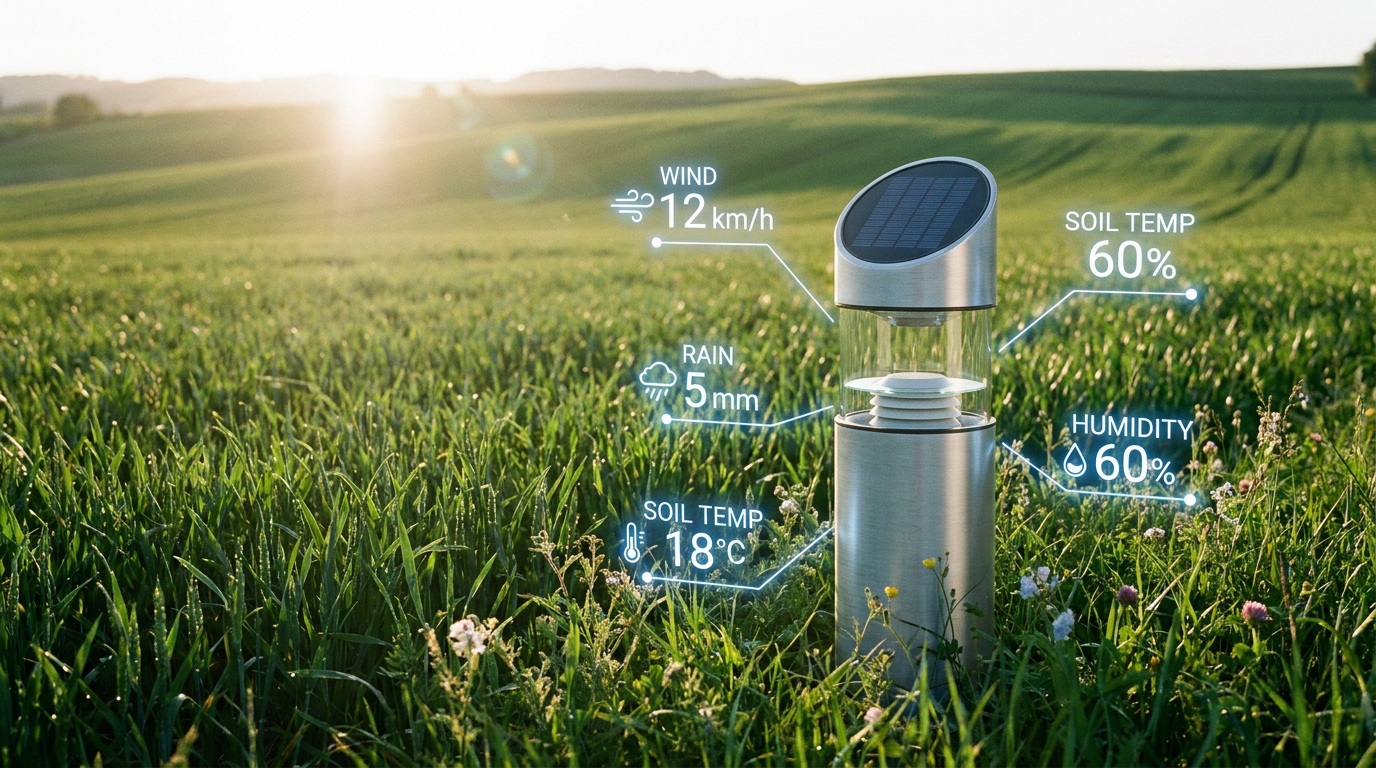
The technology enabling these policies is also becoming vastly more sophisticated. High-resolution satellite imagery, localized Internet of Things (IoT) weather sensors, and advanced algorithmic modeling allow insurers to create micro-parameters tailored to a single city block or a specific farm, rather than relying on broad regional grids that may not reflect local realities.[8]

As climate change accelerates and the frequency of extreme weather events increases, traditional insurers are retreating from high-risk areas like coastal Florida and wildfire-prone regions of California. Parametric insurance offers a viable alternative to keep these areas insurable, as the risks are strictly defined, capped, and transparent to both parties.[1][6]
Ultimately, parametric insurance represents a shift from reactive compensation to proactive resilience. By guaranteeing swift, transparent liquidity when the worst happens, it empowers communities to focus on recovery rather than bureaucracy, proving that financial innovation can serve as a powerful tool for climate adaptation.[2][6]
How we got here
Late 1990s
The first parametric solutions emerge, primarily used by large energy companies to hedge against weather anomalies.
2007
The Caribbean Catastrophe Risk Insurance Facility (CCRIF) is formed, becoming the first multi-country parametric risk pool.
2010s
Advances in satellite imagery and IoT sensors allow insurers to create highly localized, micro-parametric policies.
2020s
Parametric insurance expands rapidly into the commercial and small business sectors as traditional climate risks become harder to insure.
Viewpoints in depth
Insurtech Innovators
Advocates who view parametric models as the necessary modernization of an outdated industry.
For technology-driven insurance providers and syndicates like those at Lloyd's, the traditional indemnity model is fundamentally broken when it comes to widespread disasters. They argue that deploying thousands of human adjusters after a hurricane is inefficient and traumatizing for victims who need immediate cash. By relying on smart contracts and objective data oracles, these innovators believe parametric insurance strips the friction out of recovery, making the financial system more responsive to human needs.
Climate Resilience Advocates
Global organizations focused on closing the protection gap in vulnerable regions.
Institutions like the World Bank emphasize the macroeconomic benefits of parametric insurance. In many developing nations, traditional insurance markets simply do not exist. When a drought or cyclone hits, governments are forced to wait for international aid, which can take months to arrive. Parametric risk transfer allows these nations to secure guaranteed, immediate funding the moment a disaster metric is met, ensuring that emergency response and rebuilding can begin instantly.
Regulatory & Academic Observers
Experts who monitor the legal and structural risks of new financial products.
While acknowledging the speed of parametric payouts, regulatory bodies like the NAIC warn about the dangers of 'basis risk.' They caution that consumers accustomed to traditional insurance may not fully understand that a parametric policy does not guarantee their specific damages will be covered. If a localized event causes severe damage but fails to trip the regional data sensor's threshold, the policyholder receives nothing. Academics stress that parametric policies should be marketed as supplementary liquidity tools, rather than complete replacements for property insurance.
What we don't know
- How traditional insurance regulators will adapt consumer protection laws to cover data-triggered smart contracts.
- Whether the cost of parametric premiums will remain affordable as climate change makes extreme weather events more frequent.
- How effectively insurers can resolve disputes if a third-party data oracle experiences a technical failure during a major storm.
Key terms
- Parametric Insurance
- A type of insurance that does not indemnify the pure loss, but agrees to pay a set amount upon the occurrence of a triggering event.
- Basis Risk
- The risk that the payout from a parametric policy does not perfectly match the actual financial loss experienced by the policyholder.
- Oracle
- An independent, trusted third-party data source (like a national weather service) that verifies whether a policy's trigger condition has been met.
- Indemnity Insurance
- Traditional insurance that compensates the policyholder for the exact value of their proven, assessed losses.
Frequently asked
Do I need to prove damage to get a parametric payout?
No. If the predefined event (like a specific wind speed or earthquake magnitude) occurs at your location, the policy pays out automatically, regardless of your actual physical damage.
What happens if I have damage but the trigger isn't met?
This is known as 'basis risk.' If the event falls short of the exact metric defined in your policy, you will not receive a payout, even if you sustained losses.
How long does it take to receive funds?
Because the payout is triggered automatically by data rather than human adjusters, funds are typically disbursed within a few days to a couple of weeks.
Can parametric insurance replace my regular property insurance?
Usually not. Industry experts recommend using parametric insurance as a supplement to provide immediate cash flow for business interruption, while keeping traditional insurance for total property replacement.
Sources
Source coverage
8 outlets
3 viewpoints surfaced








[1]Swiss Re InstituteClimate Resilience Advocates
Parametric Insurance: Closing the Protection Gap
Read on Swiss Re Institute →[2]World BankClimate Resilience Advocates
How Parametric Risk Transfer Builds Climate Resilience
Read on World Bank →[3]National Association of Insurance CommissionersRegulatory & Academic Observers
Understanding Parametric Insurance
Read on National Association of Insurance Commissioners →[4]Lloyd's of LondonInsurtech Innovators
Innovation in Parametric Solutions
Read on Lloyd's of London →[5]Global Facility for Disaster Reduction and RecoveryClimate Resilience Advocates
Parametric Risk Transfer for Vulnerable Communities
Read on Global Facility for Disaster Reduction and Recovery →[6]Factlen Editorial Team
Synthesis by Factlen editorial team
Read on Factlen Editorial Team →[7]Journal of Risk and InsuranceRegulatory & Academic Observers
Basis Risk in Parametric Insurance Contracts
Read on Journal of Risk and Insurance →[8]ArtemisInsurtech Innovators
Parametric insurance market growth accelerates as technology matures
Read on Artemis →

More in finance
See all 7 stories →Retirement Strategy
Why Late-Career Workers Are Shifting to Roth 401(k)s Ahead of Retirement
6 sources

Housing Market
How Homebuyers Are Bypassing 6.5% Mortgage Rates in 2026
6 sources

Retirement Strategy
The 2026 Roth 401(k) Mandate: Why Late-Career Workers Are Changing Their Tax Strategy
6 sources

Stablecoin Adoption
Global Banking Networks Embrace Stablecoins, Slashing Cross-Border Remittance Costs
6 sources

Every angle. Every day.
Get finance stories with full source coverage and perspective breakdowns delivered to your inbox.