
How Open-Source Small Language Models Are Bringing Private AI to Consumer Devices
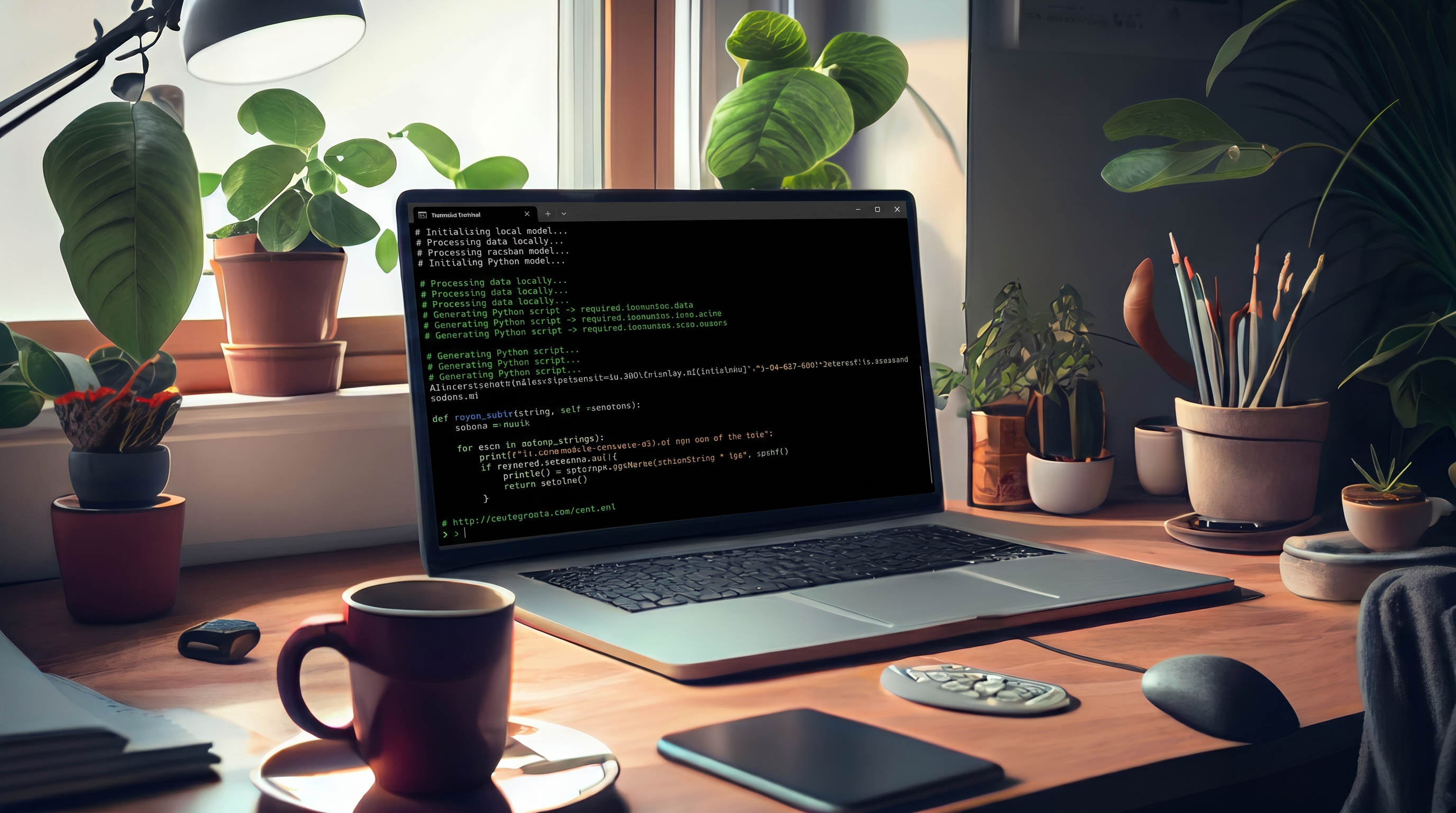
A new generation of highly efficient, open-weight AI models is allowing users to run powerful artificial intelligence entirely locally on standard laptops and smartphones. This shift toward "Small Language Models" is democratizing compute power, eliminating cloud API costs, and guaranteeing absolute data privacy.
By Factlen Editorial Team
- Privacy & Security Advocates
- Argue that local AI is essential for protecting sensitive data and ensuring compliance in regulated industries.
- Open-Source Developers
- Value the democratization of AI, focusing on cost-free, tinker-friendly models that run on everyday hardware.
- Hardware & Edge AI Researchers
- Focus on the technical breakthroughs in quantization and neural processing units that make edge inference possible.
What's not represented
- · Cloud infrastructure providers whose revenue models are threatened by the shift to local inference.
- · Regulators grappling with how to monitor or control AI models that can be downloaded and run entirely offline.
Why this matters
By severing the tether to centralized cloud servers, local AI allows you to process sensitive personal, medical, or financial data without it ever leaving your device. It also frees developers and small businesses from expensive, metered API subscriptions, making advanced computing tools accessible to anyone with a standard computer.
Key points
- Small Language Models (SLMs) allow powerful AI to run entirely on consumer laptops and smartphones.
- Techniques like quantization and knowledge distillation shrink models without destroying their reasoning capabilities.
- Local AI guarantees data privacy because prompts and documents never leave the user's device.
- Running models locally eliminates recurring cloud API costs for developers and businesses.
- The industry is moving toward a hybrid approach, using local AI for privacy and cloud AI for heavy lifting.
For years, the narrative around artificial intelligence was defined by scale. The most capable models required massive, billion-dollar data centers and a constant, high-speed internet connection to function. But in 2026, a quiet revolution is taking place on the desks and in the pockets of everyday users.[1]
The rise of "Small Language Models" (SLMs) has fundamentally altered the trajectory of AI development. Instead of relying exclusively on cloud-based behemoths, developers and consumers are increasingly downloading open-weight models and running them entirely locally on standard laptops, smartphones, and edge devices.[2][7]
This shift is not merely a technical novelty; it represents a profound democratization of computing power. By severing the tether to centralized servers, local AI offers a compelling alternative that prioritizes user privacy, eliminates recurring API costs, and guarantees offline availability.[1][2]
To understand how this is possible, one must look at the mechanics of model compression. The first major breakthrough driving this trend is a technique known as "knowledge distillation." In this process, a massive, trillion-parameter "teacher" model is used to train a much smaller "student" model.[3]

The student model learns to mimic the reasoning patterns and outputs of its teacher without inheriting its massive computational overhead. This allows models with fewer than 10 billion parameters to punch far above their weight class, achieving benchmark scores that would have required a supercomputer just two years ago.[3][6]
The second critical piece of the puzzle is "quantization." Artificial neural networks are essentially vast collections of numbers, or weights, typically stored in high-precision 32-bit or 16-bit formats. Quantization mathematically compresses these weights into lower-precision formats, such as 4-bit or even 1-bit integers.[5]
While this compression slightly reduces the model's theoretical precision, the practical loss in quality is often imperceptible to the end user. More importantly, quantization drastically shrinks the model's memory footprint. A model that originally required 16 gigabytes of Video RAM (VRAM) can be squeezed into just 3 or 4 gigabytes, allowing it to run comfortably on a standard consumer graphics card or even a smartphone's unified memory.[5][7]
The software ecosystem has evolved rapidly to support this hardware reality. Tools like Ollama and LM Studio have transformed the deployment process from a complex engineering task into a simple, one-click installation.[4]
With over 50 million monthly downloads reported in early 2026, these platforms allow users to browse, download, and run models like Meta's Llama 4 Scout, Microsoft's Phi-4, and Google's Gemma 3 as easily as installing a web browser.[4][7]

The implications for privacy are perhaps the most significant driver of this trend. When an AI model runs locally, the user's prompts, documents, and data never leave the device. There is no API round-trip, no cloud storage, and no risk of sensitive information being intercepted or used to train future commercial models.[1][2]
The implications for privacy are perhaps the most significant driver of this trend.
This absolute data sovereignty has made local SLMs the default choice for highly regulated industries. Healthcare providers are deploying local models to triage patient data and summarize clinical notes without running afoul of HIPAA regulations, while financial institutions use them to analyze proprietary trading algorithms securely.[5]
Beyond privacy, the economics of local AI are reshaping the software industry. Cloud AI inference costs can scale exponentially with user growth, creating a punishing financial burden for startups and independent developers.[6]
By shifting the compute burden to the user's own hardware, developers can offer AI-powered features without incurring crippling API bills. A one-time hardware investment in a capable laptop or a modern "AI PC" equipped with a Neural Processing Unit (NPU) pays for itself rapidly when compared to the metered drip of cloud subscriptions.[2][7]
Furthermore, local models enable true edge computing. In environments with unreliable or non-existent internet connectivity—such as remote field research, maritime operations, or disaster response—cloud-dependent AI is useless.[3]

A smartphone equipped with a quantized version of a model like Phi-3 Mini can provide real-time translation, document summarization, and coding assistance entirely offline, proving invaluable in air-gapped or remote scenarios.[2][3]
Despite these massive strides, the local AI ecosystem still faces hurdles. Running intensive models on battery-powered devices can lead to rapid power drain and thermal throttling, requiring careful optimization by software developers.[6]
Additionally, while SLMs are exceptional at focused tasks like coding, drafting emails, and summarizing text, they still struggle with the complex, multi-step reasoning and broad world knowledge that frontier cloud models possess.[6][7]
Ultimately, the future of artificial intelligence is unlikely to be a zero-sum game between the cloud and the edge. Instead, the industry is moving toward a hybrid architecture.[1]

In this model, a lightweight, local SLM acts as the first line of defense, handling everyday tasks, routing requests, and protecting sensitive data with zero latency. Only when a query requires massive computational power or vast external knowledge does the system seamlessly escalate the task to a secure cloud model.[1][7]
How we got here
Early 2023
The leak of Meta's original LLaMA weights sparks a grassroots movement of developers optimizing models for consumer hardware.
Late 2023
Quantization techniques like GGUF become standardized, allowing multi-gigabyte models to run on standard laptop RAM.
Mid 2024
Microsoft releases the Phi-3 family, proving that models under 4 billion parameters can achieve state-of-the-art reasoning.
2025
Major hardware manufacturers introduce 'AI PCs' equipped with dedicated Neural Processing Units (NPUs) specifically for local inference.
Early 2026
Open-weight SLMs like Llama 4 Scout and Gemma 3 become production-ready, driving massive enterprise adoption for privacy-first applications.
Viewpoints in depth
Privacy & Security Advocates
Argue that local AI is essential for protecting sensitive data and ensuring compliance.
This camp emphasizes that the only way to guarantee absolute data sovereignty is to physically control the hardware processing it. For the healthcare, finance, and legal sectors, sending proprietary data or Personally Identifiable Information (PII) to third-party cloud APIs poses unacceptable regulatory and security risks. Local models eliminate this vector entirely, allowing organizations to leverage generative AI while maintaining strict compliance with frameworks like HIPAA and GDPR.
Open-Source Developers
Value the democratization of AI, focusing on cost-free, tinker-friendly models.
This community views open-weight models as a vital bulwark against corporate monopolies in the AI space. By building tools that run on consumer hardware, they ensure that artificial intelligence remains accessible to students, independent researchers, and startups who cannot afford massive cloud compute budgets. They prioritize permissive licensing and collaborative improvement, arguing that the best innovations come from a decentralized, global community of tinkerers rather than a handful of closed-door tech giants.
Hardware & Edge AI Researchers
Focus on the technical breakthroughs that make edge inference possible.
Researchers in this space highlight the symbiotic relationship between software optimization and hardware evolution. They focus on pushing the boundaries of performance-per-watt, aiming to make AI inference as ubiquitous and low-power as rendering a web page. By optimizing quantization algorithms and designing specialized Neural Processing Units (NPUs) for mobile devices, this group is working to ensure that the next generation of AI applications can run seamlessly in the background without draining battery life or requiring active cooling.
What we don't know
- How quickly hardware manufacturers will standardize NPU architectures to make local AI deployment seamless across all devices.
- Whether the performance gap between small local models and massive cloud models will eventually close, or if a permanent ceiling exists for SLMs.
Key terms
- Small Language Model (SLM)
- An AI model typically under 10 billion parameters, designed to run efficiently on consumer hardware rather than massive data centers.
- Quantization
- A mathematical compression technique that reduces the precision of an AI model's weights (e.g., from 32-bit to 4-bit) to save memory.
- Knowledge Distillation
- A training method where a massive 'teacher' AI transfers its reasoning capabilities to a much smaller 'student' AI.
- VRAM (Video RAM)
- The memory located on a graphics card, which is critical for loading and running AI models quickly.
- Edge Computing
- Processing data locally on the device where it is generated (like a phone or laptop) rather than sending it to a remote cloud server.
Frequently asked
Can I run these models on my current laptop?
Yes, many quantized SLMs can run on standard laptops with at least 8GB of RAM, especially when using optimized tools like Ollama or LM Studio.
Are local models as smart as massive cloud models?
While they excel at specific tasks like coding, drafting, or summarization, they generally lack the broad world knowledge and complex reasoning capabilities of frontier cloud models.
Do I need an internet connection to use them?
No. Once the model weights are downloaded to your device, the AI functions entirely offline, ensuring complete privacy and zero latency.
Is it free to use local AI?
Yes. Open-weight models and the tools to run them are generally free to download, meaning you only pay for the electricity required to run your own hardware.
Sources
Source coverage
7 outlets
3 viewpoints surfaced







[1]Factlen Editorial TeamPrivacy & Security Advocates
Synthesis by Factlen editorial team
Read on Factlen Editorial Team →[2]Hugging FaceOpen-Source Developers
Running Small Language Models on Edge Devices
Read on Hugging Face →[3]Microsoft ResearchHardware & Edge AI Researchers
Phi-3 Technical Report: A Highly Capable Language Model Locally on Your Phone
Read on Microsoft Research →[4]GitHubOpen-Source Developers
Ollama: Get up and running with large language models locally
Read on GitHub →[5]MDPIPrivacy & Security Advocates
Assessing the Feasibility of Locally Hosted Large Language Models on Consumer-Grade Hardware
Read on MDPI →[6]Stanford AI IndexHardware & Edge AI Researchers
Artificial Intelligence Index Report 2025
Read on Stanford AI Index →[7]BentoML BlogOpen-Source Developers
The Best Open-Source Small Language Models (SLMs) in 2026
Read on BentoML Blog →

More in ai
See all 5 stories →On-Device AI
How Local AI Replaced the Cloud: Running Frontier Models on Your Laptop
0 sources

Enterprise AI
The Rise of Small Language Models: How Enterprises Are Running AI Locally in 2026
0 sources

Drug Discovery
New AI Model Accelerates Molecular Simulations 10,000-Fold, Slashing Drug Discovery Timelines
0 sources

Every angle. Every day.
Get ai stories with full source coverage and perspective breakdowns delivered to your inbox.