
How Next-Generation Geothermal Could Solve the Grid's Biggest Problem
By borrowing drilling techniques from the oil and gas industry, enhanced geothermal systems are unlocking 24/7 carbon-free power that can be deployed almost anywhere on Earth.
By Factlen Editorial Team
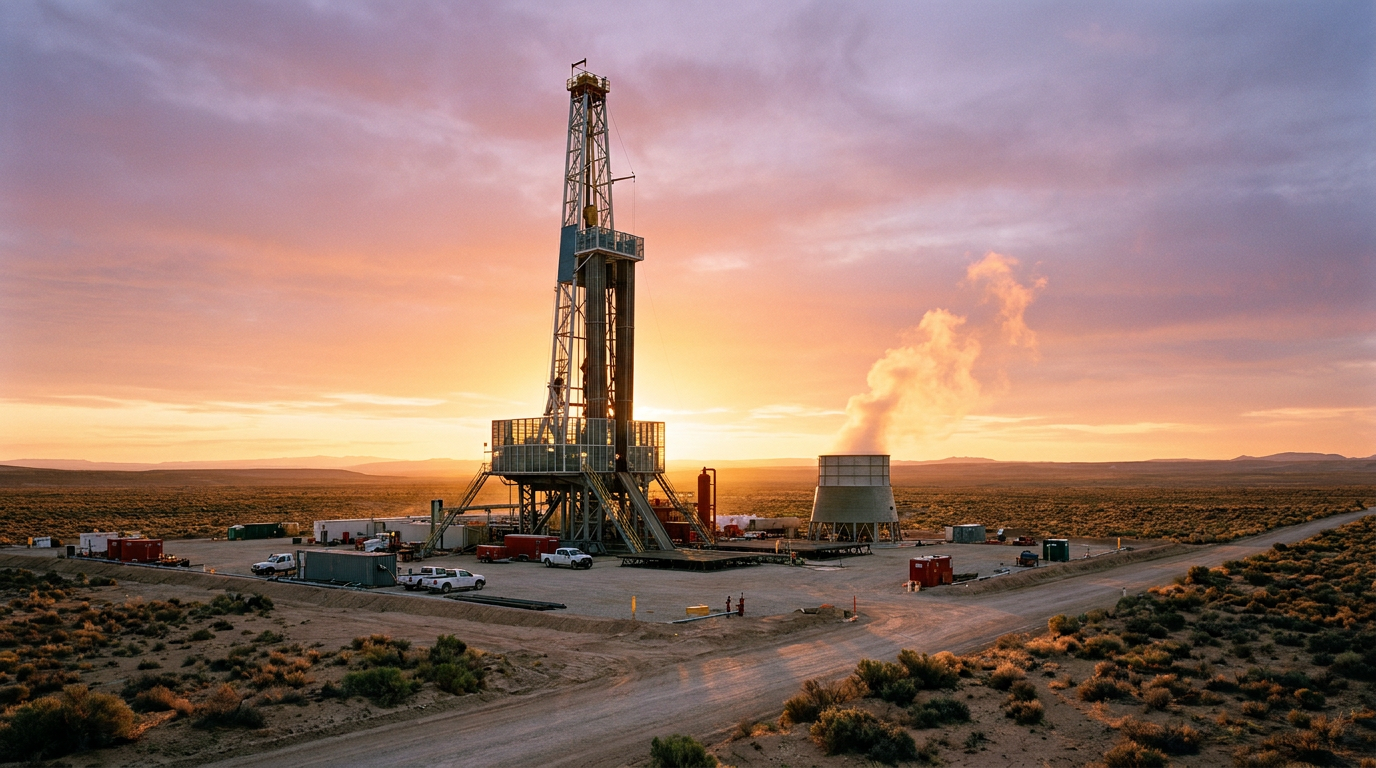
- Geothermal Innovators
- Focused on scaling EGS technology to provide 24/7 carbon-free baseload power.
- Energy Policymakers & Researchers
- Focused on the macro potential of geothermal to decarbonize the grid and the need for scientific monitoring.
- Energy Market Analysts
- Focused on the capital costs, transmission bottlenecks, and market viability of new geothermal projects.
What's not represented
- · Local communities near drilling sites
- · Traditional oil and gas executives
Why this matters
As the world shifts away from fossil fuels, solar and wind power remain vulnerable to weather and time of day. Next-generation geothermal promises to solve this by providing 24/7 carbon-free electricity anywhere on Earth, potentially stabilizing the future grid and offering a direct transition path for oil and gas workers.
Key points
- Next-generation geothermal uses oil and gas drilling techniques to tap into the Earth's heat anywhere, without needing natural hot springs.
- The U.S. Department of Energy projects this technology could expand geothermal capacity twentyfold to 90 gigawatts by 2050.
- Fervo Energy is leading the commercialization, bringing the first 100 megawatts of its Utah project online in 2026.
- Drilling times have dropped by 70% in two years, rapidly improving the economic viability of the technology.
- Major hurdles remain, including a lack of high-voltage transmission lines in rural areas and the need to monitor micro-earthquakes.
The transition to a carbon-free electrical grid has a glaring, unavoidable vulnerability: the sun eventually sets, and the wind frequently stops blowing. As nations race to decarbonize their economies and shut down legacy fossil fuel plants, grid operators are increasingly anxious about how to keep the lights on during calm, cloudy days. To fill this intermittency gap, utilities have traditionally relied on natural gas peaker plants or coal, while hoping for a miraculous breakthrough in long-duration battery storage. But the ultimate solution to the grid's baseload problem might not require a new chemical battery at all. Instead, the answer might already be waiting thousands of feet beneath our feet, locked inside the Earth's crust.[6][9]
Enter 'next-generation geothermal' energy, a technological leap that promises to fundamentally rewrite the rules of renewable power. Unlike traditional geothermal energy, which relies on rare, naturally occurring hot springs found in geologically active places like Iceland or Northern California, this new approach can theoretically be deployed almost anywhere on Earth. By engineering the subsurface environment, developers can extract the planet's virtually limitless subterranean heat and convert it into a steady, uninterrupted flow of electricity. The U.S. Department of Energy recently released a comprehensive 'Liftoff' report projecting that advanced geothermal technologies could provide 90 gigawatts of firm, clean power to the American grid by 2050—a staggering twentyfold increase from the country's current geothermal capacity.[1][2]
At the center of this impending energy boom is a specialized technology known as Enhanced Geothermal Systems, or EGS. In a fascinating twist of industrial irony, EGS borrows a highly controversial technique from the oil and gas industry—hydraulic fracturing, commonly known as 'fracking'—and repurposes it entirely for zero-carbon energy production. Traditional geothermal power requires three specific geological conditions to function: intense subterranean heat, underground fluid, and highly permeable rock that allows the fluid to flow. While the vast majority of the Earth's crust contains immense, untapped heat, it usually lacks the necessary fluid and natural permeability required to bring that thermal energy to the surface.[2][8]

Enhanced Geothermal Systems solve this geographic limitation by brute-forcing the geology. Engineers drill deep vertical wells into hot, dry, solid rock formations, often reaching depths of over 8,000 feet. Once the target depth is reached, they inject water at incredibly high pressures to create a sprawling network of artificial, millimeter-wide fractures in the rock. This effectively builds a massive subterranean radiator. Water is then continuously circulated down an injection well, where it is superheated by the surrounding rock to temperatures exceeding 300 degrees Fahrenheit. The boiling fluid is subsequently brought back up through a separate production well, where its thermal energy is used to drive massive steam turbines on the surface.[3][8]
This once-experimental technology is now moving from academic theory to commercial reality at a breakneck pace. Fervo Energy, currently the leading EGS developer in the United States, is preparing to bring the first 100 megawatts of its massive 500-megawatt Cape Station project online in rural Utah by the end of 2026. The cost curve for this technology is collapsing much faster than early models predicted. By utilizing advanced horizontal drilling techniques and fiber-optic sensors perfected during the American shale boom, Fervo recently reported a remarkable 70 percent reduction in its drilling times over a span of just two years, fundamentally altering the economic calculus of geothermal power.[5][7][8]
This once-experimental technology is now moving from academic theory to commercial reality at a breakneck pace.
Energy market analysts are taking notice of this rapid commercialization. BloombergNEF notes that while next-generation geothermal remains highly capital-intensive upfront—requiring massive investments to drill deep into hard crystalline rock—the long-term economics are becoming increasingly competitive. Because geothermal plants operate continuously, their levelized cost of energy drops significantly over time. The Department of Energy now projects that Enhanced Geothermal Systems could actually undercut the cost of advanced nuclear reactors and natural gas plants equipped with carbon capture technology by as early as 2035, making it one of the most cost-effective firm power sources available.[1][6]

Beyond the pure economics, next-generation geothermal offers a unique and politically potent advantage: it relies heavily on the exact same workforce, heavy machinery, and supply chains currently utilized by the fossil fuel industry. Oil and gas drillers, rig operators, petroleum engineers, and geophysicists can transition their specialized skills directly to geothermal development with almost zero retraining. This creates a highly sought-after 'just transition' for fossil fuel workers, allowing communities that have historically relied on oil and gas extraction to remain economically vibrant while actively participating in the global shift toward zero-carbon energy.[8][9]
However, the ambitious path to deploying 90 gigawatts of geothermal power is not without significant friction. Paradoxically, the primary bottleneck facing the industry is no longer the subterranean drilling technology, but the above-ground electrical grid itself. Fervo Energy and other emerging developers are hitting severe transmission constraints across the American West. The rural areas where Enhanced Geothermal Systems are currently being tested and deployed often lack the high-voltage transmission lines necessary to carry the newly generated power to the coastal cities and industrial centers that desperately need it.[5][6]
There is also the complex environmental challenge of induced seismicity. Because the core mechanism of Enhanced Geothermal Systems relies on fracturing deep rock formations, the process inherently creates micro-earthquakes. While these subterranean tremors are typically far too small to be felt by humans at the surface, they require rigorous, continuous monitoring to ensure public safety and to maintain the long-term stability of the artificial reservoirs. If a fracture network grows too quickly or intersects with a natural fault line, it could theoretically trigger a larger, more problematic seismic event.[3][4]

To proactively manage this seismic risk, leading scientific institutions are stepping in to provide independent oversight. Lawrence Berkeley National Laboratory recently deployed a suite of custom-built seismometers nearly 7,000 feet underground at the Cape Station site in Utah. These highly sensitive instruments continuously monitor the artificial fracture networks in real-time, providing developers with the high-fidelity data needed to adjust fluid pressures and mitigate any potential seismic hazards before they escalate. This level of transparency and scientific rigor is considered essential for winning public trust as the technology scales.[4]
Despite these infrastructural and environmental hurdles, the momentum behind next-generation geothermal is undeniable. With massive technology companies desperately seeking 24/7 clean power to run their increasingly energy-hungry artificial intelligence data centers, the corporate demand for firm, carbon-free electricity has never been higher. Tech giants are already signing long-term power purchase agreements to secure geothermal energy years before the plants are even completed, providing the financial certainty developers need to secure massive construction loans. This influx of private capital is accelerating research and development across the entire sector.[6][7]
If Enhanced Geothermal Systems can successfully navigate the grid's transmission bottlenecks and continue to drive down upfront capital costs, the technology promises to be the missing puzzle piece of the global energy transition. By providing an always-on, weather-independent source of clean power, next-generation geothermal could finally allow grid operators to fully phase out fossil fuels without sacrificing the reliability that modern economies demand. The immense heat beneath our feet has always been there, waiting to be tapped; now, after decades of incremental engineering progress, we finally have the precise tools required to bring it to the surface and power the future.[2][9]

How we got here
2021
Fervo Energy signs a first-of-its-kind agreement to supply 24/7 carbon-free geothermal power to Google data centers.
July 2023
Fervo completes Project Red in Nevada, successfully demonstrating commercial-scale horizontal drilling for geothermal.
2024
The US Department of Energy releases its first Liftoff report, projecting geothermal could reach 90 GW by 2050.
July 2025
Berkeley Lab deploys custom seismometers 7,000 feet underground at Cape Station to monitor fracture networks.
Early 2026
Fervo secures $421 million in project financing to accelerate the 500 MW Cape Station development in Utah.
Viewpoints in depth
Geothermal Innovators
Developers argue that EGS is the missing piece of the clean energy transition.
Companies like Fervo Energy view next-generation geothermal as the ultimate solution to the grid's intermittency problem. By adapting the horizontal drilling and hydraulic fracturing techniques perfected during the shale boom, they argue that geothermal can scale rapidly without relying on rare natural hot springs. They point to plummeting drilling costs and massive demand from AI data centers as proof that the technology is ready for prime time.
Grid & Market Analysts
Financial and infrastructure experts warn that transmission bottlenecks could stall growth.
While analysts acknowledge the technological breakthroughs, they caution that the physical electrical grid is not ready. Experts at BloombergNEF and Jefferies note that many of the best EGS sites are in rural areas of the American West, far from major population centers. Without massive investments in high-voltage transmission lines, developers may struggle to deliver their newly generated power to the customers who need it, potentially stranding assets.
Scientific Monitors
Researchers emphasize the need for rigorous safety and environmental oversight.
Scientists at institutions like Lawrence Berkeley National Laboratory and MIT focus on the subsurface mechanics of EGS. Because the technology relies on fracturing deep rock, it inherently causes micro-seismicity. While these tremors are typically imperceptible at the surface, researchers stress that continuous, high-fidelity monitoring is essential to prevent larger induced earthquakes and to ensure the long-term stability of the artificial reservoirs.
What we don't know
- Whether the U.S. electrical grid can be upgraded fast enough to handle the influx of power from rural geothermal sites.
- How the long-term maintenance costs of artificial fracture networks will compare to traditional power plants over decades.
- If the technology can be scaled globally to regions with vastly different geological compositions.
Key terms
- Enhanced Geothermal Systems (EGS)
- A technology that creates artificial underground reservoirs by injecting fluid into hot, dry rock to extract heat for electricity.
- Firm Power
- Electricity generation that can be relied upon to produce energy continuously, 24 hours a day, unlike intermittent sources like solar.
- Induced Seismicity
- Minor earthquakes or tremors caused by human activity, such as injecting fluids deep underground to fracture rock.
- Hydraulic Fracturing
- A technique borrowed from the oil industry that uses high-pressure fluid to create cracks in deep rock formations, allowing water to circulate and absorb heat.
Frequently asked
What is the difference between traditional and next-generation geothermal?
Traditional geothermal requires natural hot springs and permeable rock. Next-generation systems use horizontal drilling and fracturing to create artificial reservoirs in hot, dry rock anywhere.
Does enhanced geothermal cause earthquakes?
The fracturing process creates micro-seismicity, which is usually too small to be felt at the surface. Projects use deep-borehole seismometers to monitor and safely manage these micro-earthquakes.
Why is geothermal better than solar or wind?
It provides 'firm' or baseload power, meaning it generates electricity 24/7 regardless of weather conditions, filling the gaps when the sun sets or wind stops.
Are fossil fuel workers losing their jobs to this?
Actually, geothermal relies on the exact same skills and equipment as the oil and gas industry, offering a direct transition path for drillers and geophysicists.
Sources
Source coverage
9 outlets
3 viewpoints surfaced









[1]U.S. Department of EnergyEnergy Policymakers & Researchers
Pathways to Commercial Liftoff: Next-Generation Geothermal Power
Read on U.S. Department of Energy →[2]World Resources InstituteEnergy Policymakers & Researchers
Next-Generation Geothermal Can Help Unlock 100% Clean Power
Read on World Resources Institute →[3]MIT NewsEnergy Policymakers & Researchers
Next-generation geothermal energy: Promise, progress, and challenges
Read on MIT News →[4]Lawrence Berkeley National LaboratoryEnergy Policymakers & Researchers
Scientists Develop New Technology to Continuously Monitor Geothermal Energy Operations
Read on Lawrence Berkeley National Laboratory →[5]The Cool DownEnergy Market Analysts
Fervo's 42 GW geothermal push hits a Western grid bottleneck
Read on The Cool Down →[6]BloombergNEFEnergy Market Analysts
Next-Generation Geothermal Technologies Are Heating Up
Read on BloombergNEF →[7]Fervo EnergyGeothermal Innovators
2025 Year in Review: Driving Forward the Future of Clean, Firm Power
Read on Fervo Energy →[8]Information Technology and Innovation FoundationEnergy Policymakers & Researchers
Advanced Geothermal Energy Is Widely Available, Clean, and Maybe Cheap Enough to Make a Big Impact
Read on Information Technology and Innovation Foundation →[9]Factlen Editorial TeamEnergy Policymakers & Researchers
Synthesis by Factlen editorial team
Read on Factlen Editorial Team →
Every angle. Every day.
Get energy stories with full source coverage and perspective breakdowns delivered to your inbox.