
How Neuroscience is Rewiring Interior Design for Mental Health
The emerging field of neuroaesthetics is transforming home design, using brain-imaging data to create spaces that actively lower stress and improve cognitive function.
By Factlen Editorial Team
- Evidence-Based Architects
- Focus on translating lab data into practical building codes, prioritizing natural light, acoustics, and organic materials.
- Clinical Neuroscientists
- Emphasize the biological imperative of design, arguing that aesthetic beauty is a fundamental human need encoded in our DNA.
- Industry Analysts
- Examine the broader implications and risks of 'neuro-washing' in the commercial wellness market.
What's not represented
- · Low-income housing developers
- · Neurodivergent individuals
Why this matters
By understanding how our brains react to light, shapes, and textures, we can intentionally design our living spaces to act as preventative healthcare, reducing daily anxiety and improving our overall quality of life.
Key points
- Neuroaesthetics uses brain-imaging data to measure how interior design affects mental and physical health.
- Biophilic design—incorporating nature and organic shapes—can reduce stress hormones by up to 20 percent.
- Curvilinear furniture and spaces activate the brain's pleasure centers, while sharp angles can trigger mild stress.
- Circadian lighting systems are being used to align indoor environments with natural human sleep cycles.
- The movement is shifting interior design from a purely visual discipline to a preventative healthcare tool.
For decades, interior design was treated primarily as a visual discipline—a matter of matching color palettes, selecting furniture, and optimizing floor plans. But a fundamental shift is redefining how architects and designers approach the spaces we inhabit. In 2026, the focus has moved from how a room looks to how it physically alters the human brain.[3][6]
This shift is driven by the rapidly expanding field of neuroaesthetics, a scientific discipline that measures how our nervous systems respond to beauty, art, and spatial environments. Rather than relying on intuition, designers are now using peer-reviewed neurological data to craft homes that actively lower blood pressure, reduce stress hormones, and improve cognitive function.[4][6]
The foundation of this movement lies in advanced brain-imaging technology. In the late 1990s, functional MRI (fMRI) machines allowed scientists to observe the brain in real-time as subjects experienced aesthetic beauty. Today, institutions like the Penn Center for Neuroaesthetics and the International Arts + Mind Lab (IAM Lab) at Johns Hopkins University are translating those neurological findings into actionable architectural frameworks.[1][4][5]
Researchers have discovered that human-building interactions are shaped by distinct neural networks, including the sensory-motor system and the emotion-valuation network. When a person steps into a room, their limbic system—the emotional and memory center of the brain—makes immediate, subconscious assessments about safety and comfort.[3][4]

"We are in, or move through, spaces every moment of our lives, and we now know that our environments have powerful effects on our physical and mental health," notes Susan Magsamen, Executive Director of the IAM Lab at Johns Hopkins. The lab's recent reports call for a formalized sector of "neuroarchitecture" that integrates psychological expertise directly into spatial design.[1][2]
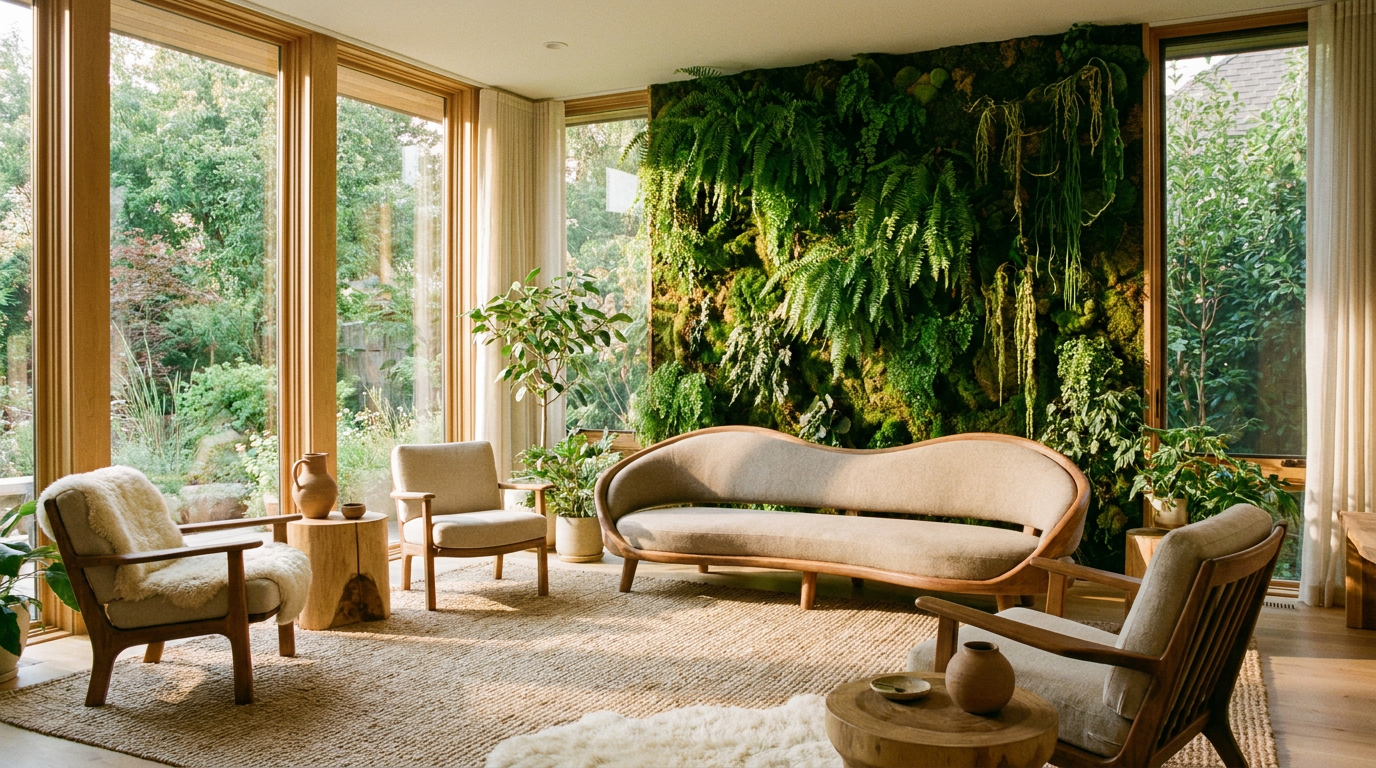
One of the most potent mechanisms in neuroaesthetics is biophilic design—the integration of natural elements into the built environment. Evolutionary biology suggests that human brains are hardwired to seek connections with nature. When we are exposed to organic forms, our brains recognize them as evolutionary safe havens, triggering the parasympathetic nervous system to induce calm.[3][6]
This goes far beyond placing a potted plant in a corner. True biophilic design involves immersive indoor ecosystems, such as living walls, circadian-aligned lighting, and natural ventilation. Studies indicate that spaces incorporating these nature-inspired elements can reduce stress markers by up to 20 percent, while simultaneously boosting serotonin levels.[4][6]
True biophilic design involves immersive indoor ecosystems, such as living walls, circadian-aligned lighting, and natural ventilation.
The brain's preference for nature extends to indirect experiences as well. Neurological studies show that viewing "biomorphic patterns"—objects and textures that mimic nature, such as wood grain, stone, or fractal patterns—can significantly regulate heart rates. Even the representation of nature, rather than the physical presence of a plant, is enough to soothe the autonomic nervous system.[4][6]

Spatial geometry also plays a surprising role in emotional regulation. Research utilizing fMRI and EEG scans has demonstrated that curvilinear spaces and rounded furniture activate areas of the brain associated with pleasure and comfort. Conversely, environments dominated by sharp angles, harsh lighting, and excessive visual contrast can activate the amygdala, triggering mild stress responses and mental fatigue.[3][6]
Lighting is another critical pillar of neuroaesthetic design. The human circadian rhythm is deeply tied to the color temperature and intensity of light. Modern neuroarchitecture utilizes automated, daylight-responsive lighting systems that mimic the natural progression of the sun, supporting healthy sleep cycles and improving daytime cognitive performance.[2][6]
Color psychology, once considered a soft science, is now being validated by neurological metrics. Specific hues have measurable effects on mood and energy levels. Soft greens and earthy ochres promote relaxation and groundedness, while warmer tones can invigorate a space. The key is applying these colors intentionally based on the neurological function desired for a specific room.[4][6]
As the field matures, designers are expanding their focus beyond the visual to create multi-sensory environments. The acoustic profile of a room, the tactile sensation of a handwoven rug, and even ambient scent systems are being calibrated to reduce sensory overload. In a world increasingly dominated by digital screens, these analog, tactile experiences provide essential cognitive relief.[2][6]

The economic and societal implications of this approach are profound. While neuroaesthetics is currently gaining the most traction in luxury residential design and high-end corporate offices, advocates argue it represents a cost-effective, life-changing opportunity for public health at scale. Hospitals designed with neuroaesthetic principles have already demonstrated accelerated patient recovery times and reduced clinical staff fatigue.[2][3]
However, the rapid commercialization of these concepts presents challenges. As "wellness design" becomes a lucrative marketing buzzword, there is a risk of "neuro-washing"—where developers claim health benefits without rigorously applying the underlying science. Distinguishing evidence-based neuroarchitecture from superficial aesthetic trends will require standardized certifications and continued academic oversight.[4][6]
There are also open questions about individual variability. While certain biological responses to nature and light are universal, cultural backgrounds and personal neurodivergence mean that a space deemed "calming" by one person might feel under-stimulating or alienating to another. The next frontier of neuroaesthetics involves highly personalized, adaptive environments.[1][6]
Ultimately, the convergence of neuroscience and interior design validates what many have intuitively known: our homes are not just shelters, but active participants in our mental health. By designing for the unconscious mind, the architecture of the future promises to transform the spaces we inhabit into powerful tools for psychological healing and human flourishing.[3][4][6]

How we got here
Late 1990s
Advancements in fMRI technology allow researchers to observe the brain's real-time response to aesthetic beauty.
2006
Sociologist John Zeisel publishes 'Inquiry by Design,' formalizing the link between neuroscience and architecture.
2021
Publication of key academic frameworks detailing the three neural networks involved in human-building interactions.
2026
Neuroaesthetics transitions from a luxury niche to a foundational, evidence-based principle in mainstream interior design.
Viewpoints in depth
Clinical Neuroscientists
Argue that aesthetic beauty is a fundamental biological need, not a luxury.
Researchers in this camp focus on the evolutionary hardwiring of the human brain. They argue that our neurological preference for natural light, fractal patterns, and organic shapes is a survival mechanism encoded in our DNA. By measuring blood flow, heart rate, and cortisol levels, they aim to prove that poorly designed spaces are an active detriment to public health, while neuro-optimized spaces can serve as preventative medicine.
Evidence-Based Architects
Focus on translating lab data into practical, scalable building codes.
For practitioners, the goal is moving neuroaesthetics out of the laboratory and into the living room. They advocate for updating standard building practices to mandate better acoustics, circadian lighting, and access to nature. This camp emphasizes that while the science is complex, the architectural solutions—such as rounded corners, natural wood finishes, and daylighting—are highly achievable and should become the new baseline for all construction.
Accessibility Advocates
Warn against the commodification of wellness design and 'neuro-washing.'
This perspective highlights the socioeconomic divide in modern architecture. Advocates point out that while luxury homes and high-end corporate offices are rapidly adopting neuroaesthetic principles, low-income housing often remains plagued by poor lighting, harsh acoustics, and a lack of green space. They caution against 'neuro-washing'—where developers use the science as a marketing gimmick to inflate prices—and push for neuro-inclusive design to be subsidized and standardized for all income levels.
What we don't know
- How individual neurodivergence (such as ADHD or autism) alters the baseline neurological response to specific spatial stimuli.
- The long-term public health impact of integrating neuroarchitecture into affordable housing and public schools.
- How to effectively regulate and certify 'neuro-designed' products to prevent misleading marketing claims.
Key terms
- Neuroaesthetics
- The scientific study of how the brain and nervous system respond to beauty, art, and spatial environments.
- Biophilic Design
- An architectural framework that integrates natural elements, light, and organic materials into the built environment to improve well-being.
- Parasympathetic Nervous System
- The body's 'rest and digest' network, which is activated by calming, nature-inspired environments to lower heart rate and stress.
- Circadian Lighting
- Artificial lighting systems designed to mimic the natural progression of sunlight to support healthy sleep and wake cycles.
Frequently asked
Do I need to buy expensive furniture to apply neuroaesthetics?
No. Simple changes like maximizing natural light, decluttering, and adding organic textures or plants can trigger positive neurological responses.
How does a room actually lower stress?
Environments with natural patterns and curvilinear shapes signal safety to the brain's limbic system, reducing the production of stress hormones like cortisol.
Is this different from Feng Shui?
While both aim to create harmonious spaces, neuroaesthetics relies on empirical biometric data—such as fMRI scans and heart rate monitoring—rather than traditional spatial philosophy.
Can neuroaesthetics help with sleep?
Yes. Utilizing circadian-aligned lighting and calming color palettes in bedrooms directly supports the brain's natural melatonin production.
Sources
Source coverage
6 outlets
3 viewpoints surfaced






[1]Johns Hopkins IAM LabClinical Neuroscientists
Center for Applied Neuroaesthetics
Read on Johns Hopkins IAM Lab →[2]Design MilkEvidence-Based Architects
John Hopkins University's IAM Lab publishes a report calling for the development of a new interdisciplinary Neuroarchitecture sector
Read on Design Milk →[3]ArchDailyEvidence-Based Architects
Neuroesthetics: The Influence of Design on Human Experience
Read on ArchDaily →[4]Science in DesignEvidence-Based Architects
The Complete Guide to Neuroaesthetics for Interior Designers: How Science Validates Design
Read on Science in Design →[5]Penn Center for NeuroaestheticsClinical Neuroscientists
Penn Center for Neuroaesthetics
Read on Penn Center for Neuroaesthetics →[6]Factlen Editorial TeamIndustry Analysts
Synthesis by Factlen editorial team
Read on Factlen Editorial Team →
Every angle. Every day.
Get home stories with full source coverage and perspective breakdowns delivered to your inbox.