
How Neuroscience is Rewiring Interior Design for Mental Health
Researchers are using brain scans to prove that room shapes, lighting, and textures trigger measurable biological responses. This emerging field, known as neuroaesthetics, is transforming interior design from an intuitive art into an evidence-based science of well-being.
By Factlen Editorial Team
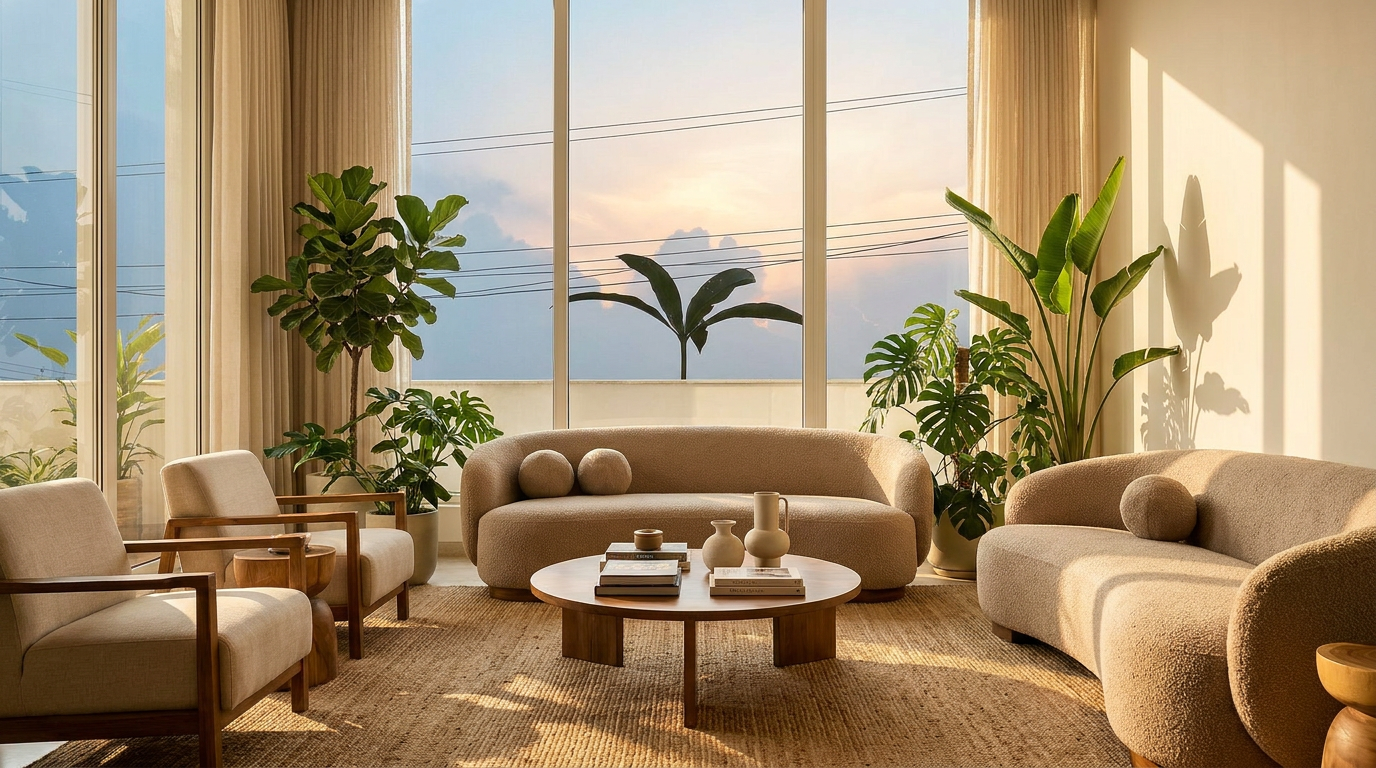
- Neuroscience Researchers
- Focus on the objective, measurable biological data—fMRI scans, cortisol levels, and heart rate variability—arguing that beauty is an evolutionary imperative.
- Evidence-Based Designers
- Focus on the practical application of biological data, arguing that architects have a moral responsibility to design spaces that actively improve mental health.
- Traditional Aesthetes
- Focus on the subjective, artistic nature of design, cautioning against reducing interior design to a purely biological algorithm.
What's not represented
- · Low-income housing developers
- · Renters with limited control over their spaces
Why this matters
Understanding how your home's design affects your nervous system empowers you to make simple changes—like adding curves, adjusting light, or introducing textures—that actively lower your daily stress hormones and improve cognitive focus.
Key points
- Interior design is shifting from an intuitive art to a measurable science of well-being.
- Neuroaesthetics studies how room shapes, lighting, and textures affect the brain and nervous system.
- Curvilinear furniture and natural materials actively lower stress hormones and engage the parasympathetic nervous system.
- Thoughtfully designed spaces can yield a 15 to 20 percent reduction in daily cortisol levels.
- The field acknowledges that while biological baselines exist, cultural background still influences aesthetic preference.
You know the feeling of walking into a room and instantly exhaling. The shoulders drop, the mind quiets, and a sense of calm washes over you. For decades, interior designers relied on intuition and artistic training to create this elusive sense of comfort, chalking it up to "good taste" or a specific "vibe." But today, the medical community is stepping into the living room. Advanced brain scanning technology is proving that our reaction to a well-designed space is not just a matter of personal preference—it is a measurable, biological reflex.[1][3]
This convergence of biology and architecture is known as neuroaesthetics. At its core, neuroaesthetics is the scientific study of how beauty, nature, and spatial design affect the human brain and autonomic nervous system. It shifts the conversation about interior design from what looks good on a magazine cover to what actively promotes human flourishing. By measuring heart rates, blood pressure, and brain waves, researchers are decoding the exact spatial ingredients that trigger the release of serotonin and dopamine.[3][4]
The mechanism behind this response is rooted in our evolutionary survival wiring. Every second, the human brain processes roughly 11 million bits of sensory information from the surrounding environment, yet we are only consciously aware of about 50 of those bits. The vast majority of our interaction with a room happens entirely subconsciously. When a space is cluttered, sharply angled, or poorly lit, the brain's threat-detection center—the amygdala—signals the sympathetic nervous system, quietly elevating stress hormones like cortisol.[1][3]

Conversely, when a space features coherent design, natural elements, and balanced proportions, it engages the parasympathetic nervous system. This is the body's "rest and digest" mode. Functional magnetic resonance imaging (fMRI) studies have shown that aesthetically pleasing environments stimulate the orbitofrontal cortex—the same region of the brain that lights up when we listen to a favorite song, eat delicious food, or experience a warm social connection.[1][4]
The origins of this field trace back to the 1990s, when neurobiologist Semir Zeki discovered that perceiving beauty consistently activated specific neural pathways. As fMRI technology became more accessible, researchers began to test how specific architectural variables influenced these pathways. They found that the human brain does not treat a room as a passive container; it treats it as an active stimulus that constantly shapes emotional regulation and cognitive performance.[2][5]
One of the most robust findings in neuroaesthetics involves the geometry of our furniture and walls. Studies utilizing fMRI and electroencephalogram (EEG) technology reveal that curvilinear spaces and rounded furniture activate the brain's pleasure and comfort centers. In contrast, sharp, jagged edges tend to trigger low-level anxiety, as the brain subconsciously registers sharp objects as potential physical threats.[1][3]

Texture also plays a profound role in how a room feels to the nervous system. Humans are highly tactile creatures, and our brains crave sensory diversity. Environments that incorporate natural materials like wood, woven fabrics, and stone stimulate the somatosensory cortex, producing feelings of warmth and belonging. A room composed entirely of smooth, synthetic surfaces like glass and polished steel may look sleek, but it often leaves the nervous system feeling cold and unanchored.[1][2][5]
Texture also plays a profound role in how a room feels to the nervous system.
Then there is the undeniable power of biophilic design—the practice of integrating nature into the built environment. Evolutionary psychology suggests that humans are hardwired to seek out natural landscapes that signal safety and resource abundance. Visual access to greenery, indoor plants, or even artwork depicting natural scenes has been shown to lower anxiety, decrease heart rate, and significantly improve working memory.[1][2]
Lighting is perhaps the most immediate biological trigger in any room. The human circadian rhythm is deeply tethered to the shifting color temperature of the sun. Neuroaesthetic research demonstrates that cool, blue-toned light enhances alertness and cognitive performance during the day, while warm, amber-toned light in the evening signals the pineal gland to produce melatonin. Spaces that lack dynamic lighting disrupt this natural cycle, leading to fatigue and mood dysregulation.[1][3][4]
The measurable outcomes of applying these principles are striking. Research from institutions like the Johns Hopkins International Arts + Mind Lab indicates that thoughtfully designed, neuroaesthetic spaces can yield a 15 to 20 percent reduction in stress hormones. In healthcare settings, these principles have been linked to accelerated patient recovery times and reduced clinical staff fatigue.[1][3][4]

To prove that these biological responses happen in real-time, a landmark 2019 exhibition in Milan called "A Space for Being" put neuroaesthetics to the test. Created in collaboration with Google, Johns Hopkins, and architecture firms, the exhibit invited guests to walk through three distinct rooms while wearing custom biometric wristbands. The sensors tracked heart rate, skin conductivity, and body temperature, proving definitively that different interior aesthetics produced wildly different physiological states in the visitors.[2][4]
Following the global pandemic, which forced millions to spend unprecedented amounts of time indoors, the demand for neuroaesthetic design has surged. Homeowners are no longer just asking designers to make their living rooms look impressive for guests; they are asking for spaces that actively soothe their anxiety and support their mental health. Certifications that guarantee the physical and mental health standards of a building are becoming as sought-after as energy-efficiency ratings.[2][5]
However, the science of beauty is not without its uncertainties. While biological responses to nature and light are largely universal, aesthetic preference is still heavily influenced by cultural background, personal memories, and individual neurodiversity. A minimalist, sparsely furnished room might feel incredibly calming to someone easily overstimulated, while the exact same room might feel sterile and isolating to someone who draws comfort from maximalist surroundings.[1][5]

This subjectivity presents a challenge for designers trying to create universal rules. Inclusive neuroaesthetic design requires acknowledging that humans experience sensory input differently. The goal is not to prescribe a single "correct" way to decorate a room, but rather to give people the vocabulary and the scientific framework to understand why their environment makes them feel a certain way.[1][4]
Ultimately, neuroaesthetics bridges the gap between art and science, validating what designers have intuitively known for centuries. Our homes are not just backdrops for our lives; they are active participants in our mental and physical well-being. By designing with empathy and evidence, we can transform the spaces we inhabit into powerful tools for human flourishing.[3][5]
How we got here
1990s
Brain scanning technology advances enough to measure physiological responses to beauty in real-time.
2019
Google and Johns Hopkins debut 'A Space for Being' in Milan, using wristbands to track real-time biological reactions to room design.
2021
Post-pandemic demand surges for homes optimized for mental health and wellness rather than just visual appeal.
Today
Neuroaesthetics becomes a core curriculum in leading architecture and interior design programs worldwide.
Viewpoints in depth
Neuroscience Researchers
Focus on the objective, measurable biological data of human spatial experience.
For neuroscientists, interior design is no longer a subjective guessing game. By utilizing fMRI scans, EEG monitors, and cortisol tracking, researchers argue that our response to beauty is an evolutionary imperative encoded in our DNA. They point to data showing that the human brain universally seeks out environments that signal safety, resource abundance, and comfort, and they advocate for using these biological metrics as the foundational baseline for all future architectural projects.
Evidence-Based Designers
Focus on the practical application of biological data to improve human health.
Architects and interior designers in this camp argue that the industry has a moral responsibility to move beyond pure aesthetics. Armed with neuroaesthetic data, they view their role as akin to preventative healthcare. By intentionally designing spaces that lower blood pressure and reduce anxiety—such as incorporating biophilic elements and circadian lighting—they believe the built environment can be actively weaponized against the modern epidemic of chronic stress.
Traditional Aesthetes
Focus on the subjective, artistic, and cultural nature of interior design.
While acknowledging the validity of the biological data, traditional designers caution against reducing the human experience of a room to a mathematical algorithm. They argue that cultural context, personal memories, and individual artistic expression are equally vital to how a space feels. A room optimized perfectly for the nervous system might technically lower heart rates, but without personal narrative and subjective beauty, they warn it risks feeling sterile and devoid of soul.
What we don't know
- How to perfectly balance universal biological design rules with individual neurodivergent sensory needs.
- The long-term, multi-year health impacts of living exclusively in neuroaesthetic-optimized environments.
- How to scale these high-end design principles affordably for low-income housing and public infrastructure.
Key terms
- Neuroaesthetics
- The scientific study of how beauty, art, and spatial design affect the human brain and nervous system.
- Biophilic Design
- An architectural approach that connects building occupants more closely to nature through plants, natural light, and organic materials.
- Orbitofrontal Cortex
- A region of the brain involved in emotional regulation and decision-making that activates when we experience beauty.
- Autonomic Nervous System
- The body's unconscious control center that regulates heart rate, blood pressure, and stress responses based on environmental cues.
Frequently asked
Do I need to buy expensive furniture to apply neuroaesthetics?
No. Simple changes like maximizing natural light, adding inexpensive indoor plants, and decluttering can significantly lower stress hormones.
Why do sharp edges cause anxiety?
Evolutionary psychology suggests the human brain subconsciously registers sharp, jagged objects as potential physical threats, triggering low-level stress.
Can room color really change my heart rate?
Yes. Studies show that highly saturated, aggressive colors can elevate heart rates, while muted, nature-inspired tones promote cardiovascular relaxation.
Is neuroaesthetics the same as Feng Shui?
While both aim to create harmonious spaces, neuroaesthetics relies on measurable biological data like fMRI scans and cortisol tracking rather than ancient spatial philosophy.
Sources
Source coverage
5 outlets
3 viewpoints surfaced





[1]ArchDailyEvidence-Based Designers
Neuroaesthetics and Neuroarchitecture: Designing for Mental Health
Read on ArchDaily →[2]Connections by FinsaEvidence-Based Designers
Neuroaesthetics in interior design: the science of well-being
Read on Connections by Finsa →[3]Science in DesignNeuroscience Researchers
Neuroaesthetics: The Convergence of Neuroscience and Design
Read on Science in Design →[4]Johns Hopkins Arts + Mind LabNeuroscience Researchers
The Impact of Aesthetic Experiences on Human Potential
Read on Johns Hopkins Arts + Mind Lab →[5]Factlen Editorial TeamTraditional Aesthetes
Synthesis by Factlen editorial team
Read on Factlen Editorial Team →
Every angle. Every day.
Get home stories with full source coverage and perspective breakdowns delivered to your inbox.