
How Koji is Transforming Home Cooking: The Science of Umami
The ancient Japanese mold Aspergillus oryzae is moving from traditional soy sauce production to modern home kitchens, where cooks are using its powerful enzymes to tenderize meats and unlock deep umami flavors.
By Factlen Editorial Team
- Modernist Chefs & Innovators
- Viewing koji as a versatile biological tool to accelerate traditional processes and invent new flavor profiles.
- Food Scientists & Microbiologists
- Focusing on the enzymatic mechanisms, safety profile, and industrial applications of the fungus.
- Culinary Traditionalists
- Honoring the centuries-old Japanese methods of cultivating koji for foundational staples like miso and sake.
- Home Cooking Advocates
- Focusing on the accessibility of shio koji as a simple, everyday tool for democratizing flavor.
What's not represented
- · Industrial Enzyme Manufacturers
- · Traditional Japanese Miso Artisans
Why this matters
Understanding the biological mechanics of koji empowers home cooks to naturally elevate the flavor and texture of their food without relying on ultra-processed additives. Furthermore, the mold's ability to produce sustainable, high-protein biomass points toward a more environmentally friendly future for global food production.
Key points
- Koji (Aspergillus oryzae) is an ancient, safe mold that produces powerful digestive enzymes.
- Protease enzymes break down proteins into amino acids, creating intense umami flavors without artificial additives.
- Amylase enzymes convert complex starches into simple sugars, providing natural sweetness.
- Home cooks are increasingly using shio koji (koji, salt, and water) as a natural meat tenderizer and flavor enhancer.
- Modern chefs use koji to rapidly accelerate the curing time of charcuterie from months to mere days.
- Recent scientific research is exploring koji's potential to produce sustainable, high-protein fungal meat alternatives.
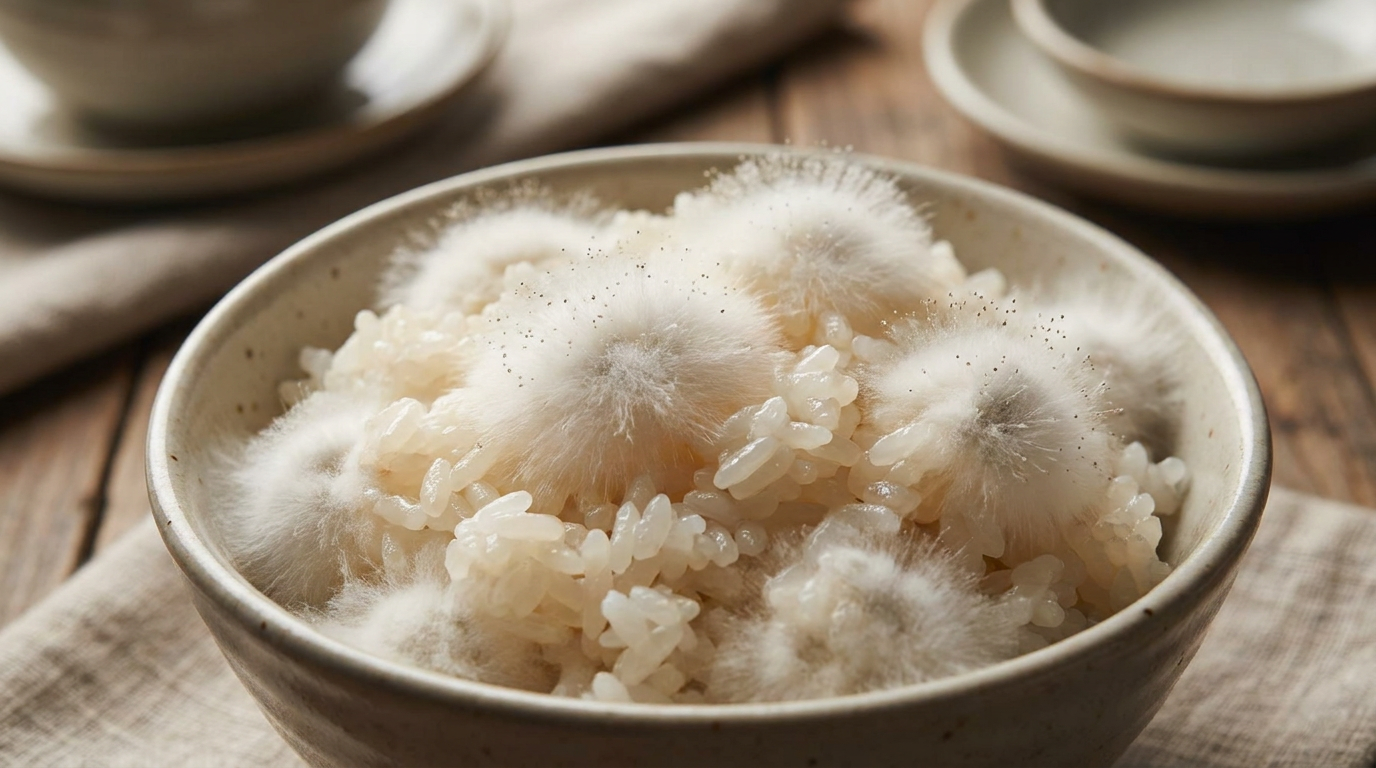
In the world's most innovative kitchens, the secret ingredient unlocking unprecedented depths of flavor is not a rare spice, a complex reduction, or a modern chemical additive. It is a fluffy, white filamentous fungus that grows on grains. Known scientifically as Aspergillus oryzae, and culinarily as koji, this ancient microbe is quietly revolutionizing how we approach seasoning, curing, and even sustainable protein production. By bridging the gap between ancient Asian fermentation traditions and modern food science, koji is fundamentally changing the landscape of gastronomy, offering cooks a natural way to manipulate flavor at a molecular level.[1]
For over a millennium, koji has served as the invisible biological architect of Japanese cuisine. It is the living engine behind foundational staples like soy sauce, miso, mirin, and sake. Historically, its role was largely confined to these traditional condiments, cultivated by specialized artisans who guarded their techniques across generations. The mold was revered to such a degree that in 2006, the Brewing Society of Japan officially designated Aspergillus oryzae as the country's "national fungus," cementing its status as a cultural and culinary treasure.[7]
Today, however, a vibrant culinary renaissance is bringing the mold out of the shadows and directly onto the cutting boards of home cooks and modernist chefs alike. By understanding the precise biological mechanisms of Aspergillus oryzae, cooks are harnessing its raw power to tenderize tough cuts of meat, accelerate traditional curing processes, and generate intense umami flavors without the use of artificial additives. This shift marks a transition from viewing koji merely as a starter culture for secondary ferments to utilizing it as a direct, active ingredient in everyday cooking.[2][3]
To truly understand koji's culinary magic, one must look closely at its biological imperative. When spores of Aspergillus oryzae are inoculated onto a cooked carbohydrate substrate—typically steamed white rice or pearl barley—the mold begins to grow, sending out root-like threads called hyphae. As it consumes the grain to fuel its growth, the fungus secretes a massive payload of digestive enzymes into its immediate environment. These enzymes are the true workhorses of the fermentation process, breaking down complex macronutrients into simpler, highly flavorful compounds.[6]

The two most critical categories of enzymes produced during this initial fermentation phase are amylases and proteases. Amylases are specifically responsible for breaking down complex, tasteless starches into simple, sweet sugars. This is the exact biological mechanism that converts rice starches into the fermentable sugars needed by yeast to brew sake. In a non-alcoholic culinary context, this powerful enzymatic action creates the profound, natural sweetness found in amazake, a traditional Japanese fermented rice drink that requires absolutely no added sugar to achieve its dessert-like profile.[7]
Proteases, meanwhile, are the master keys to koji's savory applications. These enzymes systematically dismantle large, tightly bound protein molecules into their constituent amino acids. Among these newly liberated amino acids is glutamate, the specific compound fundamentally responsible for the taste of umami. When koji is applied to a protein-rich food, it essentially pre-digests the ingredient, flooding the food with a deep, savory depth that registers on the human palate as intensely meaty and satisfying, completely transforming the flavor profile.[8]
The most accessible and popular gateway for home cooks to experiment with this enzymatic powerhouse is shio koji, a remarkably simple mixture of koji-inoculated rice, water, and salt. Left to ferment at room temperature for approximately a week, the mixture transforms into a thick, sweet-and-salty porridge-like marinade. Because the high salt concentration (typically around 8 to 12 percent) prevents the growth of unwanted bacteria, the enzymes are left free to work their magic in a safe, controlled environment.[8]
Left to ferment at room temperature for approximately a week, the mixture transforms into a thick, sweet-and-salty porridge-like marinade.
When a piece of chicken, fish, or tough vegetable is coated in shio koji, the proteases immediately go to work on the cellular structure. The enzymes relax the muscle fibers and tissue, resulting in a remarkably tender texture, while simultaneously saturating the ingredient with rich glutamates. Because the enzymes do the heavy lifting at a microscopic level, the marination process achieves in mere hours what traditional brines or slow-cooking methods might take days to accomplish, making it a revolutionary tool for weeknight dinners.[3]

Beyond simple marinades, culinary innovators are aggressively pushing the boundaries of what koji can do. Authors and chefs have popularized the concept of 'koji alchemy,' using the mold to rapidly age whole-muscle charcuterie. By applying koji spores directly to the surface of cured meats, the enzymatic action accelerates the breakdown of proteins and fats. This technique achieves the complex, nutty, and deeply savory flavors of a year-old traditional prosciutto in a matter of weeks, completely upending traditional timelines.[6][7]
This rapid transformation has profound implications for both professional kitchens and enthusiastic amateurs. It democratizes advanced culinary techniques, allowing complex flavor profiles to be developed without the need for expensive, climate-controlled aging cellars or years of patient waiting. Furthermore, the broken-down starches and sugars from the koji caramelize incredibly well when exposed to high heat. This Maillard reaction gives koji-marinated meats and vegetables a stunning, deeply browned crust when seared in a hot pan, adding yet another layer of complex, roasted flavor to the final dish.[2]
Naturally, the idea of intentionally growing a fuzzy white mold on food in a home kitchen raises immediate questions about safety and sanitation. However, Aspergillus oryzae boasts an impeccable, centuries-long safety record that stands up to the highest levels of modern scientific scrutiny. It is officially classified as Generally Recognized As Safe (GRAS) by the United States Food and Drug Administration, and its safety for human consumption has been repeatedly confirmed by the World Health Organization. It is a purely beneficial organism, optimized entirely for safe food production.[6]
From a microbiological standpoint, A. oryzae is a thoroughly domesticated species, much like the yeast used to bake bread or the bacteria used to culture yogurt. Unlike its wild, potentially dangerous cousin Aspergillus flavus, which can produce harmful mycotoxins such as aflatoxin, the koji mold has entirely lost the genetic ability to produce these toxins. Over thousands of years of careful selective breeding by human artisans, the mold has been biologically trained to do nothing but produce massive amounts of safe, flavor-enhancing enzymes, making it perfectly safe for culinary experimentation.[6]

In fact, recent scientific literature suggests that koji may actively improve the safety of the foods it touches. A fascinating 2025 study published in the Journal of Dairy Science demonstrated that fermentates derived from Aspergillus oryzae exhibit strong, natural antimicrobial activity against Listeria monocytogenes, a notoriously resilient and dangerous foodborne pathogen. The mold produces natural compounds that actively disrupt the pathogen's amino acid metabolism and iron uptake. This discovery offers a highly promising natural alternative to synthetic food preservatives, potentially revolutionizing how the commercial food industry approaches safety and shelf-life.[5]
The modern applications of A. oryzae are also expanding far beyond simple flavor enhancement, reaching into the critical realm of global food security and environmental sustainability. Researchers are currently exploring advanced submerged fermentation techniques—growing the fungus in aerated liquid nutrient baths inside massive bioreactors, rather than on traditional solid grains. This industrial approach allows the mold to grow at an exponential rate, producing massive amounts of edible fungal biomass that can be harvested, seasoned, and processed directly into nutritious food products for human consumption.[4]
A recent pilot study detailed in the academic journal Foods successfully cultivated A. oryzae on a liquid base of oat flour to create minimally processed 'fungal burgers.' The resulting biomass yielded an impressive protein content of 37 percent on a dry weight basis. Because the fungus requires a fraction of the land, water, and time needed to raise traditional livestock, this application presents a highly sustainable, nutritious, and low-environmental-impact alternative to animal proteins, all while utilizing a microbe humans have safely eaten for millennia.[4]

From ancient wooden cedar barrels in rural Japan to modern laboratory bioreactors and everyday home kitchen countertops, Aspergillus oryzae represents a perfect, harmonious synthesis of nature and culinary science. By understanding and partnering with this microscopic ally, today's cooks are not just flavoring their food—they are actively participating in a millennia-old tradition of biological alchemy. As we continue to unlock the secrets of koji, it is clear that this humble mold will continue to shape the future of how we eat, cook, and sustain ourselves.[1][2]
How we got here
4th Century B.C.
The earliest documented processes of using molds to ferment bean pastes and rice wines are recorded in China.
725 A.D.
The Japanese text Harima no Kuni Fudoki provides the first written mention of koji cultivation in Japan.
2006
The Brewing Society of Japan officially declares Aspergillus oryzae as the "national fungus" of Japan.
2018
The Noma Guide to Fermentation is published, bringing advanced koji techniques to Western modernist kitchens.
2020
The publication of Koji Alchemy further democratizes mold-based fermentation, making it accessible to everyday home cooks.
2025
Scientific studies highlight A. oryzae's potential in sustainable food systems, including its use as a natural antimicrobial and a base for high-protein fungal burgers.
Viewpoints in depth
Modernist Chefs & Innovators
Viewing koji as a versatile biological tool to accelerate traditional processes and invent new flavor profiles.
For culinary innovators, koji is no longer restricted to traditional Japanese condiments. By applying the mold's enzymatic power to non-traditional substrates—such as curing Italian-style charcuterie in weeks instead of months, or fermenting leftover bread into rich amino sauces—they treat A. oryzae as a universal flavor accelerator. This camp values the democratization of complex fermentation, arguing that understanding the science allows any cook to manipulate umami at will.
Food Scientists & Microbiologists
Focusing on the enzymatic mechanisms, safety profile, and industrial applications of the fungus.
From a microbiological perspective, Aspergillus oryzae is a highly efficient biological factory. Scientists emphasize its GRAS (Generally Recognized As Safe) status and its inability to produce harmful mycotoxins, distinguishing it from wild mold strains. Current research in this camp is expanding beyond flavor, investigating the mold's ability to produce natural antimicrobials against pathogens like Listeria, and its potential to generate sustainable, high-protein fungal biomass for alternative meats.
Culinary Traditionalists
Honoring the centuries-old Japanese methods of cultivating koji for foundational staples like miso and sake.
Traditionalists emphasize the deep cultural heritage of koji, which was declared Japan's "national fungus." They advocate for the slow, meticulous art of cultivating the mold on steamed rice or barley in cedar-lined rooms (muro). For this camp, while modern applications are interesting, the true mastery of koji lies in the subtle, balanced fermentation required to produce premium sake, authentic shoyu, and regional variations of miso that have sustained Japanese cuisine for millennia.
What we don't know
- How the widespread commercialization of submerged koji fermentation will scale economically compared to traditional plant-based proteins.
- The full extent of the antimicrobial compounds produced by A. oryzae and how they might be synthesized for commercial food preservation.
- Whether the intense umami profiles generated by rapid koji curing can entirely replicate the nuanced terroir of traditionally aged European charcuterie.
Key terms
- Aspergillus oryzae
- A filamentous fungus, or mold, domesticated over thousands of years in Asia for the purpose of fermenting foods.
- Umami
- One of the five basic tastes, characterized by a deep, savory, or meaty flavor, primarily caused by the presence of the amino acid glutamate.
- Protease
- An enzyme that breaks down long, complex protein molecules into smaller, flavorful amino acids.
- Amylase
- An enzyme that breaks down complex carbohydrates and starches into simple, sweet-tasting sugars.
- Shio Koji
- A versatile, umami-rich marinade and seasoning paste made by fermenting a mixture of koji rice, water, and salt.
- Substrate
- The underlying material or food (such as steamed rice, barley, or soybeans) on which the koji mold is grown.
Frequently asked
What exactly is koji?
Koji is a cooked grain, usually rice or barley, that has been inoculated with the spores of Aspergillus oryzae, a safe, food-grade mold.
Is it safe to eat mold intentionally grown on food?
Yes. Aspergillus oryzae is a domesticated fungus with a long history of safe use. It is classified as Generally Recognized As Safe (GRAS) by the FDA and does not produce harmful toxins.
How does koji make food taste better?
The mold produces powerful enzymes, specifically proteases and amylases. These break down proteins into savory amino acids (like glutamate, which causes umami) and star.ches into sweet simple sugars.
What is shio koji?
Shio koji is a simple, fermented marinade made from koji rice, salt, and water. It is used by home cooks to tenderize meats and naturally boost the umami flavor of dishes.
Can koji be used for things other than Japanese food?
Absolutely. Modern chefs use koji to rapidly cure charcuterie, make cultured butter, ferment hot sauces, and enhance the savory depth of almost any cuisine.
Sources
Source coverage
8 outlets
4 viewpoints surfaced








[1]Factlen Editorial TeamHome Cooking Advocates
Synthesis by Factlen editorial team
Read on Factlen Editorial Team →[2]Science FridayHome Cooking Advocates
Koji: The Mold You Want In Your Kitchen
Read on Science Friday →[3]Food52Modernist Chefs & Innovators
Koji Makes Anything Taste Better. Here's How to Get Started.
Read on Food52 →[4]MDPIFood Scientists & Microbiologists
Filamentous Fungus Aspergillus oryzae for Food: From Submerged Cultivation to Fungal Burgers
Read on MDPI →[5]PubMedFood Scientists & Microbiologists
The food fermentation fungus Aspergillus oryzae is a source of natural antimicrobials against Listeria monocytogenes
Read on PubMed →[6]American BiosystemsFood Scientists & Microbiologists
How is Aspergillus Used in Fermentation?
Read on American Biosystems →[7]Chelsea Green PublishingModernist Chefs & Innovators
Koji Alchemy: Rediscovering the Magic of Mold-Based Fermentation
Read on Chelsea Green Publishing →[8]Cosmos SocietyCulinary Traditionalists
Shio Koji: The Shortest Way to Umami
Read on Cosmos Society →
Every angle. Every day.
Get food drink stories with full source coverage and perspective breakdowns delivered to your inbox.