
How Interior Design Physically Alters Your Brain Chemistry
Neuroaesthetics is transforming interior design from an intuitive art into a measurable science. By tracking heart rates and brain waves, researchers are discovering exactly how lighting, shapes, and colors can lower stress and improve well-being.
By Factlen Editorial Team
- Evidence-Based Designers
- Architects and designers using data to create spaces that measurably improve human health and performance.
- Neuroaesthetic Researchers
- Scientists mapping the biological and evolutionary mechanisms behind our response to beauty.
- Traditional Aesthetes
- Creatives who believe design is fundamentally an art form driven by culture, personal taste, and intuition.
What's not represented
- · Low-Income Housing Developers
- · Neurodivergent Individuals
Why this matters
Most people spend the vast majority of their lives indoors. Understanding how your physical environment manipulates your nervous system empowers you to design spaces that actively reduce anxiety, boost focus, and improve your daily health.
Key points
- Neuroaesthetics uses biometric tools like fMRI scans to measure how the body responds to spatial design.
- Curvilinear furniture and smooth architectural lines actively trigger the brain's safety and pleasure centers.
- Biophilic design, which incorporates natural elements, can lower stress hormones like cortisol by up to 20 percent.
- Cool colors and dynamic, circadian-aligned lighting activate the parasympathetic nervous system, promoting deep relaxation.
You walk into a room and immediately feel your shoulders drop. The air feels lighter, your breathing slows, and a subtle sense of calm washes over you. For decades, interior designers, architects, and homeowners alike have attributed this phenomenon to 'intuition,' 'good vibes,' or simply having a 'good eye' for spatial arrangement. We have long accepted that certain environments just feel better than others, relying on subjective artistic sensibilities to guide the placement of a sofa, the color of a wall, or the intensity of a reading lamp. But what if that feeling isn't just an abstract emotion? What if it is a precise, measurable biological reaction happening inside your nervous system?
Today, the magic of a well-designed room is being pulled out of the realm of subjective feeling and placed firmly inside the functional magnetic resonance imaging (fMRI) machine. Welcome to the rapidly expanding field of neuroaesthetics—the scientific study of how our brains and nervous systems respond to beauty, art, and spatial design. By bridging the gap between clinical neuroscience and interior architecture, this discipline is transforming how we understand the spaces we inhabit. It proves that design is not merely a matter of aesthetic preference or luxury decoration; it is a fundamental environmental factor that actively shapes our cognitive function, emotional regulation, and long-term physical health.[7]
By utilizing advanced biometric tools like brain scans, electroencephalograms (EEGs), and wearable heart rate monitors, researchers are discovering that our reaction to a room is a highly orchestrated biological event. When we encounter specific spatial stimuli—whether it is the curve of a ceiling, the texture of a rug, or the temperature of a lightbulb—our bodies undergo profound physiological changes. The brain acts as a continuous environmental scanner, processing these visual and tactile inputs and translating them directly into hormonal and neurological commands that dictate how we feel and behave in that exact moment.[1][3]
The data emerging from these studies is striking. In thoughtfully designed spaces that align with neuroaesthetic principles, researchers have documented heart rates slowing, blood pressure dropping, and stress hormones like cortisol decreasing by as much as 15 to 20 percent. Simultaneously, the brain's reward centers light up, releasing a surge of serotonin, dopamine, and oxytocin—the neurotransmitters responsible for feelings of pleasure, safety, and well-being. This chemical cascade is the exact biological foundation for why a person might walk into a sunlit, harmonious living room and instinctively declare that they feel at peace.[1][3]

One of the most fascinating discoveries in neuroarchitecture is the brain's hardwired preference for specific geometric shapes. Studies published in academic journals have shown that humans naturally gravitate toward curvilinear forms—furniture, archways, and architecture featuring smooth, flowing lines rather than sharp, rigid angles. When participants in these studies view curvilinear rooms, fMRI scans reveal heightened activity in the anterior cingulate cortex, a region of the brain deeply involved in processing positive emotion, reward, and a sense of safety.[2]
The mechanism behind this preference is deeply rooted in our evolutionary survival instincts. Sharp angles, jagged edges, and highly complex, chaotic patterns subconsciously trigger the amygdala, the brain's primary threat-detection center. This keeps the nervous system in a state of mild, low-grade alertness, as the brain interprets sharp objects as potential physical hazards. Conversely, smooth curves and organic shapes mimic the gentle, forgiving forms found in nature, signaling to the nervous system that the environment is safe, allowing the body's defense mechanisms to power down and relax.[2][7]
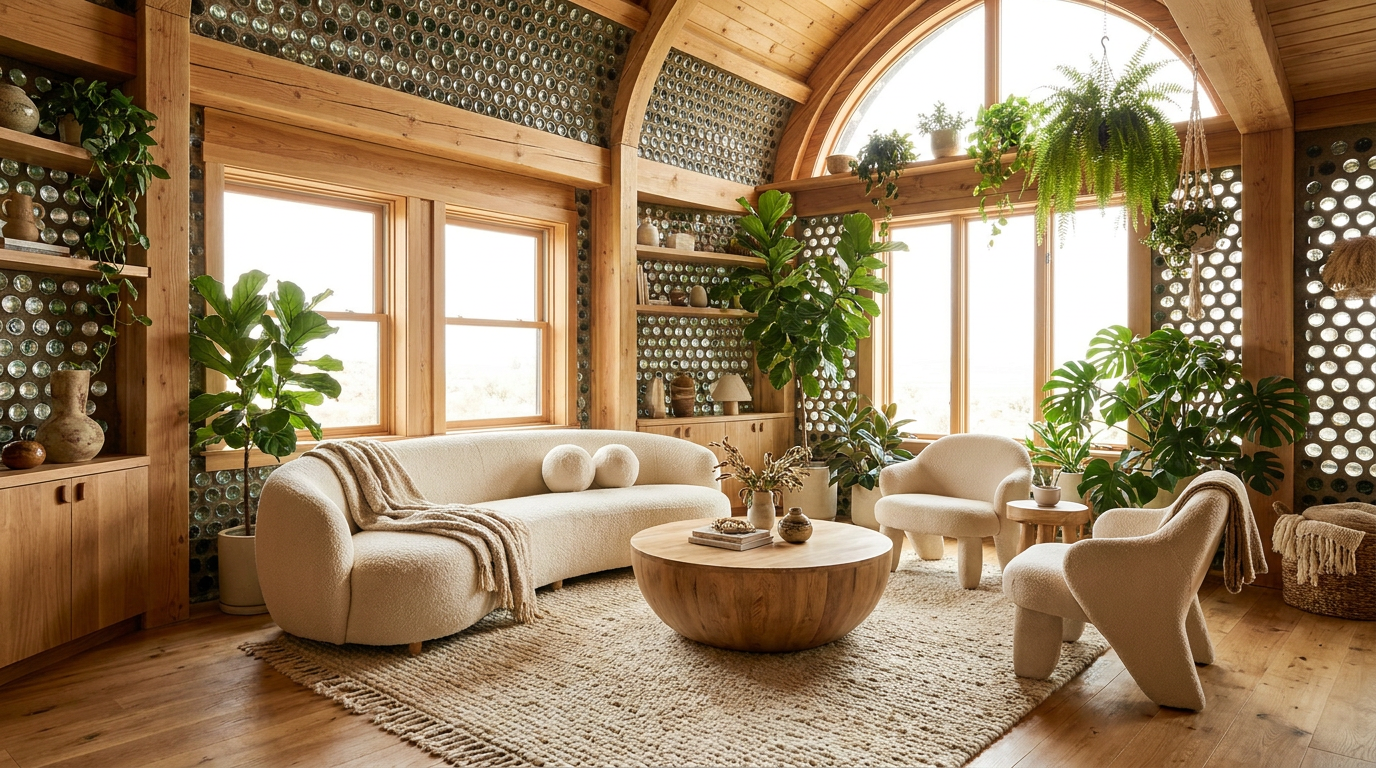
Beyond geometric shapes, the direct integration of nature—a concept known as biophilic design—acts as one of the most powerful neurological soothing agents available to designers. Visual access to greenery, indoor plants, or even natural materials like exposed wood grain and raw stone can significantly lower anxiety and mental fatigue. The presence of these organic elements reminds the brain of evolutionary safe havens, generating an unconscious sense of refuge. Even high-quality artificial plants or artwork depicting natural landscapes can trick the brain into initiating this calming parasympathetic response.[6]
Visual access to greenery, indoor plants, or even natural materials like exposed wood grain and raw stone can significantly lower anxiety and mental fatigue.
Lighting serves as another critical lever in the neuroaesthetic toolkit, acting as far more than just a visual utility. Light is a primary biological cue that synchronizes our circadian rhythms—the internal 24-hour clock that dictates our sleep-wake cycles. Exposure to bright, blue-spectrum daylight in the morning suppresses the production of melatonin, signaling the brain to increase alertness, elevate mood, and optimize cognitive function. Spaces that maximize natural sunlight inherently support this natural biological rhythm, making occupants feel more energized and focused.[5][6]

As the day progresses, transitioning to warmer, dimmer lighting mimics the setting sun, prompting the nervous system to wind down and prepare for restorative sleep. Environments that fail to respect this biological clock—such as windowless offices, hospitals, or big-box stores bathed in harsh, static fluorescent light—actively disrupt these natural hormonal cycles. Prolonged exposure to improper, unvarying lighting often leaves occupants feeling fatigued, strained, and chronically stressed. This biological reality highlights exactly why dynamic, layered lighting plans—where the intensity and color temperature can be adjusted throughout the day—are considered essential for any health-focused interior design project.[7]
Color psychology, long treated as a soft science or a matter of mere artistic preference, is also being rigorously validated by neurological data. Cool tones like muted blues, soft lavenders, and sage greens have been shown to activate the parasympathetic nervous system, which governs the body's 'rest and digest' functions. This makes these hues ideal for bedrooms, meditation spaces, or high-stress environments where emotional regulation is paramount. Conversely, warm, highly saturated colors like red and orange stimulate the sympathetic nervous system, increasing heart rate and energy levels, making them better suited for social or active spaces.[4]
The commercial applications of these neuroaesthetic findings are already transforming major industries. In the corporate sector, evidence-based design is no longer viewed as a frivolous luxury; it is a core productivity and retention strategy. Studies have shown that employees working in biophilic offices with ample access to natural light and ergonomic, curved layouts report a 15 percent increase in overall productivity. Furthermore, these optimized environments lead to significantly lower rates of mental fatigue, burnout, and absenteeism, proving that investing in human-centric design yields a measurable return on investment.[5]
In educational settings, the impact of neuroarchitecture is equally profound, fundamentally changing how schools are built and renovated. A sweeping study of over 21,000 students found that classrooms optimized with dynamic natural light, excellent acoustics, and soothing color palettes improved reading performance by 26 percent and math performance by 20 percent. By reducing visual noise and environmental stressors, the architecture itself becomes an active participant in the learning process, allowing students' brains to allocate more energy to cognitive tasks rather than subconscious threat detection.[4]

Healthcare facilities are also rapidly adopting neuroarchitecture to improve patient outcomes and support overtaxed medical staff. Research consistently demonstrates that patients with access to daylight and views of nature heal faster, require less pain medication, and experience shorter hospital stays compared to those recovering in sterile, windowless rooms. By replacing harsh clinical aesthetics with warm textures, sound-absorbing materials, and biophilic elements, hospitals can actively lower the baseline anxiety of both patients and their families, creating an environment that genuinely supports the body's natural healing mechanisms.[5][6]
But perhaps the most intimate and impactful application of neuroaesthetics is happening right inside our own homes. As the boundaries between work, rest, and play have increasingly blurred in recent years, the cognitive load placed on our residential spaces has skyrocketed. Our living rooms are now offices, our bedrooms are now cinemas, and our kitchens are classrooms. Consequently, designing a home that actively supports mental health and emotional decompression is no longer just about following trends; it is increasingly viewed as a vital form of daily, preventive healthcare.[7]
Fortunately, homeowners can apply these scientific principles without needing a massive renovation budget or an architecture degree. Simple, intentional changes can dramatically alter the psychological weight of a space. Reducing visual clutter minimizes cognitive load, allowing the brain to rest. Incorporating varied tactile textures—like a chunky knit throw or a raw wood coffee table—engages the senses and grounds the nervous system. Arranging furniture to provide a clear view of the room's entrances while keeping your back protected—a psychological concept known as 'prospect and refuge'—instantly makes a space feel more secure and relaxing.[7]
Of course, neuroaesthetics does not claim that beauty is an entirely universal, one-size-fits-all formula that can be solved with a calculator. Cultural background, personal memories, and individual neurodiversity still play a massive, undeniable role in how we interpret colors, sounds, and spatial arrangements. A bold, maximalist room filled with vibrant, contrasting patterns might overwhelm and overstimulate one person's nervous system, while providing deep comfort, joy, and a sense of nostalgic safety to another. The science provides a powerful biological baseline, but the true art of interior design still requires personal context, cultural resonance, and individual expression to make a house feel like a home.[7]

Yet, the underlying biological truths remain undeniable, offering a profound new lens through which to view our built environments. By bridging the gap between art and neuroscience, we are learning that interior design is far more than mere decoration or superficial styling. It is a powerful, invisible interface with our nervous system. Whether we are designing a corporate headquarters, a kindergarten classroom, or a modest apartment living room, we now have the data to intentionally tune our surroundings—empowering us to live healthier, calmer, and more deeply focused lives.[7]
How we got here
1990s
Advancements in fMRI and PET scan technology allow researchers to measure real-time brain responses to aesthetic stimuli.
2000s
Early studies demonstrate that patients in hospital rooms with natural views recover faster and require less pain medication.
2015
Major studies confirm that curvilinear architectural forms activate the brain's emotion and pleasure centers more than rectilinear spaces.
2020s
The post-pandemic shift toward remote work accelerates the adoption of neuroaesthetic principles in residential interior design.
Viewpoints in depth
Neuroaesthetic Researchers
Scientists mapping the biological and evolutionary mechanisms behind our response to beauty.
For neuroscientists, interior design is ultimately an exercise in evolutionary biology. They argue that our preference for natural light, organic textures, and smooth curves is not a cultural construct, but a hardwired survival mechanism. By using fMRI scans and biometric sensors, this camp seeks to strip the subjectivity out of architecture, proving that the human nervous system has universal, predictable reactions to specific environmental stimuli.
Evidence-Based Designers
Architects and designers using data to create spaces that measurably improve human health and performance.
Commercial architects and evidence-based designers use neuroaesthetic data as a functional tool and a business case. For this camp, the value of a space is measured in its return on investment: how much it increases employee productivity, how quickly it helps hospital patients heal, or how effectively it boosts student test scores. They view buildings as active technologies that can be engineered to optimize human output and well-being.
Traditional Aesthetes
Creatives who believe design is fundamentally an art form driven by culture, personal taste, and intuition.
While traditional interior designers welcome the validation that their work impacts mental health, they caution against reducing design to a purely clinical formula. This camp argues that a perfectly 'optimized' room might lack soul, cultural resonance, or personal narrative. They maintain that true beauty often involves tension, contrast, and idiosyncrasies that cannot be neatly quantified by a heart rate monitor or a brain scan.
What we don't know
- How long-term exposure to highly optimized neuroaesthetic environments affects baseline brain chemistry over decades.
- To what extent neurodivergent individuals, such as those with ADHD or autism, require distinct or opposing neuroaesthetic baselines compared to neurotypical populations.
Key terms
- Neuroaesthetics
- A multidisciplinary field combining neuroscience and design to study how aesthetic experiences affect the brain and body.
- Biophilic Design
- An approach to architecture and interior design that seeks to connect building occupants more closely to nature.
- Circadian Rhythm
- The body's internal 24-hour clock that regulates sleep and wakefulness, heavily influenced by light exposure.
- Orbitofrontal Cortex
- A region of the brain involved in cognitive processing of decision-making and emotion, which lights up in response to beautiful environments.
Frequently asked
What is neuroaesthetics?
It is the scientific study of how the brain and body respond to beauty, art, and spatial design, using tools like fMRI scans to measure biological reactions.
How does lighting affect my mood?
Natural daylight and cool blue light suppress melatonin to increase alertness, while warm, dim light signals the brain to relax and prepare for sleep.
Why do we prefer curved furniture?
Research shows that sharp angles can subconsciously trigger the brain's threat-detection centers, while smooth curves activate regions associated with pleasure and safety.
Sources
Source coverage
7 outlets
3 viewpoints surfaced







[1]Science in DesignNeuroaesthetic Researchers
Neuroaesthetics for Interior Designers
Read on Science in Design →[2]Oxford AcademicNeuroaesthetic Researchers
The Neuroaesthetics of Architecture
Read on Oxford Academic →[3]Johns Hopkins IAM LabNeuroaesthetic Researchers
Your Brain on Art: The Case for Neuroaesthetics
Read on Johns Hopkins IAM Lab →[4]Architect@WorkEvidence-Based Designers
Neuroarchitecture looks at how colour influences designs
Read on Architect@Work →[5]UppteamEvidence-Based Designers
Designing for the Mind: How Neuroarchitecture Is Transforming the AEC Industry
Read on Uppteam →[6]ALMA de LUCETraditional Aesthetes
Neuroarchitecture: how interior design influences mental well-being
Read on ALMA de LUCE →[7]Factlen Editorial TeamEvidence-Based Designers
Synthesis by Factlen editorial team
Read on Factlen Editorial Team →

Every angle. Every day.
Get lifestyle stories with full source coverage and perspective breakdowns delivered to your inbox.