
How Hotels Are Engineering the Perfect Night of Sleep
The hospitality industry is shifting from high-energy itineraries to 'sleep tourism,' utilizing AI smart beds, circadian lighting, and acoustic engineering to offer scientifically optimized rest.
By Factlen Editorial Team
- Hospitality Innovators
- Viewing sleep technology as the ultimate differentiator in a crowded luxury market.
- Sleep Science Advocates
- Focusing on the biological mechanisms of rest and the accuracy of biometric tracking.
- Wellness Equity Analysts
- Raising concerns about the commodification of basic human rest.
What's not represented
- · Housekeeping staff who must maintain and troubleshoot complex in-room biometric technologies.
- · Everyday consumers who cannot afford luxury wellness travel but suffer from chronic sleep deprivation.
Why this matters
As chronic sleep deprivation becomes a global public health issue, the travel industry's multi-billion-dollar investment in sleep science is accelerating the development of biometric beds and circadian lighting. Understanding these technologies not only helps travelers choose better accommodations, but previews the smart-home innovations that will eventually reach everyday bedrooms.
Key points
- Hotels are shifting focus from high-energy itineraries to scientifically optimized rest and recovery.
- AI-powered smart beds now monitor heart rate and dynamically adjust surface temperature throughout the night.
- Circadian lighting systems are replacing harsh overhead bulbs to naturally regulate guests' melatonin production.
- The trend highlights a growing 'sleep divide,' where restorative rest is increasingly treated as a luxury commodity.
For decades, the travel industry sold exhaustion. The ideal vacation was a packed itinerary of sightseeing, late-night dining, and early-morning excursions, leaving travelers needing a 'vacation from their vacation.' But by 2026, the ultimate luxury has become something entirely different: doing absolutely nothing, in a room scientifically engineered to make you unconscious. This paradigm shift reflects a broader cultural exhaustion, where the sheer volume of daily digital input has made profound, uninterrupted rest the most sought-after commodity in the global wellness economy.[2]
Welcome to the era of 'Sleep Tourism 2.0.' While hotels have always promised a good night's rest, the definition of a premium sleep environment has evolved far beyond high-thread-count sheets, blackout curtains, and a complimentary lavender pillow spray. Today, hospitality brands are treating sleep as a measurable, physiological outcome, integrating clinical-grade technology into the guest experience to guarantee recovery.[3][4]
The shift is driven by a global sleep crisis. With digital overload and chronic stress eroding everyday rest, travelers are increasingly seeking environments where deep recovery is structurally enforced. According to recent industry data, two out of five travelers now explicitly choose hotels based on the expectation that they will sleep significantly better there than in their own homes, fundamentally altering how trips are planned and marketed.[3]
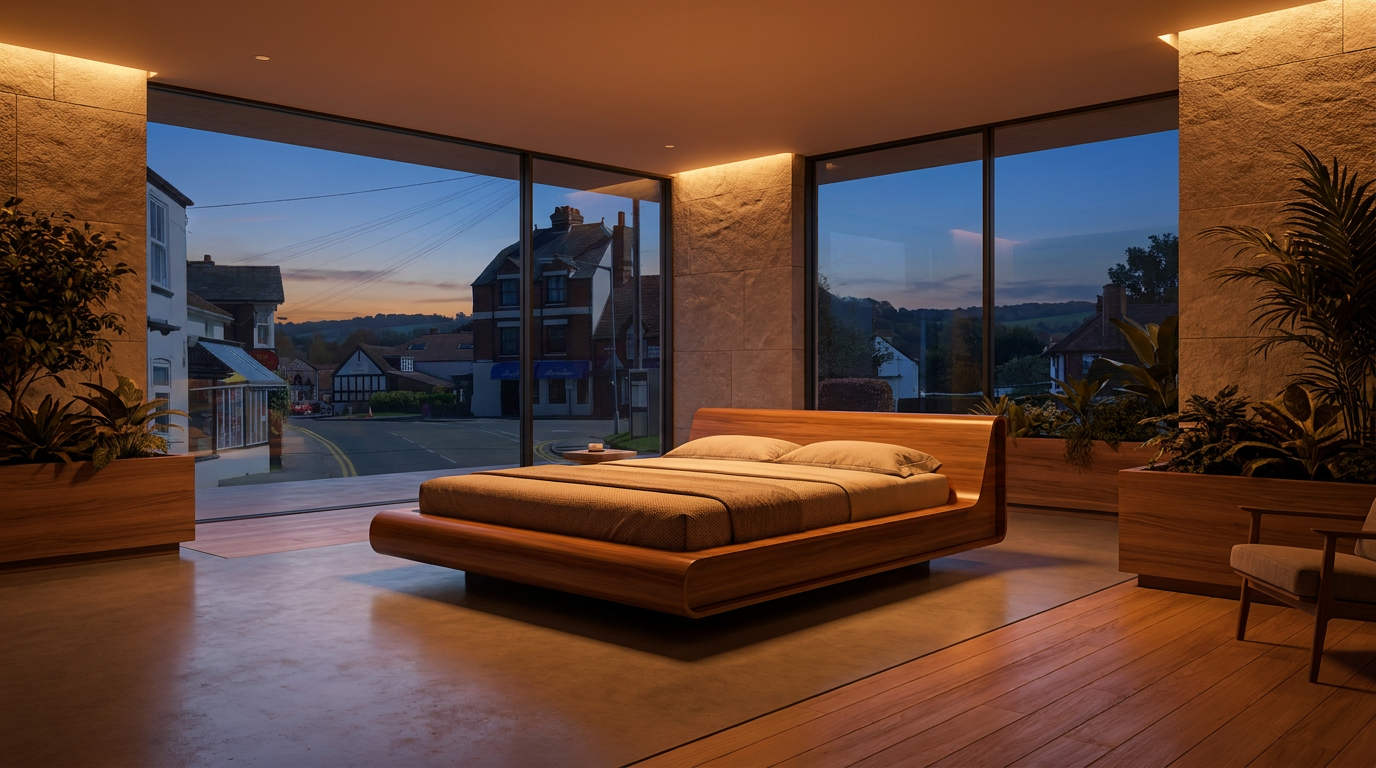
At the center of this movement is the AI-powered smart room. Rather than forcing guests to fiddle with complex thermostats and light switches upon arrival, modern wellness suites anticipate physiological needs autonomously. Sensors embedded invisibly in the mattress monitor a guest's heart rate, respiration, and micro-movements throughout the night, feeding a continuous stream of biometric data into the room's central processor.[1][5]

This biometric data drives an algorithmic climate control system. As the human body enters deep REM sleep and its core temperature naturally drops, the smart bed dynamically adjusts its surface temperature to prevent the guest from waking up in a sweat. If the system detects restless tossing or an elevated heart rate, it might subtly lower the ambient room temperature or adjust the mattress firmness to encourage a return to deeper sleep stages.[1][5]
Lighting design has undergone a similar, science-backed revolution. Traditional hotel rooms often feature harsh overhead bulbs that suppress melatonin production and disrupt the body's internal clock. Sleep-optimized rooms now utilize advanced circadian lighting systems—LED arrays that perfectly mimic the natural progression of the sun. They emit bright, blue-enriched light in the morning to stimulate cortisol and wakefulness, gradually shifting to warm, amber tones in the evening to signal the brain that it is time to rest.[1][3]
Lighting design has undergone a similar, science-backed revolution.
Acoustic engineering serves as the third pillar of the modern sleep suite. Beyond standard double-glazed windows and heavy doors, high-end properties are installing active noise-cancellation technology directly within the room's architecture. Some suites feature specialized acoustic panels and white-noise generators tuned to specific frequencies that mask disruptive urban sounds, creating a 'sonic cocoon' that isolates the guest from the chaos of the outside world.[1][3]
The demand for these highly controlled environments is staggering, reshaping the economics of luxury travel. Industry reports indicate that 70% of luxury travelers now actively seek out facilities that offer dedicated sleep quality services. This demand has given rise to the 'MeMooner'—solo travelers who book expensive trips entirely focused on personal wellness, digital disconnection, and physiological reset, completely bypassing traditional tourist attractions.[3]

Hotels are also embracing and monetizing cultural shifts around rest, such as the Scottish concept of 'hurkle-durkling'—the practice of lounging in bed all day without guilt. Rather than pushing guests out the door for morning tours or aggressive fitness classes, resorts are designing spaces that encourage prolonged, comfortable idleness, complete with 'app naps,' guided in-room meditation channels, and room service menus optimized for gut health and melatonin production.[3]
The focus on wellness extends beyond the bedroom into the broader resort experience, fundamentally changing how guests interact with one another. The traditional hotel happy hour is increasingly being replaced by 'social wellness' programming. Guests are gathering for sunrise run clubs, communal ice bath sessions, and non-alcoholic botanical tasting menus, prioritizing active recovery and clear-headed mornings over late-night indulgence.[6]
However, the integration of biometric sensors into the hospitality experience introduces new complexities, particularly around data privacy. When a bed tracks a guest's heart rate and breathing patterns, that data must be rigorously protected. Cybersecurity has rapidly transitioned from a back-office IT concern to a front-facing brand pillar, as travelers demand absolute assurance that their intimate physiological data will not be monetized, stored indefinitely, or breached by malicious actors.[6]

There is also a broader societal critique emerging around the 'sleep divide.' As the Global Wellness Institute notes, the rise of sleep tourism highlights an uncomfortable reality: restorative rest is increasingly becoming a luxury commodity. While affluent travelers can pay thousands of dollars to reset their circadian rhythms in an AI-optimized suite, much of the global population continues to struggle with environmental noise, light pollution, and chronic stress in their everyday lives.[1][7]
The ultimate promise of sleep tourism, however, is that it serves as an incubator for consumer technology. Just as the high-end amenities of past decades—like rainfall showers and premium espresso machines—eventually became standard home features, the biometric beds and circadian lighting systems currently being tested in five-star resorts are already driving innovation and lowering costs in the broader smart-home market.[1][7]
For now, the hospitality industry has found its most lucrative and universally appealing amenity yet. By transforming the hotel room from a mere place to crash into a sophisticated, medical-grade recovery chamber, brands are not just selling a room for the night—they are selling the elusive, highly prized promise of waking up truly rested and ready to face the world.[2][4]
How we got here
2010s
Hotels begin introducing basic wellness amenities, primarily focused on premium mattresses and blackout curtains.
2021
Unattended home sleep tests grow by over 600%, signaling a massive shift in consumer awareness regarding sleep health.
2024
Major luxury brands launch dedicated, multi-day sleep retreats featuring clinical tracking and coaching.
2025
Industry reports dub the year the dawn of 'Sleep Tourism 2.0', characterized by the integration of AI and biometric sensors.
2026
Circadian lighting and algorithmic climate control begin transitioning from niche luxury offerings to standard features in premium hotel tiers.
Viewpoints in depth
Hospitality Innovators
Viewing sleep technology as the ultimate differentiator in a crowded luxury market.
For hotel operators and industry analysts, the shift toward sleep tourism is a necessary evolution to capture the modern, health-conscious traveler. They argue that as consumers become more educated about the long-term health impacts of sleep deprivation, a standard comfortable bed is no longer enough to justify premium room rates. By integrating AI-driven climate control, acoustic engineering, and circadian lighting, hotels can offer a measurable return on investment for the guest: verified physiological recovery. This tech-forward approach also opens new revenue streams, from personalized sleep coaching consultations to premium 'wellness tier' room upgrades.
Sleep Science Advocates
Focusing on the biological mechanisms of rest and the accuracy of biometric tracking.
Researchers and wellness advocates celebrate the mainstreaming of sleep science, noting that environments tailored to human circadian rhythms can significantly accelerate recovery from jet lag and chronic stress. However, they emphasize that technology must be seamlessly integrated to be effective. If a smart bed requires a guest to navigate a complex app or emits disruptive blue light from a control panel, it defeats the purpose. This camp advocates for 'invisible technology'—sensors that monitor heart rate variability and adjust room temperature autonomously, allowing the guest to simply sleep without managing another digital interface.
Wellness Equity Analysts
Raising concerns about the commodification of basic human rest.
While acknowledging the benefits of sleep technology, equity analysts point to a growing 'sleep divide.' They argue that restorative rest—once a fundamental human baseline—is increasingly being packaged and sold as a luxury good. As urban environments become louder and more light-polluted, the ability to sleep in a perfectly dark, quiet, and temperature-controlled room is becoming a privilege reserved for those who can afford five-star wellness retreats. This perspective challenges the industry to consider how the innovations developed for elite sleep tourism might eventually be democratized to improve everyday living conditions for the broader public.
What we don't know
- Whether the biometric data collected by smart beds will eventually be used for personalized marketing or health insurance profiling.
- How quickly these high-end sleep technologies will become affordable enough for standard mid-tier hotels.
- If the stress of travel and changing time zones ultimately negates the benefits of a technologically optimized sleep environment.
Key terms
- Circadian Lighting
- Illumination systems that mimic the natural progression of sunlight, using blue-enriched light in the morning and warm amber tones at night to regulate melatonin.
- Biometric Smart Bed
- A mattress equipped with invisible sensors that track heart rate, respiration, and movement to dynamically adjust surface temperature and firmness.
- Sleep Divide
- The growing socioeconomic gap between those who can afford environments optimized for restorative rest and those exposed to chronic environmental disruptions.
- Hurkle-Durkling
- A Scottish term recently adopted by the wellness industry that describes the practice of lounging in bed all day for relaxation.
- Social Wellness
- Group-based health activities, such as run clubs or communal cold plunges, that are replacing alcohol-centric networking in hospitality.
Frequently asked
Do smart beds record my personal data?
Yes, biometric beds track physiological data like heart rate and breathing to adjust the environment. However, major hotel brands are making cybersecurity a priority, ensuring this data is anonymized and wiped after the guest checks out.
Is sleep tourism only for luxury resorts?
Currently, the most advanced AI and acoustic technologies are concentrated in five-star properties. However, features like circadian lighting and improved soundproofing are beginning to trickle down to mid-tier business hotels.
Can a hotel room actually cure jet lag?
While it cannot instantly cure jet lag, a room optimized with circadian lighting and precise temperature control can significantly accelerate the body's natural adjustment to a new time zone.
Sources
Source coverage
7 outlets
3 viewpoints surfaced







[1]Global Wellness InstituteSleep Science Advocates
2025 Global Wellness Economy Monitor: Sleep Tourism and the Growing Sleep Divide
Read on Global Wellness Institute →[2]EHL GroupHospitality Innovators
Hospitality Outlook 2025: Regenerative Hospitality and Guest Experiences
Read on EHL Group →[3]StarpoolSleep Science Advocates
Wellness Rooms and Sleep Technology
Read on Starpool →[4]Roux AdvertisingHospitality Innovators
Hospitality Trends Shaping 2026
Read on Roux Advertising →[5]Universidad EuropeaHospitality Innovators
Key trends shaping tomorrow's hotels
Read on Universidad Europea →[6]Torrens UniversityHospitality Innovators
Emerging trends in the hotel industry
Read on Torrens University →[7]Factlen Editorial TeamWellness Equity Analysts
Synthesis by Factlen editorial team
Read on Factlen Editorial Team →

Every angle. Every day.
Get travel stories with full source coverage and perspective breakdowns delivered to your inbox.