
How Gut Bacteria Shape Mood: The Rise of Psychobiotics and Nutritional Psychiatry
Emerging research reveals that the trillions of microbes in the human digestive tract actively manufacture the chemical signals that dictate our emotional states. This discovery is driving the new field of nutritional psychiatry, which uses targeted dietary changes to treat anxiety and depression.
By Factlen Editorial Team
- Nutritional Psychiatrists
- Focus on whole-food dietary patterns like the Mediterranean diet as the primary intervention for mood disorders, emphasizing the synergistic effects of fiber and nutrients.
- Microbiome Researchers
- Focus on isolating specific psychobiotic strains, mapping the biochemical pathways of the gut-brain axis, and developing targeted microbial therapies.
- Clinical Skeptics
- Emphasize the need for more rigorous human trials, caution against over-hyping single-strain probiotic supplements, and highlight the difficulty of standardizing treatments.
What's not represented
- · Food industry executives
- · Health insurance providers
Why this matters
Understanding the gut-brain connection empowers individuals to actively manage their mental health through daily dietary choices. By viewing food as biological information rather than just fuel, patients gain a tangible, accessible tool for building emotional resilience and combating mood disorders.
Key points
- The gut and brain communicate constantly via the vagus nerve, making digestive health central to emotional regulation.
- Approximately 95% of the body's serotonin is produced in the gastrointestinal tract, heavily influenced by gut bacteria.
- Clinical trials demonstrate that a Mediterranean-style diet can significantly reduce symptoms of major depressive disorder.
- Fermented foods and diverse plant fibers act as natural psychobiotics, outperforming isolated probiotic supplements in clinical efficacy.
For centuries, modern medicine treated the human brain as an isolated command center, safely sealed behind the blood-brain barrier and entirely responsible for our moods, anxieties, and cognitive triumphs. If a patient experienced depression or chronic stress, the solution was assumed to lie exclusively within the neurochemistry of the skull. But a quiet revolution in human biology has upended that top-down model. Researchers are increasingly looking downward, past the brain stem and into the digestive tract, to understand the origins of human emotion. The gut and the brain are not separate systems; they are intimately entangled in a continuous, bidirectional conversation. This realization has birthed an entirely new medical discipline that is shifting how doctors treat mental health, moving beyond the pharmacy and into the kitchen.[1][2]
This emerging field is known as nutritional psychiatry, and it operates on a simple but profound premise: what we eat directly alters the physical structure and function of our brains. While the idea that "food is medicine" is ancient, the modern clinical application is highly specific, focusing on how dietary patterns influence the trillions of microorganisms residing in the human digestive tract. These microbes do not merely digest our food; they actively manufacture the chemical signals that dictate our emotional states. By understanding this relationship, psychologists and gastroenterologists are collaborating to develop interventions that treat mood disorders not just with traditional talk therapy or psychiatric medications, but with targeted nutritional protocols.[1][3]
The physical bridge facilitating this mind-body dialogue is the gut-brain axis, a complex network of neural, hormonal, and immunological pathways. The primary information superhighway of this network is the vagus nerve, a thick cable of neurons that wanders from the brainstem all the way down to the abdomen. For decades, scientists assumed the vagus nerve primarily carried instructions from the brain down to the organs. However, recent anatomical studies reveal that the vast majority of the traffic on the vagus nerve is actually flowing upward. The gut is constantly broadcasting real-time updates about the body's internal environment directly to the brain's emotional and cognitive centers, heavily influencing how we perceive stress and process anxiety.[2][4]
To understand the sheer scale of the gut's neurological power, one only needs to look at the enteric nervous system. The human gastrointestinal tract is lined with approximately 100 million nerve cells—more neurons than are found in the spinal cord or the peripheral nervous system. This dense web of neural tissue is so sophisticated that it is frequently referred to as the body's "second brain." Crucially, this second brain is responsible for producing the vast majority of the body's mood-regulating neurotransmitters. An estimated 95 percent of the body's serotonin, the chemical messenger most closely associated with feelings of happiness and well-being, is synthesized not in the brain, but in the gut.[2]

The production of these vital neurotransmitters is heavily managed by the gut microbiome, the sprawling ecosystem of bacteria, fungi, and viruses that inhabit the intestines. These microbes act as a microscopic chemical factory. When fed the right materials, they produce neuroactive compounds, regulate systemic inflammation, and maintain the integrity of the intestinal lining. When the microbiome is starved of essential nutrients or bombarded with highly processed foods, the resulting bacterial imbalance—known as dysbiosis—can trigger a cascade of inflammatory responses. This low-grade inflammation can travel along the gut-brain axis, crossing the blood-brain barrier and manifesting clinically as brain fog, fatigue, anxiety, or severe depression.[4][6]
The discovery that specific bacteria can actively improve mental health has led to the classification of a new therapeutic agent: psychobiotics. Coined by researchers at the intersection of microbiology and neuroscience, psychobiotics are defined as live microorganisms that, when ingested in adequate amounts, confer a measurable mental health benefit to the host. Unlike traditional probiotics, which are primarily marketed for digestive regularity or immune support, psychobiotics are studied specifically for their capacity to modulate the central nervous system. They achieve this by producing short-chain fatty acids, synthesizing amino acids like GABA, and directly lowering the body's cortisol levels in response to stress.[4][6]
The watershed moment for nutritional psychiatry arrived with the publication of the SMILES trial (Supporting the Modification of Lifestyle in Lowered Emotional States), led by Professor Felice Jacka. Prior to this study, the link between diet and depression was largely observational—researchers knew that people who ate poorly were more likely to be depressed, but they could not prove causation. The SMILES trial was the first randomized controlled trial to test whether dietary improvement could actively treat clinical depression. The results sent shockwaves through the psychiatric community, providing the first rigorous experimental evidence that food could be used as a primary psychiatric intervention.[3][7]
In the SMILES trial, adults suffering from moderate to severe major depressive disorder were divided into two groups. One group received standard social support, while the other underwent 12 weeks of clinical nutritional counseling. The dietary intervention did not involve extreme fasting or restrictive fad diets; rather, it guided patients toward a modified Mediterranean-style diet rich in vegetables, whole grains, legumes, and healthy fats, while drastically reducing ultra-processed foods and refined sugars. At the end of the 12-week period, the patients in the nutritional intervention group showed significantly greater improvements in their depressive symptoms, with a substantial portion achieving full clinical remission.[3][7]
In the SMILES trial, adults suffering from moderate to severe major depressive disorder were divided into two groups.
Subsequent global research has consistently reinforced these findings, cementing the Mediterranean diet as the gold standard in nutritional psychiatry. Large-scale epidemiological studies and systematic reviews have demonstrated that strict adherence to a traditional, whole-food Mediterranean diet is associated with a 40 to 45 percent lower risk of developing depression. The protective effect stems from the diet's high concentration of antioxidants, omega-3 fatty acids, and dietary fiber. These components work synergistically to reduce oxidative stress in the brain and provide the exact prebiotic fuel required by the gut's most beneficial psychobiotic bacteria.[5][7]

While the supplement industry has rushed to isolate and patent specific psychobiotic strains, clinical evidence suggests that whole-food dietary patterns remain vastly superior to single-nutrient pills. The human microbiome thrives on diversity. Consuming a wide variety of plant-based fibers encourages the growth of a diverse microbial ecosystem, which is far more resilient to stress and disease than a microbiome dominated by only a few bacterial strains. Trials attempting to treat depression solely with isolated probiotic capsules have frequently yielded mixed or null results, underscoring the reality that the gut-brain axis requires the complex, synergistic matrix of nutrients found only in whole foods.[5][7]
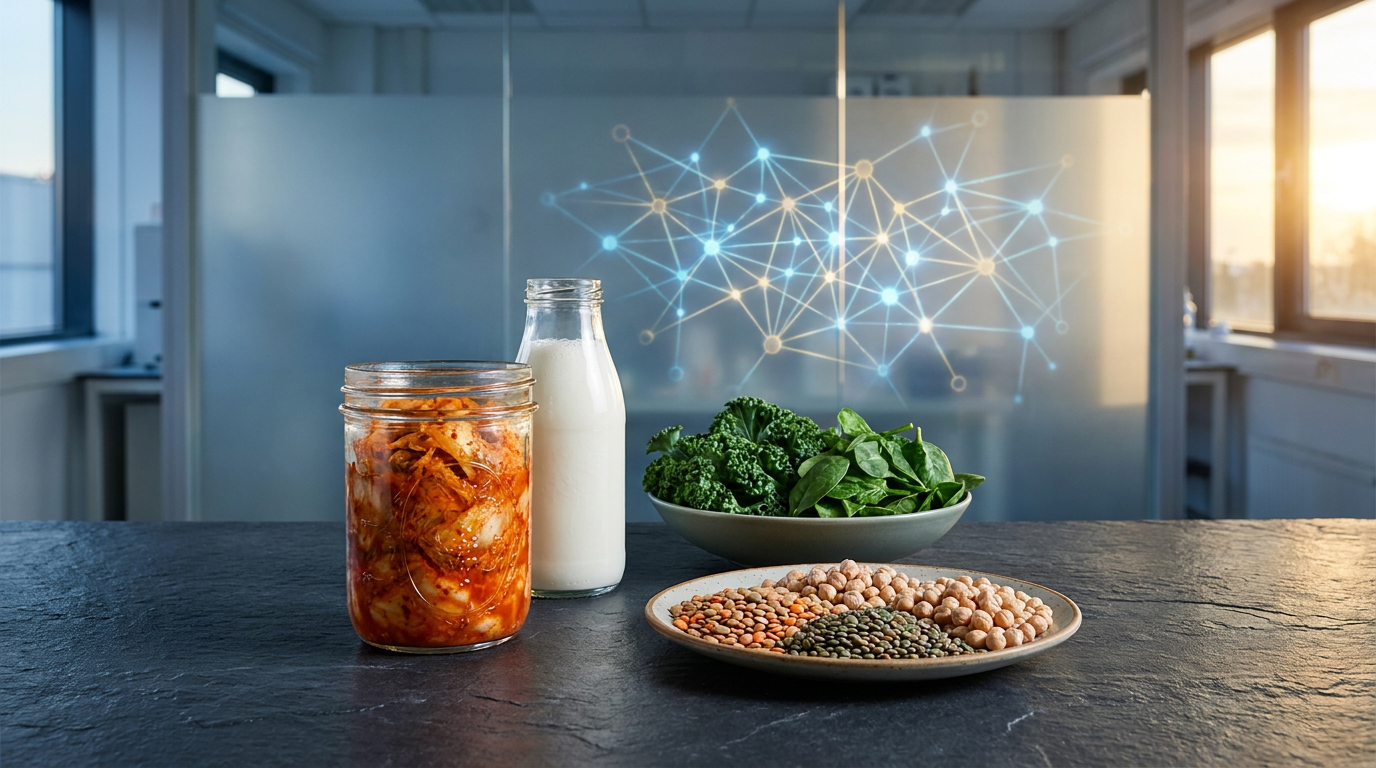
For those looking to actively cultivate a psychobiotic-rich microbiome, fermented foods are emerging as a powerful, accessible tool. Foods like unsweetened kefir, traditional sauerkraut, kimchi, tempeh, and kombucha are naturally teeming with live, beneficial bacteria. When integrated into a daily diet, these natural psychobiotics help maintain the acidic environment of the gut, crowd out pathogenic bacteria, and stimulate the production of anti-inflammatory cytokines. Nutritional psychiatrists increasingly recommend a daily serving of fermented foods as a foundational practice for maintaining cognitive health and emotional resilience, viewing the refrigerator as an extension of the medicine cabinet.[2][6]
The biochemical mechanics of how these fermented foods improve mood are becoming clearer. As beneficial bacteria ferment dietary fiber in the colon, they produce short-chain fatty acids (SCFAs), such as butyrate, acetate, and propionate. These SCFAs are metabolic superheroes. They strengthen the blood-brain barrier, preventing neurotoxins from entering the brain's delicate environment. Furthermore, SCFAs interact directly with the endocrine system to blunt the hypothalamic-pituitary-adrenal (HPA) axis, the body's primary stress response system. By keeping the HPA axis in check, a healthy microbiome effectively lowers the volume on the body's panic alarms, resulting in a calmer, more stable baseline mood.[4][6]
Despite the immense promise of psychobiotics, researchers caution that the field is still in its relative infancy. Much of the foundational data mapping the exact molecular pathways of the gut-brain axis relies on murine models—studies conducted on mice. While these animal studies clearly demonstrate that transferring the microbiome of a stressed mouse into a calm mouse will induce anxiety in the recipient, translating these exact mechanisms to the infinitely more complex human microbiome is challenging. Human clinical trials are accelerating, but standardizing dosages and identifying which specific bacterial strains work best for which specific psychiatric conditions remains an ongoing scientific hurdle.[4][6]

This scientific nuance is often lost in the commercial rush to capitalize on the gut-brain trend. The market is currently flooded with over-the-counter probiotic supplements making bold, unregulated claims about curing anxiety or erasing depression. Clinical skeptics warn that popping a generic probiotic pill while maintaining a diet high in ultra-processed foods is a futile exercise. The beneficial bacteria in a capsule cannot survive, let alone colonize and alter brain chemistry, if they are dropped into a highly inflamed, fiber-starved intestinal environment. True psychobiotic therapy requires a hospitable gut architecture, which can only be built through sustained dietary change.[1][5]
Adding to the complexity is the highly individualized nature of the human microbiome. A person's gut environment is largely established during the first 1,000 days of life, influenced by genetics, delivery method, early antibiotic exposure, and childhood diet. Because no two microbiomes are exactly alike, a dietary intervention that dramatically alleviates anxiety in one patient might have a negligible effect on another. This inherent variability explains why broad-spectrum probiotic trials sometimes fail to show universal efficacy, and it highlights the need for a more nuanced, personalized approach to nutritional psychiatry.[2][6]
The future of the field lies in precision nutrition. As microbiome sequencing technology becomes cheaper and more accessible, clinicians envision a near future where psychiatric care begins with a comprehensive stool analysis. By mapping a patient's unique microbial deficiencies, doctors could prescribe highly specific psychobiotic strains and tailored dietary protocols designed to upregulate the exact neurotransmitters that patient is lacking. This targeted approach would move nutritional psychiatry from general wellness advice into the realm of rigorous, individualized medicine, offering a powerful adjunct to traditional psychiatric care.[1][6]

Already, forward-thinking psychiatrists and general practitioners are integrating these concepts into their daily practice. Rather than immediately reaching for a prescription pad to issue selective serotonin reuptake inhibitors (SSRIs) for mild to moderate depression, many clinicians are now beginning with a thorough dietary assessment. They are educating patients on the gut-brain connection, explaining how ultra-processed foods act as neurological disruptors, and prescribing dietary modifications as a first-line treatment. When medication is necessary, a healthy gut microbiome can actually improve the efficacy and reduce the gastrointestinal side effects of traditional antidepressants.[3][7]
Ultimately, the rise of nutritional psychiatry offers a deeply empowering message for patients. Mental health is not solely determined by genetic destiny or immutable brain chemistry; it is actively shaped by the choices made at the dinner table every single day. By viewing food not merely as caloric fuel, but as biological information that programs the mind, individuals gain a tangible, daily tool for cultivating emotional resilience. Tending to the microscopic ecosystem within the gut may prove to be one of the most effective strategies for protecting the mind, proving that the path to a healthier brain truly begins in the belly.[1][2]
How we got here
2010
First major observational studies link diet quality to the prevalence of clinical depression and anxiety.
2013
The term "psychobiotics" is officially coined to describe live organisms that confer mental health benefits.
2017
The landmark SMILES trial is published, providing the first clinical evidence that dietary improvement can treat major depression.
2022
Large-scale meta-analyses confirm that adherence to a Mediterranean diet significantly lowers the risk of developing depression.
2025–2026
Research accelerates into precision nutrition, exploring how personalized microbiome sequencing can tailor psychobiotic treatments.
Viewpoints in depth
Nutritional Psychiatrists
Focus on whole-food dietary patterns as the primary intervention for mood disorders.
Clinicians in this camp argue that the most effective way to treat the gut-brain axis is through holistic dietary changes, specifically the Mediterranean diet. They point to landmark studies like the SMILES trial, which demonstrated that a diverse intake of plant fibers, healthy fats, and fermented foods creates a resilient microbiome. They argue that food provides a complex matrix of nutrients that work synergistically to reduce neuroinflammation, a feat that cannot be replicated by isolated supplements.
Microbiome Researchers
Focus on isolating specific psychobiotic strains and mapping the biochemical pathways of the gut-brain axis.
Scientists in the laboratory setting are focused on the exact mechanisms of action—how specific strains of Bifidobacterium or Lactobacillus produce short-chain fatty acids and synthesize neurotransmitters like GABA. Their goal is to move beyond general dietary advice and develop targeted microbial therapies. They envision a future of precision medicine where a patient's unique microbiome is sequenced, and specific psychobiotic strains are prescribed to correct precise neurochemical imbalances.
Clinical Skeptics
Emphasize the need for more rigorous human trials and caution against over-hyping single-strain probiotic supplements.
While acknowledging the reality of the gut-brain connection, skeptics warn that the supplement industry has vastly outpaced the science. They point out that much of the foundational data relies on animal models, and human trials using single-strain probiotic pills have frequently yielded mixed results. They stress that because every individual's microbiome is unique—shaped in the first 1,000 days of life—standardizing a universal psychobiotic treatment is incredibly difficult, and popping a pill cannot undo the damage of a highly processed diet.
What we don't know
- Which specific bacterial strains are most effective for treating distinct psychiatric conditions like anxiety versus depression.
- How to reliably standardize psychobiotic dosages given the extreme variability of individual human microbiomes.
- The exact mechanisms by which short-chain fatty acids cross the blood-brain barrier in humans to alter neurochemistry.
Key terms
- Psychobiotics
- Live microorganisms (probiotics) that, when ingested in adequate amounts, confer a mental health benefit by interacting with the gut-brain axis.
- Gut-Brain Axis
- The complex, bidirectional communication network linking the gastrointestinal tract, the microbiome, and the central nervous system.
- Enteric Nervous System
- A dense web of approximately 100 million neurons lining the gastrointestinal tract, often referred to as the body's "second brain."
- Vagus Nerve
- The primary neural superhighway connecting the gut and the brain, transmitting real-time updates about the body's internal environment.
- Dysbiosis
- An imbalance in the gut microbiome, often caused by poor diet or stress, which can trigger systemic inflammation.
- Short-Chain Fatty Acids (SCFAs)
- Beneficial metabolic byproducts produced when gut bacteria ferment dietary fiber, known to reduce inflammation and regulate stress.
Frequently asked
Can eating better really cure depression?
While diet is not a guaranteed cure for severe clinical depression, rigorous trials show that improving diet quality—specifically adopting a Mediterranean-style diet—can significantly reduce symptoms and increase the likelihood of remission.
Should I take a probiotic supplement for my anxiety?
Clinical evidence suggests that whole foods and fermented foods are more effective than single-strain probiotic pills. Supplements may not survive or colonize if the gut environment is starved of the dietary fiber needed to sustain them.
What are the best foods for gut and brain health?
A diet rich in diverse plant fibers (vegetables, legumes, whole grains), healthy fats (olive oil, omega-3s), and natural fermented foods (kefir, sauerkraut, kimchi) provides the best support for a healthy gut-brain axis.
Sources
Source coverage
7 outlets
3 viewpoints surfaced







[1]Factlen Editorial TeamClinical Skeptics
Synthesis by Factlen editorial team
Read on Factlen Editorial Team →[2]Harvard Health PublishingClinical Skeptics
Nutritional psychiatry: Your brain on food
Read on Harvard Health Publishing →[3]American Psychological AssociationNutritional Psychiatrists
How diet and nutrition impact mental health
Read on American Psychological Association →[4]Nature Reviews Gastroenterology & HepatologyMicrobiome Researchers
Gastrointestinal and Brain Barriers: Unlocking Gates of Communication Across the Microbiota-Gut-Brain Axis
Read on Nature Reviews Gastroenterology & Hepatology →[5]MDPI NutrientsMicrobiome Researchers
Nutritional Psychiatry: Towards improving mental health by what you eat
Read on MDPI Nutrients →[6]Frontiers in NutritionMicrobiome Researchers
Psychobiotics and the Gut-Brain Axis in Mental Health
Read on Frontiers in Nutrition →[7]Psychiatric TimesNutritional Psychiatrists
Speaking of Lifestyle Psychiatry: Felice Jacka, OAM, PhD
Read on Psychiatric Times →

More in health
See all 5 stories →Metabolic Health
Muscle as an Organ of Longevity: The Science of Myokines and Metabolic Health
0 sources

Clinical Evidence
The Evidence for Exercise as a First-Line Mental Health Treatment
0 sources

Diabetes Research
FDA Approves First Disease-Modifying Therapy for Newly Diagnosed Stage 3 Type 1 Diabetes in Youth
0 sources
Every angle. Every day.
Get health stories with full source coverage and perspective breakdowns delivered to your inbox.