
How 'Green Amendments' Are Rewriting Environmental Law in State Constitutions
A growing legal movement is elevating the right to clean air and water to the same constitutional level as free speech, giving citizens a powerful new tool to hold governments accountable.
By Factlen Editorial Team
- Environmental Law Advocates
- Argue that elevating environmental health to a fundamental human right provides the strongest legal tool to force government accountability.
- State Legislatures & Industry
- Argue that environmental policy should be set by elected lawmakers through specific statutes, not dictated by broad constitutional interpretations in court.
- Youth Plaintiffs
- Emphasize the intergenerational aspect of the Public Trust Doctrine, arguing that current policies unconstitutionally degrade the environment their generation will inherit.
What's not represented
- · Federal environmental regulators
- · Fossil fuel industry executives
Why this matters
Federal environmental laws can be rewritten or repealed by changing administrations. By embedding environmental protections directly into state constitutions, citizens are securing permanent, enforceable rights that bypass legislative gridlock and force regulators to prioritize ecological health.
Key points
- Green Amendments place the right to a clean environment in a state's Bill of Rights.
- They elevate environmental protection to the same legal tier as free speech.
- The legal mechanism shifts the burden of proof onto the government and polluters.
- Pennsylvania (1971), Montana (1972), and New York (2021) currently have these amendments.
- In 2023, Montana youth successfully used their state's amendment to strike down a pro-fossil-fuel law.
- Over a dozen other states are currently pursuing similar constitutional amendments.
The United States Constitution contains no mention of the environment. For decades, Americans seeking to protect their local air, water, and ecosystems have relied on a patchwork of federal and state statutes—laws that can be rewritten, weakened, or repealed by shifting political winds. But at the state level, a quieter, more permanent legal revolution is taking hold.[1]
It is known as the "Green Amendment" movement. The concept is legally elegant but profoundly disruptive: taking the right to a clean and healthful environment and writing it directly into the Bill of Rights of a state's constitution.[4][6]
By placing environmental health in the Bill of Rights, these amendments elevate clean air and pure water to the same fundamental legal tier as the freedom of speech, the freedom of religion, and the right to a trial by jury. They establish that a healthy ecosystem is not a privilege granted by the government, but an inalienable human right that the government cannot infringe upon.[1][4][6]
The mechanism behind a Green Amendment fundamentally changes how environmental law is practiced. In traditional environmental litigation, citizens must prove that a specific agency violated a specific statute—a high bar that often requires waiting for the harm to occur.[4]
A Green Amendment shifts the burden of proof. Because the right to a clean environment is constitutionally guaranteed, the government and potential polluters must prove upfront that their proposed actions—such as issuing a new industrial permit—will not violate the citizens' constitutional rights. It forces regulators to consider environmental impacts at the very beginning of the planning process.[4][6]

Furthermore, true Green Amendments are "self-executing." This means they do not require the state legislature to pass additional enabling laws for them to be enforced. Citizens can sue the government directly under the constitution if they believe their rights are being violated.[1][2]
Many of these amendments also codify the "Public Trust Doctrine." This legal principle designates the state government as the explicit trustee of public natural resources, legally bound to conserve and maintain them not just for current residents, but for generations yet to come.[3][4]
While the movement has gained recent momentum, its roots stretch back over half a century. Pennsylvania was the first state to adopt a Green Amendment in 1971. Driven by the visible scars of unregulated 19th and 20th-century coal mining—which left behind burning refuse banks and acid-polluted rivers—Pennsylvania voters approved the amendment by a four-to-one margin.[3]

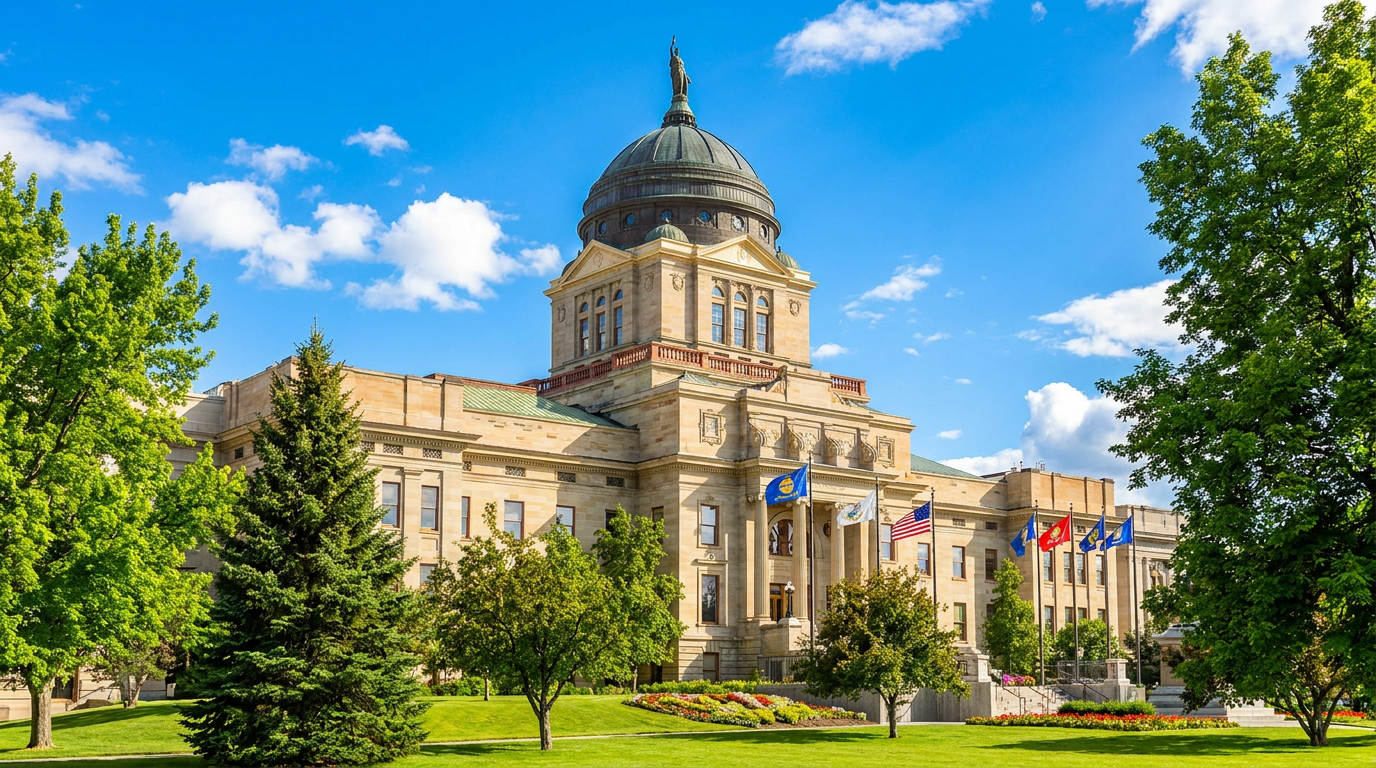
Montana followed suit a year later. During a 1972 constitutional convention, delegates wrote what the state's Chief Justice recently called "the strongest environmental protection provision found in any state constitution." It explicitly required the state and each person to maintain and improve a clean and healthful environment for present and future generations.[2][7]
Yet, for decades, these powerful constitutional tools lay largely dormant. State courts frequently interpreted them as aspirational policy goals rather than strict, enforceable legal mandates. That began to change in 2013, when the Pennsylvania Supreme Court breathed new life into its amendment by striking down a state law that had granted oil and gas companies broad powers to bypass local zoning for fracking operations.[3]
Yet, for decades, these powerful constitutional tools lay largely dormant.
The true watershed moment for Green Amendments, however, arrived in 2023 with a landmark case in Montana known as Held v. Montana. Sixteen youth plaintiffs, ranging in age from 2 to 18, sued the state, arguing that its aggressive support for the fossil fuel industry violated their constitutional right to a clean environment.[2][5]
The plaintiffs specifically targeted a provision in the Montana Environmental Policy Act. The state legislature had passed a law explicitly forbidding state agencies from considering greenhouse gas emissions or global climate impacts when analyzing proposed energy permits.[2][7]
In August 2023, following a historic trial, District Court Judge Kathy Seeley ruled in favor of the youth plaintiffs. She declared the law unconstitutional on its face, reasoning that a statute directly incentivizing greenhouse gas pollution clearly conflicted with the citizens' constitutional right to a clean and healthful environment.[2]
The state appealed, arguing that the lawsuit was an "airing of political grievances" and that Montana's emissions were too small to meaningfully impact the global climate. But in 2024, the Montana Supreme Court firmly upheld the ruling, affirming that the constitutional guarantee of a clean environment inherently includes a stable climate system.[2][5][7]
The success in Montana has supercharged the national movement. In 2021, New York became the third state to officially add a Green Amendment to its Bill of Rights, passing a simple but sweeping provision: "Each person shall have a right to clean air and water, and a healthful environment."[6]

Today, advocates are pushing for similar constitutional amendments in over a dozen other states, including New Jersey, Maryland, and West Virginia. By securing these rights at the state level, environmental groups hope to build a firewall against the deregulation of federal agencies and the shifting priorities of the federal judiciary.[6]
However, the legal path forward is fraught with uncertainty and pushback. State legislatures, wary of losing their authority to set energy policy, are aggressively fighting back against constitutional enforcement.[5]
In Montana, the legislature responded to the Held ruling by passing new laws designed to bypass the court's decision and restrict the government's ability to consider fossil fuel harms. This prompted the youth plaintiffs to file a second lawsuit, Held II, in early 2026, while the state attempted to use new laws to transfer the case to more favorable judicial districts.[5]

There are also jurisdictional limits to what state constitutions can achieve. A Green Amendment in Pennsylvania cannot stop air pollution blowing in from Ohio, nor can it dictate environmental policy on federally owned land within a state's borders.[1][4]
Despite these limitations, Green Amendments represent one of the most significant shifts in modern environmental law. By transforming clean air and water from a statutory regulatory issue into an inalienable human right, they are giving citizens a durable, powerful tool to protect their local ecosystems for generations to come.[1][6]
How we got here
1971
Pennsylvania voters overwhelmingly approve the nation's first Environmental Rights Amendment.
1972
Montana delegates draft a new state constitution containing strong environmental protections.
2013
The Pennsylvania Supreme Court revitalizes its amendment by striking down a pro-fracking law.
2021
New York becomes the third state to add a Green Amendment to its Bill of Rights.
Aug 2023
A Montana judge rules in favor of youth plaintiffs in Held v. Montana, striking down a state permitting law.
Dec 2024
The Montana Supreme Court affirms the Held v. Montana ruling.
Jan 2026
Montana youth file a second lawsuit (Held II) after the legislature attempts to bypass the original ruling.
Viewpoints in depth
Environmental Law Advocates
Advocates believe constitutional amendments are the most durable way to protect ecosystems.
Legal scholars and environmental groups argue that statutory laws are too easily manipulated by industry lobbying and shifting political administrations. By enshrining environmental rights in the constitution, advocates believe they can create a permanent legal firewall. They point to the success in Montana as proof that these amendments give citizens a tangible mechanism to hold their governments accountable, forcing regulators to prioritize ecological health over short-term economic gains.
State Legislatures & Industry
Lawmakers argue that broad constitutional mandates subvert the democratic legislative process.
Many state lawmakers and industry groups view Green Amendments as a threat to regulatory predictability and legislative authority. They argue that balancing economic development, energy needs, and environmental protection is a complex policy task that belongs in the legislature, not in the courts. When judges use broad constitutional language to strike down specific permitting laws, critics argue it amounts to judicial overreach and creates an uncertain environment for businesses trying to operate within the state.
Youth Plaintiffs
Young citizens focus on the intergenerational equity mandated by the Public Trust Doctrine.
For the youth plaintiffs driving cases like Held v. Montana, the core issue is intergenerational equity. They rely heavily on the Public Trust Doctrine embedded in these amendments, which explicitly requires the state to maintain a healthy environment for "future generations." Because they will inherit the long-term consequences of today's greenhouse gas emissions, these plaintiffs argue that current state policies aggressively promoting fossil fuels represent an unconstitutional theft of their future health and economic security.
What we don't know
- How state courts will interpret the boundaries of 'clean and healthful' as more cases are brought forward.
- Whether the conservative pushback in state legislatures will successfully limit the scope of these constitutional rulings.
- If the movement will successfully expand into states with economies heavily reliant on fossil fuel extraction.
Key terms
- Green Amendment
- A self-executing provision added to a state constitution's Bill of Rights that guarantees citizens the inalienable right to a clean and healthy environment.
- Self-executing
- A constitutional provision that is legally enforceable on its own, without needing the legislature to pass additional laws to implement it.
- Public Trust Doctrine
- A legal principle establishing that certain natural resources are preserved for public use, and that the government must protect and maintain them for citizens.
- Burden of Proof
- The obligation to prove one's assertion in court. Green Amendments often shift this burden from citizens proving harm to polluters proving they won't cause harm.
Frequently asked
Does the US Constitution protect the environment?
No. The federal Constitution does not explicitly mention the environment, which is why legal advocates are focusing on state-level constitutional amendments.
Which states currently have Green Amendments?
As of 2026, only Pennsylvania, Montana, and New York have true Green Amendments located in their constitutional Bill of Rights.
Can these amendments stop climate change?
While they cannot regulate global emissions or interstate pollution, they can force state governments to consider climate impacts before approving local fossil fuel projects.
Sources
Source coverage
7 outlets
3 viewpoints surfaced







[1]Factlen Editorial Team
Synthesis by Factlen editorial team
Read on Factlen Editorial Team →[2]Georgetown Environmental Law ReviewYouth Plaintiffs
Held v. Montana: A Landmark Case in Environmental Law
Read on Georgetown Environmental Law Review →[3]Widener University Environmental Law Center
The Environmental Rights Amendment to the Pennsylvania Constitution
Read on Widener University Environmental Law Center →[4]Rockefeller Institute of GovernmentEnvironmental Law Advocates
Green Amendments: A Fundamental Right to a Healthy Environment
Read on Rockefeller Institute of Government →[5]ACLUState Legislatures & Industry
Held v. Montana: Enforcing the Right to a Clean Environment
Read on ACLU →[6]Earth.orgEnvironmental Law Advocates
The Green Amendment Movement
Read on Earth.org →[7]Spencer Fane LLPYouth Plaintiffs
Montana's Supreme Court Holds State Statutes Unconstitutional
Read on Spencer Fane LLP →
Every angle. Every day.
Get law justice stories with full source coverage and perspective breakdowns delivered to your inbox.