
How Fungus-Resistant 'PIWI' Grapes Are Making Wine Sustainable
A new generation of resilient grapevines is allowing winemakers to drastically reduce pesticide use while adapting to the realities of climate change.
By Factlen Editorial Team
- Sustainable Viticulturists
- Argue that adapting to climate change requires abandoning chemical-heavy farming in favor of resilient hybrids.
- Wine Market Analysts
- Focus on consumer behavior, noting that unfamiliar grape names present a massive commercial hurdle regardless of environmental benefits.
- Traditional Appellation Defenders
- Value the historical continuity of classic Vitis vinifera and worry that introducing hybrids alters the defining terroir of legendary regions.
What's not represented
- · Agrochemical Manufacturers
- · Casual Wine Consumers
Why this matters
Grapevines are among the most pesticide-dependent crops in agriculture. Transitioning to disease-resistant varieties protects local ecosystems, reduces the carbon footprint of winemaking, and ensures the long-term survival of the global wine industry in a warming world.
Key points
- PIWI grapes are hybrids bred to naturally resist fungal diseases like powdery and downy mildew.
- They can reduce the need for chemical fungicide spraying in vineyards by up to 80-90%.
- Modern backcrossing techniques have eliminated the off-flavors associated with early hybrid grapes.
- The EU recently changed regulations to allow PIWI varieties in prestigious Protected Designation of Origin (PDO) wines.
- The biggest remaining challenge is consumer education, as shoppers are unfamiliar with PIWI grape names.
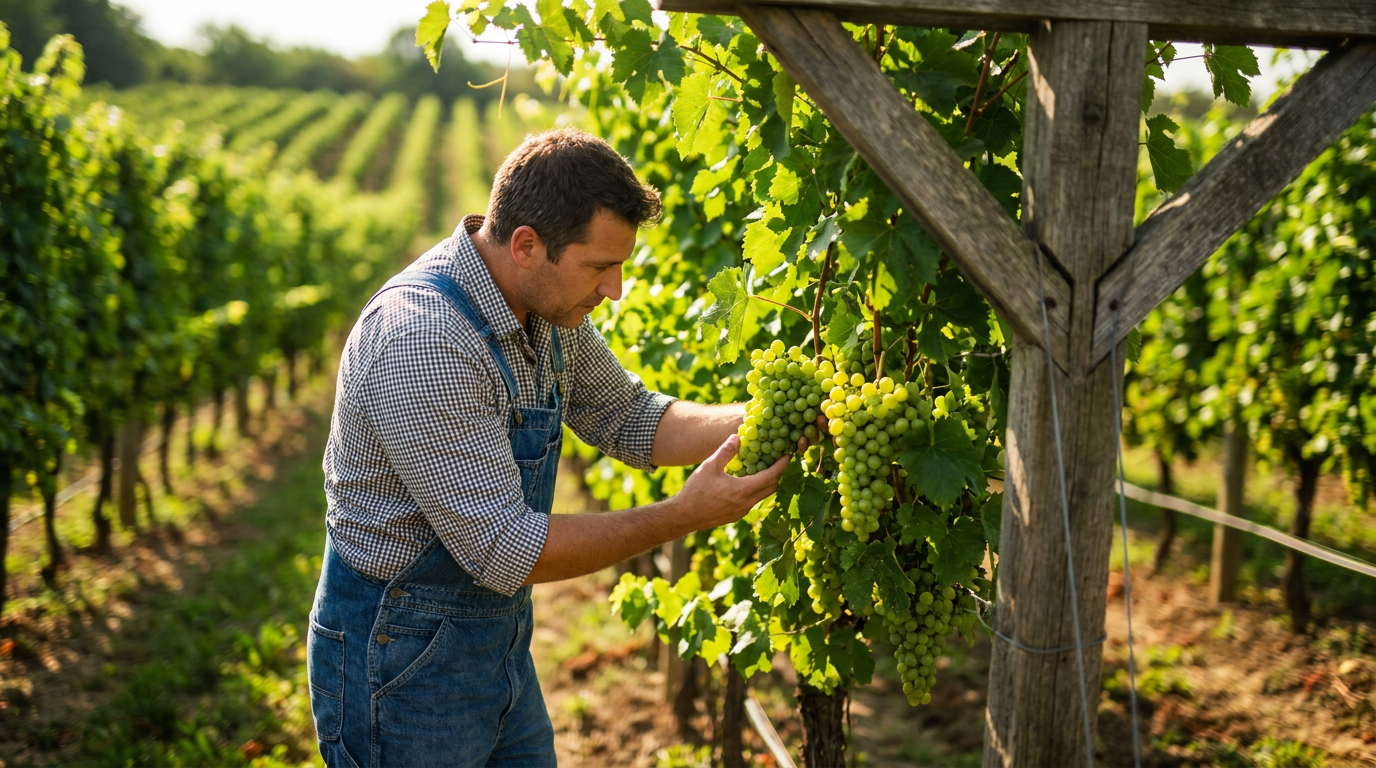
The romanticized image of winemaking—sun-drenched hillsides and pristine clusters of grapes—often masks a chemical-intensive reality. Grapevines are among the most pesticide-dependent crops in modern agriculture, accounting for a disproportionate share of fungicide use in Europe despite occupying a fraction of its farmland. As climate change accelerates, bringing erratic rainfall and unseasonal humidity, the pressure from fungal diseases is only intensifying. For decades, the industry’s primary defense has been a relentless schedule of chemical and copper spraying. Now, a quiet agricultural revolution is taking root in vineyards across Europe, offering a way to break this chemical dependency.[3][6]
The solution lies in a new generation of grapevines known as PIWIs. The term is an abbreviation of the German word "pilzwiderstandsfähig," which translates to fungus-resistant. Unlike the traditional noble grapes that dominate the global market, PIWI varieties are purposefully bred to withstand the vineyard's most persistent enemies: powdery and downy mildew. By building immunity directly into the plant's genetics, these vines drastically reduce the need for external protection, presenting a sustainable path forward for an industry grappling with its environmental footprint.[1][3][5]
To understand why PIWIs are necessary, one must look at the vulnerability of classic wine grapes. Almost all of the world’s most celebrated wines—from Pinot Noir to Cabernet Sauvignon—belong to a single species: Vitis vinifera. While prized for its complex aromatics and elegant flavor profiles, Vitis vinifera is exceptionally fragile. Having evolved in the relatively dry climates of the Mediterranean and Middle East, it possesses almost no natural defense against the fungal pathogens that were inadvertently introduced to Europe from the Americas in the 19th century.[2][3]
Creating a PIWI grape involves marrying the culinary excellence of European vines with the rugged resilience of wild American or Asian grape species. This is not achieved through genetic modification in a laboratory, but rather through the painstaking, decades-long process of traditional cross-breeding. Breeders manually pollinate the flowers of a Vitis vinifera vine with the pollen of a resistant wild species, plant the resulting seeds, and wait years to see which offspring survive fungal exposure.[1][4]

The initial offspring of these crosses, known as first-generation hybrids, historically presented a major problem. While they survived the mildew, they inherited undesirable flavor compounds from their wild parents. In the wine world, this is often described as a "foxy" aroma—a musky, wet-fur characteristic that European palates firmly rejected. Because of these poor organoleptic qualities, early hybrids were banned from quality wine production in countries like France by the mid-20th century, cementing a stigma that lingered for decades.[5]
Modern PIWI varieties have overcome this historical hurdle through a technique called backcrossing. Once a resistant hybrid is identified, it is repeatedly crossed back with high-quality Vitis vinifera parents over several generations. With each successive cross, the wild flavor traits are diluted, while the genetic markers for fungal resistance are carefully preserved. The result is a vine that is genetically 95% to 99% Vitis vinifera, capable of producing wines that rival traditional classics in blind tastings, yet robust enough to fend off disease.[1][3]
The environmental dividends of planting PIWI grapes are staggering. Depending on the region and the specific vintage conditions, growers cultivating traditional varieties may need to spray their vineyards ten to fifteen times a season to prevent crop loss. In contrast, PIWI varieties require up to 80% to 90% fewer fungicide applications. In dry years, some resistant vineyards require absolutely no spraying at all, allowing the vines to thrive purely on their own biological defenses.[2][4]

The environmental dividends of planting PIWI grapes are staggering.
This reduction in chemical use triggers a cascade of secondary ecological benefits. Fewer spray applications mean significantly fewer tractor passes through the vineyard rows. This reduction in heavy machinery traffic directly lowers the estate's carbon dioxide emissions and prevents severe soil compaction, which in turn improves water retention and root health. Furthermore, the absence of broad-spectrum copper sprays allows beneficial insects, soil microbes, and cover crops to flourish, restoring true biodiversity to the vineyard ecosystem.[4][5]
Recognizing this environmental imperative, European regulators have recently cleared the path for PIWIs to enter the highest echelons of the wine market. In late 2021, the European Union officially updated its agricultural regulations to permit the use of resistant hybrid varieties in wines with a Protected Designation of Origin (PDO). Previously, PDO regulations strictly mandated the exclusive use of 100% Vitis vinifera, effectively locking sustainable hybrids out of Europe's most prestigious and lucrative appellations.[2]
The regulatory shift sent ripples through the traditional wine establishment, culminating in a historic milestone for the world's most famous sparkling wine. In 2023, the Champagne AOC officially approved the inclusion of 'Voltis'—a white PIWI grape—into its tightly controlled list of permitted varieties. While its use is currently capped at a small percentage of the final blend, the mere presence of a hybrid grape in Champagne signals a monumental shift in how the industry balances heritage with climate adaptation.[1][6]
Despite these viticultural triumphs, the ultimate test for PIWI wines lies in the glass. For years, skeptics argued that resistant varieties could never achieve the nuance, aging potential, or terroir-transparency of classic grapes. However, recent evaluations are dismantling this prejudice. At the annual PIWI International Wine Challenge, panels of expert judges routinely award top gold medals—scoring 95 points or higher on the 100-point scale—to wines made from varieties like Souvignier Gris, Solaris, and Cabernet Blanc.[1][4]

The most formidable barrier remaining is not agricultural or qualitative, but commercial. The global wine market is heavily driven by varietal recognition; consumers confidently reach for a Chardonnay or a Merlot because they know exactly what to expect. PIWI varieties, with unfamiliar names like Johanniter, Bronner, or Muscaris, present a daunting marketing challenge. A shopper browsing a supermarket aisle is unlikely to take a chance on an unknown grape without explicit guidance or a prior tasting experience.[4][5]
To bridge this gap, progressive wineries and retailers are rethinking their sales strategies. Rather than selling PIWIs purely on their environmental merits—which studies show is often insufficient to drive a blind purchase—merchants are focusing on flavor profiling. By positioning a crisp, aromatic Solaris as an alternative for Sauvignon Blanc lovers, or a robust Regent for fans of Syrah, the industry is providing consumers with familiar reference points to navigate this new landscape.[4][5]

Education initiatives are also gaining momentum within the trade. Sommelier schools and wine certification programs are beginning to integrate PIWI modules into their curricula, ensuring the next generation of wine professionals can confidently recommend these bottles. Dedicated trade tastings, such as the UK's inaugural PIWI showcase scheduled for 2025, are providing crucial platforms for buyers and journalists to experience the quality firsthand and dismantle lingering biases.[6]
As the climate crisis continues to rewrite the rules of agriculture, the wine industry can no longer afford to rely solely on the fragile genetics of the past. PIWI grapes represent a profound philosophical shift: rather than fighting nature with an endless arsenal of chemicals, viticulture is learning to adapt alongside it. By embracing these resilient vines, winemakers are not only securing their own livelihoods against unpredictable weather, but are also ensuring that the simple joy of a good glass of wine doesn't come at the expense of the earth.[3][6]
How we got here
Mid-19th Century
Fungal diseases arrive in Europe from the Americas, prompting the first wave of hybrid breeding.
Mid-20th Century
Early hybrids are banned in European quality wine production due to undesirable 'foxy' flavors.
1988
PIWI International is founded to promote the development and awareness of fungus-resistant grape varieties.
December 2021
The European Union updates regulations to allow PIWI varieties in Protected Designation of Origin (PDO) wines.
June 2023
The Champagne AOC officially approves the PIWI variety 'Voltis' for use in its prestigious sparkling wines.
Viewpoints in depth
Sustainable Viticulturists
Advocates who believe adapting to climate change requires abandoning chemical-heavy farming.
For sustainable viticulturists, the transition to PIWI grapes is an ecological imperative. They point out that traditional Vitis vinifera vines are fundamentally unsuited to the increasing humidity and erratic weather patterns driven by climate change. Relying on endless cycles of copper and synthetic fungicide spraying degrades soil health, harms beneficial insects, and contributes to greenhouse gas emissions through constant tractor use. In their view, breeding resistance directly into the plant is the only logical way to future-proof the wine industry and restore true biodiversity to vineyard ecosystems.
Traditional Appellation Defenders
Purists who value the historical continuity and specific terroir expression of classic Vitis vinifera.
Defenders of traditional appellations approach PIWI grapes with deep caution. Their primary concern is the preservation of terroir—the unique sense of place that defines legendary wine regions like Burgundy, Barolo, or Bordeaux. They argue that the specific flavor profiles of these regions are inextricably linked to the Vitis vinifera varieties that have grown there for centuries. Introducing hybrid genetics, even if they are 99% European, risks altering the fundamental character and aging potential of the world's most celebrated wines, potentially diluting centuries of viticultural heritage.
Wine Market Analysts
Industry experts focused on consumer behavior and the commercial viability of new grape varieties.
Market analysts emphasize that the success of PIWI grapes will ultimately be decided in the retail aisle, not the vineyard. They note that the global wine market is highly conservative and driven by varietal recognition; consumers buy what they know. Unfamiliar names like 'Souvignier Gris' or 'Cabernet Blanc' present a massive barrier to entry. Analysts argue that unless the industry invests heavily in consumer education and clever marketing—such as explicitly comparing PIWIs to familiar flavor profiles—these sustainable wines will struggle to break out of niche environmental markets and achieve mainstream commercial success.
What we don't know
- Whether mainstream consumers will eventually embrace unfamiliar PIWI grape names on a global scale.
- How PIWI wines will age over several decades compared to classic Vitis vinifera vintages.
- If the fungal pathogens will eventually mutate to overcome the genetic resistance bred into current PIWI varieties.
Key terms
- PIWI
- An abbreviation for the German term 'pilzwiderstandsfähig', meaning fungus-resistant grape varieties.
- Vitis vinifera
- The classic European species of grapevine responsible for the vast majority of the world's well-known wines, such as Chardonnay and Cabernet Sauvignon.
- Powdery and Downy Mildew
- Common and destructive fungal diseases that attack grapevines, traditionally requiring heavy chemical spraying to control.
- Protected Designation of Origin (PDO)
- A geographical indication used in the EU to certify that a wine is produced in a specific region using recognized methods and grapes.
- Backcrossing
- A traditional breeding technique where a hybrid plant is repeatedly crossed back with one of its parent species to isolate desired traits, like flavor, while retaining disease resistance.
Frequently asked
What does PIWI stand for?
PIWI is an abbreviation for the German word 'pilzwiderstandsfähig', which translates to fungus-resistant.
Are PIWI grapes genetically modified?
No. They are created through traditional, manual cross-breeding techniques, combining European vines with wild species over several generations.
Do PIWI wines taste different than traditional wines?
While early hybrids had undesirable flavors, modern PIWIs are bred to match the quality and aromatic profiles of traditional European wines, frequently winning top awards in blind tastings.
Can PIWI grapes be used in Champagne?
Yes. In 2023, the Champagne AOC officially approved the inclusion of the PIWI variety 'Voltis' for use in its sparkling wines.
Sources
Source coverage
6 outlets
3 viewpoints surfaced






[1]PIWI InternationalSustainable Viticulturists
What are PIWI Wines?
Read on PIWI International →[2]DecanterTraditional Appellation Defenders
EU allows PDO wines from PIWI varieties
Read on Decanter →[3]OENO OneSustainable Viticulturists
The adoption of fungus-resistant grape varieties (FRGs)
Read on OENO One →[4]IVES Open ScienceWine Market Analysts
Fungus-resistant grape varieties: acceptance among producers and consumers
Read on IVES Open Science →[5]Austrian WineSustainable Viticulturists
Growing PIWI varieties
Read on Austrian Wine →[6]Factlen Editorial TeamWine Market Analysts
Synthesis by Factlen editorial team
Read on Factlen Editorial Team →
Every angle. Every day.
Get food drink stories with full source coverage and perspective breakdowns delivered to your inbox.