
How Formula 1's 2026 Regulations Are Rewriting the Future of Sustainable Automotive Tech
Formula 1's radical 2026 overhaul mandates a 50/50 hybrid power split and 100% sustainable fuels, transforming the sport into a high-speed laboratory for road-relevant decarbonization.
By Factlen Editorial Team
- Automotive Manufacturers
- Major car brands view the 2026 regulations as a vital bridge between motorsport and consumer road cars.
- Motorsport Traditionalists
- Racing purists worry that excessive technical complexity and energy management will dilute the on-track spectacle.
- Sustainability Advocates
- Environmental groups and policymakers see the 2026 rules as a necessary evolution for a carbon-heavy sport.
What's not represented
- · Independent Customer Teams
- · Formula E Executives
Why this matters
The technologies pioneered in Formula 1's 2026 season—specifically net-zero synthetic fuels and hyper-efficient hybrid systems—are designed to directly trickle down to consumer road cars. If successful, this could provide a viable, scalable way to decarbonize the billions of internal combustion engines already on the road globally.
Key points
- The 2026 Formula 1 regulations mandate a 50/50 power split between the internal combustion engine and electrical systems.
- Cars will run on 100% advanced sustainable "drop-in" fuels, achieving a net-zero carbon footprint.
- The complex MGU-H component has been removed to reduce costs and attract new automotive manufacturers.
- Active aerodynamics will replace the traditional DRS, allowing cars to switch between high-downforce and low-drag modes.
- The road-relevant rules have attracted major brands like Audi, Ford, and Honda to the 2026 grid.
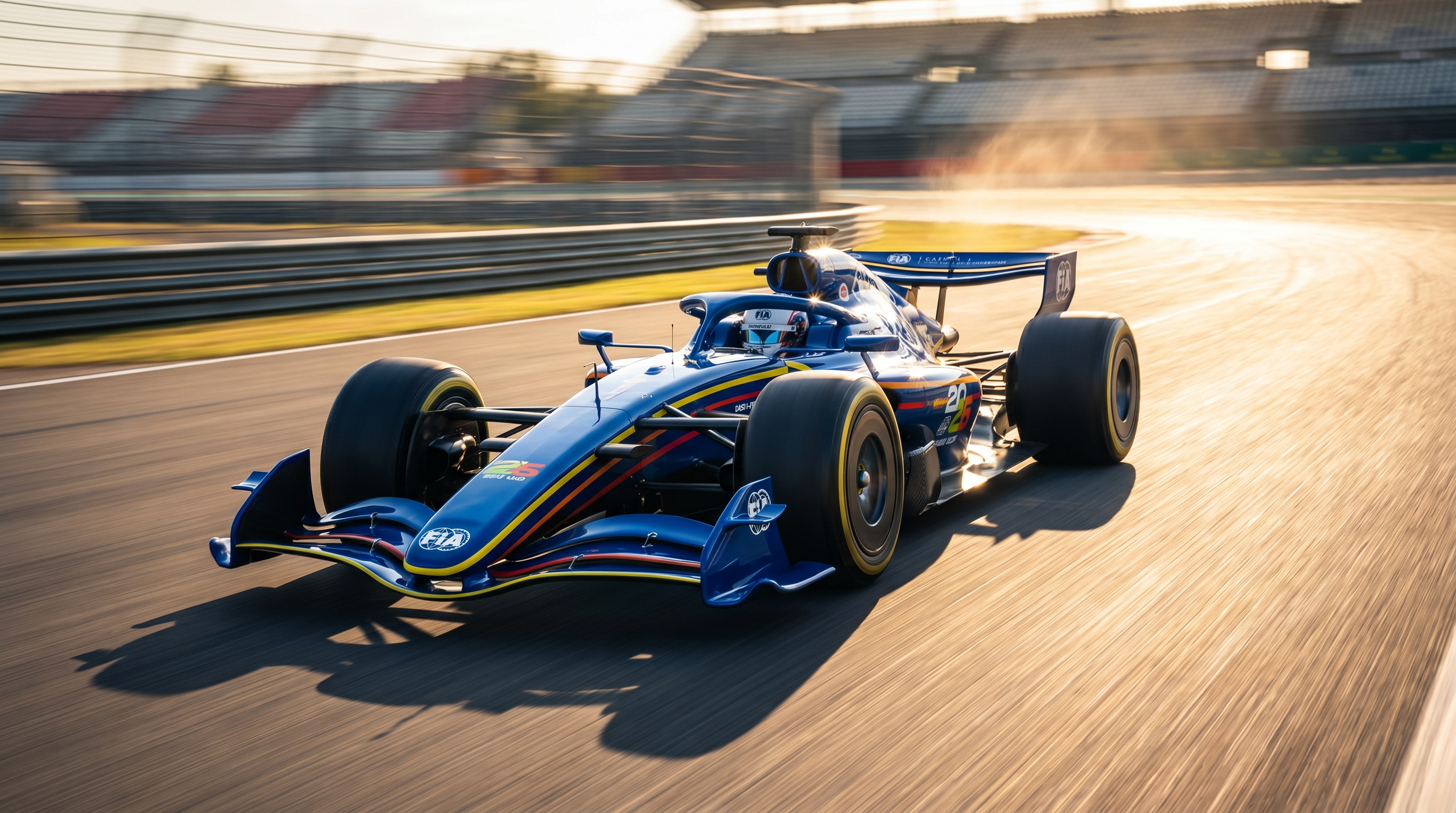
Formula 1 has long operated as the fastest research and development laboratory on Earth, but the 2026 season marks its most ambitious experiment yet. The Fédération Internationale de l'Automobile (FIA) has introduced a sweeping set of technical regulations that completely reimagine the sport's power units, aerodynamics, and fuel sources. This is not merely a tweak to the rulebook to improve overtaking or slow the cars down. It is a fundamental architectural shift designed to align the pinnacle of motorsport with the global automotive industry's push toward decarbonization.[1]
By mandating a radical 50/50 split between internal combustion and electrical power, alongside a switch to 100% sustainable fuels, Formula 1 is betting that it can remain an entertainment juggernaut while solving real-world engineering problems. The stakes for this transition are immense. The previous major engine overhaul in 2014 introduced hyper-complex hybrid systems that alienated some fans and proved so expensive that several automotive manufacturers fled the sport. The 2026 regulations aim to reverse that trend entirely, stripping away the most esoteric technology in favor of systems that directly translate to the cars sitting in everyday driveways.[2][7][8]
At the heart of the 2026 revolution is the power unit itself. The sport will retain the 1.6-liter turbocharged V6 internal combustion engine that has defined the modern hybrid era, but its role within the car is changing dramatically. Previously, the internal combustion engine generated roughly 80% of the car's total power, with the electrical systems providing the remaining 20%. Under the new regulations, that ratio shifts to a roughly 50/50 split, fundamentally altering how the cars generate and deploy their speed.[1][2][7]
To achieve this balance, the engine's raw power output drops from around 560 kilowatts to 400 kilowatts, while the electrical components receive a massive upgrade. The Motor Generator Unit-Kinetic (MGU-K), which harvests kinetic energy under braking and deploys it for acceleration, will now produce 350 kilowatts—roughly 470 horsepower. This is nearly triple its previous output of 120 kilowatts, making the electrical system a primary driver of performance rather than just a supplementary boost.[1][4]

To accommodate this massive electrical upgrade without bankrupting the teams, the FIA has eliminated the Motor Generator Unit-Heat (MGU-H). This component, which harvested energy from exhaust gases to spin the turbocharger, was an engineering marvel but possessed almost zero relevance to consumer road cars. Its removal drastically lowers the barrier to entry for new engine suppliers, reducing both development costs and system complexity while making the engines slightly less efficient but significantly cheaper to build.[1][5][7]
Perhaps the most globally significant change is what goes into the fuel tank. Starting in 2026, Formula 1 cars are mandated to run on 100% advanced sustainable fuels, marking a definitive end to the sport's reliance on traditional fossil fuels. This is a critical pillar of the sport's overarching pledge to achieve a net-zero carbon footprint by the year 2030, transforming the grid into a high-speed, high-stakes testing ground for alternative energy solutions.[1][8]
These are classified as "drop-in" fuels, meaning they can be used in a standard internal combustion engine without requiring any mechanical modifications. According to the FIA's strict guidelines, the fuel must be derived from non-food biomass, municipal waste, or directly from carbon capture schemes. Because the carbon emitted during combustion is equal to the carbon removed from the atmosphere to create the fuel in the first place, the net environmental impact is effectively zero.[1][4][8]
The implications of this fuel development extend far beyond the racetrack. While the automotive industry is heavily investing in electric vehicles, there are currently over a billion internal combustion engine cars on the road globally. If Formula 1 can help commercialize high-performance, net-zero synthetic fuels, it could provide a viable decarbonization pathway for existing passenger vehicles, heavy industry, and commercial aviation, bridging the gap during the decades-long transition to full electrification.[2]

To compensate for the shifting power dynamics of the new engines, the cars themselves are undergoing a physical transformation. The 2026 chassis regulations mandate a "nimble car" concept designed to make the vehicles more agile and responsive. The maximum wheelbase has been reduced by 200 millimeters, the width narrowed by 100 millimeters, and the minimum weight slashed by 30 kilograms, reversing a decade-long trend of increasingly heavy Formula 1 cars.[7]
To compensate for the shifting power dynamics of the new engines, the cars themselves are undergoing a physical transformation.
These smaller, lighter cars feature active aerodynamics, replacing the traditional Drag Reduction System (DRS) that has been used to facilitate overtaking since 2011. The new system allows drivers to toggle between two distinct aerodynamic configurations during a lap. "Corner Mode" deploys the front and rear wings for maximum downforce and grip through the turns, while "Straight Mode" flattens the wings to drastically reduce drag and increase top speed on the straights.[3][7]
Because the traditional DRS flap is gone, overtaking will now rely heavily on a new manual electrical override system. When a driver is within one second of the car ahead, they can activate an "Overtake Mode" that deploys the full 350 kilowatts of electrical power up to speeds of 337 kilometers per hour. This provides a massive speed delta to execute a pass, forcing drivers into strategic duels over when and where to deploy their battery reserves.[3][7]

The combination of road-relevant technology, sustainable fuels, and strict financial cost caps has triggered an unprecedented boom in manufacturer interest. For years, Formula 1 struggled to attract new engine builders due to the exorbitant costs and steep learning curves associated with the MGU-H. But in 2026, the grid will feature six distinct power unit suppliers, a testament to the broad commercial and engineering appeal of the new regulatory framework.[2][7]
Mercedes, Ferrari, and Renault will be joined by Audi, which is entering as a full works team, and Ford, which is partnering with Red Bull Powertrains. Additionally, Honda is returning in an official capacity to supply Aston Martin, and General Motors is developing a Cadillac power unit slated for introduction later in the regulatory cycle. This influx of automotive giants validates the FIA's strategy of aligning the sport's rulebook with global mobility trends.[2][8]
To ensure this influx of manufacturers doesn't result in one company dominating the sport for a decade—as Mercedes did at the start of the 2014 hybrid era—the FIA has introduced a novel catch-up mechanism known as Additional Development and Upgrade Opportunities (ADUO). This system is carefully designed to keep the competitive field tightly packed and commercially viable, without resorting to the artificial balance-of-performance metrics used in other racing series.[6]

The ADUO system closely monitors engine performance across the grid during specific review periods. If a manufacturer's internal combustion engine falls more than 2% behind the leading benchmark, they are granted extra dynamometer testing hours and permission to introduce mid-season upgrades. This safety net ensures that new entrants like Audi or Ford won't be permanently stranded at the back of the pack if they miscalculate their initial engine designs.[6]
Despite the widespread optimism from manufacturers, the 2026 regulations carry significant sporting uncertainties. The massive reliance on electrical power means drivers have to actively manage their energy deployment and harvesting throughout every single lap. Early simulator testing revealed scenarios where cars might run out of electrical energy halfway down a long straight, leading to awkward and potentially dangerous speed differentials between cars.[3]
In response to early driver feedback and simulator data, the FIA has already tweaked the energy management parameters. They increased the "super-clip" deployment limits to ensure cars can remain at full throttle longer and reduced the maximum permitted recharge limits to discourage excessive harvesting. These adjustments aim to ensure that the racing remains flat-out and aggressive, rather than devolving into an exercise in extreme battery conservation.[3][8]

There is also the lingering question of whether the pursuit of road relevance will compromise the visceral thrill of motorsport. Formula 1 is fundamentally an entertainment product, and complex energy harvesting strategies rarely translate to compelling television for the casual fan. The sport must ensure that the technological marvels beneath the engine cover do not overshadow the human drama of wheel-to-wheel racing.[2][8]
Ultimately, the 2026 regulations represent a delicate and highly calculated balancing act for the sport's executives. Formula 1 is attempting to honor its storied heritage as the fastest, loudest, and most technologically advanced racing series on earth, while simultaneously proving it can be a responsible, innovative partner in the global fight against climate change. The challenge lies in ensuring that the engineering constraints do not neuter the on-track product.[8]
If successful, the 2026 era will not only secure the long-term commercial future of the sport, but it could genuinely help engineer the sustainable fuels and highly efficient hybrid systems that power the world's transportation networks for decades to come. It is a bold, billion-dollar gamble, transforming the modern racetrack into a high-pressure crucible for the technologies that will inevitably define the next generation of global mobility.[2][8]
How we got here
2014
F1 introduces the 1.6-liter V6 turbo-hybrid engines, beginning an era of complex, expensive power units.
August 2022
The FIA officially approves the 2026 power unit regulations, confirming the removal of the MGU-H.
2023-2024
Audi, Ford, and Honda confirm their commitments to supply power units under the new 2026 framework.
March 2026
The new 2026 cars make their competitive debut at the season-opening Australian Grand Prix.
April 2026
The FIA introduces mid-season tweaks to energy management rules to encourage flat-out racing.
Viewpoints in depth
Automotive Manufacturers
Major car brands view the 2026 regulations as a vital bridge between motorsport and consumer road cars.
For companies like Audi, Ford, and Honda, Formula 1 is no longer just a marketing exercise; it is a high-speed research and development lab. The shift to a 50/50 electrical power split directly mirrors the automotive industry's transition toward hybrid and electric vehicles. Furthermore, the mandate for 100% sustainable fuels allows these manufacturers to test synthetic fuel technologies under extreme conditions, potentially unlocking a decarbonization pathway for the billions of internal combustion engines already on the road. The removal of the hyper-complex MGU-H and the introduction of strict cost caps have made the financial risk of entering the sport justifiable to corporate boards.
Motorsport Traditionalists
Racing purists worry that excessive technical complexity and energy management will dilute the on-track spectacle.
While acknowledging the need for sustainability, traditionalists argue that Formula 1 is fundamentally an entertainment product. The 2026 regulations require drivers to actively manage their electrical energy deployment and harvesting throughout every lap, leading to fears of 'lift-and-coast' driving rather than flat-out racing. Critics point to early simulator data suggesting cars might run out of battery power on long straights, creating awkward and potentially dangerous speed differentials. For this camp, the essence of motorsport is raw speed and driver skill, which they fear could be overshadowed by algorithmic energy management and automated active aerodynamics.
Sustainability Advocates
Environmental groups and policymakers see the 2026 rules as a necessary evolution for a carbon-heavy sport.
From a climate perspective, Formula 1 has historically been a target for criticism due to its massive global logistics footprint and reliance on fossil fuels. Sustainability advocates praise the 2026 regulations as a legitimate, scalable step toward the sport's pledge to reach net-zero carbon by 2030. By forcing the brightest engineering minds in the world to perfect 'drop-in' synthetic fuels derived from municipal waste and carbon capture, F1 is driving innovation that could eventually be subsidized and scaled for commercial aviation and shipping. To this camp, the sport's survival hinges on its ability to prove it is part of the climate solution, rather than the problem.
What we don't know
- How the heavy reliance on electrical energy management will ultimately impact the quality of wheel-to-wheel racing over a full season.
- Whether the new ADUO catch-up system will successfully prevent a single manufacturer from dominating the era.
- How quickly the sustainable synthetic fuels developed for F1 can be scaled for commercial consumer use.
Key terms
- MGU-K (Motor Generator Unit-Kinetic)
- An electrical component that harvests energy generated under braking and deploys it to boost acceleration.
- MGU-H (Motor Generator Unit-Heat)
- A complex system that harvested energy from exhaust gases, which has been banned for 2026 to reduce costs.
- Drop-in Fuel
- A synthetic or sustainable fuel that can be used in a standard internal combustion engine without requiring any modifications.
- Active Aerodynamics
- Movable front and rear wings that can change shape during a lap to either increase cornering grip or reduce straight-line drag.
- ADUO
- Additional Development and Upgrade Opportunities, a system allowing lagging engine manufacturers extra testing time to catch up to rivals.
Frequently asked
Is Formula 1 becoming fully electric in 2026?
No. Formula 1 is maintaining a hybrid system, but the power split between the internal combustion engine and the electric motor is shifting to roughly 50/50.
What is a 'drop-in' sustainable fuel?
It is a fuel derived from non-food biomass, municipal waste, or carbon capture that works in existing engines without modifications, resulting in net-zero carbon emissions.
Why did the FIA remove the DRS?
DRS has been replaced by a new active aerodynamic system and a manual electrical 'Overtake Mode' that provides a 350kW power boost to help drivers pass.
Which new car brands are joining F1 in 2026?
The new regulations have attracted Audi as a full works team, Ford in partnership with Red Bull, and a returning Honda supplying Aston Martin.
Sources
Source coverage
8 outlets
3 viewpoints surfaced








[1]FIASustainability Advocates
2026 FORMULA 1 TECHNICAL REGULATIONS
Read on FIA →[2]S&P GlobalAutomotive Manufacturers
Formula 1 2026 Regulations and the newfound growth in popularity
Read on S&P Global →[3]Motorsport.comMotorsport Traditionalists
FIA confirms 2026 F1 rule changes ahead of Miami Grand Prix
Read on Motorsport.com →[4]JalopnikMotorsport Traditionalists
FIA Approves Formula 1's 2026 Power Unit Regulations
Read on Jalopnik →[5]GPFansMotorsport Traditionalists
F1 2026 power unit regulations approved by the FIA
Read on GPFans →[6]GPblogMotorsport Traditionalists
How FIA's new ADUO system could reshape the 2026 F1 engine battle
Read on GPblog →[7]Aston Martin F1Automotive Manufacturers
The Road to 2026 | The tip of the iceberg – F1's new era and regulation changes explained
Read on Aston Martin F1 →[8]Factlen Editorial TeamSustainability Advocates
Synthesis by Factlen editorial team
Read on Factlen Editorial Team →

More in sports
See all 13 stories →Olympic Sustainability
How the LA 2028 Olympics Will Run Entirely on Existing Stadiums
0 sources

NBA Finals
New York Knicks Win 2026 NBA Finals, Ending 53-Year Championship Drought
0 sources

NBA Finals
New York Knicks Capture First NBA Championship Since 1973
0 sources

Hockey Strategy
How the PWHL's 'Jailbreak' and 'No Escape' Rules Are Rewriting Hockey Strategy
0 sources

Every angle. Every day.
Get sports stories with full source coverage and perspective breakdowns delivered to your inbox.