
How Forensic Genetic Genealogy Solved a 26-Year National Park Mystery
The identification of a man found in Olympic National Park in 2000 highlights how advanced DNA sequencing is closing decades-old cold cases and bringing answers to families.
By Factlen Editorial Team
- Forensic Investigators
- Focus on the technological capability to solve previously impossible cases.
- Families of the Missing
- Focus on the emotional closure and the return of identity to nameless remains.
- Policymakers
- Focus on funding and scaling genetic genealogy to clear statewide cold case backlogs.
What's not represented
- · Consumer DNA testing companies
- · Indigenous data sovereignty advocates
Why this matters
Forensic genetic genealogy is rapidly transforming the criminal justice system, offering a scientifically proven method to identify unknown victims and solve cold cases that were previously considered impossible to crack.
Key points
- Human remains found in Olympic National Park in 2000 have been identified as Joseph Louis Serrao Jr.
- The identification was made possible by forensic genetic genealogy after traditional methods failed.
- Serrao's family had not heard from him since 1998, and the breakthrough provided long-awaited answers.
- The case highlights how advanced DNA sequencing is solving decades-old mysteries across the country.
- Recent federal and state legislation aims to fund genetic genealogy to clear massive cold case backlogs.
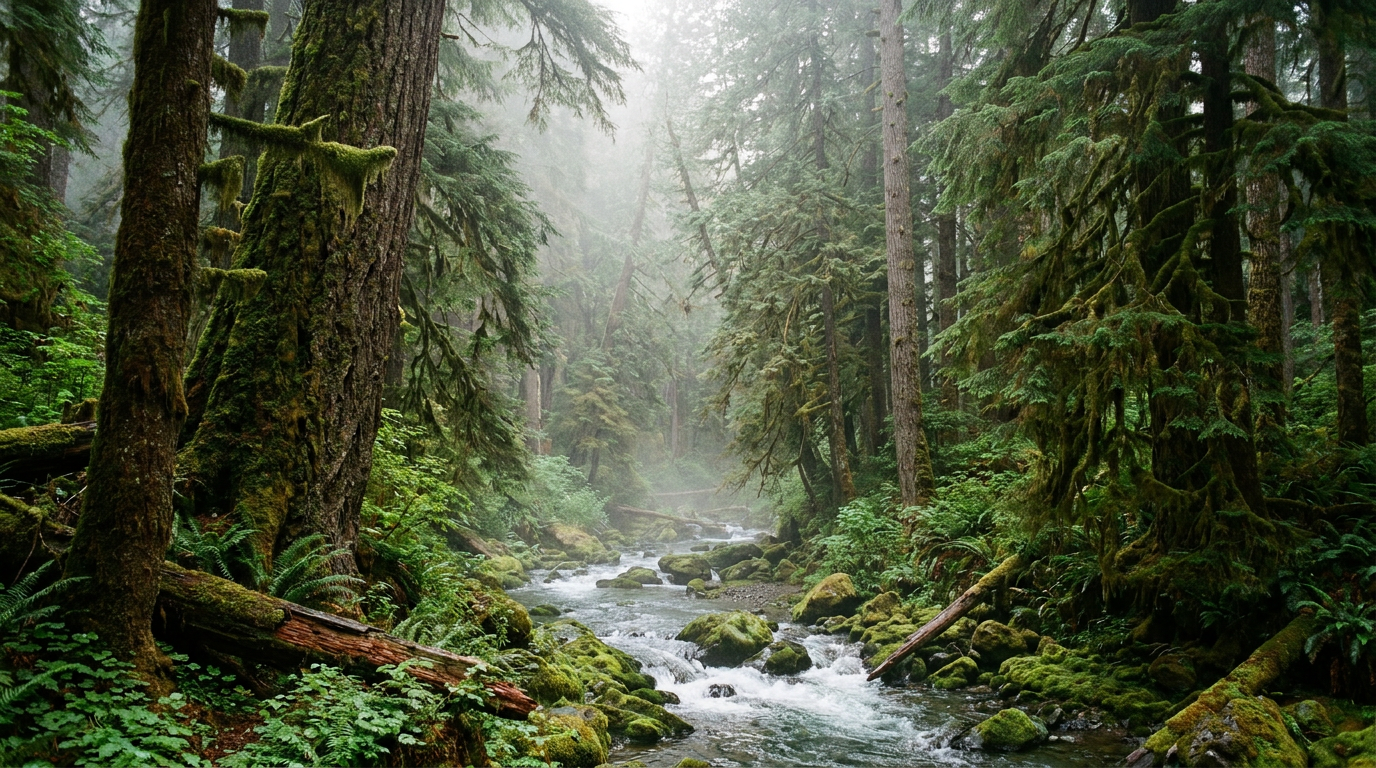
In July 2000, a researcher hiking through the remote Sol Duc backcountry of Washington’s Olympic National Park stumbled upon an abandoned campsite. Inside a green-and-black bivy-style tent, tucked into a sleeping bag, lay human skeletal remains. The site was scattered with the quiet detritus of a life interrupted: binoculars, a JanSport daypack, a folding saw, a space blanket, and winter gear. Yet, amid the camping equipment, investigators found no wallet, no ID card, and no clues to the person's identity. The remains were transported to the King County Medical Examiner's Office, where a pathologist determined the deceased was a male between 30 and 50 years old who had been dead for anywhere from six months to four years.[1][2][3][4][5]
For more than two decades, the case remained frozen in time. The Washington State Patrol Crime Laboratory processed the items recovered from the tent, but investigators were unable to lift any usable latent fingerprints. Without a name, the man became a statistic. His details were entered into the National Missing and Unidentified Persons System (NamUs) under the placeholder UP11888. Traditional forensic methods, which rely on matching DNA profiles against known criminal databases, yielded no results because the man had no prior record that would have placed his genetic signature in the system. The trail went entirely cold, leaving a family somewhere in the world wondering what had happened to their loved one.[1][3][4][5]
The breakthrough finally arrived in late 2024, driven by a revolution in forensic science. A forensic anthropologist with the King County Medical Examiner's Office, working alongside the National Park Service Investigative Services Branch, submitted a degraded DNA sample from the skeletal remains to Othram, a private laboratory in Texas specializing in forensic genetic genealogy. Unlike traditional forensic testing, which looks at a small number of genetic markers to find a direct match, Othram utilized a proprietary technique known as Forensic-Grade Genome Sequencing. This process extracts and analyzes hundreds of thousands of DNA markers, allowing scientists to build a comprehensive genetic profile even from highly degraded bone fragments that have been exposed to the elements for years.[1][2][3]

Once the comprehensive DNA profile was constructed, the laboratory's in-house genetic genealogy team uploaded the data to specialized databases designed for law enforcement use. By early 2025, the algorithms had identified distant family connections. This is the crux of forensic genetic genealogy: investigators do not need a direct match to the victim. Instead, they find second, third, or fourth cousins who share segments of DNA, and then genealogists painstakingly build family trees backward to common ancestors, and forward again to identify the missing branch. The genetic breadcrumbs pointed unequivocally toward a family with roots in Hawaii.[1][2][4][5]
Armed with these new investigative leads, the National Park Service reached out to relatives across several states. They coordinated interviews and collected reference DNA samples from first cousins on both the maternal and paternal sides of the suspected family tree. The results provided definitive scientific confirmation. On June 10, 2026, the National Park Service publicly announced that the remains belonged to Joseph Louis Serrao Jr., a man born on December 3, 1960. The 26-year-old mystery of the skeleton in the tent had finally been solved, returning a name to the unidentified man and closing a chapter that had baffled authorities for a quarter of a century.[1][2][3][4][5]
Armed with these new investigative leads, the National Park Service reached out to relatives across several states.
For Serrao's family, the identification brought a bittersweet resolution. Relatives told investigators that Serrao, originally from Hawaii, had been living in Washington state prior to his disappearance. Their last known contact with him was in 1998, and they had not heard from him since. "This case remained unresolved for nearly 30 years, but investigators never lost sight of the goal of identifying this individual and finding answers for his family," said Debra Flowers, deputy chief of the National Park Service Investigative Services Branch. She expressed hope that the scientific breakthrough would bring "some measure of closure to those who have spent so many years wondering what happened to Joseph."[1][2][3][4][5]

While the genetic puzzle has been solved, the exact circumstances of Serrao's final days in the Olympic wilderness remain partially obscured. According to the coroner's office in Clallam County, Washington, the cause of death was determined to be a gunshot wound to the head, and the manner of death was ruled a suicide. However, authorities have not publicly established a precise timeline for his final days or how long he had been camping in the Sol Duc drainage before his death. As with many cold cases resolved through genealogy, the identification provides a starting point for investigators and family members to piece together the missing years, even if some questions will permanently remain unanswered.[3][4]
The Serrao case is emblematic of a massive shift in how law enforcement agencies approach cold cases. Forensic genetic genealogy, which first gained global prominence with the 2018 arrest of the Golden State Killer, has rapidly matured from an experimental technique into a standard investigative tool. By bypassing the limitations of traditional criminal databases, FGG allows investigators to identify both unknown suspects and unidentified victims—often referred to as John and Jane Does. Laboratories are now routinely solving cases that were previously deemed impossible, extracting viable DNA from rootless hair, degraded bones, and decades-old evidence that had been sitting in storage lockers.[1][3]
The success of these techniques is driving significant legislative and policy changes at both the state and federal levels. In June 2026, the U.S. Senate passed the bipartisan Carla Walker Act, named after a Texas teenager whose 1974 murder was solved using FGG in 2021. The legislation creates a federal pilot program to fund the use of forensic genetic genealogy, making the expensive technology more widely available to local investigative agencies that lack the budget for advanced sequencing. Lawmakers argue that providing federal grants for FGG will systematically clear backlogs of unsolved violent crimes and unidentified remains across the country.[6]
State governments are also launching unprecedented initiatives to clear their cold case archives. In April 2026, Florida announced a massive statewide effort to apply modern DNA analysis and genetic genealogy to more than 21,000 cold cases, some dating back to the 1970s. The program proactively identifies cases for review, focusing on homicides, serious crimes, and hundreds of unidentified human remains. By partnering directly with forensic technology providers, states are moving away from ad-hoc testing and toward a systematic re-evaluation of all biological evidence, signaling a future where the concept of a permanently "cold" case may become obsolete.[7]

Despite the undeniable success of forensic genetic genealogy in bringing closure to families and identifying perpetrators, the practice continues to navigate complex ethical terrain. Privacy advocates emphasize the need for strict regulations regarding how genetic databases are utilized by the state. Currently, most forensic genealogy relies on databases where users have explicitly opted in to allow law enforcement searches, ensuring that consumer privacy is respected. As the technology becomes ubiquitous, the ongoing challenge for policymakers will be balancing the profound societal benefit of solving decades-old mysteries with the imperative to protect the genetic privacy of the broader public.
For the family of Joseph Louis Serrao Jr., the abstract debates over genetic privacy are overshadowed by the tangible reality of finally knowing what happened to their relative. The wilderness of Olympic National Park held its secret for 26 years, but the steady march of scientific progress eventually illuminated the truth. As forensic laboratories continue to refine their sequencing capabilities, thousands of other families waiting for answers may soon receive the phone call that the Serrao family received this year—proving that even the coldest trails can be warmed by the light of modern genetics.[2][3]
How we got here
1998
Joseph Louis Serrao Jr.'s family has their last known contact with him.
July 2000
A researcher discovers Serrao's skeletal remains inside a tent in Olympic National Park.
Nov 2024
Investigators submit a degraded DNA sample from the remains to Othram for advanced sequencing.
Early 2025
The laboratory identifies distant family connections, leading investigators to relatives in Hawaii.
June 2026
The National Park Service publicly announces the successful identification of the remains.
Viewpoints in depth
Forensic Science Community
Emphasizes that FGG is a revolutionary tool that bypasses the limitations of traditional databases.
Forensic scientists argue that traditional DNA databases like CODIS are inherently limited because they only contain profiles of individuals who have previously interacted with the criminal justice system. Forensic genetic genealogy circumvents this bottleneck by leveraging the massive, voluntarily submitted datasets of consumer DNA platforms. By analyzing hundreds of thousands of single nucleotide polymorphisms (SNPs), scientists can identify distant relatives and build family trees, turning biological evidence into highly specific investigative leads even when the DNA is severely degraded.
Legislators and Policymakers
Argues that funding FGG at the federal and state levels is a moral imperative to clear backlogs.
With thousands of unidentified remains and unsolved violent crimes languishing in archives, policymakers view genetic genealogy as a necessary public investment. Initiatives like the federal Carla Walker Act and Florida's plan to review 21,000 cold cases reflect a growing consensus that the state has a duty to deploy the best available technology to deliver justice. Advocates in this camp stress that providing grants to local agencies will democratize access to expensive sequencing technologies, ensuring that cold cases are solved regardless of a municipality's budget.
Privacy and Civil Liberties Advocates
Cautions that the widespread use of genetic genealogy must be strictly regulated to protect consumer privacy.
While acknowledging the profound benefits of solving cold cases, privacy advocates warn against the unchecked expansion of state access to genetic data. They highlight the risk of 'genetic dragnets,' where the DNA of innocent individuals is routinely scrutinized simply because they share a distant ancestor with a suspect or victim. This camp advocates for strict opt-in requirements for consumer DNA databases and clear legal frameworks to ensure that law enforcement searches are limited to severe crimes and unidentified remains, preventing mission creep into lesser offenses.
What we don't know
- The exact timeline of Joseph Louis Serrao Jr.'s final days in the Olympic wilderness.
- How long he had been camping in the Sol Duc drainage before his death.
- How future privacy regulations might impact the availability of consumer DNA data for law enforcement.
Key terms
- Forensic Genetic Genealogy (FGG)
- The practice of using genetic information from direct-to-consumer DNA tests to identify suspects or victims by tracing their family lineage.
- Forensic-Grade Genome Sequencing
- An advanced laboratory technique that analyzes hundreds of thousands of DNA markers to build a profile from highly degraded or microscopic biological evidence.
- NamUs
- The National Missing and Unidentified Persons System, a federal database that tracks missing persons and unidentified remains across the United States.
- CODIS
- The Combined DNA Index System, the FBI's program of support for criminal justice DNA databases, which relies on matching a suspect's DNA to a known offender's profile.
Frequently asked
What is forensic genetic genealogy?
It is a technique that combines advanced DNA sequencing with traditional genealogical research to identify unknown individuals by mapping their family tree through distant relatives.
How was Joseph Louis Serrao Jr. identified?
Investigators extracted DNA from his skeletal remains, built a comprehensive genetic profile, and found distant relatives in consumer databases, which led them to his family in Hawaii.
Are consumer DNA databases automatically searched by police?
No. Most major consumer DNA testing companies require users to explicitly opt-in to allow law enforcement to use their genetic data for forensic matching.
Sources
Source coverage
7 outlets
3 viewpoints surfaced







[1]National Park ServiceForensic Investigators
Decades-Long Investigation Identifies Human Remains Found in Olympic National Park
Read on National Park Service →[2]CBS NewsForensic Investigators
Human remains found in sleeping bag in national park identified after 26 years
Read on CBS News →[3]NewsweekForensic Investigators
Human Remains in Sleeping Bag Identified After 26 Years—But Mystery Remains
Read on Newsweek →[4]GV WireFamilies of the Missing
26-Year Mystery of a Skeleton in a Tent Ends With DNA Identification
Read on GV Wire →[5]KGWForensic Investigators
Human remains found in Olympic National Park identified after nearly 30 years
Read on KGW →[6]Vermont Business MagazinePolicymakers
'Carla Walker Act' to help solve cold cases passes Senate
Read on Vermont Business Magazine →[7]iHeart RadioPolicymakers
Florida Launches Plan To Solve 21,000 Cold Cases With DNA
Read on iHeart Radio →

Every angle. Every day.
Get science stories with full source coverage and perspective breakdowns delivered to your inbox.