
How Enhanced Geothermal Systems Are Turning the Earth Into a Giant Battery
By adapting drilling techniques from the oil and gas industry, next-generation geothermal technology is unlocking massive amounts of 24/7 clean energy from hot, dry rock deep underground.
By Factlen Editorial Team
- Commercial Developers
- Focus on rapid scaling, technological breakthroughs, and the commercial viability of geothermal energy.
- Federal Policymakers
- Focus on grid reliability, decarbonization targets, and utilizing existing energy workforces.
- Scientific Researchers
- Focus on resource potential, mechanism efficiency, and mitigating environmental risks like seismicity.
What's not represented
- · Local residents near EGS drilling sites
- · Fossil fuel workers transitioning to geothermal
Why this matters
As artificial intelligence and widespread electrification push the power grid to its limits, Enhanced Geothermal Systems (EGS) offer a holy grail for clean energy: a virtually limitless, 24/7 power source that can be built almost anywhere. By adapting oil and gas drilling techniques to harvest the Earth's internal heat, this breakthrough could secure reliable electricity for decades without the intermittency of wind and solar.
Key points
- Enhanced Geothermal Systems (EGS) unlock geothermal energy anywhere by drilling into hot, dry rock.
- The technology adapts horizontal drilling and hydro-shearing from the oil and gas industry.
- EGS provides 24/7 clean baseload power, solving the intermittency problem of wind and solar.
- The U.S. Department of Energy projects EGS could supply 90 gigawatts of power by 2050.
- Major tech companies are signing massive power purchase agreements to fuel AI data centers.
The world's electricity grids are facing an unprecedented squeeze. Driven by the explosive growth of artificial intelligence data centers, widespread electrification of vehicles, and a manufacturing renaissance, power demand is surging. While wind and solar capacity are expanding at record rates, they share a fundamental limitation: intermittency. When the sun sets and the wind dies down, the grid still requires reliable, round-the-clock "baseload" power. For years, the clean energy transition has searched for a silver bullet to solve this 24/7 power gap. Now, a once-overlooked technology is emerging as a leading contender, promising to unlock a virtually inexhaustible energy source right beneath our feet.[1][7]
That source is the Earth's own internal heat. Geothermal energy is not a new concept; the first commercial geothermal power plant opened in Italy over a century ago. However, conventional geothermal power has always been geographically constrained. To work, a traditional geothermal plant requires three naturally occurring elements: intense underground heat, fluid (water or steam), and permeability (natural cracks in the rock that allow the fluid to flow).[1][5]
Because finding all three elements in one place is rare, conventional geothermal development has historically been limited to volcanic regions, geysers, and hot springs—places like Iceland, New Zealand, or California. As a result, geothermal currently accounts for a mere 0.2% of the United States' summer generating capacity, hovering around 2.7 gigawatts. For decades, the vast majority of the Earth's subsurface heat remained trapped in dry, impermeable rock, completely inaccessible to energy developers.[2][5]
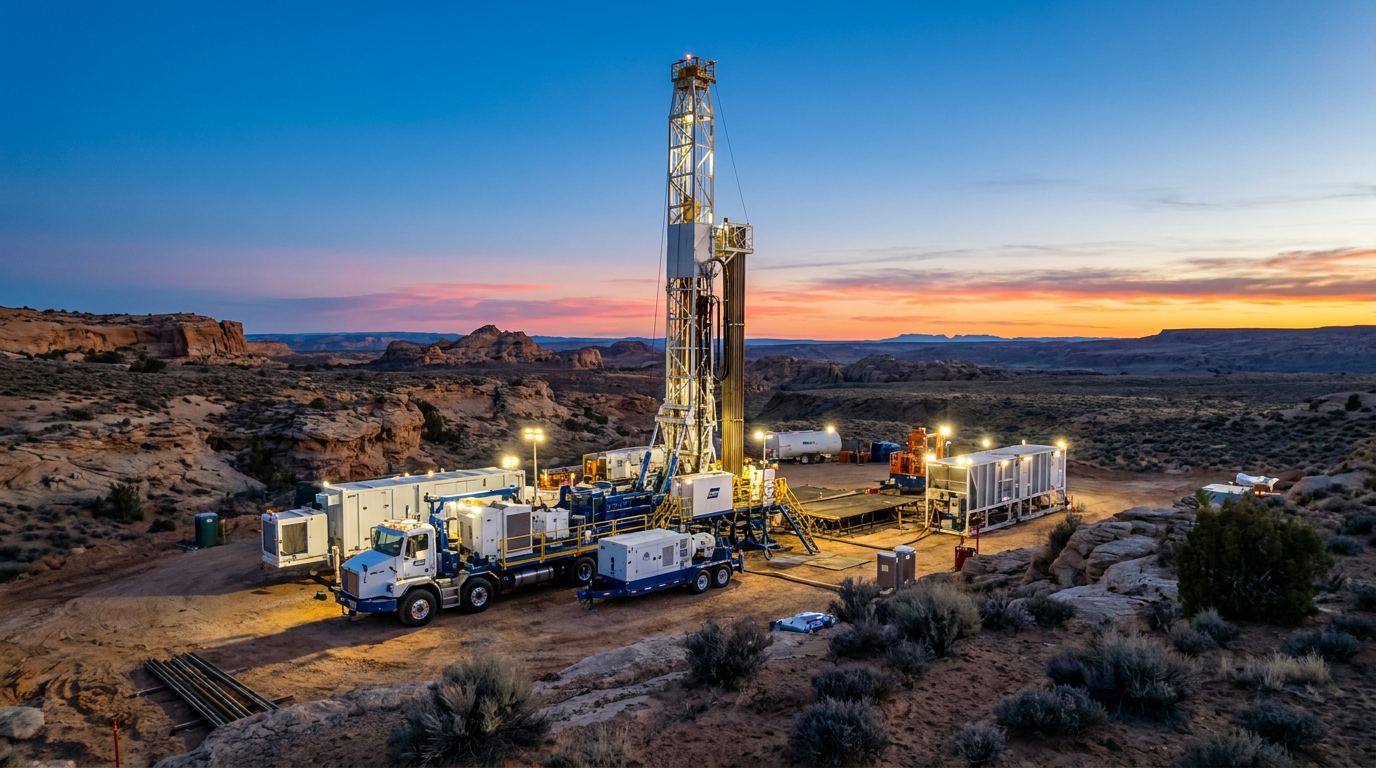
The breakthrough changing this paradigm is known as Enhanced Geothermal Systems (EGS). Instead of hunting for rare, naturally occurring hydrothermal reservoirs, EGS technology allows engineers to manufacture them. The process begins by drilling deep underground—often several kilometers down—into hard, hot, crystalline rock. Once the target depth is reached, cool fluid is injected into the rock under high pressure.[1][5]

This high-pressure injection triggers a process called "hydro-shearing." Unlike the hydraulic fracturing used in the oil and gas industry, which forcefully breaks rock apart and props it open with sand, hydro-shearing gently forces existing, microscopic fractures to slip and expand. This creates an artificial, highly permeable reservoir in the hot rock. A second well—the production well—is then drilled to intersect this newly created fracture network.[5][7]
The mechanism of power generation is elegantly simple. Cool water is pumped down the injection well, where it circulates through the artificial fractures, absorbing the intense ambient heat of the deep earth. The superheated fluid is then drawn up through the production well to the surface. There, its thermal energy is transferred to a secondary fluid with a lower boiling point, creating vapor that spins a turbine to generate electricity. The cooled water is then reinjected into the ground, creating a continuous, closed-loop cycle with virtually zero greenhouse gas emissions.[5][6]
The implications of decoupling geothermal energy from natural permeability are staggering. According to a comprehensive analysis by Princeton University, EGS could be deployed almost anywhere, provided developers drill deep enough to reach hot rock. The study projects that if deployment costs continue to fall, enhanced geothermal could supply up to 20% of all electricity in the United States by 2050, emerging as the third most significant clean energy technology behind wind and solar.[3]
The implications of decoupling geothermal energy from natural permeability are staggering.
The U.S. Department of Energy (DOE) echoes this optimism. In its recent "Pathways to Commercial Liftoff" report, the DOE estimated that next-generation geothermal technology could increase the nation's geothermal capacity twentyfold, reaching 90 gigawatts or more by mid-century. Achieving this scale would require an estimated $20 billion to $25 billion in near-term investment, but the technological foundations are already being proven in the field.[1]

The commercial viability of EGS is advancing at a blistering pace, driven largely by the adaptation of techniques perfected during the shale oil and gas boom. By utilizing long horizontal drilling and multi-stage stimulation, geothermal developers are drastically reducing costs. At the DOE's Frontier Observatory for Research in Geothermal Energy (FORGE) site in Utah, engineers successfully reduced drilling times from 310 hours in 2020 to just 110 hours by 2023, bringing performance closer to standard oil and gas industry benchmarks.[1][7]
The market is responding aggressively to these technical milestones. In June 2026, Houston-based Fervo Energy became the first EGS company to reach the public markets, closing its first day of trading with a staggering $10 billion valuation. Built heavily on oil and gas expertise, Fervo has pioneered commercial-scale EGS, securing massive long-term power purchase agreements, including a landmark 10.5-gigawatt deal with Microsoft to power its data centers.[4][7]
Fervo's flagship Cape Station project in Utah is slated to become the first large-scale commercial EGS generator in the United States, with its initial 53-megawatt phase scheduled to come online in June 2026. The broader supply chain is also maturing rapidly to support this growth. At the World Geothermal Congress in June 2026, Ormat Technologies unveiled the "Ormega100," a massive 100-megawatt binary power generation unit specifically designed to handle the higher-temperature conditions expected from utility-scale EGS developments.[2][4][6]

Beyond EGS, the industry is already eyeing the next frontier: Superhot Rock (SHR) geothermal. Companies like Quaise Energy are developing hybrid drilling rigs that combine conventional rotary drilling with millimeter-wave technology. This approach aims to vaporize rock, allowing drills to reach unprecedented depths of up to 20 kilometers, where temperatures exceed 400 degrees Celsius. Tapping into these supercritical fluids could yield five to ten times the energy output per well compared to standard EGS, though the engineering challenges remain immense.[7]
Despite the immense promise, the path to widespread EGS adoption is not without hurdles. The most prominent environmental concern is induced seismicity. The process of injecting high-pressure fluids to shear rock can trigger micro-earthquakes. While most are too small to be felt on the surface, careful site selection and real-time seismic monitoring are critical to preventing larger, damaging tremors and maintaining public trust.[5][7]
Additionally, EGS development requires substantial upfront capital. Drilling deep into hard crystalline rock is inherently expensive, and the financial risk of a "dry hole"—a well that fails to achieve the necessary flow rates—remains a barrier for early-stage financing. Water usage is another localized challenge; while the systems are largely closed-loop, the initial stimulation and ongoing reservoir maintenance require millions of gallons of water, which can be contentious in the arid Western states where early EGS projects are concentrated.[1][7]

Nevertheless, the momentum behind next-generation geothermal is undeniable. It offers a rare, unifying narrative in the energy transition: a pathway for the fossil fuel industry to pivot its vast workforce, drilling rigs, and subsurface expertise directly into the clean energy economy. By turning the Earth itself into a ubiquitous, always-on battery, enhanced geothermal systems may finally provide the missing piece of the puzzle for a fully decarbonized grid.[3][7]
How we got here
1970s
The concept of Enhanced Geothermal Systems is first proposed and tested in early government experiments.
2023
The DOE's FORGE site demonstrates massive reductions in EGS drilling times, proving the viability of oil and gas techniques.
March 2024
The US Department of Energy releases its "Liftoff" report, projecting EGS could supply 90 GW of power by 2050.
June 2026
Fervo Energy goes public at a $10 billion valuation and prepares to bring its commercial-scale Cape Station online.
Viewpoints in depth
Commercial Developers
Geothermal startups and equipment manufacturers view EGS as a highly lucrative, scalable solution to the clean energy baseload problem.
Companies like Fervo Energy and Ormat Technologies argue that by adapting horizontal drilling and hydraulic stimulation techniques from the shale boom, geothermal can rapidly scale anywhere in the world. They point to plummeting drilling costs and massive power purchase agreements with tech giants as proof that EGS is ready to move from pilot projects to utility-scale deployment.
Federal Policymakers
Government agencies see EGS as a critical pillar for achieving a decarbonized, reliable electricity grid by 2035.
The Department of Energy emphasizes that wind and solar alone cannot support the surging power demands of electrification and AI. Policymakers view EGS as the ideal "clean firm" power source that can replace retiring coal and natural gas plants while utilizing the existing workforce and supply chains of the fossil fuel industry.
Environmental & Community Watchdogs
Local communities and environmental groups support the clean energy potential but urge caution regarding resource usage and seismic risks.
While acknowledging the near-zero greenhouse gas emissions of closed-loop geothermal, watchdogs highlight the localized impacts of EGS development. They advocate for strict regulatory oversight on induced seismicity and raise concerns about the millions of gallons of water required for initial rock stimulation, particularly in the drought-prone Western United States where many early projects are located.
What we don't know
- Whether the cost of drilling deep crystalline rock will fall fast enough to compete with cheap solar and battery storage.
- How frequently induced seismicity will halt or delay projects near populated areas.
- If superhot rock (SHR) technology can overcome extreme engineering hurdles to become commercially viable by the 2030s.
Key terms
- Enhanced Geothermal Systems (EGS)
- A technology that generates geothermal electricity by creating artificial reservoirs in hot, dry rock that lacks natural permeability.
- Hydro-shearing
- A stimulation technique that uses high-pressure water to gently open and expand existing microscopic fractures in underground rock.
- Baseload Power
- The minimum level of electricity demand on a grid over a 24-hour period, requiring power plants that can generate consistent, round-the-clock energy.
- Binary Power Plant
- A geothermal facility where hot water from the earth heats a secondary fluid with a lower boiling point, creating vapor to spin a turbine.
- Induced Seismicity
- Minor earthquakes and tremors caused by human activity, such as injecting fluids deep underground.
Frequently asked
What is the difference between conventional and enhanced geothermal?
Conventional geothermal relies on naturally occurring underground water and rock fractures. Enhanced Geothermal Systems (EGS) create artificial fractures in hot, dry rock and pump water into them to extract heat.
Can EGS cause earthquakes?
The high-pressure fluid injection used in EGS can cause micro-earthquakes, known as induced seismicity. While mostly imperceptible, strict monitoring and site selection are required to prevent larger tremors.
Why are tech companies investing in geothermal?
Tech giants like Google and Microsoft need massive amounts of 24/7 "baseload" clean energy to power AI data centers, which intermittent sources like wind and solar cannot provide alone.
Does EGS use a lot of water?
While the power generation cycle is a closed loop, the initial fracturing process and reservoir maintenance require millions of gallons of water, which can be a challenge in arid regions.
Sources
Source coverage
7 outlets
3 viewpoints surfaced







[1]U.S. Department of EnergyFederal Policymakers
Enhanced Geothermal Systems
Read on U.S. Department of Energy →[2]U.S. Energy Information AdministrationFederal Policymakers
Enhanced geothermal systems could expand geothermal power generation
Read on U.S. Energy Information Administration →[3]Princeton UniversityScientific Researchers
Enhanced geothermal systems: An underground tech surfaces as a serious clean energy contender
Read on Princeton University →[4]Wood MackenzieCommercial Developers
Fervo Energy goes public: is next-generation geothermal ready for the mainstream?
Read on Wood Mackenzie →[5]Berkeley LabScientific Researchers
Conventional vs. Enhanced Geothermal: What's the Difference?
Read on Berkeley Lab →[6]Ormat TechnologiesCommercial Developers
Ormat unveils 100 MW binary unit to advance EGS deployment
Read on Ormat Technologies →[7]Factlen Editorial TeamScientific Researchers
Synthesis by Factlen editorial team
Read on Factlen Editorial Team →

More in guides
See all 52 stories →Local AI
How to Run AI Models Locally: The 2026 Guide to Digital Independence
7 sources

Exercise Science
The Science of Zone 2 Training: Why the Slowest Cardio Builds the Strongest Engine
7 sources

Battery Tech
How Solid-State Batteries Work—And Why They Are Finally Ready to Change EVs
7 sources
AI Developer Tools
Cursor vs. GitHub Copilot vs. Codeium: The 2026 AI Coding Assistant Trade-Offs
8 sources

Every angle. Every day.
Get guides stories with full source coverage and perspective breakdowns delivered to your inbox.