
How Enhanced Geothermal Just Cracked the Code for 24/7 Clean Energy
By borrowing drilling techniques from the oil and gas industry, next-generation geothermal systems are unlocking massive reserves of firm, carbon-free power.
By Factlen Editorial Team
- Geothermal Developers
- EGS is ready to scale immediately using existing oil and gas technology.
- Energy Researchers
- EGS is highly promising but requires continued innovation and monitoring.
- Tech & Data Center Operators
- Firm, clean baseload power is an existential requirement for the AI boom.
- Environmental Analysts
- The technology is a vital climate solution but subsurface risks must be managed.
What's not represented
- · Local communities near drilling sites
- · Fossil fuel executives transitioning to geothermal
Why this matters
As AI data centers and electrification strain the grid, solar and wind alone aren't enough because they are weather-dependent. Enhanced geothermal provides the missing piece: a reliable, always-on clean baseload that can be deployed almost anywhere.
Key points
- Enhanced Geothermal Systems (EGS) use oil and gas drilling techniques to tap underground heat anywhere, eliminating the need for natural hot springs.
- The technology provides 24/7 firm, carbon-free baseload power, solving the intermittency problem of solar and wind.
- Drilling costs and completion times have dropped by over 70% in recent years, making the technology commercially viable.
- The first large-scale commercial EGS plant is scheduled to begin delivering power to the U.S. grid in June 2026.
The global transition to clean energy has a massive, looming math problem: the sun sets, and the wind stops blowing.[8]
As artificial intelligence data centers, electric vehicles, and industrial electrification drive the largest surge in electricity demand in decades, grid operators are scrambling for "firm" power. This is energy that is available 24 hours a day, seven days a week, regardless of the weather.[1][5]
Historically, the only carbon-free options for baseload power were nuclear energy, which is notoriously slow and expensive to build, and hydroelectricity, which is geographically limited by river systems.[8]
Geothermal energy has long been the holy grail of renewables. It offers continuous, weather-independent power by tapping the immense, inexhaustible heat radiating from the Earth's core.[3][7]

But conventional geothermal plants have a fatal flaw. They require a rare geological trifecta of hot rock, underground water, and natural permeability, restricting them to volcanic hotspots like Iceland or specific, geologically active parts of California and Nevada.[3][4]
Now, a breakthrough technology called Enhanced Geothermal Systems (EGS) is rewriting the rules of renewable energy, decoupling geothermal power from its geographic constraints.[2][3]
Instead of hunting for naturally occurring underground hot springs, EGS engineers simply create their own reservoirs wherever the subterranean rock is hot enough.[3][7]
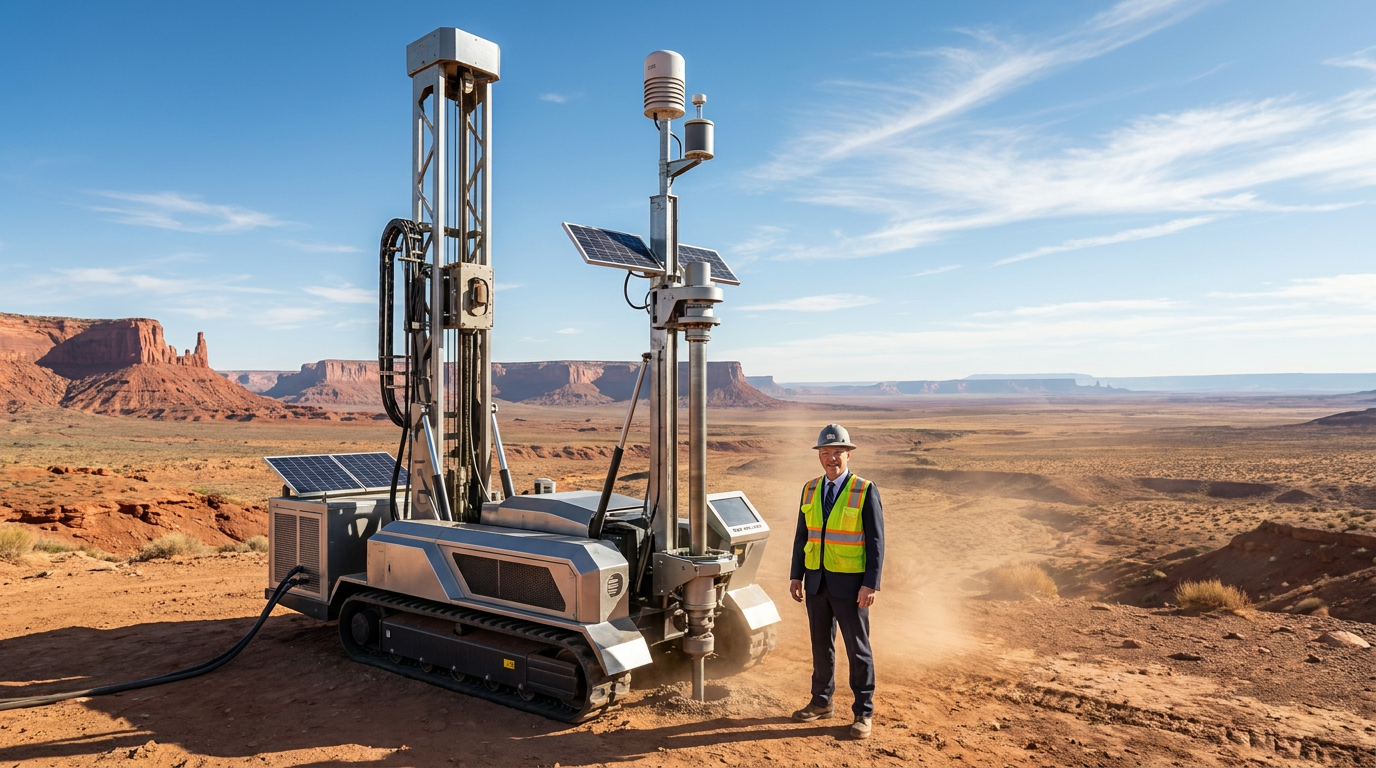
The process borrows heavily from the shale revolution. Using horizontal drilling and hydraulic fracturing—techniques perfected over decades by the oil and gas industry—developers drill deep into hot, dry, impermeable rock formations.[2][5]
They inject water at high pressure to create a network of millimeter-thick fractures, essentially building a massive, artificial underground radiator.[4][8]
They inject water at high pressure to create a network of millimeter-thick fractures, essentially building a massive, artificial underground radiator.
Cold water is pumped down an injection well, heated to hundreds of degrees as it flows through the newly fractured rock, and drawn back up a production well to spin a turbine and generate electricity on the surface.[6][7]
The results over the last few years have been staggering. Houston-based Fervo Energy, the industry's leading pioneer, reduced its drilling time per well by 75% and its per-foot drilling costs by 70% between 2022 and 2025.[2][5]

This rapid cost deflation is moving EGS from a costly, experimental science project to a commercially viable, utility-scale solution that can compete with traditional fossil fuels.[4][5]
In June 2026, Fervo's Cape Station project in Beaver County, Utah, is scheduled to bring its first phase online, marking the first large-scale commercial EGS plant in the United States.[1][3]
When fully completed, Cape Station is expected to reach 500 megawatts of capacity—enough firm, clean electricity to power hundreds of thousands of homes around the clock.[1][2]
The tech industry has taken immediate notice. Hyperscalers like Google, desperate for clean energy to power their massive AI ambitions, have signed massive power purchase agreements to secure EGS output and subsidize its early deployment.[1][2]

The U.S. Department of Energy estimates that with continued investment and technological refinement, EGS could provide 90 gigawatts of electricity nationwide by 2050, fundamentally altering the grid's makeup.[1][3]
Challenges do remain. Regulators and developers must carefully manage water usage in arid regions and monitor for induced seismicity—small tremors caused by the fracturing process that require stringent oversight.[7][8]
How we got here
1970s
Early experimental EGS concepts are tested but struggle to scale due to prohibitively high drilling costs.
2023
Fervo Energy successfully demonstrates commercial viability at its Project Red pilot facility in Nevada.
Feb 2024
Devon Energy leads a $244 million funding round, signaling major oil and gas industry buy-in for geothermal.
June 2026
Phase 1 of Cape Station in Utah is scheduled to begin delivering commercial EGS power to the grid.
2050
The U.S. Department of Energy projects EGS could supply up to 90 GW of clean power nationwide.
Viewpoints in depth
Geothermal Developers' View
EGS is ready to scale immediately using existing oil and gas technology.
Companies pioneering EGS argue that the technology has crossed the threshold of commercial viability. By repurposing the horizontal drilling and hydraulic fracturing techniques perfected during the shale boom, developers have drastically cut costs and drilling times. They view EGS as the ultimate solution to grid intermittency, offering a scalable, geographically flexible source of baseload power that can be deployed rapidly to meet the surging demands of industrial electrification and AI data centers.
Tech & Data Center Operators' View
Firm, clean baseload power is an existential requirement for the AI boom.
Hyperscalers like Google and Microsoft are increasingly concerned that weather-dependent renewables cannot support the 24/7 power requirements of massive AI server farms. For these companies, EGS represents a critical missing piece of the puzzle. By signing massive, long-term power purchase agreements (PPAs) for next-generation geothermal, tech giants are actively subsidizing the industry's early scale-up to ensure they have access to reliable, carbon-free electricity that aligns with their corporate net-zero pledges.
Energy Researchers' View
EGS is highly promising but requires continued innovation and monitoring.
Academic and government researchers emphasize the staggering long-term potential of advanced geothermal, noting it could eventually supply a double-digit percentage of global electricity. However, they caution that the industry must carefully manage subsurface risks. Key priorities include monitoring induced seismicity from rock stimulation, optimizing water usage in arid regions, and pushing the technological envelope toward 'superhot rock' systems that can withstand extreme temperatures and corrosive environments to unlock exponentially higher energy yields.
What we don't know
- Whether the rapid cost reductions seen in early pilot projects will hold true as developers scale to multi-gigawatt deployments.
- How local communities will react to the widespread use of hydraulic fracturing for clean energy.
- If 'superhot rock' technology can overcome the material science challenges of operating in highly corrosive, 400°C+ environments.
Key terms
- Enhanced Geothermal Systems (EGS)
- A technology that generates electricity by pumping water into artificially fractured hot, dry rock deep underground to extract heat.
- Baseload Power
- The minimum amount of electric power needed to be supplied to the electrical grid at any given time, requiring energy sources that can run 24/7.
- Hydraulic Fracturing
- A drilling technique that uses high-pressure fluid to create cracks in deep rock formations, originally used for oil and gas but now adapted for geothermal energy.
- Superhot Rock Geothermal
- An experimental next-generation geothermal method that drills even deeper to reach rock temperatures above 400°C, drastically increasing energy output.
- Power Purchase Agreement (PPA)
- A long-term contract between an electricity generator and a buyer, often used by tech companies to secure clean energy for data centers.
Frequently asked
What is the difference between conventional and enhanced geothermal?
Conventional geothermal relies on naturally occurring underground hot springs. Enhanced Geothermal Systems (EGS) create artificial reservoirs by injecting water into hot, dry rock, allowing plants to be built almost anywhere.
Does enhanced geothermal use fracking?
Yes, EGS uses hydraulic fracturing techniques borrowed from the oil and gas industry to create millimeter-thick cracks in deep rock, allowing water to circulate and absorb heat.
Can geothermal energy replace solar and wind?
It is designed to complement them, not replace them. Geothermal provides 'firm' baseload power that keeps the grid stable when the sun isn't shining and the wind isn't blowing.
When will EGS power be available at scale?
The first large-scale commercial EGS plant, Fervo Energy's Cape Station in Utah, is scheduled to begin delivering power to the grid in June 2026.
Sources
Source coverage
8 outlets
4 viewpoints surfaced








[1]Carbon CreditsGeothermal Developers
Fervo Energy Prepares for $1.33B IPO as Geothermal Demand Surges
Read on Carbon Credits →[2]Green Stocks ResearchGeothermal Developers
Fervo Energy files for IPO, bringing enhanced geothermal to public markets
Read on Green Stocks Research →[3]U.S. Energy Information AdministrationEnergy Researchers
What are enhanced geothermal systems?
Read on U.S. Energy Information Administration →[4]Columbia University SIPAEnergy Researchers
The Potential of Enhanced Geothermal Systems
Read on Columbia University SIPA →[5]Information Technology and Innovation FoundationTech & Data Center Operators
EGS in Action: Fervo Case Study
Read on Information Technology and Innovation Foundation →[6]MIT Energy InitiativeEnergy Researchers
Explainer: Geothermal Energy
Read on MIT Energy Initiative →[7]Project DrawdownEnvironmental Analysts
Advanced geothermal energy
Read on Project Drawdown →[8]Factlen Editorial TeamEnvironmental Analysts
Synthesis by Factlen editorial team
Read on Factlen Editorial Team →
Every angle. Every day.
Get energy stories with full source coverage and perspective breakdowns delivered to your inbox.