
How Empty Office Towers Are Becoming the Blueprint for Future Housing
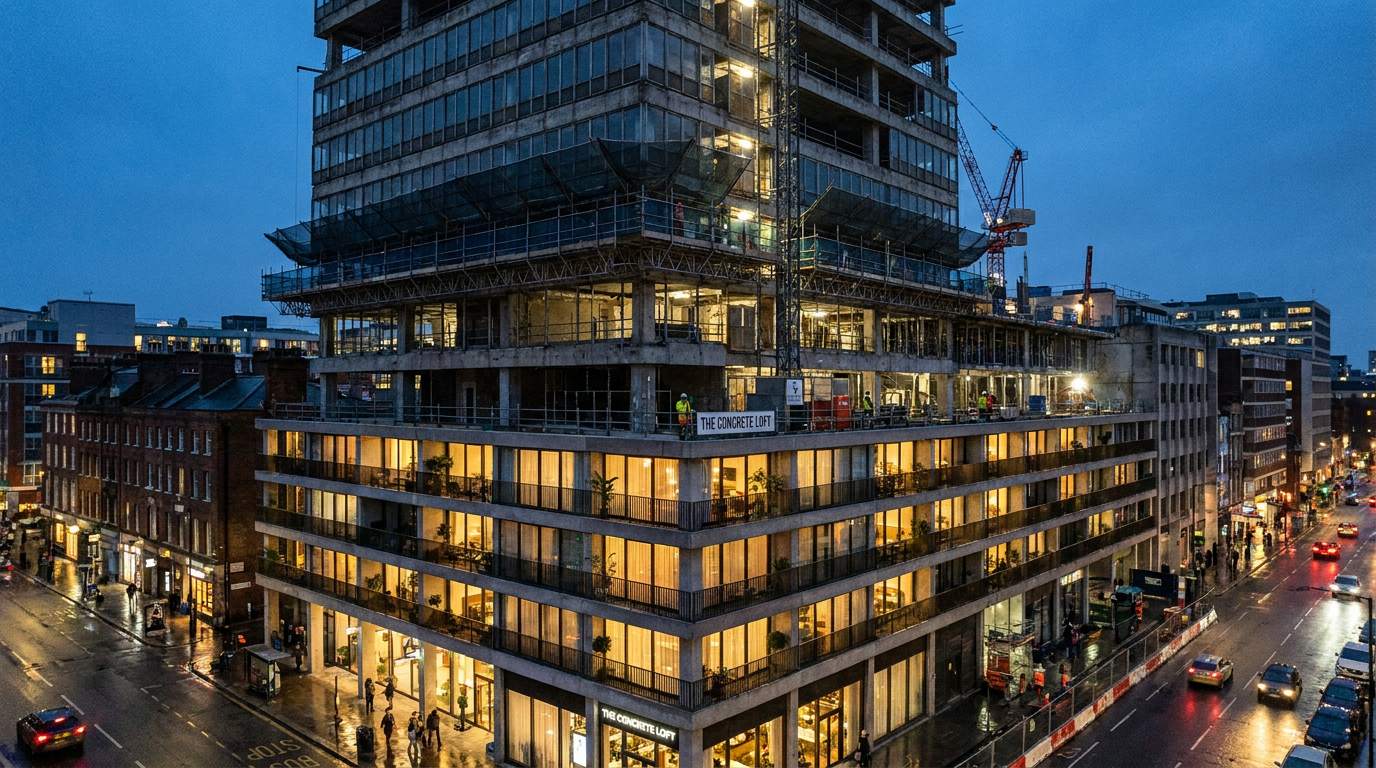
Record-high office vacancies and severe housing shortages have triggered a massive wave of adaptive reuse, with over 70,000 office-to-residential units entering the pipeline.
By Factlen Editorial Team
- Urban Planners & Municipalities
- City officials view conversions as a dual solution to empty downtowns and housing shortages.
- Real Estate Developers
- Developers balance the massive opportunity against severe structural and financial constraints.
- Sustainability Advocates
- Environmentalists champion adaptive reuse as a critical tool for decarbonizing the real estate sector.
- Housing Realists
- Analysts highlight that high conversion costs limit the creation of truly affordable housing without heavy subsidies.
What's not represented
- · Affordable Housing Advocates
- · Commercial Real Estate Lenders
Why this matters
Transforming empty office towers into apartments addresses two of the decade's biggest urban crises simultaneously: the hollowing out of downtown business districts and the severe shortage of residential housing.
Key points
- Office-to-residential conversions have hit record highs, with over 70,000 units in the 2025-2026 pipeline.
- The trend is driven by a persistent 20% national office vacancy rate and severe urban housing shortages.
- Structural challenges, such as deep floor plates and centralized plumbing, make conversions highly complex.
- Adaptive reuse reduces embodied carbon emissions by up to 70% compared to new construction.
- Cities are offering aggressive tax incentives to offset the $300,000+ per-unit conversion costs.
Across the globe, major cities are grappling with a profound post-pandemic hangover: millions of square feet of empty downtown office space, existing side-by-side with a crippling shortage of residential housing.[8]
For years, urban planners have pointed to a seemingly obvious solution—turn the empty cubicles into apartments. But what was once a niche architectural experiment has rapidly evolved into a defining real estate trend of 2026.[8]
The scale of the transformation is staggering. According to real estate data, more than 70,000 apartment units are currently in the 2025-2026 pipeline to be created from former office spaces, representing a massive acceleration from just a few years ago.[1]
Office conversions now account for roughly 42% of all adaptive reuse projects in the United States, effectively doubling their footprint as developers rush to capitalize on the shifting urban landscape.[2]

The catalyst is a brutal reality for commercial landlords: the national office vacancy rate has hovered above 20%, driven by the permanence of hybrid work. While top-tier, amenity-rich "Class A" buildings are surviving, older Class B and C properties are facing functional obsolescence.[1][3]
But transforming a 1970s commercial tower into a modern residential community is far more complex than simply erecting drywall and installing appliances. Developers face a gauntlet of structural and engineering hurdles.[8]
The most notorious hurdle is known in the industry as the "geometry problem." Office towers were designed with deep floor plates, frequently stretching more than 100 feet from the building's core to the exterior glass.[6]
Residential building codes strictly mandate natural light and ventilation for living spaces. When developers carve up a deep office floor, they are often left with long, narrow "bowling alley" apartments, or they are forced to core out the center of the building entirely to create a central light well.[6]

Then comes the plumbing. Traditional office buildings rely on centralized "wet stacks" clustered near the elevators for communal restrooms.[6]
Traditional office buildings rely on centralized "wet stacks" clustered near the elevators for communal restrooms.
Residential buildings, by contrast, require complex, distributed plumbing for individual kitchens, bathrooms, and laundry machines in every unit. Retrofitting this infrastructure often requires drilling through post-tension concrete slabs, a delicate process that risks compromising the building's structural integrity.[6]
Despite these immense engineering challenges, the environmental benefits of adaptive reuse are undeniable, making these projects highly attractive to sustainability advocates and green-focused investors.[8]
By preserving the existing foundation, steel framing, and concrete slabs, developers can reduce the "embodied carbon" of a project by 50% to 70% compared to demolishing the site and building from the ground up.[6]

To make the difficult math of conversion work, local governments are aggressively stepping in with zoning reforms and financial incentives.[3]
In New York City, a new tax incentive program has helped transform Lower Manhattan's Water Street into what locals now call "Conversion Alley." Projects like Pearl House have successfully turned mid-century office blocks into hundreds of apartments, complete with luxury amenities.[7]
Chicago is deploying $300 million in Tax Increment Financing (TIF) to revitalize its historic LaSalle Street corridor, aiming to convert millions of square feet of office space into mixed-income housing.[5]
Meanwhile, Los Angeles has expanded its pioneering Adaptive Reuse Ordinance, streamlining approval procedures and offering zoning incentives to bypass years of bureaucratic red tape for buildings older than 15 years.[4]

Yet, industry analysts caution that adaptive reuse is not a silver bullet for the global housing crisis.[8]
Due to the strict geometric and structural requirements, only an estimated 30% of older office buildings are actually viable candidates for residential conversion.[9]
How we got here
Pre-2020
Office-to-residential conversions remain a niche architectural practice, primarily focused on historic or boutique buildings.
2020–2022
The pandemic normalizes remote work, causing downtown office vacancy rates to spike and remain elevated.
2023–2024
Major cities like Los Angeles and Boston introduce aggressive zoning reforms and tax incentives to encourage adaptive reuse.
2025–2026
The conversion pipeline hits record highs, with over 70,000 units slated for delivery across the United States.
Viewpoints in depth
Urban Planners & Municipalities
City officials view conversions as a dual solution to empty downtowns and housing shortages.
For municipal leaders, the persistence of remote work poses an existential threat to the tax base and vibrancy of central business districts. By offering tax abatements and streamlining zoning approvals, cities hope to transform 9-to-5 commercial zones into 24-hour neighborhoods. They argue that even if the new units lean toward luxury, increasing the overall housing supply relieves pressure on the broader market.
Real Estate Developers
Developers balance the massive opportunity against severe structural and financial constraints.
While the prospect of acquiring distressed office assets at a discount is appealing, developers emphasize the hidden costs of adaptive reuse. Retrofitting HVAC systems, drilling through post-tension slabs for new plumbing, and carving out light wells to meet residential code can push conversion costs to $500,000 per unit. Consequently, developers argue that without significant public subsidies, these projects are only financially viable in premium markets.
Sustainability Advocates
Environmentalists champion adaptive reuse as a critical tool for decarbonizing the real estate sector.
The construction industry is a massive contributor to global greenhouse gas emissions, largely due to the production of steel and concrete. Sustainability experts point out that the greenest building is the one that already exists. By preserving the structural core and shell of an office tower, developers can avoid the massive embodied carbon penalty of demolition and ground-up construction, aligning with aggressive new climate mandates.
What we don't know
- Whether the influx of luxury conversion units will eventually lower rents across the broader housing market.
- How commercial real estate valuations will stabilize as obsolete office buildings are permanently removed from the market.
- If suburban office parks will eventually see the same level of conversion interest as downtown high-rises.
Key terms
- Adaptive Reuse
- The process of repurposing an existing building for a use other than what it was originally designed for.
- Embodied Carbon
- The total greenhouse gas emissions generated during the manufacturing, transportation, and construction of building materials.
- Floor Plate
- The total leasable square footage of a single floor in a commercial building, which dictates how much natural light reaches the interior.
- Wet Stack
- A centralized vertical column in a building that houses the main plumbing pipes for water supply and waste removal.
- Tax Increment Financing (TIF)
- A public financing method that uses future gains in taxes to subsidize current infrastructure or development projects.
Frequently asked
Why can't all empty office buildings become apartments?
Many office buildings have deep floor plates that prevent natural light from reaching the center, and their centralized plumbing systems are difficult to retrofit for individual apartments.
Does converting offices solve the affordable housing crisis?
While it adds to the overall housing supply, the high cost of structural conversions means most resulting units are priced as luxury apartments, unless subsidized by city tax incentives.
Is it better for the environment to convert rather than build new?
Yes. Adaptive reuse preserves the building's concrete and steel structure, reducing the embodied carbon footprint by 50% to 70% compared to demolishing and building from scratch.
Which cities are leading the conversion trend?
New York City, Washington D.C., Los Angeles, and Chicago currently have the largest pipelines of office-to-residential conversion projects in the United States.
Sources
Source coverage
9 outlets
4 viewpoints surfaced








[1]CBRE ResearchHousing Realists
U.S. Office-to-Residential Conversions Accelerate in 2025-2026
Read on CBRE Research →[2]RentCafeReal Estate Developers
Adaptive Reuse Report: Office Conversions Hit Record Highs
Read on RentCafe →[3]J.P. MorganReal Estate Developers
What to know about office-to-residential conversion
Read on J.P. Morgan →[4]Multifamily DiveUrban Planners & Municipalities
Los Angeles seizes on adaptive reuse to combat housing shortage
Read on Multifamily Dive →[5]Commercial SearchUrban Planners & Municipalities
City Programs for Office-to-Residential Conversion
Read on Commercial Search →[6]Repeated Signal SolutionsSustainability Advocates
The Geometry Problem: Why Office Buildings Don't Translate Cleanly to Residential
Read on Repeated Signal Solutions →[7]AFPHousing Realists
Tight housing market boosts New York office conversions
Read on AFP →[8]Factlen Editorial TeamHousing Realists
Synthesis by Factlen editorial team
Read on Factlen Editorial Team →[9]Avison YoungReal Estate Developers
Office-to-Residential Conversion Viability Report
Read on Avison Young →
Every angle. Every day.
Get real estate stories with full source coverage and perspective breakdowns delivered to your inbox.