
How Costa Rica Doubled Its Forest Cover—and What Comes Next
By pioneering a system that pays landowners to protect trees, Costa Rica reversed decades of deforestation. Now, a new wave of international funding is putting Indigenous communities in charge of the next phase of conservation.
By Factlen Editorial Team
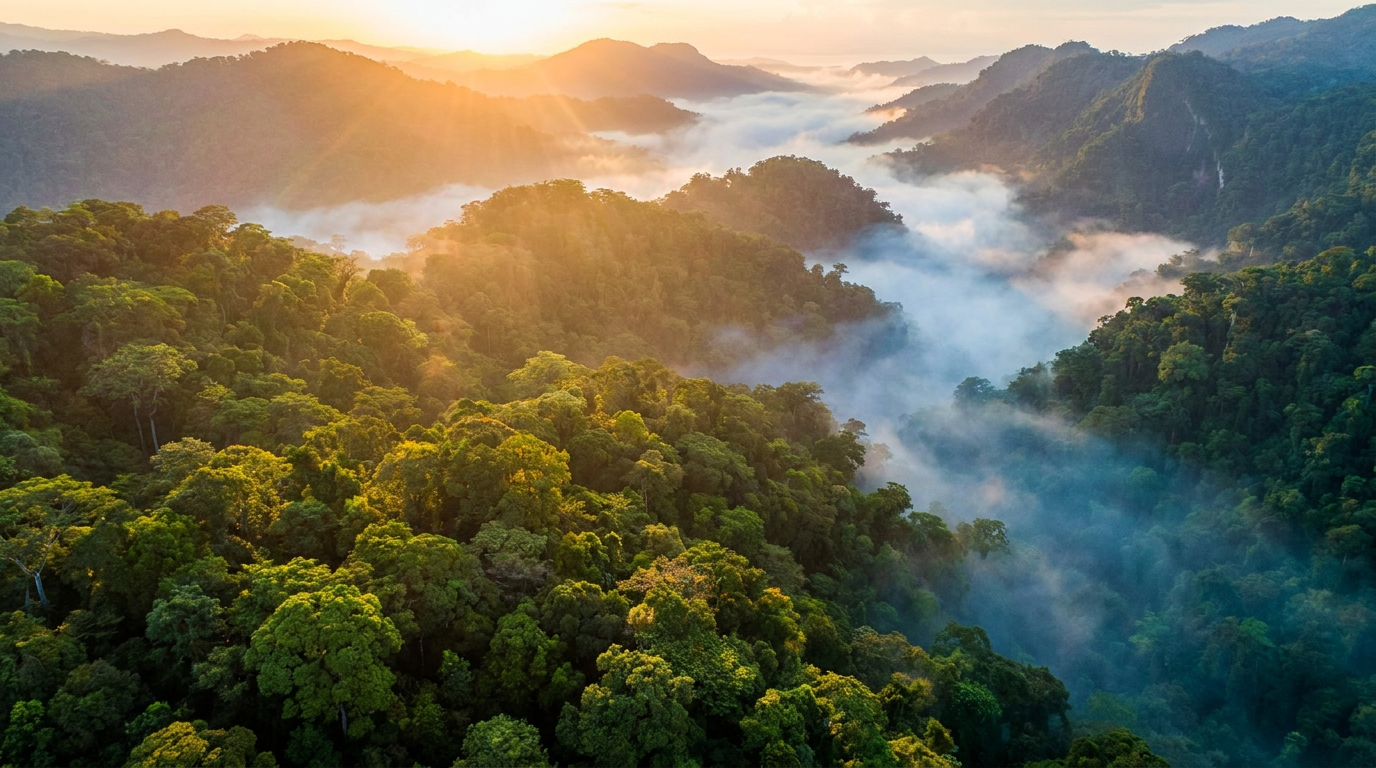
- Conservation Policymakers
- Views the PES program as a critical macroeconomic tool for achieving net-zero emissions and leveraging international carbon markets.
- Indigenous Communities
- Advocates for direct local control over climate finance, ensuring conservation funds reach the people actively managing the forests.
- Eco-Tourism Sector
- Emphasizes the business case for biodiversity, arguing that standing forests generate more long-term revenue than timber extraction.
- Neutral Analysts
- Evaluates the historical success and replicability of Costa Rica's model for other tropical nations.
What's not represented
- · Small-scale cattle ranchers facing economic pressure to convert agricultural land back to forest.
Why this matters
As global deforestation accelerates, Costa Rica's model proves that economic growth and environmental restoration can coexist, offering a replicable blueprint for other tropical nations.
Key points
- Costa Rica reversed decades of severe deforestation, doubling its forest cover from 26 percent in 1983 to over 52 percent today.
- The turnaround was driven by a pioneering program that pays private landowners to protect trees, funded largely by a domestic fossil fuel tax.
- The restored ecosystems fueled a booming ecotourism industry, proving that conservation can drive national economic growth.
- A recent $4 million World Bank grant shifts focus to inclusive governance, putting Indigenous communities in direct control of conservation funds.
Costa Rica is widely recognized as a global conservation icon, boasting lush canopies that draw millions of visitors each year. Yet, this environmental abundance is not a fortunate accident of history; it is the result of a deliberate and unprecedented policy reversal. Just a few decades ago, the country was facing an ecological crisis, recording one of the highest deforestation rates on the planet.[2][5]
In the 1940s, more than three-quarters of Costa Rica's landmass was covered by dense tropical rainforests and indigenous woodland. However, the arrival of industrial logging and the rapid expansion of agricultural land—primarily for cattle ranching and export crops—decimated the landscape. By 1983, rampant clearing had slashed the nation's forest cover to a historic low of just 26 percent.[2][5][6]
The ecological toll of this unchecked extraction was severe. The destruction of two-thirds of the country's tree canopy led to widespread soil erosion, disrupted critical watersheds, and ravaged the natural habitats of endemic species, pushing creatures like the golden toad and the poison dart frog to the brink of extinction. Rural communities also faced a looming economic crisis as the natural resources they relied upon rapidly degraded.[2]
The turning point arrived in 1996 when the Costa Rican government recognized that a standing forest was ultimately more valuable than a cut one. Policymakers severely restricted logging permits and introduced a pioneering financial mechanism: the Payment for Environmental Services (PES) program, managed by the National Forestry Financing Fund (FONAFIFO).[2][3]

The PES program operates on a simple but revolutionary premise: the state pays private landowners directly to protect and regenerate trees on their property. The initiative bundles four distinct environmental services that forests provide to society: carbon sequestration, biodiversity protection, water regulation, and landscape beauty.[3]
Rather than relying entirely on unpredictable international aid, Costa Rica engineered a self-sustaining domestic funding model. The government implemented a 3.5 percent tax on fossil fuels, effectively using the proceeds from carbon pollution to finance carbon capture. This revenue, combined with water charges and the sale of carbon credits, provided the steady cash flow needed to incentivize farmers to leave their chainsaws idle.[3]
Over the past three decades, the results have been staggering. Costa Rica's deforestation rate plummeted to near zero, and the trees naturally began to return. Today, forest cover has more than doubled from its 1983 nadir, expanding to encompass over 52 percent of the country's total land surface.[2][5][6]
Over the past three decades, the results have been staggering.
This ecological resurrection triggered a massive economic ripple effect. The restored rainforests became the foundation of a booming ecotourism and adventure travel industry. Today, tourism is a central pillar of Costa Rica's gross domestic product, proving that environmental conservation and economic growth can be mutually reinforcing rather than mutually exclusive.[2]
The financial benefits of the PES program have also flowed directly into rural households. To date, more than 18,000 families have received payments, injecting over $524 million into local economies. These funds have been used to build schools, improve healthcare access, and create thousands of jobs in sustainable forest management.[3]

Costa Rica's domestic success eventually positioned the country as a pioneer in international carbon markets. In 2022, it became the first nation in Latin America and the Caribbean to receive results-based payments from the World Bank's Forest Carbon Partnership Facility under the REDD+ framework.[8]
That initial $16.4 million payment rewarded the country for independently verified reductions of 3.28 million tons of carbon emissions between 2018 and 2019. It marked the first tranche of an Emission Reductions Payment Agreement designed to unlock up to $60 million by 2025, provided the country continues to meet strict conservation targets.[8]
As Costa Rica pushes toward its ambitious goal of becoming a fully carbon-neutral economy by 2050, the government is upgrading its strategy. The next iteration of the program, dubbed PES 2.0, shifts focus from simply measuring total forest cover to maximizing ecosystem services through agroforestry and silvopastoral systems, which integrate trees directly into active agricultural lands.[6]
Despite the program's overarching success, historical blind spots remained. Indigenous communities, who are the traditional stewards of vast tracts of Costa Rican forest, often faced bureaucratic hurdles and land tenure complexities that prevented them from fully accessing PES funds and international climate finance.[1][4]
To close this gap, a major shift toward inclusive governance is now underway. In late 2025, the World Bank approved a $4 million grant through its EnABLE trust fund specifically designed to put Indigenous groups—including the Cabécar, Bribri, and Ngabe peoples—in direct control of conservation investments.[1][4]

This initiative marks the first time these communities have been granted full authority to define what gets financed and how the money is spent. The funds are being directed toward securing land rights, purchasing equipment, and building climate-resilient infrastructure like rainwater harvesting systems, with a specific mandate to empower Indigenous women and youth who manage the natural resources daily.[1][4]
By continuously adapting its approach—from taxing fossil fuels in the 1990s to empowering Indigenous leadership today—Costa Rica has built a resilient, world-leading conservation model. The country's journey from ecological devastation to a thriving green economy offers a tangible blueprint for other tropical nations, demonstrating that reversing environmental collapse is not only possible, but profitable.[7]
How we got here
1983
Costa Rica's forest cover hits a historic low of 26 percent due to rampant logging and agricultural expansion.
1996
The government launches the Payment for Environmental Services (PES) program, funded by a fossil fuel tax.
2019
Costa Rica officially launches its Decarbonization Plan, aiming for net-zero emissions by 2050.
August 2022
Costa Rica becomes the first Latin American country to receive REDD+ payments from the World Bank.
Late 2025
The World Bank approves a $4 million grant to put Indigenous communities in direct control of conservation investments.
Viewpoints in depth
Conservation Policymakers
Views the PES program as a critical macroeconomic tool for achieving net-zero emissions and leveraging international carbon markets.
For national policymakers and international institutions like the World Bank, Costa Rica's model is the gold standard for state-led climate action. They argue that the Payment for Environmental Services (PES) program proves environmental protection does not have to come at the expense of economic development. By taxing fossil fuels to fund forest protection, the state effectively internalized the cost of carbon pollution. Now, as the country aims for total carbon neutrality by 2050, policymakers are focused on 'PES 2.0'—expanding the program beyond natural forests to include agroforestry and silvopastoral systems, ensuring that active agricultural lands also contribute to carbon sequestration.
Indigenous Communities
Advocates for direct local control over climate finance, ensuring conservation funds reach the people actively managing the forests.
While the national PES program was a macroeconomic success, Indigenous leaders point out that it historically suffered from structural blind spots. Because the original mechanism required formal land titles and complex bureaucratic navigation, many Indigenous groups—who collectively manage vast tracts of the country's most pristine forests—were effectively locked out of the financial benefits. With the recent $4 million EnABLE grant, these communities argue that conservation is finally becoming equitable. By placing decision-making power directly in the hands of local groups like the Cabécar and Bribri, the new framework ensures that climate finance directly supports the land tenure, infrastructure, and economic resilience of the people actually doing the conservation work.
Eco-Tourism Sector
Emphasizes the business case for biodiversity, arguing that standing forests generate more long-term revenue than timber extraction.
The private sector, particularly the tourism and hospitality industries, views the reforestation effort through an economic lens. In the 1980s, the dominant economic logic dictated that land was only valuable if cleared for cattle or cash crops. Today, the eco-tourism sector argues the exact opposite: Costa Rica's primary economic engine is its 'scenic beauty' and biodiversity. By protecting the habitats of rare species and maintaining lush landscapes, the country draws millions of high-spending international tourists annually. This camp highlights that the jobs created by eco-lodges, guided tours, and sustainable agriculture far outnumber those previously provided by the logging industry, proving that conservation is a highly profitable long-term investment.
What we don't know
- How effectively the new PES 2.0 framework will scale agroforestry practices among traditional cattle ranchers.
- Whether international carbon market prices will remain stable enough to provide reliable, long-term funding for the REDD+ initiatives.
Key terms
- Payment for Environmental Services (PES)
- A financial mechanism that pays landowners to protect and restore forests rather than cutting them down.
- REDD+
- A UN-backed framework that rewards developing countries financially for reducing emissions from deforestation and forest degradation.
- Silvopastoral Systems
- An agricultural method that integrates trees, forage plants, and livestock grazing in a mutually beneficial way.
- Carbon Sequestration
- The process of capturing and storing atmospheric carbon dioxide, naturally performed by growing trees.
Frequently asked
How did Costa Rica fund its reforestation?
The country primarily funded its Payment for Environmental Services program through a 3.5 percent national tax on fossil fuels, effectively making polluters pay for conservation.
How much of Costa Rica is forested today?
After dropping to 26 percent in 1983, Costa Rica's forest cover has more than doubled and now accounts for over 52 percent of its landmass.
Who benefits from the conservation payments?
More than 18,000 families and landowners have received payments. Recently, new grants have been structured to give Indigenous communities direct control over these funds.
Sources
Source coverage
8 outlets
4 viewpoints surfaced







[1]World BankConservation Policymakers
Costa Rica strengthens Indigenous leadership to conserve forests and reduce emissions with World Bank support
Read on World Bank →[2]World Economic ForumEco-Tourism Sector
Costa Rica has doubled its tropical rainforests in just a few decades. Here's how
Read on World Economic Forum →[3]UNFCCCConservation Policymakers
Payments for Environmental Services Program | Costa Rica
Read on UNFCCC →[4]DevelopmentAidIndigenous Communities
World Bank backs Indigenous-led forest conservation in Costa Rica
Read on DevelopmentAid →[5]Positive NewsEco-Tourism Sector
Costa Rica doubles its forest cover in 30 years
Read on Positive News →[6]IILAConservation Policymakers
Costa Rica's Payment for Environmental Services (PES) Scheme
Read on IILA →[7]Factlen Editorial TeamNeutral Analysts
Synthesis by Factlen editorial team
Read on Factlen Editorial Team →Costa Rica First in Latin America to Receive World Bank Payment for Reducing Emissions from Deforestation
Read on World Bank Group →
Every angle. Every day.
Get world stories with full source coverage and perspective breakdowns delivered to your inbox.