
How Cold-Climate Heat Pumps Finally Conquered the Winter
Next-generation heat pumps have shattered the myth that they only work in mild climates, delivering high-efficiency heating even in sub-zero temperatures.
By Factlen Editorial Team
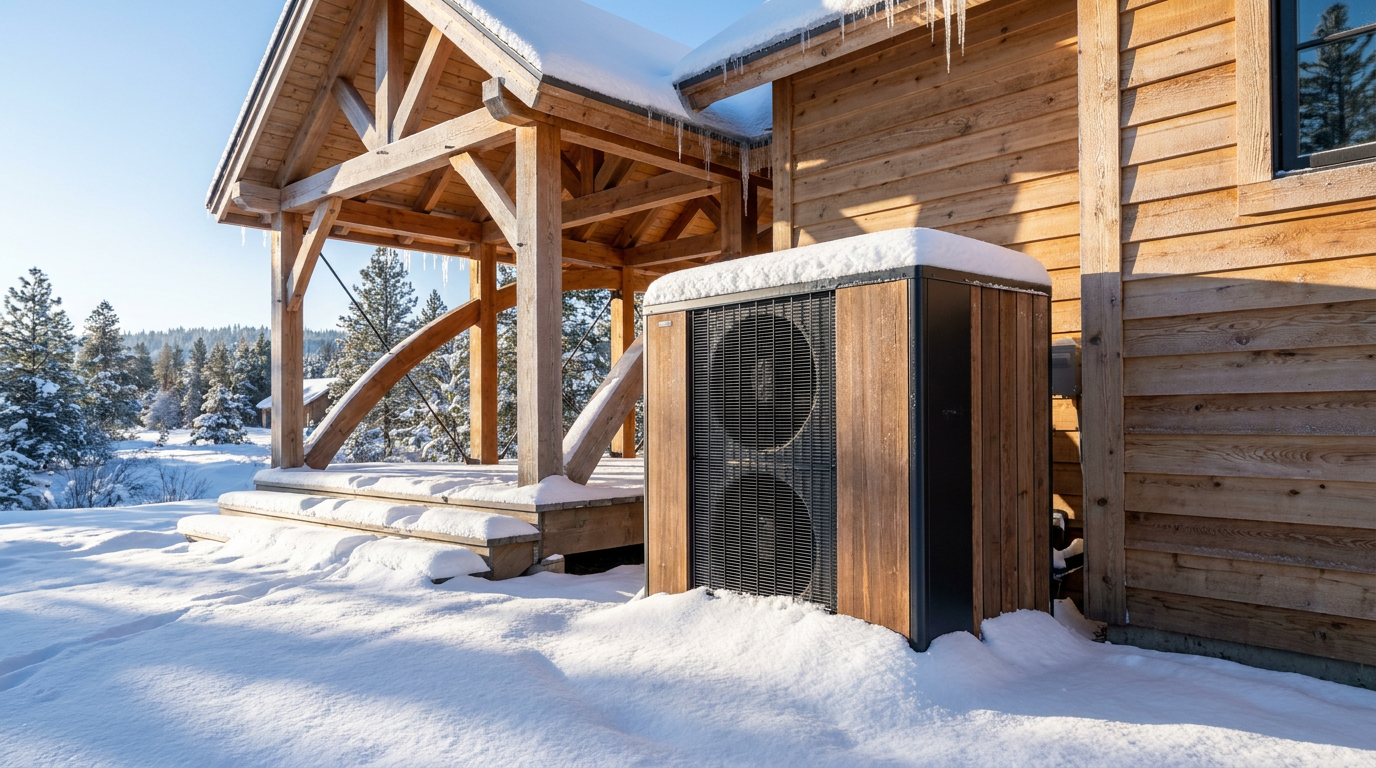
- HVAC Manufacturers & Installers
- Focuses on the technical leaps in compressor technology and the practicalities of sizing and installing these systems.
- Energy Researchers & Regulators
- Focuses on grid impact, decarbonization targets, and the success of lab validations in pushing the market forward.
- Consumer & Climate Advocates
- Focuses on the financial empowerment of homeowners escaping volatile fossil fuel prices and the environmental benefits of electrification.
What's not represented
- · Fossil Fuel Industry Representatives
- · Electric Grid Operators managing winter peak loads
Why this matters
Space conditioning and water heating consume over 40% of U.S. primary energy. The ability to efficiently heat homes in freezing climates without fossil fuels is a massive leap forward for both household utility bills and global emissions targets.
Key points
- Modern cold-climate heat pumps can efficiently heat homes even when outdoor temperatures drop below 0°F.
- Variable-speed compressors and vapor injection technology allow units to maintain capacity in extreme cold.
- The DOE's field validations proved these units deliver nearly twice as much heat energy as they consume in electricity at 5°F.
- The Inflation Reduction Act provides a $2,000 annual tax credit to offset the higher upfront installation costs.
- New 2026 regulations are shifting the industry toward ultra-low-GWP refrigerants like R-290.
For decades, conventional wisdom in northern climates held a stubborn rule: heat pumps are for the South. Older models simply could not extract enough ambient heat when temperatures plunged below freezing, leaving homeowners shivering or reliant on expensive emergency heating strips.[5][6]
But heading into 2026, that limitation has been thoroughly engineered out of existence. Modern cold-climate heat pumps are quietly replacing gas furnaces even in the most frigid regions of North America, fundamentally altering the economics of home heating.[4][8]
The stakes for solving this engineering hurdle were massive. Space conditioning and water heating consume over 40% of the nation's primary energy and represent a major source of residential greenhouse gas emissions. Transitioning homes away from fossil fuels required a technology that could reliably heat a house in Minnesota or Maine without bankrupting the homeowner.[1][7][8]
To accelerate this transition, the U.S. Department of Energy (DOE) launched the Residential Cold Climate Heat Pump (CCHP) Challenge, partnering with major manufacturers to push the boundaries of thermodynamic engineering. The goal was to develop and commercialize next-generation units that could maintain high efficiency and comfort even in the bitterest winters.[1][8]
The results of that challenge are now reshaping the HVAC industry. A comprehensive 2025 field validation report by the Pacific Northwest National Laboratory (PNNL) tracked prototype units installed in homes across the U.S. and Canada. The data proved that the technology had turned a corner: even in outdoor air temperatures between 0°F and 5°F, the units maintained a median Coefficient of Performance (COP) of 1.9.[2]

To understand why a COP of 1.9 is revolutionary, it helps to compare it to traditional heating. A high-efficiency gas furnace burns fuel to create heat, maxing out at about 98% efficiency (a COP of 0.98). A heat pump with a COP of 1.9 is operating at 190% efficiency, meaning it delivers nearly twice as much heat energy into the home as it consumes in electrical energy, even when it is near zero degrees outside.[2][5][6][8]
This seemingly impossible math—pulling heat out of freezing air—comes down to basic physics. Heat energy exists in the air all the way down to absolute zero (-273°C). Because heat naturally moves toward cold, engineers just needed a substance colder than the winter air to absorb that ambient energy.[5][8]
Modern cold-climate heat pumps achieve this using advanced liquid refrigerants with extremely low boiling points, some remaining liquid down to -50°C. When outside air at -25°C blows across the outdoor heat exchanger, it is still significantly warmer than the refrigerant inside. The refrigerant absorbs this heat, boils, and turns into a gas.[5]
Modern cold-climate heat pumps achieve this using advanced liquid refrigerants with extremely low boiling points, some remaining liquid down to -50°C.
The real magic happens in the next step. The warmed gas is fed into a compressor, which squeezes it tightly. As the volume of the gas decreases, its temperature skyrockets. This intensely hot gas is then pumped indoors, where it passes over another heat exchanger, transferring its heat to the home's air or water system before cooling back into a liquid to repeat the cycle.[5][8]

While the basic refrigeration cycle is old, the 2026 generation of heat pumps relies on two critical modern upgrades. The first is the variable-speed inverter compressor. Older heat pumps operated like a light switch—either blasting at 100% capacity or completely off. Inverter compressors act like cruise control, smoothly modulating their output anywhere from 20% to 100% to match the exact heating demand of the house, drastically reducing energy waste.[3][4][6]
The second upgrade is vapor injection technology. When outdoor temperatures plummet, the system injects a secondary stream of refrigerant vapor directly into the compressor. This acts like a turbocharger, allowing the heat pump to maintain its full heating capacity even when the air outside is dangerously cold.[3][8]
These lab-tested innovations are proving themselves in the real world. During the DOE challenge, Trane Technologies installed a prototype in a Boise, Idaho home and monitored it over two harsh winters. The system successfully kept the home warm by extracting heat from the air, relying on its backup electric resistance heat strip only 10% of the time. Over two full seasons, the homeowner saw average energy bill savings of 15% to 20%.[3]
Across the country, similar success stories are emerging. During the severe winter storms of recent years, where temperatures dropped 30 degrees in minutes, homeowners with cold-climate heat pumps reported their systems easily maintained comfortable indoor temperatures. Data from the Rocky Mountain Institute shows that all-electric homes are saving between $50 and $1,000 annually on utility bills compared to homes relying on gas.[7]
The financial equation for homeowners has also shifted dramatically. While the upfront cost of a high-efficiency cold-climate heat pump remains higher than a traditional air conditioner or furnace—often ranging from $5,000 to over $12,000—federal incentives have bridged the gap. Under the Inflation Reduction Act, qualifying heat pumps are eligible for a tax credit of 30% of the project cost, capped at $2,000 annually.[6][7]

For homeowners currently heating with heating oil, propane, or standard electric baseboards, the operational savings are profound. Switching to a cold-climate heat pump can reduce monthly heating bills by 30% to 50%, often offsetting the higher initial investment within five to seven years.[6]
The industry is also undergoing a massive environmental shift in 2026. New regulations require heat pumps to use low-GWP (Global Warming Potential) refrigerants. Manufacturers are moving toward substances like R-290 (propane), which has a GWP of just 3—compared to older refrigerants that scored in the thousands. R-290 systems can also produce higher water temperatures, making them ideal for retrofitting older homes with traditional radiators.[4][8]

There are still edge cases where professionals advise caution. In the most extreme northern climates—such as parts of Canada or the northernmost U.S. states—contractors often recommend a "dual-fuel" or hybrid system. This setup pairs the high-efficiency heat pump with a smaller gas furnace that only kicks on during record-breaking cold snaps, providing peace of mind without sacrificing everyday efficiency.[4][6]
Ultimately, the cold-climate heat pump has transitioned from a niche alternative to the gold standard for residential HVAC. By combining advanced thermodynamics with smart incentives, the technology is offering homeowners a rare opportunity: a cash-flow positive path to decarbonize their homes while improving their year-round comfort.[4][7][8]
How we got here
Mid-1800s
The basic concept of the heat pump is first developed, though early models struggle in extreme cold.
2021
The U.S. Department of Energy launches the Cold Climate Heat Pump Challenge to spur industry innovation.
2024
Extensive field validations conclude, proving prototype units can maintain high efficiency in sub-zero temperatures.
Jan 2026
New environmental regulations take effect, shifting the industry toward ultra-low-GWP refrigerants like R-290.
Viewpoints in depth
Energy Researchers & Regulators
Focuses on grid impact, decarbonization, and the success of the DOE challenge in pushing the market forward.
For the Department of Energy and national laboratories, the cold-climate heat pump is a critical lever for national decarbonization. Space heating represents a massive portion of the country's energy footprint. By validating that these systems can maintain a Coefficient of Performance (COP) near 2.0 even in freezing weather, researchers have proven that electrifying northern homes will not collapse the winter grid or leave residents freezing. Their focus remains on scaling adoption and ensuring the electrical grid is prepared for the shift away from natural gas.
HVAC Manufacturers & Installers
Focuses on the technical leaps and the practicalities of sizing and installing these systems in older homes.
The industry views the 2026 landscape as a triumph of engineering. Manufacturers point to variable-speed inverter compressors and vapor injection as the technologies that finally solved the cold-weather problem. However, installers emphasize that these systems require precise load calculations and proper home insulation to work effectively. They also note that the transition to new A2L and R-290 refrigerants requires specialized training, making the choice of a qualified contractor more important than ever.
Consumer & Climate Advocates
Focuses on the financial empowerment of homeowners and the environmental benefits of electrification.
Advocacy groups highlight the immediate financial relief these systems offer to homeowners currently trapped by volatile heating oil or propane prices. By utilizing the $2,000 Inflation Reduction Act tax credits, families can offset the higher upfront costs and begin seeing 30% to 50% reductions in their monthly utility bills. For these groups, the cold-climate heat pump is not just an environmental win, but a crucial tool for household financial resilience against extreme weather and energy inflation.
What we don't know
- How quickly the electrical grid in northern states can adapt to the increased winter load as millions of homes transition away from gas heating.
- Whether the upfront costs of cold-climate heat pumps will naturally decrease as manufacturing scales, or if they will remain dependent on federal tax credits to be competitive.
Key terms
- Cold-Climate Heat Pump (CCHP)
- A heat pump specifically engineered with advanced compressors and refrigerants to operate efficiently in sub-zero temperatures.
- Coefficient of Performance (COP)
- A metric of heating efficiency; a COP of 2.0 means the unit produces two units of heat for every one unit of electricity consumed.
- Variable-Speed Inverter Compressor
- A compressor that can adjust its output smoothly rather than just turning fully on or off, maximizing efficiency and comfort.
- Global Warming Potential (GWP)
- A measure of how much heat a greenhouse gas traps in the atmosphere; newer refrigerants have drastically lower GWP scores.
- Vapor Injection Technology
- A system that injects extra refrigerant vapor into the compressor, acting like a turbocharger to boost heating capacity in extreme cold.
Frequently asked
Do heat pumps really work in freezing weather?
Yes. Modern cold-climate models use advanced refrigerants and variable-speed compressors to extract ambient heat from the air even when temperatures drop to -15°F and below.
What is a dual-fuel system?
A hybrid setup pairing a heat pump with a backup gas furnace, often recommended in the most extreme northern climates for the few days a year when temperatures drop below -20°F.
Are heat pumps cheaper to run than gas furnaces?
Usually. Because they move heat rather than create it, they operate at 200-300% efficiency, often saving homeowners 30-50% on utility bills compared to oil, propane, or standard electric heat.
What is the 2026 refrigerant transition?
New environmental regulations require heat pumps to use low-GWP (Global Warming Potential) refrigerants like R-290, which are vastly more environmentally friendly than older chemicals.
Sources
Source coverage
8 outlets
3 viewpoints surfaced







[1]Department of EnergyEnergy Researchers & Regulators
Residential Cold Climate Heat Pump Challenge
Read on Department of Energy →[2]Pacific Northwest National LaboratoryEnergy Researchers & Regulators
Performance Results from DOE Cold Climate Heat Pump Challenge Field Validation
Read on Pacific Northwest National Laboratory →[3]Trane TechnologiesHVAC Manufacturers & Installers
Trane Technologies Completes the U.S. Department of Energy's Residential Cold Climate Heat Pump Challenge
Read on Trane Technologies →[4]EcohomeHVAC Manufacturers & Installers
Choosing a cold climate heat pump for energy-efficient heating in 2026
Read on Ecohome →[5]Arctic Heat PumpsHVAC Manufacturers & Installers
How Cold Climate Heat Pumps Work in Sub-Zero Temperatures
Read on Arctic Heat Pumps →[6]HVAC Pro SalesHVAC Manufacturers & Installers
Heat Pump vs AC in 2026: The Cold Climate Breakthrough
Read on HVAC Pro Sales →[7]Switch Is OnConsumer & Climate Advocates
Cold-climate heat pumps are passing the extreme weather test
Read on Switch Is On →[8]Factlen Editorial TeamConsumer & Climate Advocates
Synthesis by Factlen editorial team
Read on Factlen Editorial Team →
Every angle. Every day.
Get home stories with full source coverage and perspective breakdowns delivered to your inbox.