
How Chemists Are Finally Breaking the 'Forever' Bond in PFAS
A wave of peer-reviewed breakthroughs in 2026 has demonstrated that 'forever chemicals' can be rapidly captured and permanently destroyed without extreme heat. The water treatment industry is now racing to scale these defluorination technologies.
By Factlen Editorial Team
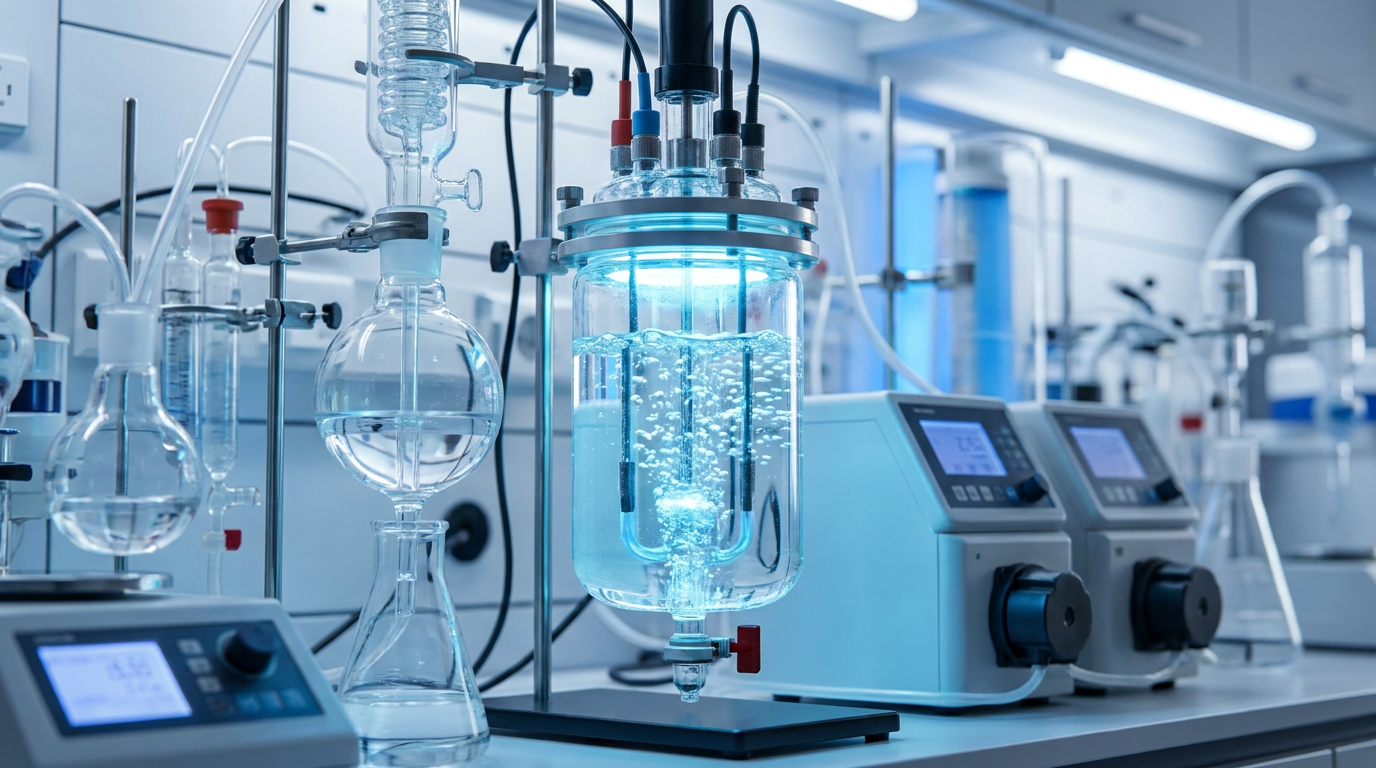
- Chemical Researchers
- Focused on discovering novel materials and low-energy mechanisms to break the carbon-fluorine bond.
- Water Infrastructure Industry
- Prioritizes the scalability, energy efficiency, and operational costs of deploying these technologies at municipal scale.
- Environmental Watchdogs
- Advocates for rapid deployment of destruction tech to prevent further bioaccumulation and health impacts.
- Evidence Synthesis
- Evaluates the gap between laboratory breakthroughs and real-world economic viability.
What's not represented
- · Municipal taxpayers who will fund the infrastructure upgrades
- · Chemical manufacturers facing liability for cleanup costs
Why this matters
For decades, removing 'forever chemicals' from water simply meant moving them to a landfill where they could eventually leak back out. These new chemical breakthroughs finally offer a way to permanently obliterate the toxins, protecting public health without creating new hazardous waste sites.
Key points
- New materials can capture PFAS up to 100 times faster than conventional activated carbon filters.
- Researchers have successfully broken the resilient carbon-fluorine bond using low-energy photochemical and electrochemical methods.
- Nano-sized molecular cages have been engineered to trap highly mobile short-chain PFAS with 98% efficiency.
- The water treatment industry is shifting from merely storing captured chemicals to achieving 'true defluorination' on site.
The fundamental problem of per- and polyfluoroalkyl substances, universally known as PFAS, lies in their atomic architecture. The carbon-fluorine bond is one of the strongest connections in all of organic chemistry, granting these synthetic chemicals their famous resistance to heat, water, and grease. Unfortunately, that same durability means they do not break down in nature, leading to widespread bioaccumulation in human bloodstreams and global water supplies. For decades, municipal water treatment facilities have been trapped in a frustrating cycle: they can capture these "forever chemicals" using conventional activated carbon filters, but they cannot easily destroy them. The captured pollutants are simply transferred from the water supply into hazardous solid waste facilities or subjected to extreme, energy-intensive incineration, effectively moving the problem rather than solving it.[7]
In 2026, the scientific consensus is rapidly shifting from mere capture to "true defluorination"—the complete and permanent severing of the carbon-fluorine bond. A wave of peer-reviewed breakthroughs has demonstrated that the total mineralization of PFAS into harmless inorganic salts is now possible without relying on brute-force thermal energy. Driven by tightening regulations from the U.S. Environmental Protection Agency and the European Union's expanding REACH directives, researchers have pivoted toward low-energy electrochemical and photochemical mechanisms. This shift represents a monumental leap in environmental remediation, offering the first realistic pathway to permanently erasing these persistent toxins from the ecosystem rather than just shuffling them between landfills and aquifers.[6][7]
The first major evidentiary claim supporting this transition is a dramatic acceleration in capture speed, which is a necessary precursor to efficient destruction. Researchers at Rice University recently engineered a novel layered double hydroxide (LDH) material constructed from copper and aluminum. By replacing specific aluminum atoms with copper, the team created a highly positively charged matrix that acts as a powerful magnet for negatively charged long-chain PFAS molecules. This structural innovation fundamentally changes the kinetics of water filtration, allowing the material to pull contaminants out of complex aqueous environments at unprecedented velocities.[1]
According to data published in the journal Advanced Materials, this specialized LDH material attracts and traps long-chain PFAS up to 100 times faster than the conventional activated carbon filters currently used by most municipalities. Instead of requiring hours of contact time to effectively scrub the water, the copper-aluminum matrix soaks up the pollutants in a matter of minutes. Crucially, the material maintains this extreme efficiency even when tested in highly complex, real-world environments, including turbid river water and heavily processed municipal wastewater, proving its viability outside the sterile confines of a laboratory.[1][4]

However, capturing the chemicals at record speed is only half the battle; the second, more crucial claim is that these highly concentrated PFAS can be destroyed safely and economically. The Rice University research team demonstrated that once the LDH material is saturated with forever chemicals, it does not need to be discarded into a hazardous waste landfill. By heating the loaded filter material in the presence of calcium carbonate, the researchers successfully induced a thermal decomposition process that attacks the fluorinated backbone of the trapped chemicals.[1]
This localized thermal degradation process destroys more than half of the trapped PFAS without releasing the toxic, airborne byproducts that typically plague traditional incineration methods. Furthermore, the calcium carbonate treatment simultaneously cleans and regenerates the LDH material for immediate reuse. Early laboratory testing confirms that the copper-aluminum matrix can survive at least six complete cycles of rapid capture and thermal destruction without suffering any significant loss in filtration efficacy, dramatically lowering the projected lifecycle cost of the material.[4]
The third major evidentiary breakthrough addresses the massive energy footprint historically required for destruction. Breaking the resilient carbon-fluorine bond traditionally demanded extreme temperatures exceeding 1,000 degrees Celsius, making widespread municipal deployment financially ruinous. Now, researchers at Clarkson University have validated a much milder, highly targeted photochemical approach. Their system bypasses the need for extreme ambient heat, offering a more elegant, precision-engineered solution to molecular disassembly.[2]
The third major evidentiary breakthrough addresses the massive energy footprint historically required for destruction.
Published in Nature Communications, the Clarkson methodology utilizes a specialized reactive material that synergizes light and electricity. The system first utilizes cathodic adsorption to attract and concentrate the PFAS molecules directly onto its surface. Once the chemicals are pinned in place, the material deploys a "hot-electron mechanism"—bombarding the carbon-fluorine bonds with high-energy electrons generated by targeted light exposure. This localized electron bombardment effectively cleaves the bonds at the atomic level without requiring the surrounding water to be boiled or pressurized.[2]

This photochemical mechanism operates effectively under remarkably mild ambient conditions and has proven successful even in highly challenging scenarios, such as concentrated industrial brine streams and groundwater heavily contaminated by military-grade firefighting foam. By avoiding the harsh oxidative conditions of traditional incineration, the Clarkson system actively prevents the formation of unintended, smaller toxic byproducts. This ensures that the destruction process results in true mineralization, leaving behind only harmless fluoride ions and basic carbon compounds.[2][7]
A fourth critical claim addresses the most elusive targets in environmental chemistry: short-chain PFAS. As global regulations have successfully clamped down on legacy long-chain chemicals like PFOA and PFOS, chemical manufacturers have systematically pivoted to shorter-chain alternatives. Because these smaller molecules have fewer carbon atoms, they are highly mobile in water and notoriously difficult to trap using standard granular activated carbon or reverse osmosis systems, frequently slipping right through municipal defenses.[5][6]
Evidence published in Angewandte Chemie by researchers at Flinders University introduces a highly specialized solution: nano-sized molecular cages specifically engineered to lock onto these evasive short-chain variants. Unlike broad-spectrum filters, these molecular cages are geometrically designed to match the exact size and charge profile of short-chain PFAS, acting as a highly selective trap that ignores harmless water molecules while permanently binding to the targeted pollutants.[3]
Laboratory models utilizing standard municipal tap water demonstrated that these nano-cages can eliminate up to 98% of short-chain PFAS, even when the chemicals are present at environmentally relevant, trace concentrations. Similar to the LDH materials developed at Rice, these molecular cages are fully reusable, maintaining their near-perfect capture rates after multiple rigorous filtration cycles. This capability fills a massive vulnerability in current water treatment infrastructure, providing a reliable "polishing" stage for drinking water.[3][5]

The commercial water treatment industry is now rapidly mobilizing to scale these laboratory successes into industrial realities. Analysts project that the second half of 2026 will witness a definitive market shift toward on-site defluorination technologies, driven heavily by the legal liabilities associated with new EPA enforcement and the European Union's expanding chemical restrictions. The era of simply filtering water and ignoring the resulting toxic sludge is coming to a definitive end.[6]
Advanced systems utilizing Hydrothermal Alkaline Treatment (HALT), Supercritical Water Oxidation (SCWO), and proprietary photochemical reduction are currently moving from pilot programs to full-scale industrial deployment. The primary strategic objective is to deploy these destruction reactors directly at industrial source points—such as chemical manufacturing plants and military bases—treating the highly concentrated wastewater before the forever chemicals can ever escape into the broader municipal water supply.[6][7]

Despite the robust scientific evidence validating these new destruction mechanisms, significant economic and engineering uncertainties remain. The transition from processing liters of water in a controlled laboratory to continuously treating millions of gallons of complex municipal wastewater daily presents massive fluid dynamics and materials science challenges. The durability of these novel materials when exposed to the abrasive, unpredictable nature of raw sewage over several years is still entirely unknown.[8]
Furthermore, the baseline energy costs associated with scaling electrochemical and photochemical reactors remain a critical variable for cash-strapped public water utilities. While the fundamental science of breaking the "forever" bond is now thoroughly proven and peer-reviewed, the macroeconomic reality of deploying that science globally will ultimately determine how quickly our water supplies are truly cleansed. The technology exists to end the PFAS crisis; the next phase is purely a matter of infrastructure investment.[7][8]
How we got here
1940s
PFAS are invented and rapidly adopted for non-stick cookware, waterproof clothing, and firefighting foams.
Early 2000s
Scientific consensus builds linking long-term PFAS exposure to severe health issues, including cancer and liver damage.
April 2024
The U.S. EPA issues the first-ever national, legally enforceable drinking water standards for six major PFAS.
Early 2026
Multiple research teams publish breakthroughs demonstrating rapid capture and low-energy destruction of both long- and short-chain PFAS.
Late 2026
Commercial water treatment firms begin deploying on-site "true defluorination" systems for industrial wastewater.
Viewpoints in depth
Materials Scientists
Focused on the atomic-level mechanisms of breaking the carbon-fluorine bond.
For materials scientists and chemists, the primary hurdle has always been the sheer thermodynamic stability of the carbon-fluorine bond. Their recent breakthroughs focus on bypassing the need for brute-force thermal energy. By engineering highly specific environments—such as utilizing hot-electron mechanisms or layered double hydroxides—they argue that we can achieve complete mineralization of PFAS under mild conditions, preventing the creation of smaller, equally toxic byproducts.
Water Infrastructure Industry
Prioritizes the scalability, energy efficiency, and operational costs of deploying these technologies.
While the commercial sector acknowledges the brilliance of these chemical breakthroughs, their focus is strictly on real-world deployment. Industry analysts point out that treating millions of gallons of municipal wastewater daily requires systems that are not just effective, but economically viable. They argue that the immediate future lies in deploying these advanced destruction technologies at industrial source points, rather than attempting to retrofit every municipal water plant overnight.
Environmental Regulators
Focused on ensuring that destruction methods meet strict new compliance standards without unintended consequences.
Regulatory bodies and environmental watchdogs are pushing for a rapid transition from 'capture and store' to 'true defluorination.' However, they maintain a cautious stance on scaling new technologies, emphasizing the need for rigorous auditing. Their primary concern is ensuring that novel destruction methods do not inadvertently release fluorinated gases into the atmosphere or leave behind highly mobile ultra-short-chain PFAS that evade current testing protocols.
What we don't know
- The exact cost per gallon to deploy photochemical and electrochemical destruction methods at a municipal scale.
- Whether the energy grid can support the widespread adoption of electricity-intensive defluorination reactors.
- How effectively these new materials will perform over years of continuous use in highly contaminated industrial environments.
Key terms
- PFAS
- Per- and polyfluoroalkyl substances, a class of over 15,000 synthetic chemicals known for resisting heat, water, and grease.
- Carbon-Fluorine Bond
- An exceptionally strong chemical bond that gives PFAS their durability, but also prevents them from breaking down in nature.
- Mineralization
- The complete breakdown of a complex organic chemical into harmless, naturally occurring inorganic minerals and salts.
- Layered Double Hydroxide (LDH)
- A synthetic material with a positively charged structure that can rapidly attract and trap negatively charged pollutants.
- Short-chain PFAS
- Newer generations of forever chemicals with fewer carbon atoms, making them harder to filter out of water than older variants.
Frequently asked
What makes PFAS so hard to destroy?
They rely on the carbon-fluorine bond, which is one of the strongest chemical bonds in organic chemistry and highly resistant to natural degradation.
What happens to PFAS right now?
Most water treatment plants capture them using activated carbon filters, which are then transferred to landfills or incinerated at extremely high temperatures.
What are short-chain PFAS?
They are smaller versions of the chemicals developed as replacements for legacy PFAS. They are highly mobile in water and much harder to catch with standard filters.
When will this new technology reach my tap water?
While commercial scaling is beginning in 2026 for industrial wastewater, widespread municipal deployment will likely take several years due to massive infrastructure costs.
Sources
Source coverage
8 outlets
4 viewpoints surfaced







[1]Advanced MaterialsChemical Researchers
Layered Double Hydroxide Materials for Rapid PFAS Capture and Thermal Degradation
Read on Advanced Materials →[2]Nature CommunicationsChemical Researchers
Cathodic adsorption and hot-electron mechanism for PFAS elimination under mild conditions
Read on Nature Communications →Nano-sized molecular cages for the selective capture of short-chain PFAS
Read on Angewandte Chemie →[4]The GuardianEnvironmental Watchdogs
New filtration technology could be gamechanger in removal of Pfas 'forever chemicals'
Read on The Guardian →[5]Science DailyEnvironmental Watchdogs
New Water Filter Removes 98% of PFAS
Read on Science Daily →[6]AquaTechWater Infrastructure Industry
PFAS destruction: The shift to true defluorination in 2026
Read on AquaTech →[7]Royal Society of ChemistryChemical Researchers
Advances in electrochemical technologies for PFAS destruction
Read on Royal Society of Chemistry →[8]Factlen Editorial TeamEvidence Synthesis
Synthesis by Factlen editorial team
Read on Factlen Editorial Team →
Every angle. Every day.
Get science stories with full source coverage and perspective breakdowns delivered to your inbox.