
How Autonomous AI Agents Are Becoming the Primary Defense for EV Charging Networks
As electric vehicle chargers emerge as vulnerable critical infrastructure, cybersecurity experts and federal agencies are deploying autonomous AI agents to continuously hunt threats and prevent grid destabilization.
By Factlen Editorial Team
- Infrastructure Defenders
- Argue that continuous AI pentesting is the only viable way to secure rapidly updating cloud-native infrastructure.
- National Security Regulators
- Focus on systemic risks to the grid, advocating for the rapid but controlled adoption of AI defenders.
- AI Risk Skeptics
- Highlight the inherited vulnerabilities of large language models, cautioning against unrestricted autonomous access.
What's not represented
- · Local municipal grid operators
- · Consumer privacy advocates
Why this matters
With over 600 million EVs projected by 2040, securing the charging ecosystem is vital to preventing cascading power grid failures. The shift to AI-driven defense ensures that our critical infrastructure can heal itself at machine speed, protecting consumer data and national energy stability.
Key points
- EV chargers are network-connected industrial control systems vulnerable to cyberattacks that could destabilize local power grids.
- Traditional quarterly security scans are inadequate for cloud-native charging networks that receive weekly software updates.
- Autonomous AI agents are being deployed to act as continuous red teams, mapping attack paths and patching vulnerabilities in real time.
- While AI defenders offer machine-speed protection, federal agencies warn they introduce new risks like prompt injection that require strict oversight.
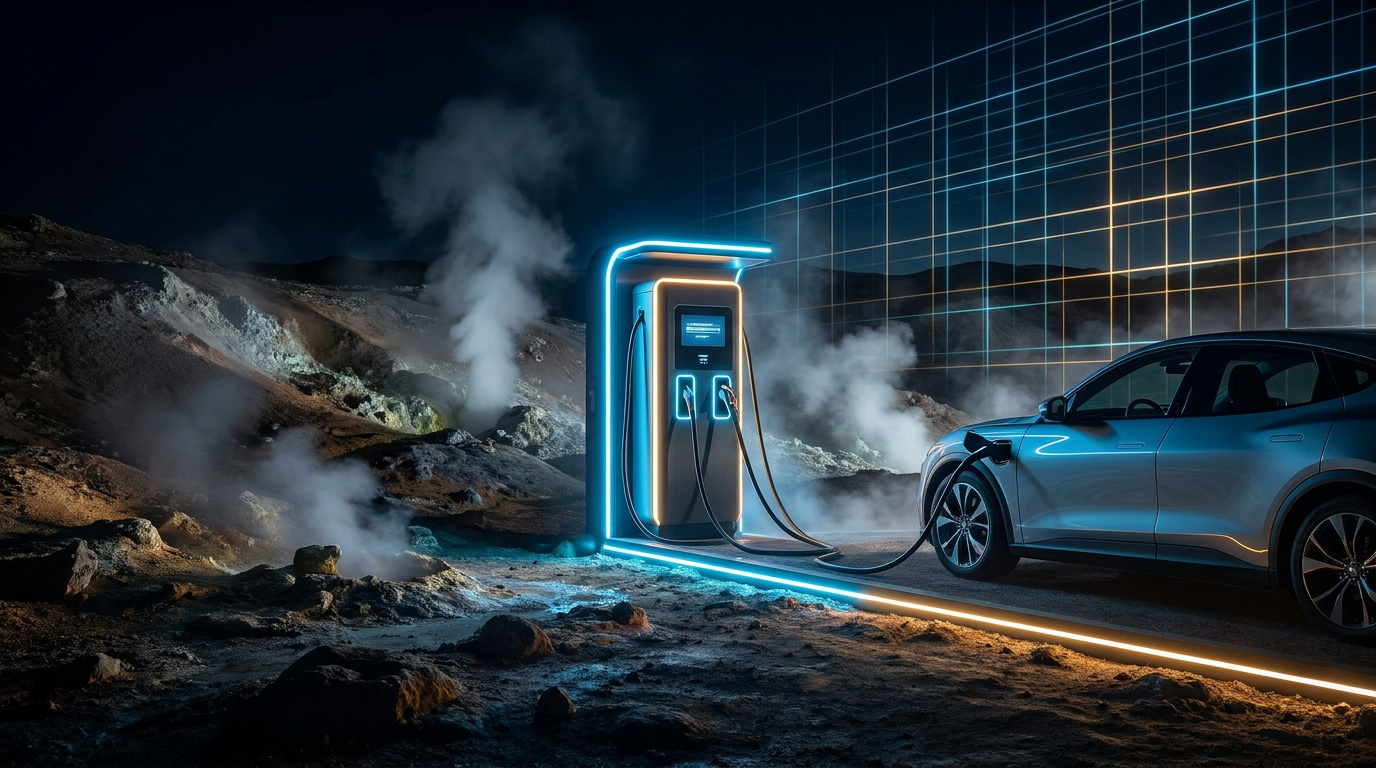
The modern electric vehicle charger is not merely a high-voltage power outlet; it is a network-connected industrial control system deployed on public sidewalks and highway rest stops. As the global fleet of electric vehicles expands, these charging stations have become critical infrastructure, interfacing directly with both consumer financial data and the broader electrical grid. Yet, cybersecurity experts warn that much of this infrastructure relies on security models inherited from consumer internet-of-things devices rather than hardened national defense standards. This gap presents a severe vulnerability, where compromised chargers could theoretically be manipulated to push or pull electricity in synchronized bursts, destabilizing grid frequencies and triggering localized blackouts.[5]
Traditional cybersecurity paradigms are struggling to secure this rapidly shifting attack surface. Historically, infrastructure operators relied on point-in-time penetration tests and quarterly vulnerability scans to identify weaknesses. However, modern EV charging networks are cloud-native environments characterized by weekly code releases, over-the-air firmware updates, and complex third-party payment integrations. A quarterly scan creates a predictable ninety-day window during which new vulnerabilities can remain undetected and exploitable. Threat actors targeting energy systems are increasingly aware of these operational rhythms, waiting for scans to conclude before probing for newly introduced gaps.[4]
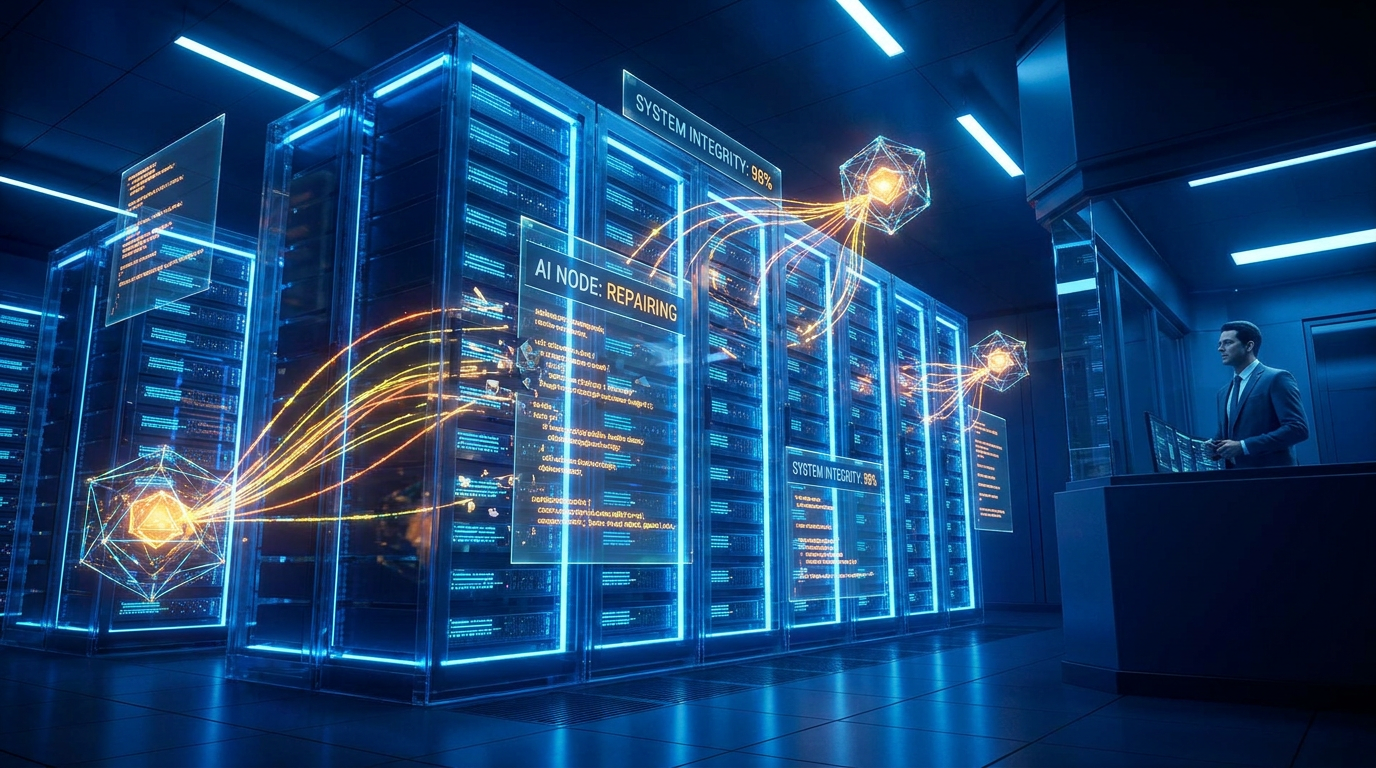
To close this exposure window, a consensus is emerging among researchers, industry executives, and federal agencies: the defense of critical infrastructure must become as autonomous and continuous as the threats it faces. The proposed solution centers on "agentic AI"—artificial intelligence systems powered by large language models that can interpret telemetry, make decisions, and execute multi-step workflows without human intervention. Rather than passively logging errors, these AI agents act as continuous, automated red teams, constantly probing the network for weaknesses and deploying mitigations in real time.[4][6]

The efficacy of this approach is moving from theoretical white papers to empirical validation. In a recent breakthrough, researchers in Spain successfully demonstrated an AI agent system designed specifically to protect EV chargers from energy theft and physical damage. By continuously analyzing patterns in charging behavior, energy flow, and communication traffic, the autonomous agents were able to detect anomalies indicative of a cyberattack. Upon identifying a threat, the agents dynamically adjusted energy flows and isolated compromised chargers before the attack could propagate to the wider grid.[1]
This localized success aligns with broader industry frameworks for securing the vehicle-to-grid ecosystem. Security executives argue that defending EV infrastructure requires autonomous agents that think in terms of attack graphs rather than isolated software vulnerabilities. Instead of merely flagging a misconfigured cloud API, an advanced AI agent models the entire potential kill chain—tracing how a minor cloud vulnerability could be chained to a charger exploit, which in turn could compromise a connected vehicle or the local grid substation. By simulating these complex attack paths continuously, AI defenders can identify protocol-level logic flaws that static analysis tools routinely miss.[4]
The push toward AI-driven defense has recently received explicit backing from the highest levels of the United States government. On June 2, 2026, the White House issued an Executive Order on artificial intelligence that fundamentally reframed frontier AI models not merely as potential threats, but as essential components of national cyber defense. The directive instructs federal agencies to actively absorb advanced AI into the defense stacks of critical infrastructure operators, including local utilities and energy providers.[3]
The push toward AI-driven defense has recently received explicit backing from the highest levels of the United States government.
This policy shift is supported by a new AI cybersecurity clearinghouse, established by the Treasury Department, which coordinates AI-assisted vulnerability scanning and patch distribution across critical sectors. The government's stance represents a clear acknowledgment that human analysts alone can no longer scale to meet the volume and velocity of modern cyber threats. By embedding AI agents across the defensive perimeter, organizations can automate the detection and remediation of vulnerabilities, freeing human engineers to focus on high-level strategy and long-term architectural resilience.[3][6]

The primary mechanism enabling this autonomous defense in the EV sector is the integration of AI agents with the Open Charge Point Protocol (OCPP), the de facto communication standard between chargers and central management systems. When AI agents are deployed at the edge—residing directly within the charge point or local controller—they can monitor OCPP websockets in real time. This allows the agents to detect intrusion attempts using anomaly-based models, predict hardware failures through pattern recognition, and instantly adapt charging profiles in response to grid fluctuations.[4]
Despite these promising capabilities, the evidence supporting the wholesale deployment of agentic AI carries transparent uncertainties and inherent risks. In May 2026, the Cybersecurity and Infrastructure Security Agency (CISA), alongside international intelligence partners, published comprehensive guidance on the adoption of agentic AI. The agencies warned that because these agents are built on large language models, they inherit the fundamental vulnerabilities of those underlying systems. Specifically, autonomous defenders are susceptible to prompt injection and adversarial manipulation, meaning sophisticated attackers could theoretically trick the defending AI into ignoring an attack or even assisting in the network's compromise.[2]
The CISA guidance emphasizes that organizations must treat security as a core priority when deploying AI agents, never granting them broad or unrestricted access to sensitive data or critical systems without robust guardrails. The evidence suggests that relying solely on vendor-provided prompt injection mitigations is insufficient. Instead, securing AI agents requires a defense-in-depth approach, where the agents themselves are continuously monitored for anomalous behavior, and human oversight is maintained for high-stakes actions, such as taking a regional charging network offline.[2][5]

To mitigate these inherited risks, the cybersecurity industry is rapidly developing specialized tools designed to police the AI agents. Emerging solutions focus on inspecting and sanitizing the inputs and outputs of edge AI models in real time, stopping manipulated or unsafe behaviors at the point of decision. Crucially, these secondary guardrails are engineered for extremely low latency, ensuring that the AI agents can operate at machine speed without introducing delays that would disrupt the charging experience or the delicate balance of the electrical grid.[7]
The stakes for resolving these security challenges are immense. Industry projections estimate there will be more than 600 million electric vehicles on the road by 2040, transforming the global charging network into one of the largest and most distributed energy systems in history. Ensuring the resilience of this infrastructure is not just a matter of consumer convenience; it is a fundamental requirement for national security and the successful transition to a decarbonized economy.[5]
The integration of agentic AI into critical infrastructure defense represents a paradigm shift in cybersecurity. While the technology introduces new vectors for exploitation, the consensus among researchers and policymakers is that the risks of inaction are far greater. By deploying autonomous agents capable of continuous, machine-speed defense, the energy sector is moving toward a future of self-healing networks—infrastructure that can anticipate, absorb, and neutralize cyber threats long before they impact the physical world.[1][3][4][7]
How we got here
August 2025
Cybersecurity researchers demonstrate how compromised EV chargers could theoretically cause localized blackouts by destabilizing grid frequencies.
April 2026
Industry leaders advocate for continuous AI pentesting, warning that quarterly security scans leave 90-day exposure windows in cloud-native charging networks.
May 2026
CISA and international intelligence partners issue guidance on the careful adoption of agentic AI for critical infrastructure.
June 2026
The White House issues an Executive Order directing federal agencies to absorb frontier AI models into national cyber defense strategies.
June 2026
Researchers in Spain successfully demonstrate an autonomous AI agent system capable of protecting EV chargers from energy theft and physical damage.
Viewpoints in depth
Infrastructure Defenders
Security practitioners who view AI agents as a mandatory evolution in cyber defense.
This camp argues that the traditional cybersecurity model is fundamentally broken when applied to modern infrastructure. With EV charging networks receiving weekly cloud updates and continuous over-the-air firmware patches, a quarterly penetration test leaves the system exposed for months at a time. They maintain that only autonomous AI agents, capable of mapping complex attack graphs and operating at machine speed, can provide the 24/7 continuous validation required to secure the grid.
Federal Regulators
Government agencies balancing the need for advanced defense with the risks of autonomous systems.
Federal authorities recognize that human analysts can no longer scale to meet the volume of modern cyber threats, prompting directives to absorb frontier AI into national defense stacks. However, their endorsement is highly conditional. Regulators emphasize that AI agents must be deployed incrementally, starting with low-risk tasks, and must never be granted unrestricted access to critical systems without robust, human-in-the-loop oversight mechanisms.
AI Safety Researchers
Experts focused on the inherent vulnerabilities introduced by large language models.
This perspective cautions that deploying AI to defend infrastructure essentially fights fire with fire, introducing entirely new attack vectors. Because agentic AI relies on language models, it is susceptible to prompt injection and adversarial manipulation. Skeptics warn that sophisticated threat actors could bypass traditional firewalls by directly manipulating the defending AI, turning the network's autonomous protector into an unwitting accomplice.
What we don't know
- Whether current edge-AI hardware can process complex security guardrails without introducing unacceptable latency into the charging process.
- How liability will be assigned if an autonomous AI agent makes a defensive decision that inadvertently damages a consumer's vehicle.
- The extent to which sophisticated state-sponsored actors are already developing adversarial AI designed specifically to bypass these new agentic defenders.
Key terms
- Agentic AI
- Artificial intelligence systems capable of autonomous decision-making and executing multi-step workflows to achieve a specific goal.
- Industrial Control Systems (ICS)
- The hardware and software systems that monitor and control physical industrial processes, such as power generation and energy distribution.
- Open Charge Point Protocol (OCPP)
- The global communication standard that allows electric vehicle chargers to communicate with central management systems.
- Prompt Injection
- A cyberattack technique where malicious instructions are hidden within legitimate inputs to manipulate the behavior of an AI model.
- Kill Chain
- A cybersecurity model that traces the sequential stages of a cyberattack, from initial reconnaissance to the final exfiltration or disruption.
Frequently asked
Why are EV chargers considered critical infrastructure?
EV chargers are directly connected to the electrical grid and manage high-voltage power transfers. If compromised, attackers could manipulate energy flows to destabilize grid frequencies and cause blackouts.
What is agentic AI?
Agentic AI refers to artificial intelligence systems that can autonomously interpret data, make decisions, and execute multi-step workflows without requiring human prompts for every action.
How do AI agents protect charging networks?
They act as continuous, automated red teams, constantly probing the network for vulnerabilities, simulating attack paths, and deploying real-time mitigations before human analysts could react.
What are the risks of using AI to defend infrastructure?
Because AI agents rely on language models, they can be vulnerable to prompt injection or adversarial manipulation, potentially allowing attackers to trick the defending AI.
Sources
Source coverage
7 outlets
3 viewpoints surfaced







[1]WiredInfrastructure Defenders
Here’s How AI Agents Can Protect EV Chargers
Read on Wired →[2]Cybersecurity and Infrastructure Security Agency (CISA)National Security Regulators
Careful Adoption of Agentic AI Services
Read on Cybersecurity and Infrastructure Security Agency (CISA) →[3]The White HouseNational Security Regulators
Executive Order on Promoting Advanced Artificial Intelligence Innovation and Security
Read on The White House →[4]DriivzInfrastructure Defenders
Securing the Charge: Why Continuous AI Pentesting is the Future of EV Infrastructure
Read on Driivz →[5]Dark ReadingAI Risk Skeptics
Agentic AI, Apple, EV Chargers: Cyber Peril Abounds
Read on Dark Reading →[6]InformationWeekInfrastructure Defenders
How AI is changing the breadth of cybersecurity roles
Read on InformationWeek →[7]Factlen Editorial TeamAI Risk Skeptics
Synthesis by Factlen editorial team
Read on Factlen Editorial Team →

Every angle. Every day.
Get technology stories with full source coverage and perspective breakdowns delivered to your inbox.