
How AI Visual Effects Are Giving Indie Filmmakers Hollywood-Level Capabilities
Generative AI tools have evolved from experimental novelties into professional production staples, allowing independent creators to execute complex visual effects, motion capture, and sound design on micro-budgets.
By Joao Marques

In short
- AI video tools now offer precise, cinematic control, moving beyond early experimental artifacts.
- Performance capture AI eliminates the need for expensive MoCap suits and specialized studios.
- Filmmakers are choosing between all-in-one 'pipeline' platforms and specialized 'point-tool' stacks.
The gap between a $50,000 independent film and a $50 million Hollywood blockbuster used to be visible in almost every frame. For decades, ambitious science fiction, historical epics, and fantasy narratives were largely off-limits to emerging directors because the visual effects required massive server farms and armies of digital artists. Today, that financial barrier is evaporating. Artificial intelligence has moved from an experimental novelty—characterized by morphing, dream-like artifacts—into a precise, controllable production staple that is fundamentally democratizing the filmmaking process.[2][4]
In 2026, independent filmmakers are leveraging a new generation of AI tools to execute sequences that would have previously bankrupted their productions. Platforms like Runway ML and Luma Dream Machine allow creators to generate photorealistic environments, manipulate weather, and build complex establishing shots on a shoestring budget. By offloading the most labor-intensive technical work to intelligent algorithms, solo creators and micro-teams can now achieve cinematic fidelity that rivals major studio output.[3]
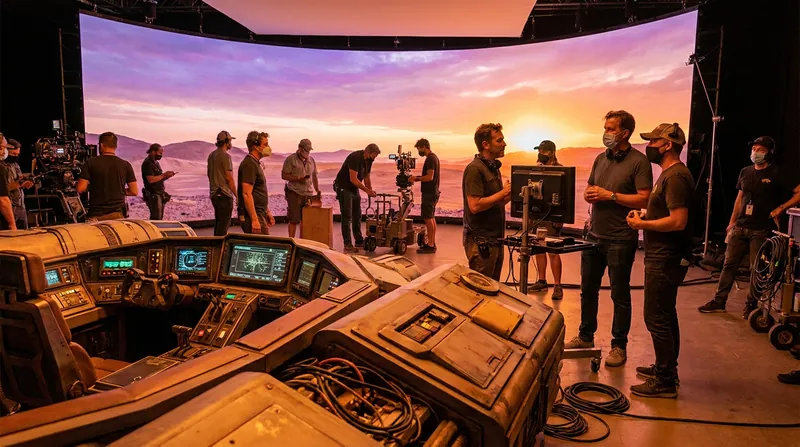
The mechanism behind this shift relies on advanced machine learning models trained specifically on cinematic data. Runway's Gen-4 model, for instance, has been optimized for depth of field, color grading, and lens characteristics, ensuring that generated footage seamlessly matches live-action video shot on professional cinema cameras. This allows a director to film actors in a practical, low-cost location—like a warehouse or a garage—and use AI to extend the set into a sprawling cyberpunk cityscape or a sweeping alien vista.[1]
Beyond environmental generation, AI is revolutionizing character animation and motion capture. Traditionally, integrating a CGI character into a live-action scene required expensive motion-capture suits, specialized studio space, and weeks of manual animation. Now, tools like Wonder Dynamics and Runway's Act-Two performance capture can extract realistic motion data directly from standard 2D video. A filmmaker can record an actor in normal clothing, and the software will automatically track their movements, map them onto a 3D model, and render the character with accurate lighting and shadows.[3]
Post-production workflows are also seeing massive efficiency gains. Tedious tasks that once consumed weeks of an assistant editor's time are now automated. DaVinci Resolve 19 features AI-powered tools like Magic Mask, which performs automatic rotoscoping—the process of isolating a subject from its background frame-by-frame. What used to take days of meticulous clicking can now be accomplished in seconds, freeing up editors to focus on the creative pacing of the narrative rather than technical drudgery.[2]
Audio, often the Achilles' heel of low-budget productions, has similarly benefited from AI intervention. Independent films frequently suffer from poor on-set sound due to lack of specialized equipment or noisy locations. Instead of renting a professional recording studio for Automated Dialogue Replacement (ADR), filmmakers are using platforms like ElevenLabs to clone their actors' voices. This allows directors to rewrite lines in post-production or fix muffled audio by generating studio-quality dialogue that perfectly matches the actor's original cadence and emotional tone.[3]
As these tools proliferate, a strategic divide has emerged in how filmmakers build their workflows: the "pipeline tool" versus the "point-tool stack." Pipeline platforms, such as LTX Studio and mStudio, offer an all-in-one environment that handles everything from script generation and storyboarding to video rendering and timeline editing. These platforms prioritize speed and workflow continuity, allowing a small team to manage an entire project under a single interface without constantly exporting and importing files.
Conversely, the point-tool stack approach involves combining best-in-class specialized software for each specific task. A director might use Sudowrite for script refinement, Midjourney for concept art, Runway Gen-4 for cinematic video generation, and Google Veo for synchronized audio. While this method requires more manual assembly and technical know-how, it yields the highest possible peak quality for individual shots, making it the preferred choice for filmmakers pushing the absolute boundaries of visual fidelity.
The economics of this new workflow are staggering. A professional subscription to Runway costs roughly $28 per month, providing enough generation capacity for a short film's VFX needs. Competing models like Vidu offer even lower costs, operating at three to five times less than premium tiers while still delivering highly usable footage. For an independent production requiring several minutes of complex visual effects, the total software expenditure might be under $200—a fraction of the tens of thousands of dollars traditionally required.[1]
This technological empowerment is already translating into mainstream distribution. The stigma surrounding AI-assisted filmmaking is fading as audiences prioritize compelling narratives over traditional production methods. In early 2026, the Frame Forward AI Film Festival announced that its winning animated shorts would receive a national theatrical release across 14,000 screens in 2,300 U.S. theaters. These films, created by small independent teams using AI tools, represent a historic milestone, proving that machine-assisted cinema can hold its own in traditional theatrical settings.
Despite the rapid advancements, challenges remain. The "black box" nature of some AI models has raised concerns about copyright and the ethical sourcing of training data. In response, a new wave of platforms is emerging that emphasizes licensed datasets and provides legal indemnity for creators. This ensures that independent filmmakers can secure distribution deals and festival placements without fear of intellectual property disputes, carving out a safe space for fearless experimentation.[4]
Furthermore, the sheer volume of content being generated means that discoverability is becoming the new bottleneck. With the technical barriers lowered, the market is flooding with high-quality visuals. Tools like OutlierKit are now being used in pre-production to analyze audience trends and ensure that AI-generated films actually find their target demographic, solving the problem of beautiful movies that nobody watches.
Ultimately, AI is not replacing the fundamental art of filmmaking. A generative model cannot dictate emotional pacing, subtext, or the thematic resonance of a story. The director's eye remains the most critical component of any production. What these tools provide is leverage—allowing a single visionary with a laptop to execute ideas that previously required an army.[4]
By shifting the bottleneck from capital to pure creativity, the film industry is entering a golden age of independent storytelling. Voices that were previously marginalized by the high costs of production now have the tools to visualize their most ambitious worlds, ensuring that the next great cinematic masterpiece might just come from a bedroom rather than a Hollywood backlot.[2][4]
Definitions
- Rotoscoping
- The traditionally manual process of tracing over live-action footage frame-by-frame to isolate a subject from its background.
- Pipeline Tool
- An all-in-one software platform that handles multiple stages of filmmaking, from scriptwriting to final video export, in a single workspace.
- Point-Tool Stack
- A workflow strategy that combines several specialized, best-in-class software applications for different tasks, requiring manual assembly of the final product.
- Automated Dialogue Replacement (ADR)
- The process of re-recording audio in a studio after filming to improve sound quality or change dialogue.
- Performance Capture
- Technology that records the movements and facial expressions of human actors to animate digital 3D characters.
Questions & answers
Can I copyright a film made with AI?
Yes, provided the film demonstrates significant human authorship. While purely AI-generated clips cannot be copyrighted, a film that uses AI as a tool within a human-directed narrative structure generally qualifies for protection.
Do these tools replace human actors?
No. Most professional AI workflows currently rely on human actors for performance, using AI to alter their environments, apply digital makeup, or translate their movements into 3D characters.
How much does it cost to use AI VFX?
Professional AI video generation platforms typically start around $28 to $35 per month, allowing filmmakers to produce several minutes of high-quality visual effects for a fraction of traditional costs.
Do I need a powerful computer to use these tools?
Generally, no. Most heavy AI generation is processed in the cloud, meaning filmmakers can produce complex visual effects using standard laptops.
Analysis by camp
Independent Filmmakers
Creators who view AI as a liberating force that removes financial barriers to storytelling.
For indie directors and small production teams, AI is the ultimate equalizer. They argue that the traditional Hollywood system gatekeeps ambitious storytelling by tying it to massive budgets. By utilizing tools like Runway and ElevenLabs, these creators can punch far above their weight class, producing sci-fi, fantasy, and historical pieces that would have been impossible a few years ago. Their primary focus is on how these tools expand creative freedom and allow them to retain ownership of their intellectual property without relying on studio financing.
AI Platform Developers
Technologists focused on improving workflow integration and cinematic fidelity.
Companies building these tools are heavily focused on moving past the 'gimmick' phase of generative AI. They argue that the future of the technology lies in granular control—allowing directors to adjust lighting, camera angles, and character consistency across multiple shots. Developers are increasingly prioritizing integrations with industry-standard software like Adobe Premiere and DaVinci Resolve, aiming to make AI an invisible, seamless part of the traditional post-production pipeline rather than a standalone novelty.
Traditional Studio Executives
Industry veterans navigating the economic and legal implications of democratized production.
While studios recognize the cost-saving potential of AI, they approach the indie democratization trend with cautious pragmatism. Their primary concerns revolve around copyright clarity, the ethical sourcing of training data, and maintaining a high bar for quality control. However, many executives acknowledge that the influx of high-quality indie films will likely change how studios scout talent and acquire projects, potentially shifting their role from primary financiers to distributors of independently produced, AI-assisted content.
- Independent Filmmakers
- Creators empowered by the removal of financial barriers to high-end visual storytelling.
- AI Platform Developers
- Technologists focused on workflow integration and maximizing cinematic fidelity.
- Industry Strategists
- Analysts tracking how democratized production changes distribution and audience reach.
Perspectives this story doesn't cover
- Traditional VFX Artists whose daily workflows are being fundamentally altered by automation.
- Entertainment Lawyers navigating the evolving landscape of AI copyright and distribution contracts.
Sources
Source coverage
4 outlets
3 viewpoints surfaced




- [1]FlowithAI Platform Developers
Runway vs Vidu: Which AI Video Generator is Best for Filmmakers?
Read on Flowith → - [2]TOI EntertainmentIndependent Filmmakers
The AI Tools Independent Filmmakers Are Actually Using in 2026
Read on TOI Entertainment → - [3]ShunyanantAI Platform Developers
10 Powerful AI Tools for Low-Budget Filmmaking
Read on Shunyanant → - [4]Factlen Editorial TeamIndustry Strategists
Synthesis by Factlen editorial team
Read on Factlen Editorial Team →
More in Entertainment
See all →Film Tech
The Science of the Scare: How Biometrics and AI Are Replacing the Hollywood Test Screening
2 sources
Box Office Trends
Original Storytelling and Mid-Budget Films Fuel Hollywood's 2026 Box Office Resurgence
3 sources
Film Tech
The $50,000 Blockbuster: How AI and Micro-Volumes Are Democratizing Hollywood
4 sources
Film Tech
The Tactile Renaissance: How Hollywood is Blending Practical Effects with LED Volumes
2 sources
Comments
Every angle. Every day.
Get Entertainment stories with full source coverage and perspective breakdowns, free every day.