
How AI Dubbing is Erasing Language Barriers in Global Streaming
Major streaming platforms are deploying advanced AI dubbing and real-time translation tools in 2026, allowing international shows to reach global audiences seamlessly. The technology preserves actors' original voice tones and lip movements, transforming how the world consumes cross-cultural entertainment.
By Jana Rami

In short
- Major streaming platforms are deploying AI dubbing that preserves an actor's original voice tone and emotion in translated languages.
- Advanced edge computing enables real-time lip-sync adjustments, making foreign content look natively filmed.
- The technology makes it economically viable to distribute independent and regional films to a global audience.
In 2026, the global streaming industry has crossed a technological threshold that is fundamentally changing how audiences consume entertainment. While the "streaming wars" of the early 2020s were defined by platform consolidation, aggressive pricing strategies, and raw subscriber counts, the current frontier is defined by a much more profound metric: universal accessibility. For decades, language barriers have served as the ultimate friction point in global entertainment, limiting the reach of international cinema and television to niche audiences willing to read subtitles or endure poorly synchronized dubbing.
Today, that friction is rapidly evaporating. Major streaming platforms are deploying advanced artificial intelligence to erase linguistic borders, transforming regional hits into global phenomena overnight. This shift is not merely a technical upgrade; it represents a democratization of storytelling that allows a viewer in the American Midwest to experience a Korean thriller or a Spanish romance exactly as the original director intended.[3]
The core of this breakthrough lies in the deployment of generative artificial intelligence for seamless, emotion-preserving dubbing and subtitling. Unlike the stiff, mismatched, and often unintentionally comical dubs of the past, modern AI audio tools analyze the original actor's vocal timbre, pitch, and emotional cadence. The software then generates a translated audio track that sounds remarkably like the original performer speaking a completely new language.
This means the subtle heartbreak in a French drama or the rapid-fire comedic timing of a Japanese sitcom is no longer lost in translation. Industry analysts note that AI-powered subtitling and dubbing are making it exponentially cheaper and faster to push shows into new international markets, fundamentally altering the economics of film and television distribution.[2][3]
Beyond just audio translation, the visual integration of these localized tracks is reaching unprecedented levels of sophistication. Advanced edge computing and global content delivery networks are enabling real-time, localized video adjustments that were previously the domain of high-end visual effects studios. Platforms are increasingly utilizing AI-driven lip-sync technology that subtly alters the on-screen actor's mouth movements to match the translated dialogue.
By processing these adjustments at the edge of the network, streaming services can deliver a frictionless, native-feeling viewing experience without buffering or latency issues. This technological synergy ensures that viewers are completely immersed in the narrative, entirely forgetting that the content was originally produced in a foreign language.[1][3]
This technological leap arrives precisely as the streaming market reaches an unprecedented level of global scale. The days of platforms relying solely on domestic audiences for growth are over. Industry analysts at Omdia project that Netflix alone will reach nearly 400 million subscribers worldwide by the end of 2031, maintaining a scale that exceeds any individual competitor.
Furthermore, Omdia forecasts that Netflix's monthly audience will exceed a staggering one billion views by 2027. This massive global footprint underscores why seamless localization is no longer a luxury, but a core operational necessity. When a platform's audience spans nearly every country on Earth, the ability to instantly translate and culturally adapt content becomes the primary engine for sustained engagement and subscriber retention.
The push for AI-driven localization is heavily backed by the sheer economic momentum of the global streaming sector. According to Ampere Analysis, global streaming subscription revenue is expected to top $200 billion by 2030, representing a 29 percent increase over a four-year period. With the United States market accounting for roughly half of that revenue but rapidly approaching saturation, platforms are aggressively looking to international markets for their next phase of growth.
Extracting greater value from existing global audiences requires a constant pipeline of fresh, high-quality content. By utilizing AI to break down language barriers, platforms can effectively multiply their existing content libraries, offering subscribers thousands of hours of international programming that suddenly feels local and accessible.
The democratization of storytelling enabled by this technology is reshaping the global entertainment hierarchy. Previously, only massive Hollywood blockbusters or heavily funded flagship series could afford the prohibitive costs of high-quality localization in dozens of languages. Independent films, regional dramas, and niche documentaries were often left behind, restricted to their native territories.
Now, AI-powered dubbing makes it economically viable to push lower-budget projects into the global spotlight. A critically acclaimed but underfunded indie film from Brazil can now seamlessly reach audiences in Germany, Japan, and the United States simultaneously. This levels the playing field, allowing stories to succeed based on their creative merit rather than the size of their localization budget.[2][3]
Alongside revolutionary translation tools, artificial intelligence is overhauling the notoriously frustrating process of content discovery. Roku's 2026 industry predictions highlight a persistent pain point: viewers previously spent an average of 20 minutes simply searching for their next watch, overwhelmed by the sheer volume of available content.
To combat this "subscription fatigue," platforms are rolling out a new wave of AI-driven personalization algorithms. These systems go far beyond basic genre recommendations, analyzing nuanced viewing habits to shrink discovery time dramatically. By matching users with highly specific international content they wouldn't have otherwise found—and presenting it in their native language—platforms are keeping viewers engaged longer and reducing churn rates.
The ripple effects of this technological boom are also trickling down to the rapidly expanding creator economy. As traditional television collides with digital-first content, streaming platforms are increasingly integrating creator-focused tabs and licensing models to capture younger demographics. Independent video creators, who previously relied on platforms like YouTube for global reach, are now finding lucrative homes on premium streaming services.
Crucially, these independent producers can leverage the exact same AI translation and dubbing tools used by legacy studios to globalize their own content. This convergence is blurring the lines between user-generated content and prestige television, creating a vibrant, borderless ecosystem of entertainment.[3]
While the technology represents a massive win for global accessibility, it has naturally sparked complex conversations within the entertainment industry, particularly among localization professionals and voice actors. The ability to digitally replicate an actor's voice in another language raises valid questions about consent, artistic integrity, and fair compensation. In response, major studios and streaming platforms are actively developing ethical licensing frameworks.
These new models ensure that original actors are compensated when their vocal likenesses are used to generate AI dubs, and that human voice actors remain integral to the process—often acting as "performance directors" who guide the AI's emotional output. This collaborative approach aims to harness the scale of AI while preserving the irreplaceable human element of performance.[3]
Ultimately, the erasure of language barriers in streaming represents one of the most profound cultural shifts of the digital age. By making international stories universally accessible, streaming platforms are doing more than just boosting their subscriber metrics; they are fostering a more interconnected and empathetic global audience.
Viewers are gaining unprecedented windows into the daily lives, histories, and imaginations of cultures they might never otherwise encounter. As AI dubbing and personalization continue to refine the viewing experience, the future of entertainment looks increasingly borderless, proving that great storytelling—no matter where it originates—possesses a universal language of its own.[3]
Key terms
- Generative AI Dubbing
- The use of artificial intelligence to create translated audio tracks that mimic the original actor's specific voice and emotional delivery.
- Content Delivery Network (CDN)
- A geographically distributed group of servers that work together to provide fast delivery of internet content, crucial for streaming high-quality video globally.
- Edge Computing
- Processing data closer to where it is being generated rather than in a centralized data center, reducing latency for real-time video adjustments.
- Subscription Fatigue
- Consumer frustration caused by having to manage and pay for too many individual streaming services to find desired content.
Frequently asked
How does AI dubbing differ from traditional dubbing?
Traditional dubbing uses separate voice actors to record translated dialogue, often resulting in mismatched lip movements and altered vocal tones. AI dubbing analyzes the original actor's voice and generates translated audio that matches their specific pitch, cadence, and emotion.
Will this technology replace human voice actors?
While AI automates much of the translation, major studios are developing frameworks where human actors act as 'performance directors' to guide the AI's emotional output, ensuring the human element is preserved and compensated.
Are streaming platforms altering the video as well as the audio?
Yes, some platforms are utilizing advanced edge computing to subtly alter an actor's on-screen mouth movements to match the translated dialogue, creating a seamless lip-sync effect.
Why are streaming services investing so heavily in this now?
With domestic markets reaching saturation, platforms need international growth to reach projected revenue goals. AI localization allows them to instantly offer their entire content library to global audiences without prohibitive translation costs.
Viewpoints in depth
Accessibility Advocates
Viewing AI dubbing as a democratizing force for global media consumption.
For accessibility advocates, the true value of AI dubbing lies in its ability to open up the world's media to everyone. Viewers with visual impairments, dyslexia, or other reading difficulties have long struggled with the rapid pace of subtitled international content. By providing high-quality, native-sounding audio tracks in dozens of languages, platforms are making global culture accessible to demographics that were previously excluded. Furthermore, advocates argue that this seamless translation fosters greater cultural empathy, as mainstream audiences are more likely to engage with foreign stories when the linguistic friction is removed.
Streaming Executives
Focusing on the economic imperatives of global scale and content efficiency.
From a corporate perspective, AI localization is the key to surviving the next decade of the streaming wars. With the North American market largely saturated, platforms must look to Asia, Latin America, and Europe for subscriber growth. Executives view AI dubbing as a massive cost-efficiency multiplier; instead of spending millions to produce new local content for every region, they can instantly localize their existing multi-billion-dollar libraries for a fraction of the cost. This allows them to extract maximum value from every production, turning regional investments into global assets overnight.
The Voice Acting Community
Advocating for ethical frameworks and fair compensation in the age of AI replication.
While acknowledging the technological marvel of AI dubbing, the voice acting community remains deeply concerned about the commodification of human performance. Labor unions and localization professionals argue that an actor's voice is their livelihood and unique artistic signature. They are pushing for strict ethical frameworks that require explicit consent before a vocal likeness can be digitally replicated in another language. Additionally, they advocate for residual compensation models, ensuring that the original performers share in the financial upside when their AI-generated voices help a show succeed in foreign markets.
- Accessibility Advocates
- Argue that AI dubbing democratizes content, allowing viewers with visual impairments or reading difficulties to enjoy international media.
- Streaming Executives
- Focus on the economic growth, global scale, and cost-efficiency of using AI tools to expand content libraries across borders.
- Voice Acting Community
- Emphasize the need for ethical AI frameworks, consent, and fair compensation when vocal likenesses are replicated in other languages.
Perspectives this story doesn't cover
- Traditional dubbing studios facing business model disruption
- Linguists concerned about the loss of regional dialects in standardized AI translations
Sources
Source coverage
3 outlets
3 viewpoints surfaced



- [1]CDNetworksStreaming Executives
8 Streaming Trends and Technologies in 2026
Read on CDNetworks → - [2]Hargreaves Lansdown
Will AI be good for streaming?
Read on Hargreaves Lansdown → - [3]Factlen Editorial TeamVoice Acting Community
Synthesis by Factlen editorial team
Read on Factlen Editorial Team →

More in Entertainment
See all →Live Sports Streaming
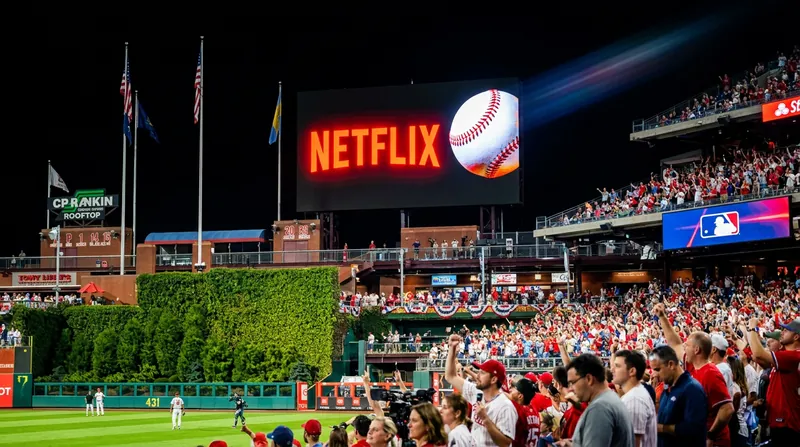
Netflix Secures Exclusive MLB Home Run Derby and Opening Night Rights in Major Live Sports Pivot
4 sources
Streaming Economics
Netflix Authorizes $25 Billion Stock Buyback, Eclipsing Content Spend in Major Industry Pivot
2 sources
Streaming Economics
Disney Agrees to $50 Million Antitrust Settlement Over ESPN Bundling, Must Consider Unbundling Networks
3 sources

Virtual Theater
The Global Stage: How Streaming Platforms Are Democratizing Access to Live Theater
6 sources

Comments
Every angle. Every day.
Get Entertainment stories with full source coverage and perspective breakdowns, free every day.