
How AI and Adaptive Hardware Made 2026 a Breakthrough Year for Gaming Accessibility
Driven by AI-assisted mods, standardized storefront tags, and new adaptive hardware, the video game industry has crossed a major threshold in making virtual worlds accessible to players of all physical abilities.
By Factlen Editorial Team
- Accessibility Advocates & Players
- Viewing accessibility as a fundamental right rather than a post-launch bonus.
- Hardware & Software Developers
- Treating inclusive design as a core technical and engineering challenge.
- Occupational Therapists & Nonprofits
- Focusing on the clinical application and psychological benefits of accessible gaming.
What's not represented
- · Indie developers struggling with the budget to implement complex accessibility features
Why this matters
For millions of disabled individuals, gaming is not just entertainment—it is a vital avenue for social connection, stress relief, and shared experiences that bypass physical world barriers. The mainstreaming of these tools means that physical or visual limitations no longer dictate who gets to participate in digital communities.
Key points
- The video game industry is shifting accessibility from a post-launch bonus to a core design expectation.
- Xbox expanded its inclusive hardware with new Adaptive Thumbstick Toppers and facial-expression controls.
- Blind players are leveraging AI tools to mod accessibility features into dozens of mainstream titles.
- A new study shows 84 percent of visually impaired gamers experience improved social interaction through play.
For decades, the video game industry treated accessibility as an optional bonus—a set of features patched in post-launch, if at all, for a niche audience. But in 2026, the landscape has fundamentally shifted. Driven by a convergence of artificial intelligence, modular hardware, and a unified push from advocacy groups, gaming accessibility has transitioned from a peripheral concern to a core design expectation. From the floors of the Consumer Electronics Show to the digital storefronts of major console manufacturers, the industry is dismantling the barriers that have long kept disabled players locked out of virtual worlds. This is no longer just about adding subtitles or colorblind filters; it is about rethinking how humans interface with digital environments from the ground up.[1][6]
The hardware ecosystem has seen some of the most visible leaps forward. In May 2026, coinciding with Global Accessibility Awareness Day, Microsoft expanded its already robust suite of inclusive tools. The company introduced new 3D-printable Adaptive Thumbstick Toppers, including a specialized 'Goal Post' shape designed to interface seamlessly with the Xbox Adaptive Joystick. Beyond physical hardware, Xbox rolled out native support for Cephable, a software platform that allows players with limited mobility to control games using voice commands, facial expressions, and subtle head movements tracked via a mobile or desktop app. These advancements allow players to bypass traditional gamepads entirely, translating a blink or a vocal cue into complex in-game actions.[2]
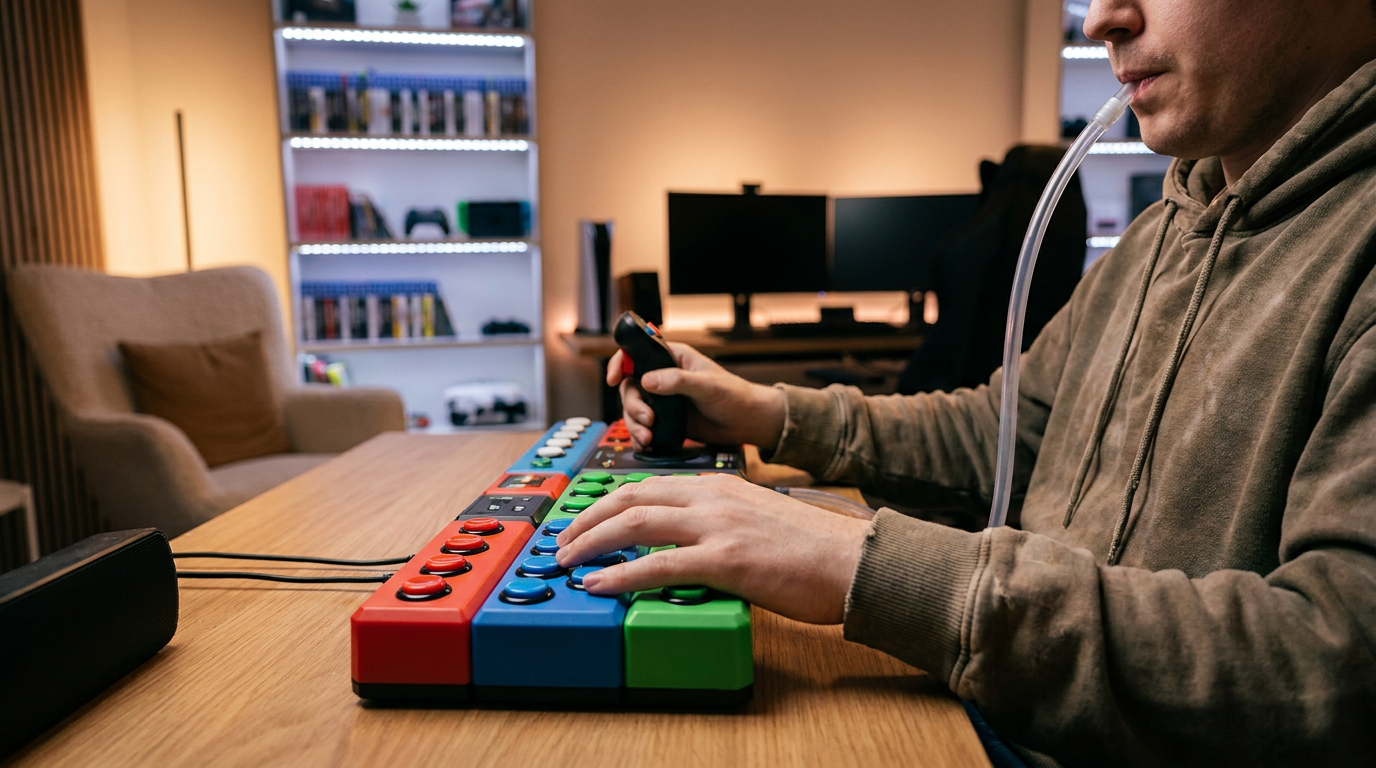
While massive corporations are building the platform-level infrastructure, specialized nonprofits and regional publishers are doing the crucial work of matching players with bespoke setups. In South Korea, Kakao Games recently received a commendation from the Gyeonggi Province governor for its 'Play Buddy Together' initiative. Over the past three years, the program has successfully matched 96 disabled players with 608 customized assistive devices, including the Tobii Eye Tracker 5 and the sip-and-puff QuadStick Mouse. By partnering with the National Rehabilitation Center, the publisher ensures that players receive clinical support to calibrate these complex devices, turning what could be an overwhelming technical hurdle into a seamless gateway to play.[1][7]

Similar hands-on work is being championed by organizations like SpecialEffect, a UK-based charity that deploys occupational therapists to the homes and hospitals of disabled gamers. At the Nordic Game 2026 conference, the organization showcased its 'Eye Gaze Games' initiative, a suite of mobile and browser experiences built specifically to be controlled by eye-tracking cameras, single-button switches, and adaptive joysticks. SpecialEffect's therapists assess individuals with complex physical challenges—ranging from spinal cord injuries to muscular dystrophy—and build custom control rigs that evolve as the player's condition or gaming preferences change. As the organization notes, there is a massive 'silent majority' of disabled individuals who have never identified as gamers simply because the door was never opened for them.[4]
But physical mobility is only one half of the accessibility equation; the other frontier is visual impairment. Historically, blind and low-vision players have had to rely on a sparse selection of audio-only games or titles with exceptionally robust screen-reader support. In 2026, artificial intelligence has dramatically accelerated the pace of inclusion. At the GAconf accessibility conference, advocates highlighted a sudden boom in AI-assisted modding, revealing that blind players and developers have successfully modded accessibility features into more than 50 mainstream games in just the past few months. These AI tools can read on-screen text, identify environmental hazards, and provide real-time audio descriptions of complex visual scenes, effectively translating visual user interfaces into navigable audio landscapes.[3]

But physical mobility is only one half of the accessibility equation; the other frontier is visual impairment.
The psychological and social impacts of these technological breakthroughs are profound. A 2026 study commissioned by Activision and conducted by the Royal National Institute of Blind People (RNIB) quantified the stakes: 84 percent of blind or partially sighted gamers reported that gaming significantly improved their social interactions, while 87 percent cited it as a crucial tool for stress relief. For many disabled individuals, virtual worlds offer a level playing field where the physical and transportation barriers of the offline world simply do not exist. Disability nonprofits have emphasized this point, noting that accessible gaming opens vital avenues for friendship, shared challenges, and community building that are often denied to disabled people in physical spaces.[1][5]

To ensure players can actually find the games they can play, the industry is also overhauling how it categorizes software. The newly formed Accessible Games Initiative (AGI) has begun rolling out a standardized taxonomy of accessibility tags across digital storefronts. Xbox has already integrated these tags, allowing users to filter the store for games that support specific features like co-pilot mode, high-contrast UI, or custom controller remapping. Advocates are currently pushing for Valve, PlayStation, and Nintendo to fully adopt the AGI standards, arguing that disabled players should not have to gamble their money on a game only to discover its control scheme is fundamentally incompatible with their physical needs.[1][6]
Ultimately, the push for gaming accessibility is mirroring the broader architectural concept of the 'curb cut effect'—the phenomenon where accommodations designed for disabled people end up benefiting everyone. Just as sidewalk ramps assist parents with strollers and delivery workers with carts, features like advanced motion control settings, highly customizable subtitles, and remappable inputs are being embraced by the wider gaming public. As developers increasingly view accessibility not as a post-launch patch but as a foundational pillar of game design, the medium is finally fulfilling its core promise: creating boundless virtual worlds where absolutely anyone can be the hero.[1][6]
How we got here
March 2023
Kakao Games launches the 'Play Buddy Together' initiative to distribute customized assistive devices.
January 2026
Industry leaders present the 'Gaming for All' panel at CES, signaling a major shift toward universal inclusive design.
May 2026
Xbox celebrates Global Accessibility Awareness Day by launching new Adaptive Thumbstick Toppers and Cephable voice support.
June 2026
Advocates at GAconf reveal that blind players have successfully used AI to mod accessibility into over 50 mainstream games.
Viewpoints in depth
Accessibility Advocates & Players
Viewing accessibility as a fundamental right rather than a post-launch bonus.
For disabled gamers, the push for accessibility is about tearing down artificial barriers to digital communities. Advocates emphasize that virtual worlds offer a unique space where physical limitations do not dictate participation, making gaming a crucial lifeline for social interaction. They are heavily focused on standardizing storefront tags so players know what they are buying, and they champion grassroots efforts—like AI-assisted modding—to force inclusion into titles where developers have lagged behind.
Hardware & Software Developers
Treating inclusive design as a core technical and engineering challenge.
Major platform holders and developers are increasingly viewing accessibility as a foundational pillar of game architecture. Rather than patching in features after a game is finished, studios are building native support for voice commands, eye-tracking, and modular controllers directly into their engines. For hardware engineers, the goal is interoperability—creating universal standards like the Xbox Adaptive Joystick that allow players to mix and match 3D-printed toppers, switches, and pedals to fit their exact physical needs.
Occupational Therapists & Nonprofits
Focusing on the clinical application and psychological benefits of accessible gaming.
Medical professionals and charitable organizations look at gaming through the lens of mental health and rehabilitation. Organizations like SpecialEffect and the RNIB highlight the profound psychological benefits of play, noting massive improvements in stress relief and social connection among disabled individuals. For occupational therapists, the challenge is highly individualized; they conduct one-on-one assessments to build bespoke control rigs, ensuring that complex medical conditions do not prevent a patient from experiencing the joy and agency of gaming.
What we don't know
- It remains unclear when major storefronts like Nintendo and PlayStation will fully adopt the standardized accessibility tags proposed by the AGI.
- The long-term impact of AI-generated audio descriptions on game performance and latency is still being tested in competitive environments.
Key terms
- Adaptive Controller
- A highly customizable video game controller designed primarily to meet the needs of gamers with limited mobility.
- Eye-Tracking
- Technology that monitors where a user is looking on a screen, allowing them to control a game's camera or cursor using only their eye movements.
- Screen Reader
- A software application that translates on-screen text and visual interface elements into synthesized speech.
- Sip-and-Puff Device
- An assistive technology that allows users to control a computer or game console by inhaling or exhaling into a specialized mouthpiece.
- Curb Cut Effect
- The phenomenon where accessibility features designed for disabled individuals end up benefiting the broader public.
Frequently asked
What is the Accessible Games Initiative (AGI)?
The AGI is a collective effort to create standardized accessibility tags on digital storefronts, helping disabled players easily identify if a game supports their specific needs before purchasing.
How is AI helping blind gamers?
Blind players and developers are using AI tools to mod mainstream games, enabling the software to read on-screen text, identify hazards, and provide real-time audio descriptions of the environment.
What new hardware did Xbox announce in 2026?
Xbox introduced new 3D-printable Adaptive Thumbstick Toppers and native support for Cephable, a platform that allows players to control games using voice commands and facial expressions.
Do these accessibility features benefit non-disabled players?
Yes. Much like the 'curb cut effect' in physical architecture, features like highly customizable controls, advanced subtitles, and motion-sickness toggles are widely used and appreciated by the general gaming audience.
Sources
Source coverage
7 outlets
3 viewpoints surfaced







[1]Thompson Tribune NewsAccessibility Advocates & Players
Gaming for All: The 2026 Accessibility Push
Read on Thompson Tribune News →[2]Xbox WireHardware & Software Developers
Xbox Celebrates Global Accessibility Awareness Day with Improved Adaptive Thumbstick Toppers and More
Read on Xbox Wire →[3]GAconfAccessibility Advocates & Players
Not just vibes: How Blind Players Are Modding Accessibility into Games with AI
Read on GAconf →[4]Nordic GameOccupational Therapists & Nonprofits
Accessibility Revolution! Gaming's New Frontier
Read on Nordic Game →[5]Royal National Institute of Blind PeopleOccupational Therapists & Nonprofits
Study: Gaming's Impact on Players Who Are Blind or Partially Sighted
Read on Royal National Institute of Blind People →[6]Factlen Editorial TeamOccupational Therapists & Nonprofits
Synthesis by Factlen editorial team
Read on Factlen Editorial Team →[7]Kakao GamesHardware & Software Developers
Play Buddy Together: Three Years of Assistive Device Support
Read on Kakao Games →
More in entertainment
See all 6 stories →Pixar Animation
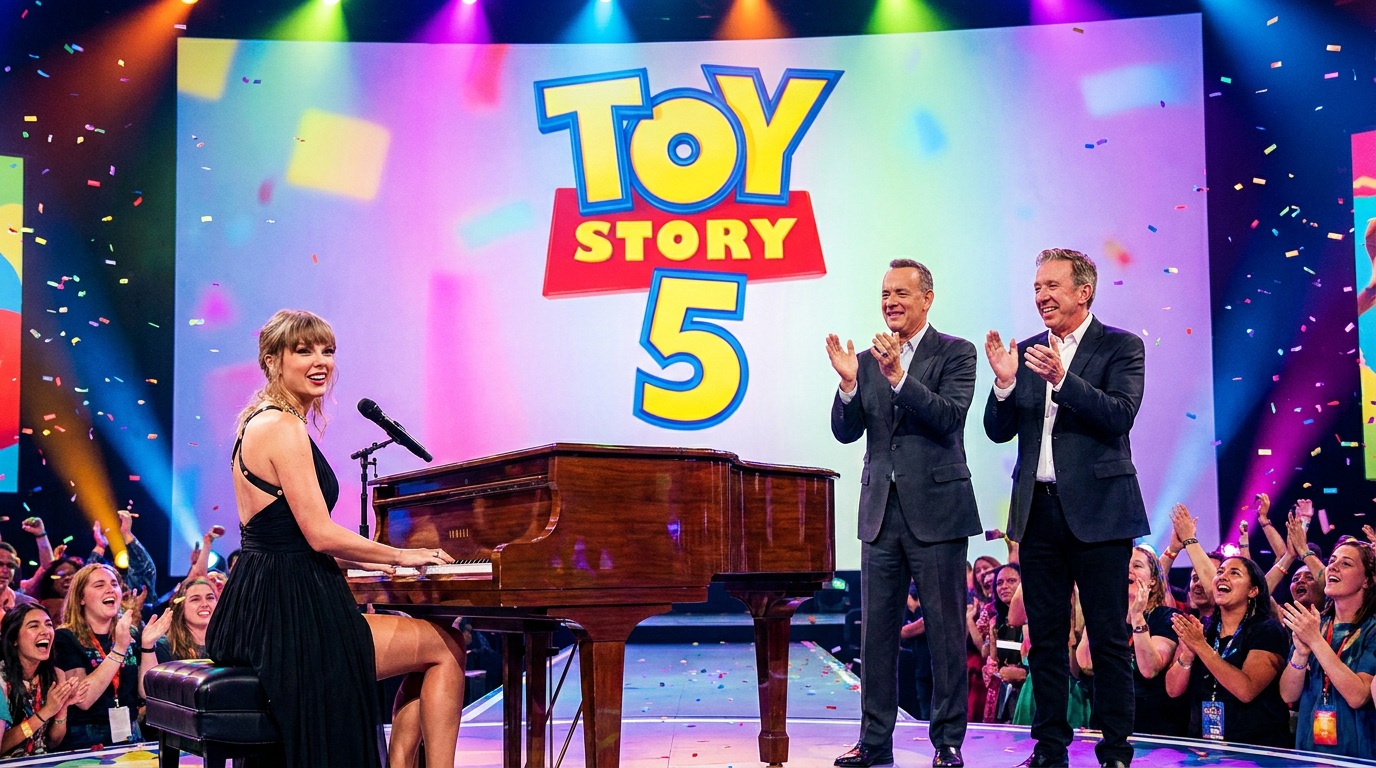
'Toy Story 5' Premieres to Critical Acclaim as Pixar Tackles the Screen-Time Era
0 sources

Toy Story 5
Toy Story 5 Premieres With Taylor Swift Original Song, Tackling the Modern Dilemma of Screen Time
0 sources
Awards History
The EGOT Explained: How Entertainment's Ultimate Crown is Actually Won
0 sources

Game Accessibility
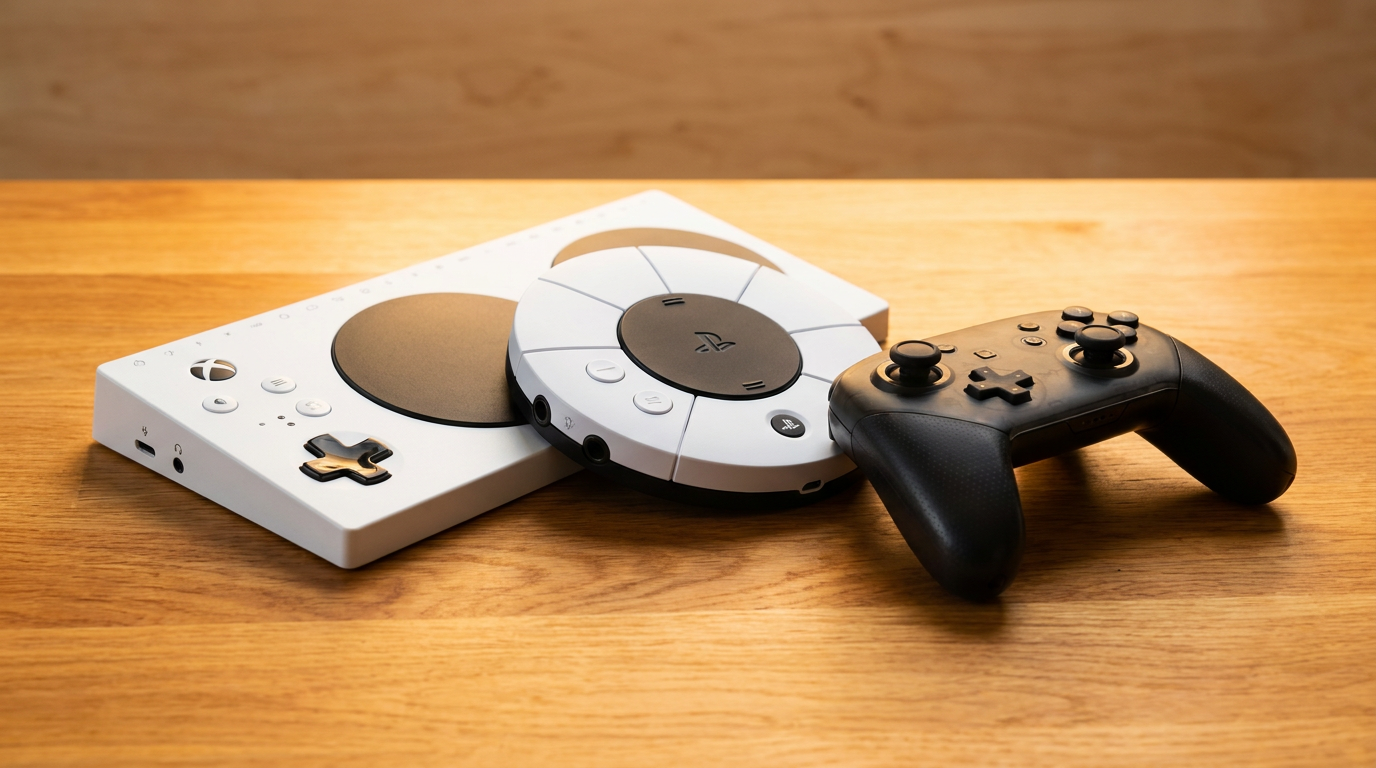
Gaming Giants Unite to Launch Universal Accessibility Standard Across All Consoles
0 sources
Every angle. Every day.
Get entertainment stories with full source coverage and perspective breakdowns delivered to your inbox.