
How Acoustic Enrichment and 'Super Corals' Are Rewriting Reef Restoration
Marine biologists are moving beyond traditional coral gardening, deploying underwater speakers and selectively bred heat-tolerant corals to rebuild reefs faster than they degrade.
By Factlen Editorial Team
- Marine Technologists
- Advocates for aggressive, high-tech interventions to actively manage and adapt reef ecosystems.
- Ecological Traditionalists
- Emphasizes that technological fixes are secondary to the primary goal of halting global carbon emissions.
- Local Conservation Communities
- Focuses on scalable, low-cost restoration methods that empower local populations and utilize traditional knowledge.
What's not represented
- · Commercial Fishing Industry
- · Coastal Tourism Operators
Why this matters
Coral reefs support a quarter of all marine species and provide food and coastal protection for a billion people. As climate change pushes these ecosystems to the brink, these new restoration technologies are the difference between total ecological collapse and the survival of the oceans' most vital habitats.
Key points
- Traditional coral gardening is struggling to keep pace with accelerating marine heatwaves, prompting a shift to active interventions.
- Broadcasting healthy reef sounds through underwater speakers can increase coral larval settlement by up to seven times.
- Scientists have successfully bred adult corals for enhanced heat tolerance, proving resilience can be passed down in one generation.
- Microfragmentation techniques allow researchers to accelerate coral growth by up to 50 times the natural rate.
- While these technologies buy crucial time, experts warn they cannot replace the need to reduce global carbon emissions.
For the past decade, marine biologists attempting to save the world's coral reefs have relied heavily on a straightforward, labor-intensive method known as coral gardening. Divers would break off fragments of healthy coral, grow them in underwater nurseries, and manually glue them back onto degraded reefs. It was a noble effort, but as ocean temperatures have continued to shatter historical records, the limitations of this passive approach have become starkly apparent. Traditional restoration is simply struggling to keep pace with the accelerating frequency of marine heatwaves, with survival rates for conventionally transplanted corals often plateauing around 30 to 40 percent.[7]
The realization that we cannot simply replant the same vulnerable species into a fundamentally altered ocean has sparked a quiet revolution in marine conservation. Scientists are pivoting away from basic transplantation and embracing a suite of active, high-tech interventions designed to engineer resilience. This new paradigm, broadly categorized as "assisted evolution" and active sensory manipulation, treats the reef not just as a garden to be seeded, but as a complex biological machine that can be hacked, coaxed, and upgraded to withstand the climate of the 21st century.[7]
At the forefront of this shift is a profound rethinking of how coral ecosystems naturally regenerate. Corals may appear to be static, rock-like structures, but in their earliest stages of life, they are highly mobile. Coral larvae are free-swimming, microscopic organisms that drift through the open ocean for days or weeks, desperately searching for a suitable place to anchor themselves and begin building a colony. For years, scientists assumed this settlement process was largely driven by chemical cues or ocean currents. But recent discoveries have revealed that these tiny organisms are listening to the ocean.[7]
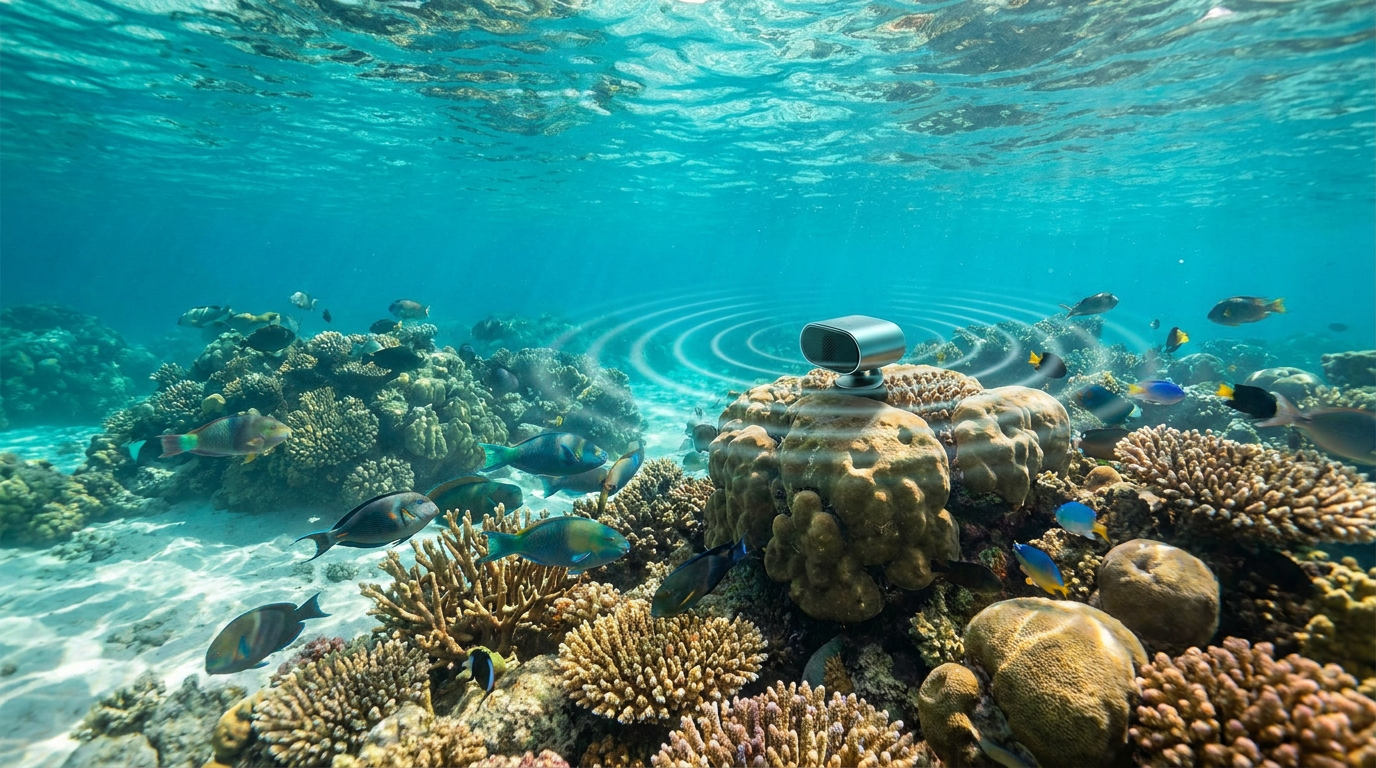
A healthy coral reef is one of the loudest environments on earth. It is a cacophony of biological noise—the persistent, frying-bacon crackle of snapping shrimp, the low grunts and clicks of feeding fish, and the scraping of parrotfish beaks against calcium carbonate. This acoustic signature acts as an underwater beacon, broadcasting a signal of health and biodiversity for miles in every direction. Conversely, a degraded or bleached reef is eerily silent, offering no auditory invitation to passing marine life.[1][7]

Recognizing this sensory dynamic, researchers have begun deploying underwater speaker systems to artificially recreate the soundscape of a thriving ecosystem. This technique, known as acoustic enrichment, aims to trick drifting larvae into settling on degraded patches of rubble that they would otherwise bypass. In a landmark 2024 study, researchers at the Woods Hole Oceanographic Institution (WHOI) demonstrated the remarkable efficacy of this approach. By broadcasting the sounds of a vibrant reef, they were able to significantly influence the behavior of golfball coral larvae.[1]
The WHOI team discovered that the acoustic cues are highly time-sensitive. Golfball coral larvae exposed to healthy reef audio settled at significantly higher rates during their first 36 hours in the water. After that critical window closed, the larvae became desperate to settle anywhere, and the auditory cues lost their influence. This finding proved that sound is a primary driver of habitat selection during the most vulnerable phase of a coral's life cycle, offering conservationists a powerful new tool to direct repopulation efforts exactly where they are needed most.[1]
The success of acoustic enrichment is not limited to a single species. Parallel field research published by the Royal Society evaluated the settlement rates of Porites astreoides, a common brooding coral. When exposed to a custom solar-powered acoustic playback system, these larvae settled at rates averaging 1.7 times higher than on silent control reefs, with localized spikes reaching up to seven times the normal settlement volume. The acoustic pull remained effective at distances up to 30 meters from the speaker, proving that sound can blanket a meaningful ecological footprint.[2]
Crucially, the underwater speakers do more than just attract coral. They also draw in juvenile fish across multiple trophic levels, including the herbivores that graze on macroalgae. If algae are left unchecked, they can quickly overgrow and smother newly settled corals. By using sound to recruit a cleanup crew of fish, acoustic enrichment jumpstarts a positive feedback loop: the fish keep the substrate clean for the corals, the corals grow to provide habitat for the fish, and the maturing ecosystem eventually begins generating its own authentic biological noise.[2][7]
Crucially, the underwater speakers do more than just attract coral.
Yet, coaxing corals to settle on a degraded reef is only the first hurdle; ensuring they survive the next inevitable marine heatwave is the ultimate challenge. This is where the science of assisted evolution enters the frame. Marine biologists are actively scouring the globe for "super corals"—rare genetic outliers that have demonstrated an exceptional, natural ability to withstand extreme thermal stress without bleaching.[3][7]

In April 2025, a series of expeditions supported by UNESCO identified a vital stronghold of these super corals in the Tatakoto atoll of French Polynesia. Located over 1,000 kilometers from Tahiti, the atoll features environmental conditions characterized by intense heatwaves and extreme temperature fluctuations that would normally decimate a reef. Yet, the local coral populations were found to be thriving. Scientists are now conducting assisted migration trials, moving cuttings from Tatakoto to other archipelagos to determine if their remarkable heat resistance is a permanent genetic trait that can be utilized globally.[3]
Finding naturally resilient corals is a massive step forward, but researchers are not stopping there. They are actively cross-breeding these robust survivors in controlled laboratory settings to amplify their thermal tolerance. At Newcastle University’s Coralassist Lab, scientists recently achieved a historic breakthrough by successfully breeding adult corals specifically for enhanced heat resistance. By simulating severe marine heatwaves in the lab, they identified the strongest individuals and facilitated their reproduction.[4]
The results from the Coralassist trials were highly encouraging. The offspring of the heat-tolerant parents consistently outperformed standard corals when exposed to elevated temperatures, proving that selective breeding can measurably enhance thermal resistance in just a single generation. While the researchers caution that this genetic boost is not a silver bullet—it cannot outpace the most extreme climate projections if emissions remain unchecked—it provides a critical buffer, raising the biological ceiling of what these ecosystems can endure.[4][7]
To deploy these genetically fortified super corals at a meaningful scale, conservationists are relying on a technique called microfragmentation. Because corals grow agonizingly slowly in the wild, rebuilding a reef through natural growth could take decades. However, scientists discovered that when a coral is cut into tiny, one-centimeter squares using a specialized diamond-blade saw, the animal's natural healing response goes into overdrive.[6][7]

These micro-fragments channel all their energy into rapid tissue regeneration, growing up to 50 times faster than they would under normal conditions. When placed near each other on a substrate, fragments from the same parent colony will eventually fuse back together, creating a massive, sexually mature coral head in a fraction of the natural time. This technique allows labs to mass-produce thousands of heat-resilient clones from a single super coral specimen in a matter of months.[6][7]
Scaling up also requires mobilizing the reproductive power of the corals themselves. The Great Barrier Reef Foundation has pioneered a method known as "Coral IVF" to maximize the yield of natural spawning events. During the annual mass spawning, researchers capture millions of excess eggs and sperm from healthy reefs. Instead of leaving them to the mercy of ocean currents and predators, the spawn is reared in specially designed floating nursery pools until the larvae are strong enough to be delivered directly onto damaged reef tracts.[5]
The implementation of these advanced techniques is also evolving to become more sustainable and community-focused. In the United Arab Emirates, experts from the International Union for Conservation of Nature (IUCN) are blending cutting-edge microfragmentation with indigenous cultural practices. Rather than using synthetic plastics or concrete for artificial reefs, they are propagating corals on locally sourced natural stones, palm leaves, and oyster shells. This hybrid approach reduces waste, lowers costs, and empowers local communities to take an active role in marine stewardship.[6]
The synthesis of acoustic enrichment, selective breeding, and rapid propagation represents a new frontier in ocean conservation. We are no longer passive observers hoping for natural recovery; we are actively managing the acoustic and genetic landscape of the seabed. These interventions are complex, labor-intensive, and require significant funding, but they are currently the most viable strategy to prevent the total collapse of shallow-water tropical reefs.[7]
Ultimately, marine biologists are clear-eyed about the reality of the climate crisis. No amount of underwater audio or selective breeding can save coral reefs if global temperatures rise by 2.5 or 3 degrees Celsius. These technological breakthroughs are not a replacement for the urgent need to decarbonize the global economy. However, they are a vital insurance policy. By engineering resilience today, scientists are buying the world's most biodiverse marine ecosystems the time they need to survive until the climate stabilizes.[7]
How we got here
1997-1998
The first recorded global mass coral bleaching event devastates reefs worldwide, prompting early restoration efforts.
2014
Microfragmentation emerges as a viable technique, allowing slow-growing corals to be cultivated rapidly in nurseries.
2019
Early field studies in Australia prove that acoustic enrichment can double the abundance of juvenile fish on degraded reefs.
2024
Researchers at the Woods Hole Oceanographic Institution demonstrate that acoustic playback significantly increases the settlement rates of multiple coral species.
2025
Breakthroughs in selective breeding and the discovery of naturally heat-resistant 'super corals' in French Polynesia offer new genetic stock for warming oceans.
Viewpoints in depth
Marine Technologists
Advocates for aggressive, high-tech interventions to actively manage and adapt reef ecosystems.
This camp argues that passive conservation—simply protecting areas from fishing and pollution—is no longer enough in a rapidly warming world. They champion assisted evolution, acoustic enrichment, and genetic mapping as essential tools to engineer resilience. Their view is that we must actively guide the adaptation of marine ecosystems because natural evolutionary processes are too slow to keep pace with anthropogenic climate change.
Ecological Traditionalists
Emphasizes that technological fixes are secondary to the primary goal of halting global carbon emissions.
While supportive of restoration research, this perspective warns against 'techno-optimism' that might distract from the root cause of reef decline: burning fossil fuels. They argue that super corals and acoustic enrichment are merely life support systems. If ocean temperatures continue to rise unchecked and acidification worsens, even the most heavily engineered and selectively bred corals will eventually succumb.
Local Conservation Communities
Focuses on scalable, low-cost restoration methods that empower local populations and utilize traditional knowledge.
For the communities that rely on reefs for food and coastal protection, the priority is accessibility. They advocate for blending modern science with indigenous practices—such as using natural stones and oyster shells for coral propagation—rather than relying solely on expensive lab-based technologies. This camp emphasizes that successful restoration must be community-led, utilizing local volunteer networks and eco-tourism operators to scale up efforts like Coral IVF.
What we don't know
- Whether selectively bred 'super corals' will maintain their heat resistance over multiple generations in the wild.
- The exact maximum distance at which acoustic enrichment can effectively draw in coral larvae across different ocean currents.
- How artificial acoustic interventions might inadvertently affect the behavior of non-target marine species.
Key terms
- Acoustic Enrichment
- The practice of playing recordings of healthy reef sounds through underwater speakers to attract marine life to degraded habitats.
- Assisted Evolution
- Human intervention to accelerate the natural adaptation of species, such as selectively breeding corals for heat tolerance.
- Coral Bleaching
- A stress response where corals expel the symbiotic algae living in their tissues, turning them completely white and leaving them vulnerable to starvation.
- Coral IVF
- A restoration technique that involves capturing coral eggs and sperm during mass spawning, fertilizing them in controlled pools, and releasing the larvae back onto reefs.
- Microfragmentation
- A method of cutting corals into very small pieces to stimulate rapid growth and tissue regeneration.
Frequently asked
What is a 'super coral'?
A coral that has either naturally adapted to survive higher ocean temperatures or has been selectively bred in a lab to possess enhanced thermal resistance.
How do corals 'hear' underwater?
While they lack ears, free-swimming coral larvae have tiny sensory hairs that can detect the acoustic vibrations and pressure waves created by fish and snapping shrimp on a healthy reef.
What is microfragmentation?
A technique where corals are cut into tiny pieces (about 1 square centimeter). This triggers a rapid healing response, causing the coral to grow up to 50 times faster than its normal rate.
Can these technologies save reefs from climate change?
Not entirely on their own. Scientists emphasize that while these tools buy crucial time and boost resilience, global carbon emissions must still be reduced to stop ocean temperatures from exceeding the corals' absolute limits.
Sources
Source coverage
7 outlets
3 viewpoints surfaced






[1]Woods Hole Oceanographic InstitutionMarine Technologists
Using successful techniques from an earlier study, acoustic enrichment continues to show promise
Read on Woods Hole Oceanographic Institution →[2]Royal Society PublishingMarine Technologists
Acoustic enrichment increases coral larval settlement on a degraded reef
Read on Royal Society Publishing →[3]UNESCOLocal Conservation Communities
Heat-resistant 'super corals': a source of hope for the future of coral reefs?
Read on UNESCO →[4]Sustainability TimesMarine Technologists
Scientists create heat-resistant super corals that could save entire marine ecosystems from collapse
Read on Sustainability Times →[5]Great Barrier Reef FoundationLocal Conservation Communities
Coral IVF and Cryopreservation: Restoring the Reef
Read on Great Barrier Reef Foundation →[6]IUCNLocal Conservation Communities
Blending tradition with innovative restoration in the UAE
Read on IUCN →[7]Factlen Editorial TeamEcological Traditionalists
Synthesis by Factlen editorial team
Read on Factlen Editorial Team →
Every angle. Every day.
Get environment stories with full source coverage and perspective breakdowns delivered to your inbox.