
GPS Pet Trackers vs. AirTags: Which Device Actually Keeps Your Pet Safe?
As pet technology advances in 2026, owners face a choice between the low-cost convenience of Apple AirTags and the premium, real-time safety of dedicated cellular GPS trackers. The right choice depends entirely on your pet's lifestyle, your budget, and where you live.
By Factlen Editorial Team
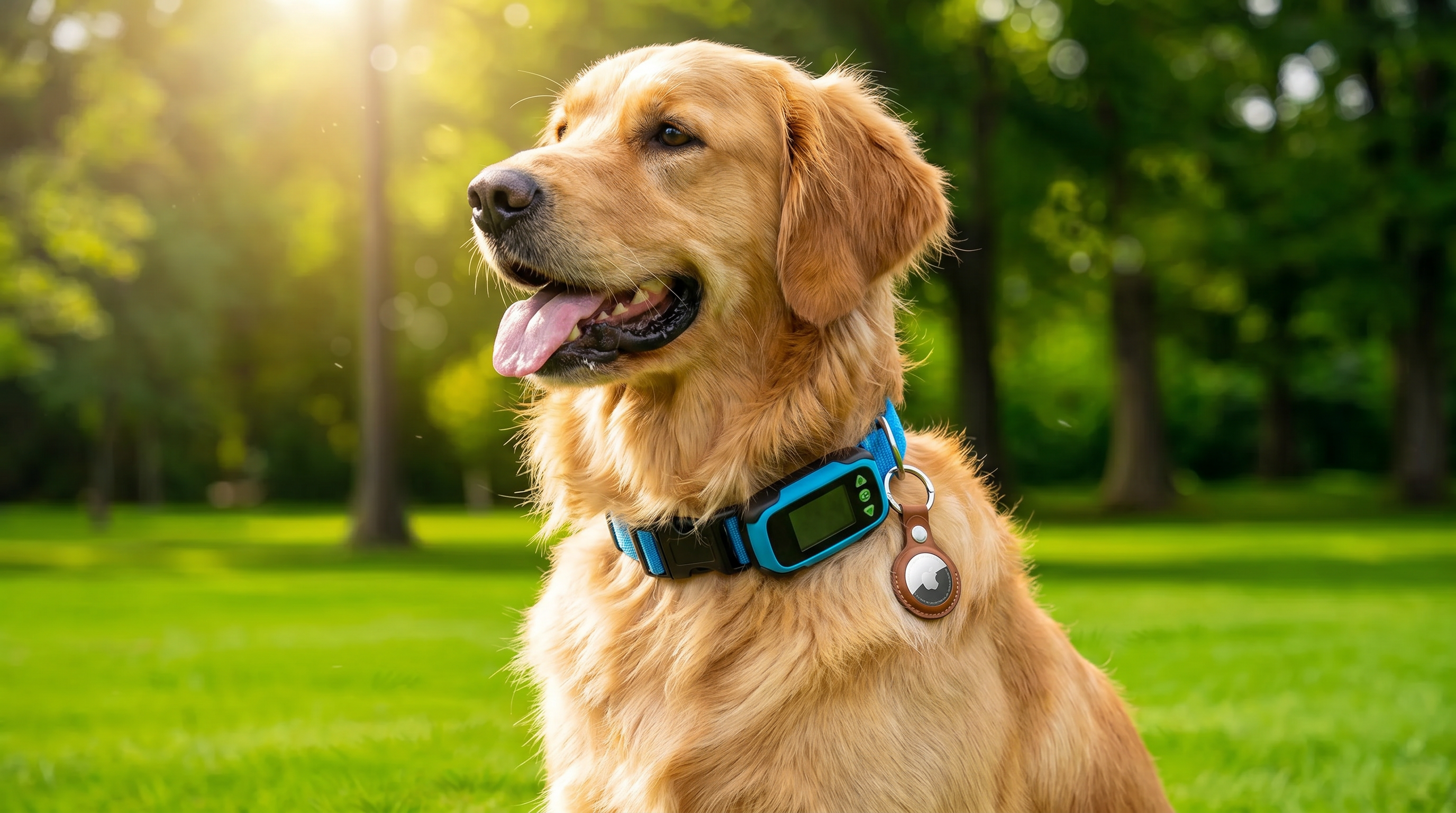
- Active & Rural Owners
- Prioritize real-time satellite tracking, unlimited range, and proactive escape alerts.
- Urban Pet Owners
- Value low cost, zero-maintenance battery life, and rely on dense city networks.
- Tech & Hardware Analysts
- Focus on the fundamental technology differences and hardware limitations.
What's not represented
- · Veterinary professionals discussing the safety of collar attachments
- · Animal shelter workers relying on microchips over consumer trackers
Why this matters
Choosing the wrong tracking device can mean the difference between a quick reunion and a permanently lost pet. Understanding the technological limits of Bluetooth versus cellular GPS ensures owners don't rely on a city-bound gadget in the wilderness or overpay for features they don't need.
Key points
- Apple AirTags use Bluetooth and the Find My network, making them highly effective in cities but useless in rural areas.
- Dedicated GPS trackers use cellular networks to provide real-time location updates and proactive escape alerts anywhere with a signal.
- AirTags cost a flat $29 and boast a one-year battery life, offering unmatched convenience and affordability.
- GPS trackers require a $50 to $150 upfront investment plus a $7 to $13 monthly subscription, and must be charged regularly.
- The 11-gram AirTag is ideal for cats and small dogs, while 35-gram GPS trackers are better suited for medium to large active breeds.
- Neither device replaces a traditional microchip, which remains the permanent standard for identifying lost pets at shelters.
As pet ownership continues to rise globally in 2026, the technology designed to keep our companions safe has evolved from simple microchips to sophisticated digital safety nets. Losing a pet is a universally distressing experience, prompting millions of owners to seek out wearable tech that can provide immediate peace of mind. The market has rapidly bifurcated into two distinct philosophies: repurposing ubiquitous Bluetooth item finders or investing in dedicated cellular tracking collars. Navigating this landscape requires understanding that these devices are not interchangeable; they are built on fundamentally different technologies designed to solve different problems.[7]
The core debate centers on whether to attach a $29 Apple AirTag to a pet's collar or to invest in a dedicated cellular GPS tracker, such as the Tractive Dog 6 or the Fi Series 3+. Pet owners often view these as direct competitors, but tech analysts emphasize that comparing them is like comparing a local neighborhood watch to a dedicated satellite surveillance system. Each approach carries distinct trade-offs regarding cost, convenience, range, and proactive safety features.[2][4]
When evaluating the Apple AirTag, the primary argument for its use is unmatched cost and convenience. At a flat rate of roughly $30 with zero monthly subscription fees, it offers a massive financial advantage over dedicated trackers. The evidence for its convenience is clear in its battery life and form factor: a standard CR2032 coin battery powers the device for up to a year without any charging routine, and it weighs a mere 11 grams. For many owners, this makes the AirTag a simple, set-and-forget safety backup that easily attaches to any collar without weighing the animal down.[4][6]

However, the argument against the AirTag is its fundamental technological limitation. It is not a true GPS device; it relies entirely on Bluetooth and the proximity of other Apple devices on the Find My network. The evidence shows that while this works brilliantly in dense cities, it fails entirely in remote areas. If a dog wanders into a rural landscape, a dense forest, or any location where iPhones are absent, the tracker becomes effectively useless. Furthermore, AirTags do not offer proactive geofencing; they will not alert an owner the moment a pet escapes the yard, meaning the owner only discovers the pet is missing when they actively check the app.[3][5]
Conversely, the argument for dedicated GPS trackers centers on absolute range and proactive safety. Devices like Tractive and Fi utilize cellular LTE-M networks and satellite positioning, meaning they can locate a pet anywhere with a cell signal, regardless of whether another human is nearby. The evidence for their superiority in emergencies lies in their software: they offer real-time, two-second location updates and proactive geofencing that instantly alerts owners if a pet breaches a designated safe zone. For an actively escaping dog, this real-time cellular connection is often the difference between a quick retrieval and a prolonged search.[1][2]
Conversely, the argument for dedicated GPS trackers centers on absolute range and proactive safety.
The argument against dedicated GPS trackers, however, is the ongoing financial and logistical burden. Owners must pay between $50 and $150 upfront for the hardware, and then commit to a $7 to $13 monthly subscription to maintain the cellular connection. Over three years, a GPS tracker can cost upwards of $350, compared to the AirTag's $29. Additionally, the evidence points to a significant maintenance trade-off: GPS trackers require regular charging, with batteries lasting anywhere from two days to a month depending on the model and usage. They are also noticeably bulkier, often weighing 35 grams or more, which can be cumbersome for cats or toy dog breeds.[2][4]

Another argument against subscription-based GPS trackers is the inherent platform risk associated with proprietary hardware. The evidence for this risk materialized in late 2025 when Whistle, a major player in the pet GPS market, permanently shut down its services. This closure effectively bricked thousands of devices, leaving owners with useless hardware and demonstrating that a tracker is only as reliable as the company maintaining its servers. In contrast, the Apple AirTag relies on the decentralized Find My network, which is deeply integrated into the global iOS ecosystem and carries virtually zero risk of sudden discontinuation.[4][7]
Beyond simple location tracking, the evidence for dedicated GPS devices extends into canine health and wellness. Modern premium trackers have evolved into comprehensive health monitors, utilizing onboard sensors to track a pet's daily activity levels, sleep quality, and behavioral anomalies. By establishing a baseline for a specific dog, these devices can alert owners to potential health issues—such as increased scratching or lethargy—before clinical symptoms appear. Bluetooth item finders, designed primarily to locate lost keys or luggage, offer absolutely none of these biometric insights.[1][5]

Ultimately, neither device is a universal winner; the right choice depends entirely on geography, budget, and the specific pet's lifestyle. The Apple AirTag fits well when you live in a dense urban or suburban environment where iPhones are ubiquitous, your pet is small or mostly indoors, and you want a low-cost, zero-maintenance backup. It does not fit well when you live in a rural area, hike frequently, or have an escape-prone dog that requires immediate, proactive alerts.[3][6]
On the other hand, a dedicated cellular GPS tracker fits well when you have a highly active dog, live near open country, or prioritize real-time peace of mind over budget constraints. It is the only reliable choice for off-lead adventures in nature. It does not fit well when you are unwilling to pay a monthly subscription, if you struggle to remember to charge daily devices, or if the bulkier hardware is simply too heavy for a small cat or toy breed to wear comfortably.[2][4]
How we got here
April 2021
Apple releases the AirTag, and pet owners immediately begin attaching them to collars despite Apple's warnings that they are for items, not pets.
2023–2024
Dedicated GPS trackers upgrade to LTE-M cellular networks, significantly improving battery life and real-time accuracy.
August 2025
Whistle, a major GPS tracker brand, shuts down its services, highlighting the platform risk of subscription-based hardware.
June 2026
The market solidifies into two distinct camps: cheap Bluetooth trackers for cities and premium cellular GPS for active dogs.
Viewpoints in depth
Urban Pet Owners
Prioritize low costs and zero-maintenance devices in dense environments.
For city dwellers, the density of smartphones turns the Apple AirTag into a highly effective tracking tool. Because the Find My network relies on passing devices, an escaped dog in a busy metropolis will ping its location almost constantly. These owners argue that paying a monthly cellular subscription is unnecessary when the local population provides a free, crowdsourced network. The 11-gram weight and year-long battery life perfectly suit indoor pets that only occasionally slip out the front door.
Active & Rural Owners
Demand real-time satellite tracking and proactive alerts regardless of cost.
Owners who hike, hunt, or live in rural areas view Bluetooth trackers as dangerously inadequate. In environments where the nearest smartphone might be miles away, an AirTag provides zero utility. This camp argues that the $7 to $13 monthly subscription for a dedicated GPS tracker is a mandatory insurance policy. They rely heavily on proactive geofencing to alert them the second a dog leaves a property, and they require the unlimited range of cellular LTE-M networks to track a moving animal in real-time.
Tech & Hardware Analysts
Focus on the fundamental engineering differences between item finders and live trackers.
Technology reviewers emphasize that consumers often misunderstand what they are buying. They point out that Apple explicitly designed the AirTag to track inanimate objects like keys and luggage, not living, moving animals. Analysts argue that while the AirTag is a marvel of low-power Bluetooth engineering, it lacks the two-way communication required for true safety. They advocate for consumers to treat GPS trackers as active security systems and AirTags as passive recovery tags.
What we don't know
- Whether Apple will ever release a dedicated pet-tracking device or officially support pet features in the Find My network.
- How the rollout of advanced 5G networks will impact the battery life and form factor of future GPS trackers.
Key terms
- Bluetooth Tracking
- A short-range wireless technology that relies on proximity to a smartphone to determine a device's location.
- Find My Network
- Apple's crowdsourced network of hundreds of millions of devices that securely relay the location of nearby AirTags.
- Geofencing
- A feature in GPS trackers that allows owners to draw a virtual boundary on a map and receive an alert if the pet crosses it.
- LTE-M
- A low-power cellular network used by modern GPS trackers to transmit location data over long distances without draining the battery instantly.
Frequently asked
Can I use an AirTag to track my dog in the woods?
No. AirTags rely on nearby Apple devices to update their location, making them highly ineffective in remote areas without cell service or foot traffic.
Do GPS pet trackers require a monthly fee?
Yes. Most dedicated GPS trackers require a subscription ranging from $7 to $13 per month to cover the cellular data connection required for real-time tracking.
Which tracker is better for cats or small dogs?
The Apple AirTag is often preferred for small pets due to its 11-gram weight, whereas many GPS trackers weigh 35 grams or more and can be too bulky.
Will an AirTag alert me if my dog leaves the yard?
No. AirTags do not offer proactive geofencing or escape alerts; they only show the location when you actively check the Find My app.
Sources
Source coverage
7 outlets
3 viewpoints surfaced







[1]PCMagTech & Hardware Analysts
The Best GPS Pet Trackers for 2026
Read on PCMag →[2]AirpinpointActive & Rural Owners
AirTags vs Tractive 2026: Pet Tracker vs Asset Tracker
Read on Airpinpoint →[3]PetLinkTech & Hardware Analysts
Apple AirTag vs. GPS Pet Trackers: Which Is Better for Pet Safety?
Read on PetLink →[4]PatifyAppUrban Pet Owners
2026 Dog GPS Tracker Comparison: Best & Cheapest Models Reviewed
Read on PatifyApp →[5]PawvaActive & Rural Owners
Tile or AirTags for Dogs Vs GPS Pet Tracker for Your Furry Escape Artist
Read on Pawva →[6]Slade CzechUrban Pet Owners
Pet on the Radar: How (and If) AirTag Works for Tracking Your Furry Escape Artist
Read on Slade Czech →[7]Factlen Editorial TeamTech & Hardware Analysts
Synthesis by Factlen editorial team
Read on Factlen Editorial Team →

More in shopping
See all 5 stories →

Every angle. Every day.
Get shopping stories with full source coverage and perspective breakdowns delivered to your inbox.