
Google Discontinues Nest Speakers to Launch Gemini-Powered 'Google Home Speaker'
Google has officially ended production of its Nest Home Mini and Nest Audio devices, replacing them with a new $100 smart speaker built entirely around its Gemini AI. The shift marks the end of the traditional Google Assistant era, introducing natural-language commands and a new premium subscription model for advanced smart home control.
By Factlen Editorial Team
- Smart Home Enthusiasts
- Excited about the end of rigid commands, viewing Gemini's multi-step processing as the realization of the original smart home promise.
- Privacy & Cost Skeptics
- Wary of the new subscription model and the precedent of paying a monthly fee for advanced hardware features.
- Ecosystem Loyalists
- Relieved to see new hardware after a six-year drought, viewing the Matter and Thread integration as proof Google is prioritizing the smart home.
What's not represented
- · Competitor Ecosystems (Amazon/Apple)
- · Third-Party Device Manufacturers
Why this matters
The transition from Google Assistant to Gemini fundamentally changes how users interact with their homes, moving from rigid, memorized commands to natural conversation. It also introduces a new subscription model to the living room, meaning the most advanced smart home features will now carry a monthly fee.
Key points
- Google is ending production of the Nest Home Mini and Nest Audio speakers.
- The new $99.99 Google Home Speaker launches June 25.
- Gemini for Home replaces Google Assistant, enabling natural, multi-step voice commands.
- Advanced features like Gemini Live require a $10/month Google Home Premium subscription.
- Existing Nest speakers will continue to receive security updates and basic Gemini features.
The era of the rigid "Hey Google" command is officially coming to a close. Google has confirmed it is halting production of its popular Nest Home Mini and Nest Audio smart speakers, clearing the shelves for a fundamental reboot of its smart home ecosystem.[1]
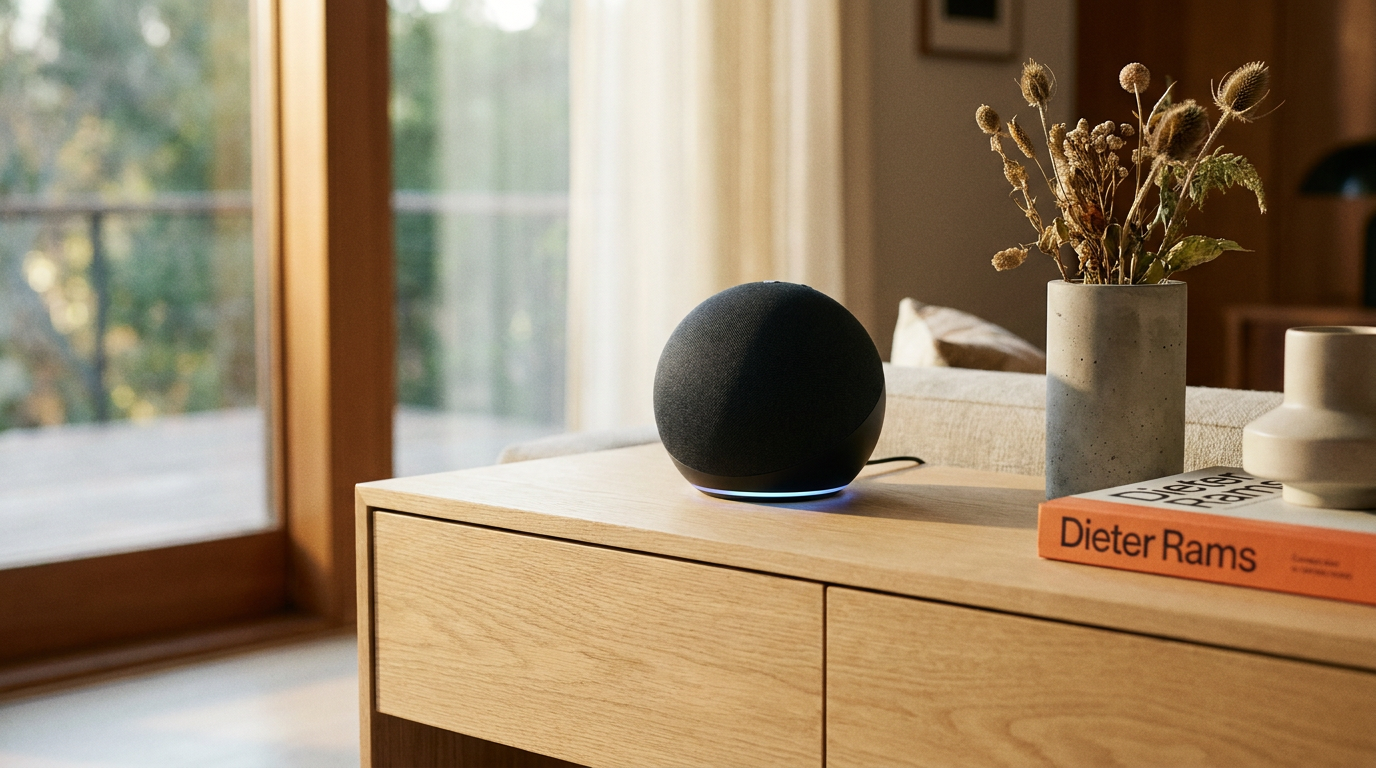
In their place arrives the newly announced "Google Home Speaker," a $99.99 device that drops the Nest branding entirely. Scheduled to ship on June 25, the spherical device is Google's first new standalone smart speaker in six years, ending a long drought for hardware enthusiasts.[2][4]
But the hardware swap is only half the story. The new speaker serves as the flagship vessel for "Gemini for Home," a complete brain transplant that replaces the decade-old Google Assistant with Google's generative AI model.[2][5]
For years, smart home users have learned to speak in robotic, highly specific syntax to get their devices to work. If a user wanted to turn off the lights and lock the door, they had to issue two separate commands or build a rigid routine in a companion app.[5]

Gemini for Home changes that mechanism entirely by processing natural language and context. Users can now issue complex, multi-part commands in a single breath, such as asking the speaker to dim the living room lights, turn on the television, and lower the thermostat.[2][5]
The AI is also designed to handle conversational corrections mid-sentence. If a user asks to set an alarm for 7:00 AM, but immediately corrects themselves to 7:30 AM, Gemini understands the pivot without requiring a canceled command and a fresh wake word.[2]
The AI is also designed to handle conversational corrections mid-sentence.
Under the hood, the new Google Home Speaker acts as a central hub for the modern smart home. It functions as both a Matter controller and a Thread border router, ensuring compatibility with a wide range of third-party smart home accessories.[2]
Audio quality has also received a significant upgrade over the outgoing Nest Audio. The new device features 360-degree sound and advanced microphone processing to hear commands over loud music or across a noisy room, and two speakers can be paired together to create a mini home theater setup.[2][4]

However, the introduction of generative AI into the living room comes with a new monetization strategy. While the basic Gemini for Home upgrade is free, Google is locking its most advanced conversational features behind a "Google Home Premium" subscription.[2][5]
For $10 a month, subscribers gain access to "Gemini Live," a mode that allows for free-flowing, back-and-forth discussions without repeatedly saying the wake word. The premium tier also unlocks AI-powered notifications, such as a camera summarizing exactly who is at the front door rather than just pinging a generic motion alert.[5]
To ease the transition, Google is bundling six months of the Premium service with pre-orders of the new speaker. The subscription is also included at no extra cost for users who already pay for Google AI Pro or Ultra plans.[2][4][5]

For the millions of users who already own the now-discontinued Nest Mini and Nest Audio, Google has promised that the devices will not become obsolete paperweights. Existing hardware will continue to receive security patches and software updates.[1]
In fact, Google is rolling out the basic Gemini for Home voice assistant to its older speakers and smart displays via an early access program. This means legacy devices will still benefit from improved conversational abilities, even if they lack the newer hardware required for lightning-fast, on-device AI processing.[3][5]
Ultimately, the retirement of the Nest audio lineup signals a broader pivot in the tech industry. As competitors prepare similar generative AI upgrades for their own ecosystems, the smart home is evolving from a network of voice-activated remote controls into a truly ambient, conversational environment.[2]
How we got here
2016
Google launches its original Google Home smart speaker.
2019
The Google Home Mini is rebranded and updated as the Nest Mini.
2020
Google releases the Nest Audio, its last major standalone smart speaker for six years.
August 2025
Google first teases the integration of Gemini AI into its smart home ecosystem.
June 2026
Google discontinues the Nest audio line and launches the Gemini-powered Google Home Speaker.
Viewpoints in depth
Smart Home Enthusiasts
Excited about the end of rigid commands and the arrival of natural language processing.
For power users, the transition to Gemini for Home represents the realization of the original smart home promise. Enthusiasts have long been frustrated by the need to memorize specific syntax or create complex routines just to execute basic tasks. By allowing multi-step commands and contextual corrections, this camp believes generative AI finally makes the smart home intuitive enough for anyone to use seamlessly.
Privacy & Cost Skeptics
Wary of the new subscription model and the implications of generative AI in the living room.
Skeptics argue that locking features like Gemini Live behind a $10-a-month paywall sets a concerning precedent for consumer hardware. They point out that previous generations of smart speakers included their full feature sets out of the box. Additionally, privacy advocates express concern over the data requirements of generative AI models, questioning how much conversational audio is processed in the cloud versus on the device itself.
Ecosystem Loyalists
Relieved to see Google finally update its aging hardware lineup.
Users heavily invested in the Google ecosystem view the new speaker as a long-overdue hardware refresh. After watching competitors iterate on their devices for six years, loyalists see the inclusion of Matter and Thread support—alongside the return to the 'Google Home' branding—as proof that the company is once again prioritizing its smart home division rather than letting it languish.
What we don't know
- How well Gemini for Home will handle complex third-party device integrations compared to the legacy Google Assistant.
- Whether Google plans to release a cheaper 'Mini' version of the new speaker to replace the $50 price point of the outgoing Nest Mini.
Key terms
- Gemini for Home
- Google's new generative AI voice assistant designed to replace the legacy Google Assistant on smart home devices.
- Gemini Live
- A premium conversational mode that allows users to have continuous, back-and-forth discussions with the AI without repeating a wake word.
- Matter
- A universal smart home connectivity standard that allows devices from different brands to work together seamlessly.
- Thread border router
- A device that connects a low-power Thread smart home network to a standard Wi-Fi network, improving device speed and reliability.
Frequently asked
Will my old Nest Mini stop working?
No. Google has confirmed that existing Nest Mini and Nest Audio devices will continue to receive software updates and security patches.
Do I have to pay a monthly fee to use the new speaker?
The basic Gemini for Home assistant is free, but advanced features like Gemini Live and AI camera summaries require a $10/month Google Home Premium subscription.
When does the new Google Home Speaker launch?
The speaker is available for pre-order now and will begin shipping on June 25, 2026.
Sources
Source coverage
5 outlets
3 viewpoints surfaced





[1]EngadgetEcosystem Loyalists
Google has discontinued the Nest Home Mini and Nest Audio
Read on Engadget →[2]ForbesSmart Home Enthusiasts
Google Re-Enters Smart Speaker Market With AI-Powered Google Home Speaker
Read on Forbes →[3]PhoneArenaPrivacy & Cost Skeptics
Google finally replaces the Nest Audio and Mini with a new Gemini-powered smart speaker
Read on PhoneArena →[4]The GadgeteerSmart Home Enthusiasts
8 Things to Know About the New Google Home Speaker
Read on The Gadgeteer →[5]Google BlogEcosystem Loyalists
Welcome to the next era of Google Home
Read on Google Blog →

Every angle. Every day.
Get technology stories with full source coverage and perspective breakdowns delivered to your inbox.