
Global Renewable Capacity Must Reach 1,200 GW Annually to Hit 2030 Target, IRENA Reports
A new assessment finds that while global renewable capacity hit a record 5.15 terawatts in 2025, annual installations must nearly double and grid investments must reach $1 trillion a year to meet the COP28 tripling goal.

- International Energy Agencies
- Focuses on the aggregate global targets and the necessity of massive capital deployment to meet climate pledges.
- Grid Operators
- Emphasizes the physical reality of integrating 1,200 GW annually, noting that generation is useless without transmission upgrades.
- Developing Economies
- Highlights the bottleneck of investment concentration and the need for transmission infrastructure funding in emerging markets.
Perspectives this story doesn't cover
- Fossil Fuel Producers
- Local Communities Facing Grid Expansion
Why it matters
Reaching the 2030 renewable energy targets agreed upon at COP28 requires a massive pivot in global infrastructure spending, shifting focus from raw generation capacity to the transmission grids and battery storage necessary to handle it.
Inside the conference rooms of Climate Week NYC, the International Renewable Energy Agency (IRENA) delivered a stark accounting of the global energy transition: while the world added a record 693 gigawatts of renewable power in 2025, that pace is no longer enough to meet international climate pledges. The assessment, co-authored with the COP31 Presidency of Türkiye and the Global Renewables Alliance, maps the exact physical and financial requirements needed to keep the UAE Consensus targets alive over the next five years.[1][4]
The global baseline has shifted upward. Total renewable power capacity reached 5.15 terawatts at the end of 2025, driven heavily by solar photovoltaic installations. Yet the agreement struck at the COP28 summit requires tripling that global capacity to 11.2 terawatts by 2030. To bridge that gap, the report calculates that annual capacity additions must nearly double, averaging 1,200 gigawatts every year from 2026 through the end of the decade.[2][4]
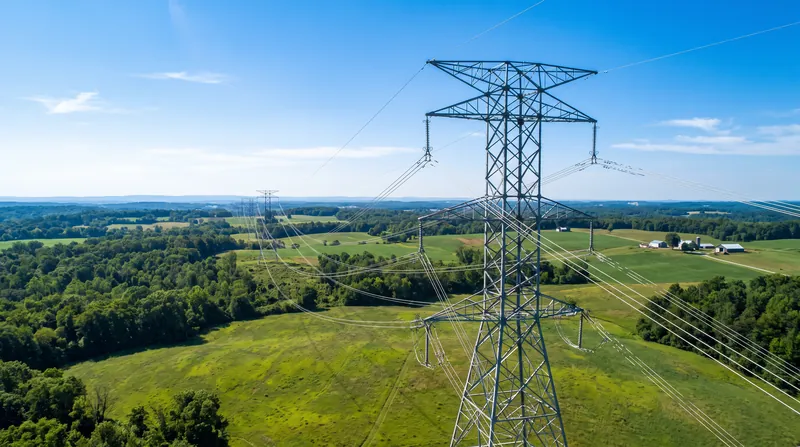
Manufacturing the panels and turbines to hit 1,200 gigawatts is not the primary constraint; delivering that power to end users is. The coalition identified transmission networks as the single largest physical bottleneck in the transition. To support the influx of new generation, the report states that global grid investment must reach nearly $1 trillion annually between 2026 and 2030—more than double the capital deployed for grids in 2025.[1][4]
IRENA Director-General Francesco La Camera warned that while generation capacity can still close the gap toward the 2030 target, "energy efficiency is falling behind and grid infrastructure has not kept pace with renewable deployment." He called for a faster expansion of storage and flexibility solutions to manage the load and prevent newly generated clean power from being wasted.[4]
The efficiency shortfall is measurable. The UAE Consensus included a mandate to double the global rate of energy efficiency improvement by 2030, which requires a 4 percent annual gain in energy intensity. The 2025 data shows the global economy managed only a 2 percent improvement, leaving a significant deficit that places even more pressure on the raw generation side of the equation.[4]
The UAE Consensus included a mandate to double the global rate of energy efficiency improvement by 2030, which requires a 4 percent annual gain in energy intensity.
To manage the intermittency of a grid dominated by 11.2 terawatts of renewables, the report points to a rapid scale-up in energy storage. Battery storage costs declined by approximately 30 percent between 2024 and 2025, continuing a long-term trend that makes 24/7 renewable energy systems—where solar and wind are co-located with utility-scale batteries—increasingly cost-competitive against traditional thermal plants.[4]
If the 1,200-gigawatt annual deployment rate is achieved, the fundamental architecture of the global power sector will invert. By 2030, variable renewable sources are projected to surpass total installed fossil fuel capacity, accounting for roughly 62 percent of all global installed power capacity, a sharp increase from the 35 percent share recorded in 2025.[4]
The demand side of the equation is also being formalized. COP31 President-Designate Murat Kurum used the report's release to propose a new science-based target for consumption, pushing to electrify 35 percent of all global final energy use by 2035. That target focuses heavily on converting buildings, heavy industry, and transportation networks to run on the newly expanded renewable grid.[4]
The scale of the required $1 trillion in annual grid investment represents a fundamental reallocation of global energy capital. The report notes that without this simultaneous advancement in transmission and distribution networks, the sheer volume of new solar and wind generation will face severe curtailment, stranding clean electrons before they can reach end users.[2][5]
The trajectory of the global energy transition now depends less on the manufacturing cost of solar panels and more on the speed of infrastructure deployment. The next verifiable indicator of progress will be the upcoming capital expenditure filings from national grid operators, which must reflect a doubling of transmission investments to keep the 11.2-terawatt target mathematically viable.[1][3]
What to know
- Global renewable power capacity reached 5.15 terawatts at the end of 2025, with a record 693 gigawatts added during the year.
- Annual capacity additions must average 1,200 gigawatts from 2026 to 2030 to meet the COP28 tripling target.
- Grid infrastructure investment must reach nearly $1 trillion annually to prevent curtailment of new renewable generation.
- Global energy intensity improved by only 2 percent in 2025, falling short of the 4 percent required to double efficiency.
- Variable renewable sources are projected to account for 62 percent of global installed power capacity by 2030.
Sources
Source coverage
5 outlets
3 viewpoints surfaced





- [1]ReutersInternational Energy Agencies
Global renewable deployment must double to hit 2030 climate target, report says
Read on Reuters → - [2]Asian PowerInternational Energy Agencies
Global renewables need 1200GW of annual additions through 2030: IRENA
Read on Asian Power → - [3]APBI-ICMADeveloping Economies
Global renewable deployment must double to hit 2030 target, IRENA report
Read on APBI-ICMA → - [4]SolarQuarterGrid Operators
Global Renewable Power Capacity: Quick Growth Needed by 2030
Read on SolarQuarter → - [5]Utilities Middle EastGrid Operators
Record renewables additions must nearly double to meet 2030 goal
Read on Utilities Middle East →
Comments

More in Energy
See all →Strait of Hormuz
Iran Proposes 7-Day Deal to Reopen Strait of Hormuz in Exchange for US Sanctions Lift
5 sources

Grid Stability
The Sub-Second Services That Stabilize the Electric Grid
6 sources

Grid Infrastructure
UN Launches Global Grids Accelerator to Address Clean Energy Bottleneck in Africa and Southeast Asia
6 sources
Diesel Markets
US Distillate Inventories Hit Lowest Seasonal Level Since 1996 Amid Record Exports
5 sources
Every angle. Every day.
Get Energy stories with full source coverage and perspective breakdowns delivered to your inbox.