
UN General Assembly Adopts First Declaration Affirming Statehood for Island Nations Facing Sea Level Rise
The United Nations has formally adopted a declaration guaranteeing that small island states will retain their sovereignty and maritime economic zones even if their landmasses are submerged by rising oceans.
By Layla Zaher

- Small Island Developing States
- Nations facing direct territorial loss that championed the declaration to secure their legal and economic future.
- International Law Analysts
- Legal experts focused on how the declaration alters the 1933 Montevideo Convention and customary international law.
- Climate Justice Advocates
- Groups emphasizing the moral obligation of high-emission countries to protect the sovereignty of vulnerable nations.
Perspectives this story doesn't cover
- Host nations receiving displaced populations
Fast facts
- The UN General Assembly adopted a declaration ensuring island nations retain statehood even if their land is submerged.
- The resolution freezes current maritime boundaries, protecting lucrative Exclusive Economic Zones and fishing rights.
- The move alters the 1933 Montevideo Convention, which previously required physical territory for a nation to legally exist.
- The International Law Commission has 24 months to draft administrative frameworks for deterritorialized governments.
Why this matters
Under traditional international law, a country must possess a defined physical territory to exist as a sovereign state. This declaration rewrites that precedent, ensuring that nations losing their land to climate change will not also lose their legal identity, their UN voting rights, or their control over lucrative maritime resources.
Inside the United Nations General Assembly hall in New York on Thursday afternoon, delegates from 193 member states adopted by consensus a declaration that permanently decouples national sovereignty from physical land. The resolution guarantees that small island developing states will retain their statehood, their United Nations membership, and their maritime boundaries even if rising sea levels render their physical territories entirely uninhabitable.[1][2]
The legal framework addresses an existential threat that the 1933 Montevideo Convention—the treaty that established the modern definition of a state—never anticipated. Under that convention, a state must possess a defined territory and a permanent population. The new UN declaration explicitly states that climate-induced land loss will not trigger a loss of statehood, establishing a new precedent in international law.[3][4]
"This is not merely a symbolic gesture; it is the legal survival of our nations," said Fatumanava-o-Upolu III Dr. Pa'olelei Luteru, the permanent representative of Samoa and chair of the Alliance of Small Island States (AOSIS), addressing the assembly. "Our exclusive economic zones, our fishing rights, and our global voice will remain intact regardless of what the oceans do to our shores."[4]
The economic implications are immediate and structural. Island nations like Tuvalu, the Marshall Islands, and Kiribati control vast Exclusive Economic Zones (EEZs) that stretch 200 nautical miles from their coastlines. These zones generate critical revenue through international fishing licenses and deep-sea mining rights. By freezing maritime baselines at their current coordinates, the declaration prevents neighboring countries or international bodies from claiming those waters as the islands shrink.[2][5]
Island nations like Tuvalu, the Marshall Islands, and Kiribati control vast Exclusive Economic Zones (EEZs) that stretch 200 nautical miles from their coastlines.
The push for the declaration accelerated after the Intergovernmental Panel on Climate Change projected that global mean sea levels could rise by up to 1.1 meters by 2100 under high-emission scenarios. For nations like the Maldives, where 80 percent of the land sits less than one meter above sea level, the timeline for physical displacement is measured in decades, not centuries.[1][6]
Legal scholars note that the consensus adoption bypasses the need for a decades-long treaty ratification process. Because no member state objected during the plenary session, the declaration immediately enters the corpus of customary international law.[3]
"We are building the legal architecture for a scenario we are still fighting to prevent," United Nations Secretary-General António Guterres told reporters following the vote. "The international community has agreed that a nation's identity and rights are not washed away by the tide."[1][5]
The resolution now tasks the International Law Commission with drafting specific administrative mechanisms over the next 24 months. These frameworks will define how a government-in-exile can issue passports, manage offshore assets, and participate in international treaties without a physical capital.[2][4]
Viewpoints in depth
Alliance of Small Island States (AOSIS)
The coalition of 39 island and low-lying coastal nations that drafted and championed the declaration.
AOSIS representatives argue that the international community, which generated the vast majority of greenhouse gas emissions, bears a legal and moral obligation to protect the sovereignty of the nations suffering the direct consequences. They view the freezing of maritime baselines as a non-negotiable economic baseline, ensuring that their primary source of income—ocean resources—remains under their control even if their populations are forced to relocate.
International Legal Scholars
Academics and jurists analyzing the shift in customary international law.
Legal experts emphasize that this declaration fundamentally alters the 1933 Montevideo Convention's definition of statehood. By accepting that a state can exist without habitable land, the UN has created a new category of "deterritorialized states." Scholars note that while the declaration secures voting rights and maritime zones, it leaves complex logistical questions unresolved, such as how a nation exercises criminal jurisdiction or manages citizenship when its entire population lives within the borders of other host countries.
Sources
Source coverage
6 outlets
3 viewpoints surfaced






- [1]Health Policy WatchInternational Law Analysts
World Leaders Approve First UN Declaration On Sea Level Rise, Guaranteeing Statehood For Sinking Nations
Read on Health Policy Watch → - [2]GristInternational Law Analysts
UN passes first declaration on sea level rise, protecting island nations' sovereignty
Read on Grist → - [3]Climate Home NewsSmall Island Developing States
Threatened by rising seas, small islands secure right to keep their statehood
Read on Climate Home News → - [4]UNSmall Island Developing States
Press Release: UN Member States Adopt First Declaration on Sea Level Rise, Affirming Stable Maritime Zones and Continuity of Statehood
Read on UN → - [5]The Climate WatchClimate Justice Advocates
UN adopts first sea-level rise declaration to protect island states
Read on The Climate Watch → - [6]teleSURClimate Justice Advocates
UN Adopts Declaration on Sea Level Rise to Protect Vulnerable Communities
Read on teleSUR →
Comments
More in Environment
See all →Biodiversity Target
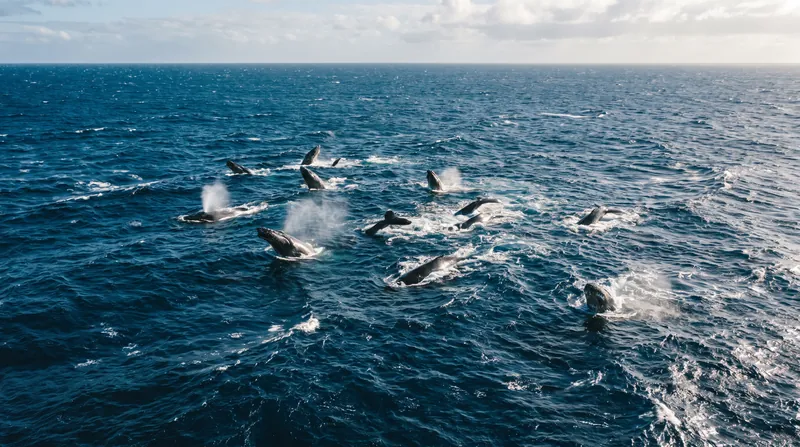
Global 30x30 Goal Remains Achievable, But Ocean Protection Lags Severely With Commitments Only Reaching 12%
4 sources
Amazon Conservation
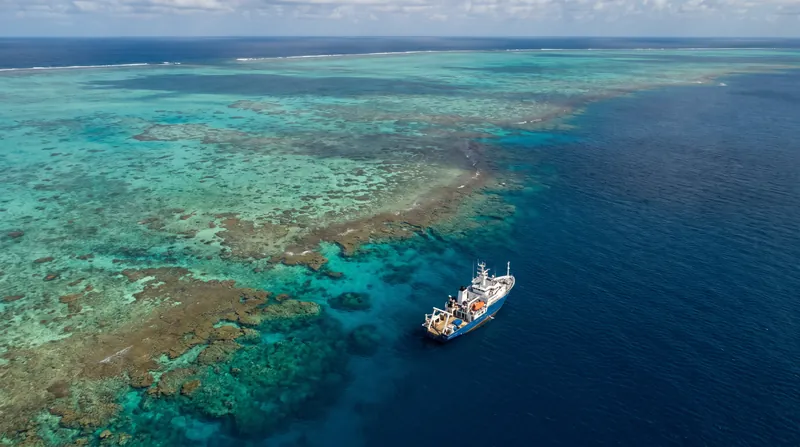
Protecting Existing Amazon Forests Yields Greater Climate and Biodiversity Gains Than Restoration, Study Finds
4 sources
Soil Conservation
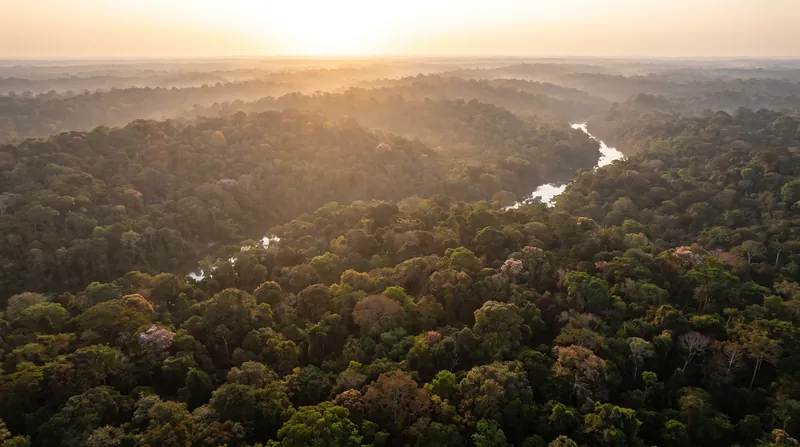
The R-Factor, K-Factor, and LS-Factor: How the Universal Soil Loss Equation Predicts Erosion Rates from Rainfall, Soil Type, and Topography
6 sources

Emissions Math
The Mechanics of the IRA Repeal: Why US Climate Goals Are Now 'Out of Reach'
5 sources
Every angle. Every day.
Get Environment stories with full source coverage and perspective breakdowns delivered to your inbox.