
Thermal Stratification and Biofilm Resistance Force Water Utilities to Switch From Free Chlorine to Monochloramine
Municipal infrastructure relies on a delicate chemical balance to deliver safe drinking water across vast distances. When traditional disinfectants fail against temperature gradients and bacterial defenses, operators must deploy targeted ammonia mixtures to secure the grid.
By Marina Lopez

Share this story
In short
- Free chlorine degrades rapidly in the warm, stagnant upper layers of stratified water storage tanks, leaving distribution extremities unprotected.
- Highly reactive chlorine neutralizes against the outer layers of pipe biofilms, while stable monochloramine penetrates deeply to inactivate embedded bacteria.
- Utilities transition to chloramination to maintain the federally mandated 0.2 mg/L residual without exceeding strict limits on carcinogenic disinfection byproducts.
Thermal stratification in municipal storage tanks destroys free chlorine residuals, while thick biofilms on aging pipe walls block the chemical from reaching embedded bacteria. To keep drinking water safe across sprawling distribution networks, utilities are forced to abandon free chlorine and switch to monochloramine.[3]
This transition is fundamentally driven by the physics of water storage and the biology of bacterial defense. Free chlorine is a highly reactive, aggressive disinfectant that neutralizes pathogens on contact. However, that same reactivity becomes a fatal flaw when water must travel miles from the treatment plant to the consumer's tap.
More than 113 million people in the United States now consume drinking water treated with chloramines, making it the second most common disinfection method nationwide. The shift is accelerating as aging infrastructure and warming climates expose the limitations of traditional chlorination.[3]
"Free chlorine remains one of the most effective and widely used disinfectants for treating drinking water," writes Kevin Chapa, an infrastructure specialist at Big Wave Water. "However, maintaining consistent chlorine residuals and preventing stratification in storage tanks can be challenging."
The Physics of Thermal Stratification
Municipal water distribution systems rely on massive elevated or ground-level storage tanks to maintain pressure and meet peak demand. During the spring and summer months, the sun heats the exterior of these steel and concrete structures.
This solar heating triggers thermal stratification, a phenomenon where warmer, less dense water rises to the top of the tank while colder water remains trapped at the bottom. Because the inlet and outlet pipes are typically located near the base, the warm upper layer can remain stagnant for days.
Thermal stratification inevitably leads to chemical stratification. As water temperatures climb above 15 degrees Celsius (60 degrees Fahrenheit), the natural decay rate of free chlorine accelerates dramatically.
The stagnant upper layer quickly becomes a warm detention zone where the disinfectant residual drops to zero. When demand spikes and this older water is finally drawn down into the distribution network, it enters the pipes with virtually no chemical protection against microbial growth.
To combat this, operators often install active submersible mixers, such as Kasco Marine's CertiSafe units, to homogenize the water column. While mechanical mixing reduces temperature gradients to within a 0.2-part-per-million chemical variance, it cannot entirely halt the thermal decay of free chlorine in sprawling systems.
The Biofilm Barrier in Aging Pipes
As the depleted water travels through miles of underground mains, it encounters a second formidable obstacle: biofilm. The vast majority of microbial biomass in a drinking water distribution system does not float freely in the water; it clings to the internal surfaces of the infrastructure.[2]
These bacterial communities secrete an extracellular polymeric substance (EPS), a sticky, protective matrix that shields them from environmental stress. Free chlorine, due to its high reactivity, immediately attacks the outer layers of this EPS matrix and the organic matter suspended in the water.[2]
By reacting with the surface of the biofilm, free chlorine neutralizes itself before it can penetrate deeply enough to kill the bacteria embedded within. The microorganisms survive, multiply, and eventually slough off into the bulk water supply, degrading water quality at the tap.[2]
A comprehensive 56-week study published in the journal Water Research in August 2025 documented these dynamics in controlled pipe loops. Researchers found that while free chlorine drastically reduced overall biomass, it exerted intense selection pressure that allowed highly resistant strains of Proteobacteria to dominate the infrastructure.[2]
The researchers noted that while free chlorine created a uniform, low-diversity biofilm, monochloramine maintained a highly diverse microbial community comparable to untreated water. This weaker selection pressure paradoxically prevents the rise of hyper-resistant superbugs within the pipe network.[2]
The Disinfection Byproduct Dilemma
This combination of thermal decay and biofilm resistance traps water utilities in a strict regulatory bind. The United States Environmental Protection Agency mandates that a minimum disinfectant residual of 0.2 milligrams per liter must be maintained at all points in the distribution system.
To ensure that 0.2 milligrams per liter survives the journey to the furthest extremities of a stratified network, a treatment plant using free chlorine must inject massive doses at the source. However, this brute-force approach triggers a secondary crisis.[1]
When high concentrations of free chlorine react with naturally occurring organic matter in the water, they generate regulated disinfection byproducts (DBPs). The most prominent of these are trihalomethanes (THMs) and haloacetic acids (HAAs), which carry significant long-term health risks.[1]
The EPA's Stage 1 and Stage 2 Disinfectants and Disinfection Byproducts Rules strictly cap THMs at 0.080 milligrams per liter and HAAs at 0.060 milligrams per liter. A utility cannot simply pump more free chlorine into the system without violating these federal limits.[1]
If a utility attempts to clear a distant biofilm bloom by elevating the free chlorine dose at the treatment plant, the resulting spike in trihalomethanes will trigger an immediate regulatory violation. The system is hydraulically and chemically deadlocked.[1]
The Monochloramine Solution
Faced with this mathematical impossibility, utilities turn to chloramination. By adding a precise ratio of ammonia to water that already contains free chlorine—typically a five-to-one ratio of chlorine to ammonia—operators create monochloramine.[1]
Monochloramine is a fundamentally different chemical tool. It is a weaker, slower-acting oxidant than free chlorine, which makes it remarkably stable. It does not degrade rapidly in the warm, stratified layers of a summer storage tank, nor does it react aggressively with suspended organic matter.
This stability allows monochloramine to travel vast distances through the distribution network without producing high levels of trihalomethanes. "Chloramine stability is advantageous in distribution systems with long detention times," notes a 2019 technical report from The Water Research Foundation.[1]
Crucially, monochloramine's lower reactivity is its greatest asset against biofilms. Because it does not immediately neutralize upon contact with the outer EPS matrix, the chemical can diffuse deeply into the biofilm structure before inactivating the bacteria hidden inside.[1]
"Monochloramine is the preferred species, as it is more effective and less likely to cause taste-and-odor problems," The Water Research Foundation report concludes. This deep-penetration capability ensures that the pipes remain clean and the regulatory residual is met at the furthest tap.[1]
Operational Trade-offs and Nitrification
Despite its advantages, chloramination introduces complex new vulnerabilities to the water grid. As monochloramine slowly degrades over time, it releases free ammonia into the distribution system.
This free ammonia serves as a food source for ammonia-oxidizing bacteria, which convert the chemical into nitrites and nitrates. This process, known as nitrification, rapidly consumes the remaining monochloramine residual and can severely degrade water quality if left unchecked.
Nitrification typically accelerates when water temperatures exceed 15 degrees Celsius, creating a dangerous feedback loop in unmixed storage tanks. Once a nitrification episode begins, it is notoriously difficult to stop without flushing millions of gallons of treated water into the storm drains.
To prevent nitrification, utilities must carefully manage water age and deploy active mixing systems in their storage tanks. Furthermore, state environmental guidelines often require chloraminated systems to perform an annual "chlorine burn."[3]
During a chlorine burn, the utility temporarily halts the addition of ammonia and switches back to aggressive free chlorine for approximately four weeks. This sudden chemical shock prevents bacteria from developing long-term resistance to the monochloramine regimen.[3]
The Future of Distribution Networks
The chemistry of chloramination continues to reveal new complexities as analytical techniques improve. In late 2024, researchers from the University of Arkansas and ETH Zurich identified a previously unknown compound, chloronitramide anion, that forms naturally as chloramine disinfectants decompose.[3]
The chemistry of chloramination continues to reveal new complexities as analytical techniques improve.
While the health implications of such trace compounds remain under active investigation, the fundamental infrastructure pressures are not changing. As global temperatures rise, the thermal stratification of municipal storage tanks will only become more severe.[3]
Water utilities must continuously balance the immediate threat of waterborne pathogens against the long-term risks of chemical byproducts. Until distribution networks can be entirely rebuilt to eliminate stagnant detention zones, monochloramine will remain the essential compromise keeping sprawling water grids safe.[3]
Key terms
- Thermal stratification
- The separation of water into distinct temperature layers within a storage tank, with warmer water rising to the top and colder water settling at the bottom.
- Biofilm
- A complex community of microorganisms that clings to the interior walls of water pipes, protected by a sticky extracellular matrix.
- Monochloramine
- A stable chemical disinfectant created by combining free chlorine with ammonia, designed to persist over long distances in water distribution networks.
- Disinfection byproducts (DBPs)
- Regulated chemical compounds, such as trihalomethanes, that form when chlorine reacts with naturally occurring organic matter in water.
- Nitrification
- A process where bacteria consume the free ammonia released by decaying monochloramine, degrading water quality and depleting the disinfectant residual.
Reader questions
Is chloraminated drinking water safe for household pets?
While safe for mammals to drink, chloraminated water is toxic to fish and amphibians because it enters their bloodstream directly through their gills. Aquarium owners must use specific water conditioners to neutralize the chloramines before filling their tanks.
Can I remove monochloramine from my tap water by boiling it?
Boiling is highly inefficient for removing monochloramine compared to free chlorine. It takes nearly 30 minutes of rolling boil to remove half the chloramine from a standard batch of water, whereas free chlorine dissipates in under two minutes.
Why does my tap water sometimes smell strongly of bleach?
A strong bleach or chemical odor usually indicates a lack of sufficient free chlorine, which allows foul-smelling dichloramine and trichloramine compounds to form. Proper municipal dosing of monochloramine actually produces far less odor than standard chlorination.
Where opinion splits
Municipal Water Operators
Focus on maintaining regulatory compliance and infrastructure integrity across aging, sprawling networks.
For utility managers, the switch to monochloramine is a mathematical necessity rather than a preference. They are legally bound to deliver a measurable disinfectant residual to the furthest tap in their jurisdiction without violating strict caps on disinfection byproducts. Facing vast networks with long detention times and unmixed storage tanks, operators view chloramination as the only viable chemical tool to balance these competing federal mandates, despite the added operational burden of managing nitrification.
Public Health Regulators
Prioritize the reduction of carcinogenic byproducts while ensuring absolute protection against acute waterborne pathogens.
Environmental and health agencies recognize that free chlorine, while an exceptional primary disinfectant, creates unacceptable levels of trihalomethanes and haloacetic acids when pushed to the doses required for large networks. Regulators support the transition to monochloramine as a secondary disinfectant because it drastically lowers long-term cancer risks associated with these byproducts. However, they mandate strict monitoring and periodic 'chlorine burns' to prevent the rise of resistant bacterial strains in the infrastructure.
Infrastructure Engineers
Advocate for mechanical and hydraulic solutions to water quality issues rather than purely chemical interventions.
Engineers argue that the reliance on monochloramine treats the symptom rather than the disease. They point out that thermal stratification and excessive water age are hydraulic failures caused by oversized, passive storage tanks and dead-end mains. By installing active submersible mixers and redesigning flow patterns to eliminate stagnant zones, engineers believe utilities could reduce their dependence on complex chemical balancing acts and lower the overall rate of infrastructure corrosion.
- Municipal Water Operators
- Focus on maintaining regulatory compliance and infrastructure integrity across aging, sprawling networks.
- Public Health Regulators
- Prioritize the reduction of carcinogenic byproducts while ensuring absolute protection against acute waterborne pathogens.
- Infrastructure Engineers
- Advocate for mechanical and hydraulic solutions to water quality issues rather than purely chemical interventions.
Perspectives this story doesn't cover
- Residential Consumers
- Aquarium and Fishery Owners
Sources
Source coverage
3 outlets
3 viewpoints surfaced



- [1]The Water Research FoundationPublic Health Regulators
Chloramination in Drinking Water Treatment
Read on The Water Research Foundation → - [2]Water ResearchInfrastructure Engineers
Long-term succession of biofilm in drinking water distribution systems under different disinfection regimes
Read on Water Research → - [3]Factlen Editorial TeamPublic Health Regulators
Synthesis by Factlen editorial team
Read on Factlen Editorial Team →
More in Environment
See all →Water Infrastructure
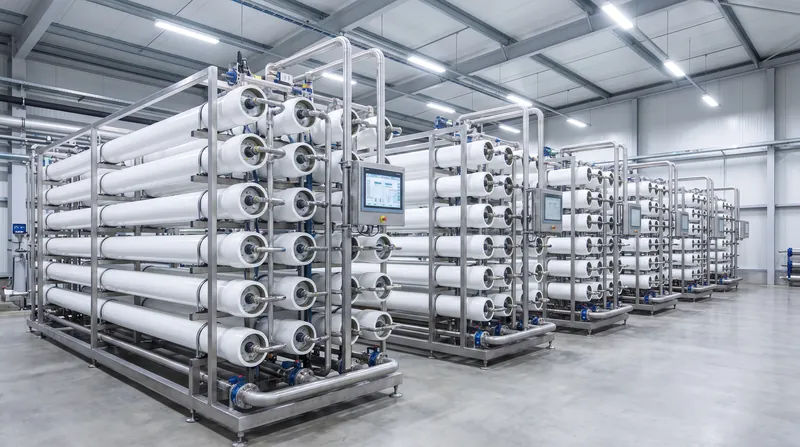
Explainer: Comparing the Energy, Cost, and Brine Disposal of Reverse Osmosis and Thermal Desalination
7 sources
Water Infrastructure
EPA Announces $1 Billion in Funding to Address PFAS in Drinking Water
7 sources
Water Infrastructure
Texas Water Demand to Outpace Supply Within Four Years, Driven by Data Center Boom and Population Growth
6 sources

Fluid Dynamics
Bed-Friction Pressure Imbalance Forces Rivers to Meander Rather Than Flow Straight
11 sources
Comments
Every angle. Every day.
Get Environment stories with full source coverage and perspective breakdowns, free every day.