
Global Markets Surge and Inflation Fears Ease as U.S.-Iran Peace Deal Reopens Trade Routes
Asian equities, led by a 12% surge in SoftBank, rallied alongside global bonds and commodities after the U.S. and Iran reached an agreement to halt their conflict and reopen the Strait of Hormuz. The diplomatic breakthrough is expected to significantly ease global supply chain pressures and food inflation.
By Factlen Editorial Team
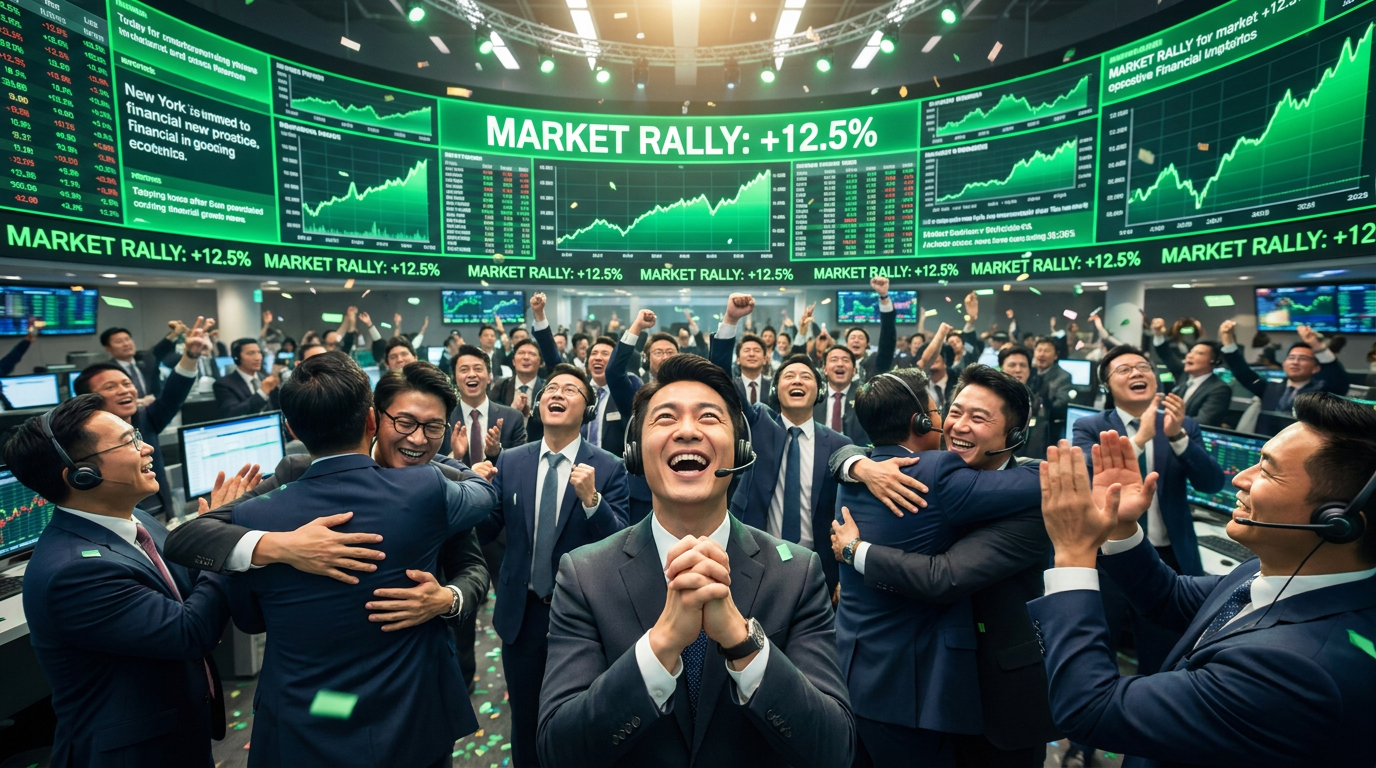
- Optimistic Equities Traders
- View the peace deal as a massive bullish catalyst that removes geopolitical overhang and paves the way for central bank rate cuts.
- Relieved Supply Chain Operators
- Focus on the physical unblocking of global trade routes, viewing the deal as a critical lifeline for manufacturing and shipping margins.
- Cautious Macro Analysts
- Acknowledge the positive economic boost but warn against irrational exuberance until the final diplomatic agreements are signed and safe transit is proven.
What's not represented
- · Middle Eastern local businesses affected by the conflict's economic fallout
- · Agricultural producers navigating the sudden drop in crop futures
Why this matters
The reopening of the world's most critical energy chokepoint removes a massive inflationary tax on the global economy. For consumers, this signals imminent relief at the gas pump and grocery store, while investors are already pricing in a lower likelihood of further interest rate hikes from central banks.
Key points
- Asian tech stocks and global equities surged following news of a U.S.-Iran interim peace agreement.
- The deal includes provisions to reopen the Strait of Hormuz, ending a four-month blockade of the critical waterway.
- Oil and agricultural commodity prices tumbled, significantly easing fears of prolonged global inflation.
- U.S. Treasuries rallied as traders dialed back expectations for further Federal Reserve interest rate hikes.
- Approximately 600 commercial vessels are currently idling, waiting for clearance to safely resume transit through the strait.
The global financial system breathed a massive sigh of relief on Monday as Asian equities exploded upward, led by a staggering 12% surge in SoftBank shares. The dramatic market rally rippled across asset classes, signaling a profound shift in investor sentiment after months of geopolitical anxiety.[1]
The catalyst for the euphoric market reaction was the announcement of an interim peace agreement between the United States and Iran, effectively halting a devastating four-month conflict. Crucially for the global economy, the deal includes provisions to immediately reopen the Strait of Hormuz, the world's most vital energy and shipping chokepoint.[2]
For the corporate world, the reopening of the waterway represents the sudden removal of a massive inflationary tax that had been suffocating supply chains. Asian economies, which rely heavily on energy and goods flowing through the strait, are poised to be the biggest beneficiaries of the physical supply crunch easing.[3]
The immediate impact was felt across global commodities. Oil prices tumbled from their wartime highs as the threat of a prolonged energy crisis evaporated, while copper popped significantly higher as bulls regained control of the narrative, betting on a resurgence in global economic growth.[5][7]

Agricultural markets also saw immediate relief, with grain futures in Chicago dropping sharply. The reopening promises to ease the severe farm input shocks that had threatened a new wave of global food inflation, providing a lifeline to agricultural producers and consumers alike.[4]
Agricultural markets also saw immediate relief, with grain futures in Chicago dropping sharply.
In the bond markets, U.S. Treasuries advanced across the curve as traders rapidly dialed back their expectations for further interest rate hikes from the Federal Reserve. The consensus on trading floors is that the deflationary impact of the peace deal will give central banks the breathing room they desperately need.[6]
Macroeconomic analysts were quick to upgrade their outlooks. Vanguard's Chief APAC Economist Qian Wang noted that while some uncertainty remains regarding the deal's long-term sustainability, the immediate boost to the global economic outlook is undeniable and substantial.[8]
The physical reality of the reopening is staggering in its scale. Approximately 600 commercial vessels are currently idling near the chokepoint, with shipowners eagerly seeking clarity on safe transit protocols so they can finally move billions of dollars worth of stranded cargo.[2][3]

Historical data from global financial institutions underscores just how anomalous the last four months have been for commodity volatility. The sudden resolution of the conflict is being viewed as a generational market event that resets the baseline for global trade costs.[9][10]
While some institutional investors caution that the final ink has yet to dry on the diplomatic agreements, the overwhelming "shoot first, ask questions later" rally shows how desperate the global economy was for a resolution. For now, markets are overwhelmingly pricing in a return to stability and growth.[5]

How we got here
Late Feb 2026
Conflict erupts, closing the Strait of Hormuz and spiking global energy prices.
Spring 2026
Global supply chains face severe crunches, driving up food and commodity inflation.
June 14, 2026
Reports emerge of an interim peace agreement between the U.S. and Iran to halt the war.
June 15, 2026
Global markets surge in a massive relief rally, with equities popping and oil prices tumbling.
Viewpoints in depth
Optimistic Equities Traders
View the peace deal as a massive bullish catalyst that removes geopolitical overhang.
For equity bulls, the reopening of the Strait of Hormuz is the exact catalyst needed to sustain a long-term market rally. By removing the inflationary pressure of a global energy shock, traders believe central banks—particularly the Federal Reserve—will no longer be forced to hike interest rates. This environment is viewed as highly favorable for growth stocks, particularly in the Asian tech sector, which saw immediate double-digit gains as the news broke.
Relieved Supply Chain Operators
Focus on the physical unblocking of global trade routes and the restoration of shipping margins.
Logistics companies, manufacturers, and Asian economies that rely heavily on imported energy view the interim agreement as a critical lifeline. The four-month closure of the strait forced ships into massive, costly detours that destroyed profit margins and delayed critical manufacturing inputs. For this camp, the market rally is secondary to the physical reality of 600 vessels finally being able to move cargo, which will normalize freight rates and stabilize factory floors.
Cautious Macro Analysts
Acknowledge the positive economic boost but warn against irrational exuberance until the deal is finalized.
While acknowledging the undeniable relief the deal brings to global markets, cautious institutional voices warn that the market's euphoric reaction may be premature. They point out that the agreement is currently interim, and the logistical nightmare of clearing the backlog of vessels will take weeks to resolve. Furthermore, they argue that the structural economic scars left by four months of supply chain disruptions will take time to heal, advising investors to wait for the final diplomatic signatures before declaring a total victory over inflation.
What we don't know
- The exact timeline for when the 600 idling commercial vessels will be cleared for safe transit.
- Whether the interim peace agreement will hold long enough to be formalized into a permanent treaty.
- How quickly the drop in wholesale commodity and agricultural prices will translate to lower costs for everyday consumers.
Key terms
- Strait of Hormuz
- A critical shipping chokepoint between the Persian Gulf and the Gulf of Oman, through which a significant portion of the world's oil and liquefied natural gas passes.
- Relief Rally
- A sudden and widespread increase in market prices following the removal of a major negative uncertainty or economic crisis.
- Fed Hike Bets
- Market expectations and financial wagers regarding whether the U.S. Federal Reserve will increase interest rates to combat inflation.
Frequently asked
Why did Asian markets react so strongly to the news?
Asian economies are heavily dependent on energy and manufactured goods flowing through the Strait of Hormuz, making them the biggest beneficiaries of the trade route's reopening.
Will this agreement help lower global inflation?
Yes. The immediate drop in oil prices and agricultural input costs is expected to significantly ease global inflationary pressures, which may prevent further interest rate hikes.
Is the peace deal completely finalized?
It is currently an interim agreement. While markets are reacting positively, some investors remain cautious until the final documents are signed and safe shipping transit is fully restored.
Sources
Source coverage
10 outlets
3 viewpoints surfaced





[1]CNBCCautious Macro Analysts
SoftBank surges more than 12% as Iran-U.S. peace deal sends Asia stocks soaring
Read on CNBC →[2]BloombergCautious Macro Analysts
US and Iran Reach Deal to Halt the War, Reopen Hormuz
Read on Bloomberg →[3]The New York TimesRelieved Supply Chain Operators
Hormuz Reopening Would Offer Relief for Asia, but Economic Scars Will Remain
Read on The New York Times →Crop Prices Drop as Hormuz Reopening Would Ease Farm Input Shock
Read on Bloomberg →Markets cheer U.S.-Iran agreement, but some investors caution deal is yet to be signed
Read on CNBC →Treasuries Rally as Traders Trim Fed Hike Bets After Iran Deal
Read on Bloomberg →Copper Pops Higher as US-Iran Agreement Puts Bulls in Charge
Read on Bloomberg →Vanguard's Wang on Iran-US Deal Economic Impact
Read on Bloomberg →[9]International Energy AgencyCautious Macro Analysts
Global Oil Market Report and Chokepoint Analysis
Read on International Energy Agency →[10]World BankRelieved Supply Chain Operators
Commodity Markets Outlook: Supply Chain Disruptions
Read on World Bank →
More in business
See all 5 stories →AI Infrastructure
SpaceX Raises Record $85.7 Billion in Historic IPO to Fund Orbital AI Infrastructure
7 sources
AI Economics
The Compute-First Era: How AI is Rewriting the Rules of Venture Capital
6 sources
Fed Watch
Federal Reserve Holds Rates Steady as New Chair Kevin Warsh Signals Hawkish Pivot
8 sources
Every angle. Every day.
Get business stories with full source coverage and perspective breakdowns delivered to your inbox.