
Fox Corp. Acquires Roku in $22 Billion Deal, Gaining Control of Leading Connected TV Platform
Fox Corporation has reached a definitive agreement to acquire streaming platform Roku for $22 billion, securing control over the dominant operating system for connected televisions in North America.
By Jana Rami

Share this story
Fox Corp. has fundamentally altered the trajectory of the streaming wars, announcing a definitive agreement to acquire Roku in an all-cash transaction valued at $22 billion. The acquisition represents one of the most significant media consolidations of the decade, merging a legacy broadcast and content powerhouse with the dominant digital gatekeeper of the modern living room.
For years, the entertainment industry has debated whether content or distribution holds the ultimate power in the digital age; with this single move, Fox has declared its intention to control both, securing the platform that dictates how millions of viewers navigate their daily entertainment choices.[1]
Roku currently commands a staggering 43 percent share of the connected television operating system market in the United States, boasting over 85 million active accounts globally. By absorbing this massive infrastructure, Fox transitions from being merely a tenant on the digital home screen to owning the building itself.
The sheer scale of Roku's footprint means that nearly half of all American households using a smart TV or streaming stick are interacting with a Roku-designed interface. This acquisition gives Fox direct access to those living rooms, bypassing traditional cable operators and rival tech platforms to establish a direct, unfiltered relationship with the consumer base.[2][3]
The strategic rationale behind the $22 billion price tag lies in the underlying mechanics of modern television consumption. The traditional cable box has been entirely replaced by the smart TV interface, making the operating system the ultimate arbiter of what viewers see first when they turn on their screens.
In this new paradigm, the company that controls the home screen controls the viewer's journey, dictating which apps are promoted, which shows are recommended, and how search results are populated. Fox recognizes that owning this digital real estate is far more lucrative and defensible than simply producing shows to live on someone else's platform.[2]
For Fox, this acquisition solves a looming existential crisis in a rapidly fragmenting media landscape. While competitors like Disney, Warner Bros. Discovery, and Comcast invested tens of billions of dollars into building premium subscription streaming services, Fox largely sat out the subscription wars.
Instead, the company opted to acquire the free ad-supported platform Tubi in 2020, betting that consumers would eventually suffer from subscription fatigue. That contrarian bet has paid off, and the Roku acquisition serves as the ultimate acceleration of Fox's advertising-first digital strategy, cementing its status as a leader in free, ad-supported streaming rather than a laggard in the premium tier.[3]
Roku's underlying business model perfectly complements Fox's advertising-centric corporate strategy. While Roku is primarily known to everyday consumers for its purple-branded streaming sticks and affordable smart TVs, the company actually generates the vast majority of its revenue through digital advertising and platform revenue sharing.
Projected to pull in roughly $3.5 billion in ad revenue for 2026, Roku has quietly built one of the most sophisticated connected TV advertising networks in the world. By bringing this machinery in-house, Fox instantly upgrades its own ad-tech capabilities, allowing it to offer marketers highly targeted, data-rich campaigns across both traditional broadcast and digital streaming environments.[1][5]
The financial mechanics of Roku's platform power are deeply embedded in the streaming ecosystem. When a user signs up for a rival service like Netflix, Max, or Paramount+ through a Roku device, Roku typically takes a standard percentage cut of the subscription fee.
More importantly, Roku contractually controls a portion of the video ad inventory on ad-supported apps that run on its operating system. This means that even when a viewer is watching a competitor's ad-supported tier, Roku—and soon, Fox—is monetizing a slice of that attention, effectively turning rival media companies into revenue generators for the Fox corporate umbrella.[4]
The integration of Fox's Tubi with The Roku Channel is expected to create an undisputed juggernaut in the Free Ad-Supported Streaming Television (FAST) ecosystem. Both platforms have seen explosive growth as consumers seek out free alternatives to pricey subscription bundles.
Analysts predict the combined entity will command unparalleled leverage in the digital video advertising market, offering brands a unified buying platform that spans premium live sports, breaking news, and a massive library of on-demand entertainment. This consolidation of free streaming inventory could force smaller FAST competitors to merge or exit the market entirely as Fox and Roku corner the ad dollars.[4]
However, the acquisition has understandably sent shockwaves through rival media conglomerates and streaming operators. Companies that rely heavily on Roku to distribute their streaming applications now face the uncomfortable reality that their primary digital distributor is owned by a direct, well-capitalized competitor.
The streaming industry relies on a delicate balance of 'frenemy' relationships, but Fox's outright ownership of the largest distribution pipe fundamentally alters the balance of power. Competitors are now bracing for tougher negotiations over revenue sharing, ad inventory splits, and the crucial placement of their apps on the Roku home screen.[4]
There is mounting anxiety across Hollywood that Fox could manipulate Roku's user interface to unfairly prioritize its own content. Critics worry that Fox Sports, Fox News, or Tubi programming could be permanently anchored to the most visible parts of the home screen, while competitors' applications and search results are algorithmically buried deeper in the menus.
In an ecosystem where a single prominent banner ad on the Roku home screen can drive millions of immediate sign-ups or views, the potential for self-preferencing gives Fox an immense, potentially insurmountable advantage in audience acquisition and retention.[2][4]
Fox executives have aggressively pushed back against these anti-competitive concerns, emphasizing that Roku's immense value is intrinsically tied to its status as an agnostic, open platform. In calls with investors, leadership argued that if Roku were to artificially degrade the user experience for Netflix or Disney+ viewers, consumers would simply migrate to competing hardware ecosystems managed by Amazon, Apple, or Google. Maintaining a neutral, comprehensive search and discovery experience is vital to keeping users engaged with the Roku operating system, making blatant self-preferencing a self-defeating strategy in the long run.[3]
Beyond the battle for the interface, Roku's granular viewership data represents a massive, hidden prize in this acquisition. Roku's operating system tracks exactly what users are watching, when they pause, what advertisements they skip, and how they navigate between different applications.
This comprehensive, cross-platform data will allow Fox to hyper-target its advertising and optimize its content acquisition strategy with unprecedented precision. While individual streaming apps only know what a user does within their own walled garden, Roku sees the entire landscape, providing Fox with the ultimate map of modern consumer viewing habits.[3]
The sheer scale of this vertical integration guarantees that the deal will face intense, prolonged regulatory scrutiny in Washington. Antitrust experts note that while Fox and Roku do not directly compete in the same primary consumer markets, the merger creates a classic vertical monopoly concern.
Regulators at the Federal Trade Commission and the Department of Justice will closely examine whether a company controlling both major content production and the essential means of its digital distribution inherently harms market competition, potentially demanding strict behavioral remedies or firewalls before allowing the acquisition to proceed.[6]
Wall Street's reaction to the blockbuster announcement has been sharply polarized. Roku shares surged nearly 18 percent in pre-market trading following the news, reflecting investor relief at a lucrative exit in an increasingly competitive hardware market.
Conversely, Fox shares dipped slightly as analysts digested the massive capital outlay and the execution risks associated with integrating a Silicon Valley tech firm into a legacy media conglomerate. If approved by regulators, the landmark deal is expected to close in the second half of 2027, permanently rewriting the rules of engagement and distribution in the streaming era.[5][6]
Key points
- Fox Corp. will acquire Roku for $22 billion in an all-cash transaction.
- The deal gives Fox control over the operating system used by 43% of US smart TVs.
- Fox plans to heavily integrate its Tubi streaming service with The Roku Channel.
- Rival streamers worry Fox could manipulate home screen placement to favor its own content.
Unanswered questions
- Whether the FTC or DOJ will attempt to block the acquisition on antitrust grounds.
- How Fox will manage Roku's existing partnerships with rival media conglomerates.
- If Roku's hardware manufacturing division will be spun off or maintained under Fox.
How we got here
2008
Roku launches its first streaming player in partnership with Netflix.
2014
Roku begins licensing its operating system directly to television manufacturers like TCL.
2017
Roku goes public, shifting its primary business focus from hardware sales to advertising revenue.
2020
Fox acquires the free ad-supported streaming service Tubi for $440 million.
July 2026
Fox announces the definitive $22 billion agreement to acquire Roku.
- Platform Consolidators
- Argue that combining content production with platform distribution is the only way legacy media can compete with tech giants like Apple and Amazon.
- Independent Streamers
- Fear that Fox will use its control of the Roku interface to unfairly prioritize its own content and extract higher fees from competing apps.
- Market Analysts
- View the acquisition as a brilliant strategic pivot that transitions Fox from a traditional network into a powerful digital gatekeeper.
- Regulatory Skeptics
- Warn that the vertical integration of a major content producer and the largest TV operating system will trigger intense antitrust scrutiny.
Perspectives this story doesn't cover
- Consumer advocacy groups concerned about data privacy and targeted advertising
- Hardware manufacturing partners like TCL and Hisense who license the Roku OS
Sources
Source coverage
6 outlets
4 viewpoints surfaced






- [1]CNBCPlatform Consolidators
Fox to buy streaming device maker Roku for $22 billion
Read on CNBC → - [2]The VergeMarket Analysts
Would you host part of an AI data center in your home?
Read on The Verge → - [3]The Wall Street JournalMarket Analysts
Fox-Roku Merger Signals Shift from Content to Platform Control
Read on The Wall Street Journal → - [4]The Hollywood ReporterIndependent Streamers
What Fox's Roku Acquisition Means for Rival Streamers
Read on The Hollywood Reporter → - [5]BloombergMarket Analysts
Roku Shares Surge as Fox Secures $22 Billion Buyout
Read on Bloomberg → - [6]Financial TimesRegulatory Skeptics
Regulators likely to scrutinize Fox's $22bn Roku takeover
Read on Financial Times →
More in Entertainment
See all →Streaming Economics
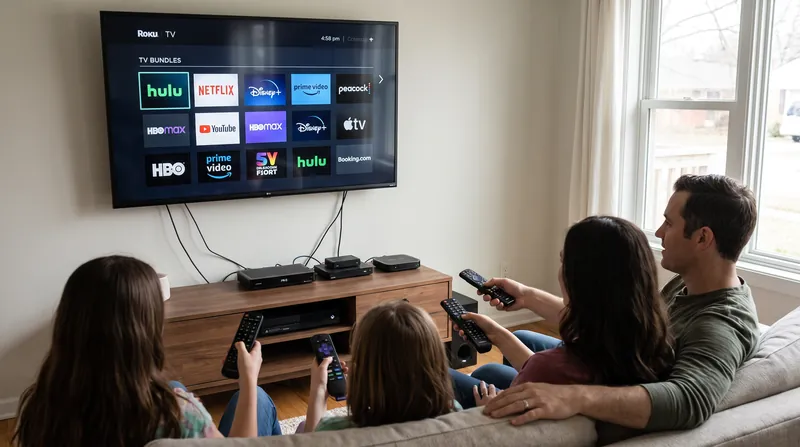
Streaming Wars End as Disney+, Hulu, and Max Announce Coordinated Price Hikes
7 sources
Streaming Economics
Disney's Streaming Segment Achieves Massive Profitability, Validating 'One Disney' Strategy
2 sources
Streaming Wars
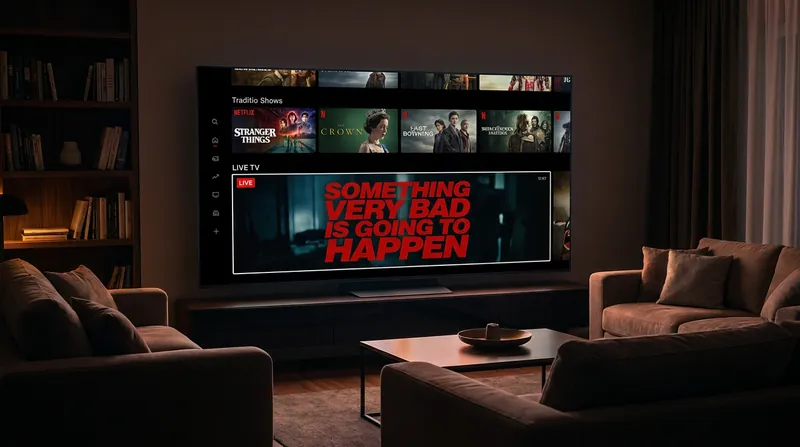
Netflix Explores Major Pivot to Live TV and Reselling Competitors' Services Amid Engagement Concerns
3 sources
Streaming Wars
Warner Bros. Discovery Reverts to 'HBO Max' in Major Streaming Brand Reversal
3 sources
Comments
Every angle. Every day.
Get Entertainment stories with full source coverage and perspective breakdowns, free every day.