
Federal HFC Phase-Down Forces Complete Overhaul of All New AC and Heat Pump Technology
The EPA's mandate to eliminate high-GWP refrigerants has forced the HVAC industry to redesign all new residential cooling systems around mildly flammable A2L alternatives.
By Paige Carter

In short
- The EPA has banned the manufacture of new residential AC units using the legacy R-410A refrigerant.
- New systems must use A2L refrigerants, which have a significantly lower Global Warming Potential.
- Because A2L refrigerants are mildly flammable, new systems require built-in leak sensors and automatic shutoffs.
The federal government has mandated a complete phase-down of the refrigerants used in residential air conditioners and heat pumps, forcing a structural redesign of all new equipment entering the market.[1][3]
The hinge date for this transition was January 1, 2025. After this point, manufacturers could no longer produce or import new residential split-system air conditioners or heat pumps that use R-410A, the industry-standard refrigerant for the past two decades.[2]
Instead, the industry has shifted to a new class of refrigerants known as A2Ls—primarily R-454B and R-32. These new chemicals are designed to dramatically reduce the climate impact of household cooling, but they require entirely different mechanical architectures.
The transition is driven by the American Innovation and Manufacturing (AIM) Act of 2020, which tasked the Environmental Protection Agency (EPA) with phasing down the production and consumption of hydrofluorocarbons (HFCs) by 85 percent over a 15-year period.[1][2]
R-410A, while safe for the ozone layer, has a high Global Warming Potential (GWP) of 2,088. This means that a leaked pound of R-410A traps roughly 2,088 times more heat in the atmosphere than a pound of carbon dioxide over a century.[2]
Under the EPA's Technology Transitions Rule, new residential cooling equipment must use refrigerants with a GWP under 700. The primary replacements, R-454B (GWP 466) and R-32 (GWP 675), easily meet this new federal threshold.[1][2]
But this is not a simple chemical swap. A2L refrigerants are classified by safety standards as "mildly flammable," which means they cannot be safely pumped into older systems designed for the non-flammable R-410A.
Because of this classification, 2025 and 2026 HVAC systems incorporate new safety features that were never required in older units. This includes built-in refrigerant leak sensors and automatic mitigation controls integrated directly into the hardware.
If a new system detects a refrigerant leak, the control board will automatically shut down the compressor to stop the flow and activate the indoor blower fan. This dilutes the refrigerant concentration in the air, preventing it from ever reaching flammable levels.
This structural redesign means that homeowners cannot simply retrofit their existing air conditioning units to accept the new A2L refrigerants. The internal pressures, sensors, and electrical components are fundamentally incompatible.[3]
However, the EPA has ensured that existing systems are not rendered illegal or obsolete. Homeowners can continue to operate, repair, and recharge their current R-410A systems indefinitely, as the phase-down targets new production rather than existing use.[2]
To prevent millions of dollars in stranded inventory, the EPA also adjusted its enforcement timelines. Contractors are permitted to continue installing pre-2025 manufactured R-410A units until those existing warehouse supplies are completely depleted.[2]
For consumers shopping for a new system today, this creates a unique buying window. They can choose between the remaining stock of older R-410A equipment or invest in the newly redesigned A2L systems.[2][3]
While the newer A2L systems carry higher upfront costs due to the added safety sensors and redesigned compressors, they often deliver improved energy efficiency, which can lower monthly utility bills over the system's lifespan.
Conversely, those who stick with older R-410A systems will face a different financial reality in the coming years. As the AIM Act continues to cap the production of legacy HFCs, the cost of R-410A service refrigerant is expected to climb steadily as supplies dwindle.[2]
Ultimately, the 2026 refrigerant transition represents a pivotal moment in home comfort technology. By understanding the regulatory timeline and the mechanical differences, homeowners can make informed decisions about whether to repair an aging unit or invest in the next generation of cooling.[3]
Definitions
- A2L Refrigerant
- A classification of refrigerants that are mildly flammable but have a significantly lower environmental impact than older chemicals.
- Global Warming Potential (GWP)
- A metric that compares the amount of heat trapped by a greenhouse gas to the amount of heat trapped by carbon dioxide.
- R-410A
- The industry-standard refrigerant used in most residential AC systems over the last two decades, now being phased out due to its high GWP.
- R-454B
- One of the primary new A2L refrigerants replacing R-410A, offering a 78% reduction in global warming potential.
- AIM Act
- The American Innovation and Manufacturing Act of 2020, which gave the EPA authority to phase down the use of hydrofluorocarbons.
Questions & answers
Is my current R-410A air conditioner now illegal?
No. Existing R-410A systems are fully legal to operate, repair, and recharge. The new rules only apply to the manufacturing and installation of new equipment.
Can I put the new A2L refrigerant in my old AC unit?
No. A2L refrigerants operate at different pressures and require specific safety sensors. Attempting to retrofit an old system is dangerous and will void the warranty.
Will it cost more to repair my old AC in the future?
Likely yes. As the EPA phases down the production of R-410A, the shrinking supply is expected to drive up the cost of the refrigerant needed for major repairs.
Can contractors still install new R-410A systems in 2026?
Yes, but only from the limited remaining inventory of units that were manufactured before the January 1, 2025 cutoff date.
Analysis by camp
Environmental Regulators
Focused on reducing the climate impact of household cooling through strict GWP limits.
Agencies like the EPA, operating under the AIM Act, view the transition away from high-GWP refrigerants as a critical step in meeting national and global climate targets. By capping the production of HFCs and mandating a shift to A2L alternatives, regulators aim to cut greenhouse gas emissions from the HVAC sector by 85% over 15 years. They argue that the long-term environmental benefits far outweigh the short-term logistical challenges of redesigning equipment.
HVAC Manufacturers & Contractors
Navigating the logistical and technical hurdles of a complete equipment redesign.
For the industry, the shift to A2L refrigerants has required a massive overhaul of product lines and safety protocols. Manufacturers have spent years redesigning compressors and integrating new leak-detection sensors to safely handle mildly flammable chemicals. Meanwhile, contractors face the burden of retraining technicians, updating their diagnostic tools, and managing the complex inventory overlap between legacy R-410A units and the new A2L systems.
Homeowners
Balancing the upfront costs of new systems against the rising maintenance costs of older units.
Consumers are caught in the middle of the regulatory shift. While existing R-410A systems remain perfectly legal to operate, homeowners face a difficult financial calculus when major repairs arise. The dwindling supply of legacy refrigerants is expected to drive up service costs, pushing many to replace their units entirely. Although the new A2L systems promise better energy efficiency, the added safety features translate to higher initial purchase prices.
- Environmental Regulators
- Prioritize the rapid reduction of greenhouse gas emissions through strict GWP thresholds.
- HVAC Industry
- Focus on the technical execution, safety compliance, and inventory management of the transition.
- Consumer Advocates
- Emphasize the financial impact on homeowners, including repair costs and system longevity.
Perspectives this story doesn't cover
- Independent repair technicians
- Real estate developers
Sources
Source coverage
3 outlets
3 viewpoints surfaced



- [1]U.S. Environmental Protection AgencyEnvironmental Regulators
HFC Technology Transitions Program
Read on U.S. Environmental Protection Agency → - [2]AC DirectHVAC Industry
R-410A Phase-Out Timeline: Exact 2025-2030 Dates from the EPA AIM Act
Read on AC Direct → - [3]Factlen Editorial TeamConsumer Advocates
Synthesis by Factlen editorial team
Read on Factlen Editorial Team →

More in Shopping & Reviews
See all →Water Heaters
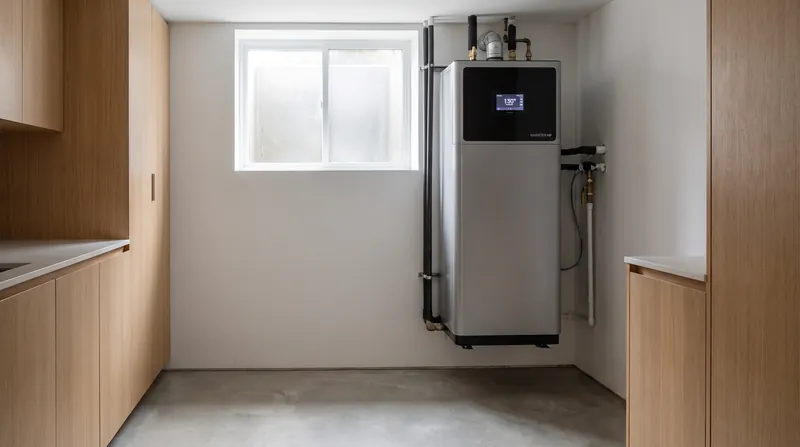
The Mechanics of Water Heating: Comparing Tank, Tankless, and Heat Pump Systems for Efficiency and Cost
7 sources
Appliance Manufacturing
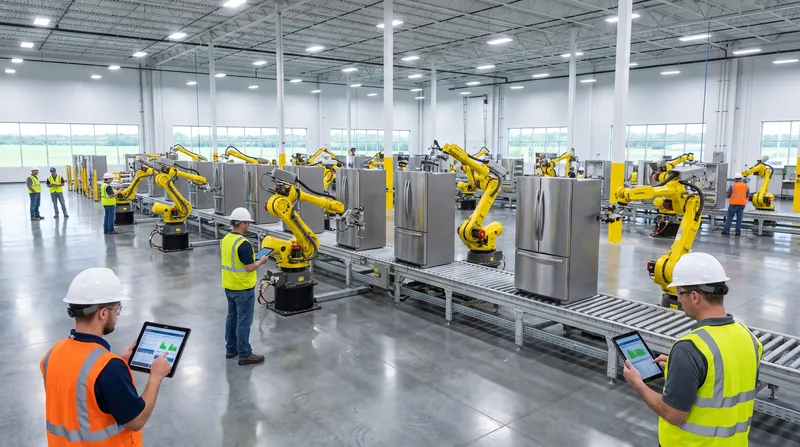
LG and GE Lead $2.4 Billion US Appliance Manufacturing Boom Amid Regionalization Push
6 sources
Appliance Safety
How Modern Kitchen Appliances Prevent Overheating and Protect Children
5 sources
Induction Tech
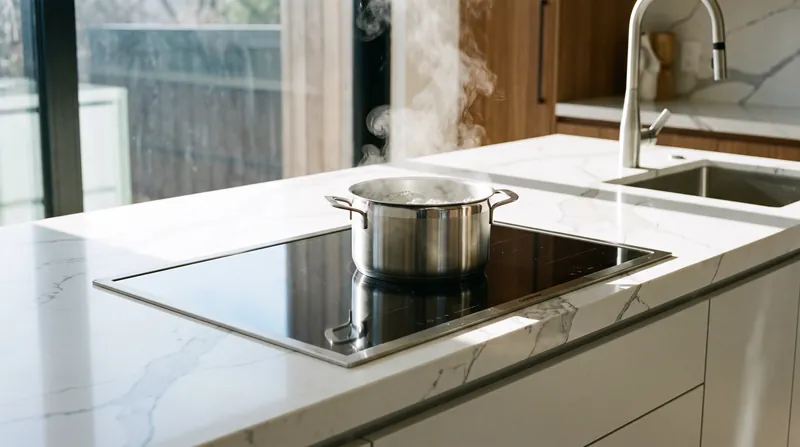
The Efficiency Redesign: How Induction Cooktops Use Electromagnets to Outperform Gas and Electric Stoves
5 sources
Comments
Every angle. Every day.
Get Shopping & Reviews stories with full source coverage and perspective breakdowns, free every day.