
Fact-Checking the Cure: How Psychological Inoculation is Defeating Misinformation
A growing body of peer-reviewed evidence suggests that "prebunking"—exposing people to the tactics of misinformation before they encounter it—is highly effective at building cognitive immunity.
By Factlen Editorial Team

- Cognitive Psychologists
- Focus on the empirical success of inoculation theory and the psychological mechanisms that build mental resilience.
- Platform Engineers
- Prioritize the scalability of prebunking interventions as short-form video ads within existing social media architectures.
- Civic Literacy Advocates
- Argue that while digital prebunking is effective, it must be integrated into broader, systemic media literacy education for citizens.
What's not represented
- · Bad actors adapting their tactics to bypass prebunking
- · Long-term longitudinal studies spanning multiple years
Why this matters
As AI makes generating false narratives cheaper and faster, traditional fact-checking struggles to keep up. Understanding how to "vaccinate" your own mind against manipulation offers a scalable, proven defense for voters and digital citizens.
Key points
- Prebunking uses psychological inoculation to build cognitive immunity against misinformation.
- The intervention focuses on teaching manipulation tactics rather than debunking specific claims.
- Studies show prebunking improves detection accuracy by up to 30% across the political spectrum.
- The protective effects decay over 1-2 months, meaning periodic 'boosters' are necessary.
- Tech platforms have successfully scaled these interventions as short-form video ads.
The traditional fact-checking model suffers from a structural disadvantage: it is inherently reactive. By the time a falsehood is identified, researched, and debunked, it has often already reached millions of screens. The lie, as the adage goes, travels halfway around the world before the truth gets its boots on.[1]
But over the past five years, cognitive psychologists and civic technologists have pioneered a proactive alternative that is showing remarkable empirical success. It is called "prebunking," and it relies on a decades-old psychological framework known as inoculation theory.[2]
The premise is functionally identical to how a biological vaccine works. Instead of waiting for an infection to take hold, prebunking exposes the mind to a weakened "micro-dose" of a manipulative tactic, accompanied by a clear warning and a refutation.[1][2]
When individuals are later exposed to the actual misinformation in the wild, their cognitive immune system is already primed to recognize and reject it. The evidence supporting this mechanism has moved from controlled laboratory settings into massive, real-world platform deployments.[3][6]

The strongest evidence for prebunking lies in its focus on tactics rather than topics. A landmark study published in Science Advances demonstrated that teaching people to spot common manipulation techniques makes them significantly better at identifying misinformation across entirely different subjects.[3]
These techniques include the use of highly emotional language, false dichotomies, deliberate scapegoating, and incoherence. By isolating the delivery mechanism of the lie rather than the specific claim, researchers found a way to build broad-spectrum resilience.[2][3]
Researchers at the University of Cambridge found that users who watched short, animated videos explaining these tactics were 24% to 30% more likely to correctly identify manipulative content in subsequent tests compared to a control group.[2][3]
This tactic-based approach solves the "whack-a-mole" problem of traditional fact-checking. Civic organizations do not need to predict exactly what specific lie will go viral tomorrow; they only need to teach people the underlying mechanics of digital deception.[1][5]

Another major breakthrough in the evidence pack is that the intervention works consistently across the political spectrum. One of the most persistent challenges in political fact-checking is the "backfire effect," where correcting a falsehood can sometimes cause partisans to dig in their heels and defend the lie.[4]
Another major breakthrough in the evidence pack is that the intervention works consistently across the political spectrum.
Prebunking largely bypasses this partisan defensiveness. Because the intervention focuses on how people are being manipulated rather than what they should believe about a specific political issue, it does not trigger the same identity-based resistance.[4][6]
Data published by the American Psychological Association confirms that psychological inoculation improves manipulation detection equally among conservative, moderate, and liberal participants. It is a politically neutral defense mechanism.[4]
The laboratory success of inoculation theory prompted tech companies to test whether it could work in the chaotic environment of real-world platforms. Google's Jigsaw unit ran massive field experiments, serving prebunking videos as unskippable ads on YouTube to over five million users.[6]
The results mirrored the academic findings: even in a distracted, scrolling environment, exposure to a 30-second prebunking ad significantly increased a user's ability to spot manipulation techniques a day later, proving the intervention can scale.[6]
While the initial efficacy of prebunking is well-documented, the primary area of scientific uncertainty surrounds its durability. Research published in Nature Human Behaviour indicates that the protective effects of psychological inoculation begin to fade over time.[7]
The cognitive "immunity" typically peaks within the first week of exposure and shows significant decay after one to two months. The mind, it appears, forgets the warning signs if they are not reinforced.[7]

This suggests that a single intervention is insufficient for long-term protection. Just as with biological vaccines, cognitive immunity requires periodic "booster shots" to maintain high levels of resistance against novel manipulation campaigns.[1][7]
Civic organizations and election officials are now adapting these findings into their communication strategies. By deploying prebunking campaigns in the weeks immediately preceding elections, they can maximize the protective window when voters are most vulnerable to targeted deception.[5]
As generative AI drives the cost of producing synthetic media and deepfakes to zero, reactive fact-checking will become mathematically impossible to scale. There will simply be too much volume for human analysts to debunk.[1]
In this emerging landscape, prebunking offers a proven, evidence-based mechanism to upgrade the resilience of the human mind itself. It shifts the burden of defense from the platform to the empowered user.[1][5]
By teaching citizens to recognize the architecture of a lie before it arrives, psychological inoculation is turning passive media consumers into active, defended participants in the digital public square.[1][2]

How we got here
1964
Psychologist William McGuire first proposes Inoculation Theory to explain how attitudes can be protected from persuasion.
2017
Researchers at Cambridge begin adapting inoculation theory specifically for digital misinformation.
2022
Google's Jigsaw unit publishes results from massive field experiments proving prebunking works on social media.
2026
Civic organizations widely adopt prebunking as a primary defense against AI-generated election misinformation.
Viewpoints in depth
Cognitive Psychologists
Focus on the empirical success of inoculation theory and the psychological mechanisms that build mental resilience.
Academic researchers emphasize that the human brain is highly susceptible to emotional manipulation, but equally capable of learning defense mechanisms. By isolating the 'vectors' of misinformation—such as fear-mongering or false dichotomies—psychologists argue we can train the brain to recognize the shape of a lie without needing to know the specific facts of the claim. Their primary focus now is studying the 'decay rate' of this immunity and how to optimize booster interventions.
Platform Engineers
Prioritize the scalability of prebunking interventions as short-form video ads within existing social media architectures.
For civic technologists and platform engineers, the appeal of prebunking is its mathematical scalability. Reactive fact-checking requires human labor for every new rumor, which is impossible in the age of generative AI. Prebunking, however, can be deployed as unskippable 30-second ads to millions of users simultaneously. Engineers argue this is the only viable systemic defense, shifting the platform's role from playing referee on individual posts to upgrading the baseline media literacy of the user base.
Civic Literacy Advocates
Argue that while digital prebunking is effective, it must be integrated into broader, systemic media literacy education for citizens.
Educators and civic groups welcome the data supporting prebunking but warn against treating it as a silver bullet. They argue that a 30-second video on YouTube is a good start, but true civic resilience requires deep, structural changes to education systems. They advocate for embedding inoculation theory into middle and high school curricula, ensuring that the next generation of voters possesses a permanent, foundational understanding of digital manipulation tactics.
What we don't know
- Whether bad actors will develop new manipulation tactics specifically designed to bypass prebunked defenses.
- How effectively prebunking works across different cultural and linguistic contexts globally.
- The exact frequency of 'booster' interventions required to maintain permanent cognitive immunity.
Key terms
- Prebunking
- A communication strategy that preemptively exposes people to the tactics of misinformation to build their cognitive resilience against it.
- Inoculation Theory
- A psychological framework developed in the 1960s suggesting that exposing people to weakened arguments helps them build defenses against stronger persuasive attacks later.
- False Dichotomy
- A manipulation tactic that presents a complex issue as having only two extreme options, forcing a false choice.
- Scapegoating
- The tactic of unfairly blaming a specific group or individual for a complex problem to provoke an emotional response.
Frequently asked
What is the difference between prebunking and debunking?
Debunking reacts to a specific lie after it has spread. Prebunking proactively warns people about the tactics used to deceive them before they encounter the misinformation.
Does prebunking tell people what to believe?
No. Effective prebunking focuses on the mechanics of manipulation (like emotional scapegoating or false dichotomies) rather than pushing a specific political viewpoint.
How long does the protection last?
Research indicates the cognitive immunity peaks in the first week and begins to decay significantly after one to two months, requiring periodic 'boosters'.
Does this work on social media?
Yes. Large-scale field tests on platforms like YouTube have shown that even 30-second prebunking ads significantly improve users' ability to spot manipulation.
Sources
Source coverage
7 outlets
3 viewpoints surfaced







[1]Factlen Editorial TeamCivic Literacy Advocates
Synthesis by Factlen editorial team
Read on Factlen Editorial Team →[2]University of CambridgeCognitive Psychologists
Inoculation theory and misinformation: The Cambridge Social Decision-Making Lab
Read on University of Cambridge →[3]Science AdvancesCognitive Psychologists
Psychological inoculation improves resilience against misinformation on social media
Read on Science Advances →[4]American Psychological AssociationCognitive Psychologists
The effectiveness of prebunking interventions across the political spectrum
Read on American Psychological Association →[5]Information Futures LabCivic Literacy Advocates
Prebunking: A guide for journalists and citizens
Read on Information Futures Lab →[6]JigsawPlatform Engineers
Scaling prebunking across platforms
Read on Jigsaw →[7]Nature Human BehaviourCognitive Psychologists
Durability of cognitive immunity to propaganda and misinformation
Read on Nature Human Behaviour →
More in news politics
See all 9 stories →US-Iran Deal
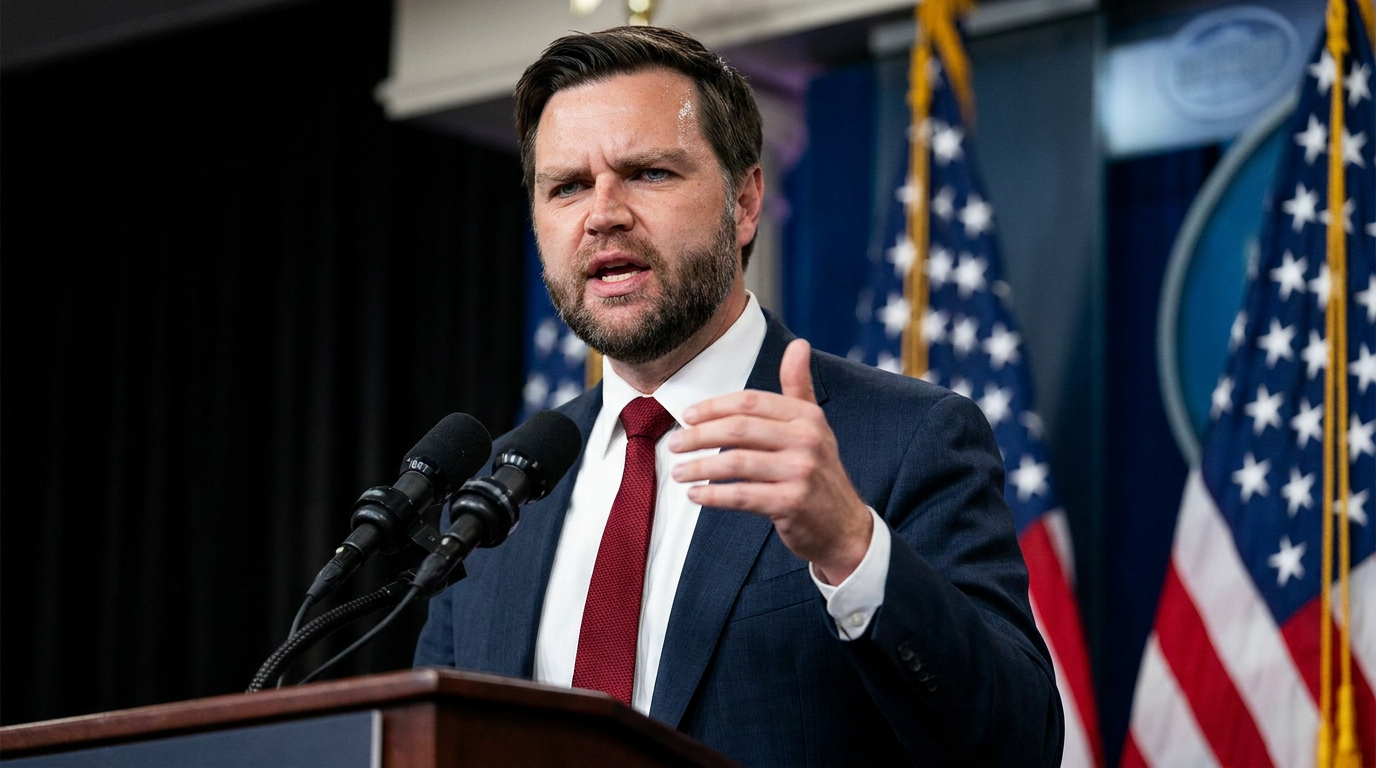
U.S. and Iran Sign Agreement to End War; Vance Lashes Out at Israeli Critics
7 sources
U.S.-Iran Deal
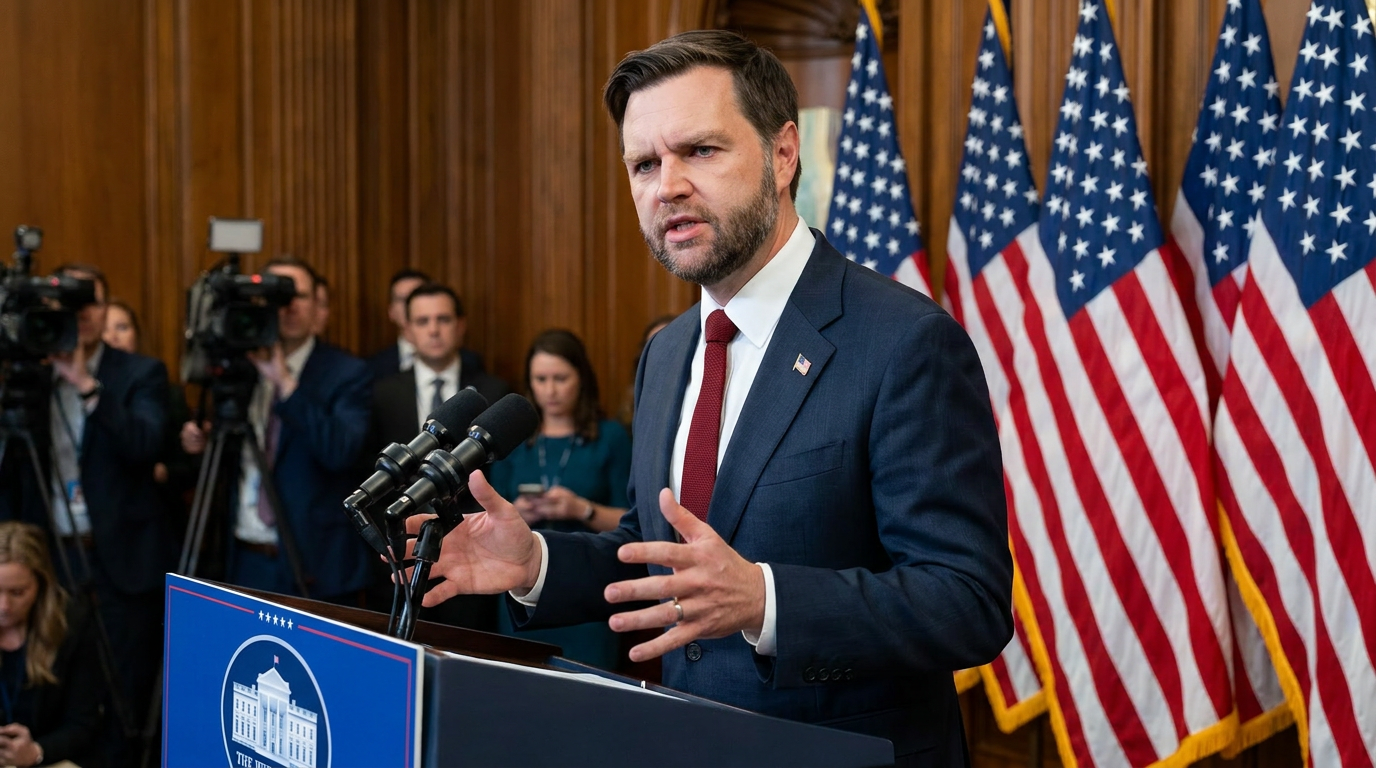
U.S. and Iran Sign 14-Point Agreement to End War, Sparking Fierce Backlash from Israel
6 sources

U.S.-Iran Relations
Vance Rebukes Israeli Critics of U.S.-Iran Peace Agreement, Warning Against Alienating 'Only Powerful Ally'
8 sources
Cognitive Defense
The Science of 'Prebunking': How Psychological Inoculation is Defeating Misinformation
6 sources

Every angle. Every day.
Get news politics stories with full source coverage and perspective breakdowns delivered to your inbox.